
This article was updated in August 13, 2026 with new products and information by Mark S. Taylor
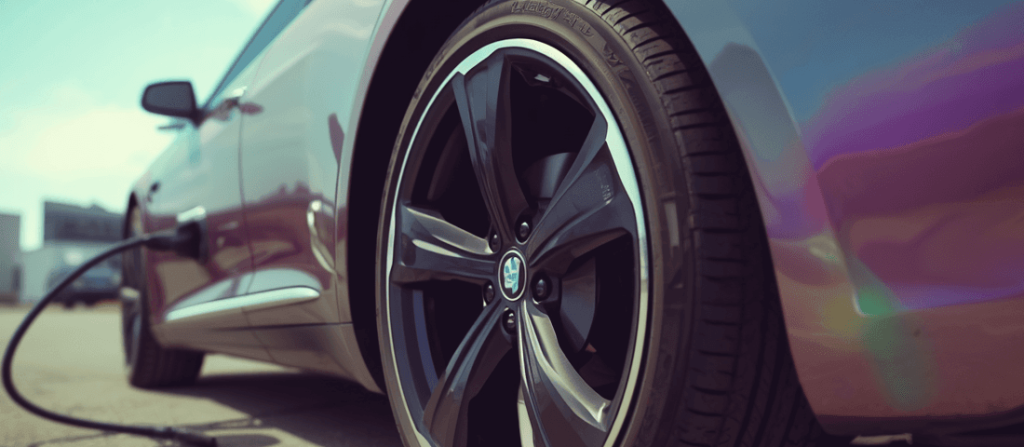
You bought an EV to save on gas. Then you looked at your tires and realized the tread was halfway gone at 18,000 miles. Now you’re wondering if you got played — or if this is just how electric cars work.
Yes, EV tire wear faster than gas car tires. The gap is roughly 20–30% depending on the vehicle, the tires, and how you drive. That doesn’t mean your EV is a bad deal. It means you need to understand where that wear comes from, what it costs you, and how to slow it down. I’ve been tracking this since the first Model S rolled into my bay a decade ago. The pattern is clear — and mostly preventable.
In this guide, I’ll break down the physics behind faster EV tire wear, show you what replacements actually cost, compare total ownership expenses over 100,000 miles, and give you an EV-specific maintenance routine that will add thousands of miles to your tread life.
Contents
- 1 What Makes EV Tires Wear Faster?
- 2 How Much Faster? The Real Numbers
- 3 EV Tires vs. Regular Tires: What’s the Difference?
- 4 What EV Tires Cost (And What Gas Car Tires Cost)
- 5 100,000-Mile Ownership Cost Comparison
- 6 How to Make EV Tires Last Longer
- 7 FAQs About EV Tire Wear Faster Than Gas Car
- 8 Bottom Line
What Makes EV Tires Wear Faster?
Three things conspire against your rubber the moment you take delivery of an electric car. None of them are defects. They’re physics.
1. Weight — The Battery Is Heavy
EVs carry battery packs that add 600 to 1,500 pounds compared to similar gas-powered cars. A Tesla Model 3 weighs over 4,000 pounds. A Toyota Corolla — roughly the same size — comes in around 3,000 pounds. That extra mass sits low in the chassis, which helps handling, but it also means every tire is carrying more load with every rotation.
Emissions Analytics — a respected vehicle testing organization — found that for every extra 450kg (about 1,000 lbs) you add to a car, tire wear increases by roughly 20%. Given that most EVs are 600–900 lbs heavier than their gas equivalents, you’re looking at a significant wear penalty before you even touch the accelerator.
More weight means more friction. More friction means more rubber left on the road.
2. Instant Torque — Zero to Stress in Zero Seconds
A gas engine has to rev up before it delivers peak torque. An electric motor delivers 100% of its torque the instant you press the pedal. That’s why EVs feel so quick off the line — and why your tires take a beating.
When you launch hard, the driven tires slip microscopically against the pavement. On a gas car, the torque builds gradually and the tires have time to hook up. On an EV, the torque spike is immediate. The rubber scrubs. Even with traction control intervening, the wear adds up — especially on rear-wheel-drive EVs where the rear tires handle both acceleration and most of the regenerative braking.
3. Regenerative Braking — Rear Tires Work Harder
EVs slow down by turning the electric motor into a generator, sending energy back to the battery. On rear-wheel-drive EVs, this means the rear tires are doing most of the deceleration work in addition to most of the acceleration work. On a gas car, braking is biased toward the front wheels — which is why front tires typically wear faster.
On a RWD EV, the rears wear faster than the fronts unless you rotate religiously. Many EV owners don’t realize this because they never hear the brakes squeal — the pads barely wear. But the tires do.
How Much Faster? The Real Numbers
The tire industry has settled on a rough figure: EV tires wear out 20–30% faster than comparable gas car tires. Michelin and Hyundai have both publicly cited the 20% mark. Emissions Analytics puts the upper end closer to 50% on performance-oriented models with soft compounds.
But what does that mean in miles?
Consumer Reports surveyed EV owners and found that more than 30% replaced their tires sooner than expected. Over half of those replacements happened at or before 30,000 miles. For comparison, a typical gas car on all-season tires gets 40,000 to 60,000 miles before replacement.
Here’s the catch: a lot of that premature wear is preventable. The same survey found that many EV owners never rotated their tires — partly because EVs don’t need oil changes, so there’s no regular service appointment to remind them. Without rotation, the driven tires wear unevenly and fast. One owner reported needing new tires at 28,000 miles simply because he forgot to rotate — and the tire warranty was voided as a result.
The bottom line: EVs do wear tires faster, but the gap is smaller than the headlines suggest if you maintain them properly. Ignore maintenance, and you’ll be buying tires every 20,000 miles. Stay on top of it, and you can push 40,000 to 50,000 miles even on an EV.
EV Tires vs. Regular Tires: What’s the Difference?
Walk into a tire shop and ask for tires for your EV, and they’ll probably steer you toward “EV-specific” rubber. That label means something — but it doesn’t mean regular tires are automatically off the table.
EV-specific tires have three main differences:
Reinforced construction. They use stronger sidewalls and higher load ratings to handle the extra weight. Most EVs need XL (extra load) rated tires or higher. A regular passenger tire with a standard load rating is not safe on a 4,500-pound EV — the sidewall can flex too much under hard cornering or emergency braking.
Low rolling resistance compounds. These reduce friction with the road, which improves range. The trade-off is often slightly less grip in wet conditions. Consumer Reports found that some EV-tuned tires stop 15–25 feet longer in wet braking than non-EV ultra-high-performance tires.
Foam inserts for noise reduction. EVs are quiet. Without engine noise masking road sound, tire roar becomes noticeable. Many EV tires have polyurethane foam bonded to the inside of the tread to absorb sound waves.
So can you put regular tires on an EV?
Yes — if they meet the load and speed requirements. Pirelli’s chief technical officer for North America noted that a regular tire with the correct XL rating and speed index will physically work on an EV. The problem is longevity: Pirelli estimates regular tires wear 5–20% faster than EV-specific tires when mounted on an electric vehicle. You’ll also lose some range — typically 2–5% — because regular tires have higher rolling resistance.
My advice: if you’re replacing OEM tires, buy EV-specific replacements. The upfront cost is higher, but the longer tread life and preserved range usually offset the premium. Don’t cheap out on the only part of your car that touches the road.

What EV Tires Cost (And What Gas Car Tires Cost)
Here’s what you’ll actually pay at the tire shop in 2025–2026.
| Tire Type | Per Tire | Set of Four (Installed) | Typical Tread Life |
|---|---|---|---|
| Standard economy gas car tire | $80–$140 | $400–$650 | 50,000–70,000 miles |
| Mid-range all-season gas car tire | $120–$180 | $550–$850 | 45,000–60,000 miles |
| EV-specific tire (standard) | $150–$250 | $700–$1,000 | 35,000–50,000 miles |
| EV-specific tire (performance) | $200–$350 | $900–$1,600 | 25,000–40,000 miles |
| Tire rotation | — | $25–$75 per visit | — |
| Wheel alignment | — | $50–$168 | — |
| Rotation + balancing | — | $60–$200 per visit | — |
Installation is usually included in the set-of-four price at major retailers like Discount Tire, Costco, or Tire Rack. Dealerships often charge $100–$200 more for the same tires.
The hidden cost most people miss: EVs need more frequent rotations and alignments. I recommend every 5,000–7,500 miles for an EV versus 7,500–10,000 for a gas car. Over 100,000 miles, that’s two to three extra rotations and one extra alignment — roughly $200–$400 in additional maintenance that gas car owners don’t pay.
100,000-Mile Ownership Cost Comparison
Let’s put it all together. Here’s what tires actually cost you over the first 100,000 miles of ownership.
| Cost Category | Gas Car (Mid-Range) | EV (EV-Specific Tires) |
|---|---|---|
| Tire sets needed | 2 sets | 3 sets |
| Tire cost (installed) | $550–$850 per set | $700–$1,000 per set |
| Total tire cost | $1,100–$1,700 | $2,100–$3,000 |
| Extra rotations/alignments | $0 | $200–$400 |
| Total tire spend | $1,100–$1,700 | $2,300–$3,400 |
| EV tire premium | — | +$600–$1,700 |
Now, the offset:
| Savings Category | Over 100,000 Miles |
|---|---|
| Gas savings (EV vs. 30 MPG gas car at $3.50/gal) | $8,000–$10,000 |
| Brake maintenance savings (regenerative braking) | $300–$600 |
| Oil change savings | $800–$1,200 |
Net result: Even with the tire premium, most EV owners save $6,000–$9,000 in total maintenance and fuel costs over 100,000 miles. The tire cost is real — but it’s a footnote in the overall ownership equation, not a dealbreaker.

How to Make EV Tires Last Longer
You can’t change physics. But you can change your habits. Here’s what I tell every EV owner who rolls in with prematurely bald tires.
1. Rotate every 5,000–7,500 miles. Not 10,000. Not “when the oil change reminder pops up” — EVs don’t have those. Set a calendar reminder. Uneven wear is the number one killer of EV tire life.
2. Check tire pressure monthly. Underinflation by just 5 PSI increases wear on the edges and reduces range. EVs are sensitive to pressure because of the weight. Most EVs have a recommended pressure of 38–42 PSI — higher than many gas cars.
3. Use smooth acceleration. I get it — instant torque is fun. But every hard launch scrubs rubber. Use progressive throttle inputs. Your tires will last 20% longer, and your passengers’ necks will thank you.
4. Engage Eco mode for daily driving. Most EVs soften throttle response in Eco mode, which reduces torque spikes and the resulting tire slip. Save Sport mode for when you actually need it.
5. Get an alignment check annually. The extra weight means misalignment wears tires faster on an EV than on a gas car. A $100 alignment beats a $900 tire set every time.
6. Don’t ignore one-pedal driving wear. Aggressive one-pedal driving with high regenerative braking puts extra load on the driven wheels. Dial regen down to “low” or “standard” if you notice uneven wear.
7. Buy the right tires. Don’t put standard-load passenger tires on a 4,500-pound EV. Check the load index on the sidewall — it needs to be XL or higher. The wrong tire wears faster and is unsafe.
FAQs About EV Tire Wear Faster Than Gas Car
Do EV tires really wear out 20–30% faster?
Yes — that’s the figure cited by Michelin, Hyundai, and testing organizations like Emissions Analytics. But the actual number depends heavily on your driving style, tire choice, and maintenance habits. A careful driver who rotates regularly can narrow the gap significantly.
Can I put regular tires on my EV?
You can, if they have the correct load rating (XL or higher) and speed index. However, regular tires wear 5–20% faster on an EV than EV-specific tires, and they may reduce your range by 2–5% due to higher rolling resistance. For most owners, EV-specific tires are the better long-term value.
How often should I rotate tires on an EV?
Every 5,000–7,500 miles. That’s more frequent than the 7,500–10,000 mile interval typical for gas cars. The extra weight and torque on EVs cause faster position-based wear, especially on rear-wheel-drive models.
Does regenerative braking help or hurt tire wear?
It’s complicated. Regenerative braking reduces brake pad wear to almost nothing, which saves you $300–$600 over 100,000 miles. But on RWD EVs, it concentrates deceleration forces on the rear tires. Without regular rotation, the rears wear out fast.
Why are EV tires more expensive?
Three reasons: reinforced construction to handle extra weight, specialized low-rolling-resistance compounds, and foam inserts for noise reduction. These add manufacturing cost. Plus, EV-specific tires are still a niche product with lower production volumes than standard passenger tires.
Bottom Line
EV tires wear faster than gas car tires. That’s not a myth, a defect, or a conspiracy by tire companies. It’s weight, torque, and physics.
But the premium is manageable. Over 100,000 miles, you’ll spend roughly $600–$1,700 more on tires than a gas car owner. Against $8,000–$10,000 in fuel savings, that’s a rounding error.
The real mistake I see is owners treating EV tires like gas car tires — ignoring rotations, running low pressure, and launching hard at every light. Do that, and you’ll be buying new rubber every 20,000 miles. Maintain them properly, and you’ll get 40,000 to 50,000 miles even with the EV penalty.
Set a 5,000-mile rotation reminder. Check your pressure monthly. Buy the right tires for your car’s weight. And maybe ease off the accelerator just a little — your tread depth gauge will notice.