
This article was updated in May 13, 2026 with new products and information by Mark S. Taylor
Your engine needs two things to run: air and fuel. Mix them in the right ratio, add a spark, and you get power. But getting that mix exactly right — every time, at every speed, in every temperature — is harder than it sounds. That’s where the carburetor comes in.
For nearly a century, the carburetor was the brain of every gasoline engine. It sat on top of the intake manifold and did one job: mix air and fuel into a fine, combustible spray before that mixture reached the cylinders. No computers. No sensors. Just clever mechanical engineering.
Today, carburetors live on in classic cars, motorcycles, lawnmowers, and the hearts of gearheads who love simple, tunable machinery. If you own one — or you’re just curious how your grandfather’s Chevy got down the road. — this guide covers everything you need to know. How does carburetor works no need to engineering degree required.

Contents
- 1 What Is a Carburetor?
- 2 How Does a Carburetor Actually Work? (Step by Step)
- 3 Carburetor Parts Explained Simply
- 4 Running Rich vs. Running Lean — What It Means
- 5 Who Still Uses Carburetors Today?
- 6 5 Warning Signs Your Carburetor Is Going Bad
- 7 What Causes a Carburetor to Fail?
- 8 Carburetor vs. Fuel Injection — Key Differences
- 9 Should You Clean, Rebuild, or Replace?
- 10 FAQs About — How Does Carburetor Works
- 11 The Bottom Line
What Is a Carburetor?
A carburetor is a mechanical device that mixes air and gasoline in the right ratio before sending the mixture into the engine. That mixture then enters the combustion chamber, where a spark plug ignites it to create power.
Simple version: the carburetor is the part of the engine that handles fuel delivery. Press the gas pedal, and the carburetor responds by sending more fuel-air mixture to the engine.
Since the 1990s, carburetors have been largely replaced by fuel injection in cars and trucks, but they’re still widely used in small engines like lawnmowers, generators, and motorcycles.
How Does a Carburetor Actually Work? (Step by Step)
The whole system runs on a clever physics trick called the Venturi effect. Here’s how it works from start to finish.
Step 1 — Air Enters Through the Top
Air flows in through the carburetor’s air intake, passing through a filter that removes dust and debris. This clean air travels down the carburetor’s barrel — a tube that connects to the engine’s intake manifold.
Step 2 — The Venturi Creates a Vacuum
Here’s the key part. As air passes through a narrow section of the carburetor called the venturi, it speeds up. That speed increase causes a drop in pressure — a vacuum — that pulls fuel up through a small nozzle called the jet.
Think of it like blowing air across the top of a straw sitting in a glass of water. The moving air creates low pressure above the straw, and that pulls liquid up. That’s exactly what the carburetor venturi does with fuel.
Step 3 — Fuel Mixes With Air
The carburetor takes liquid gasoline and mixes it with air, producing a fine mist that travels into the combustion chamber, where the spark plug ignites it.
The perfect mixture — the one that burns most efficiently — is 14.7 parts air to 1 part fuel by weight. Carburetors are designed to react to throttle input and engine vacuum to maintain this ratio under changing driving conditions.
Step 4 — The Throttle Controls How Much You Get
A carburetor is essentially a tube with an adjustable plate called the throttle plate that controls how much air can flow through it. That plate is connected directly to your gas pedal. Push the pedal, the plate opens wider, more air flows, more fuel gets pulled in, and the engine makes more power.
Step 5 — The Mixture Enters the Engine
The fuel-air mist flows through the intake manifold and into each cylinder. The piston compresses it, the spark plug ignites it, and the controlled explosion pushes the piston down — creating the power that moves your vehicle.
Carburetor Parts Explained Simply
| Part | What It Does |
|---|---|
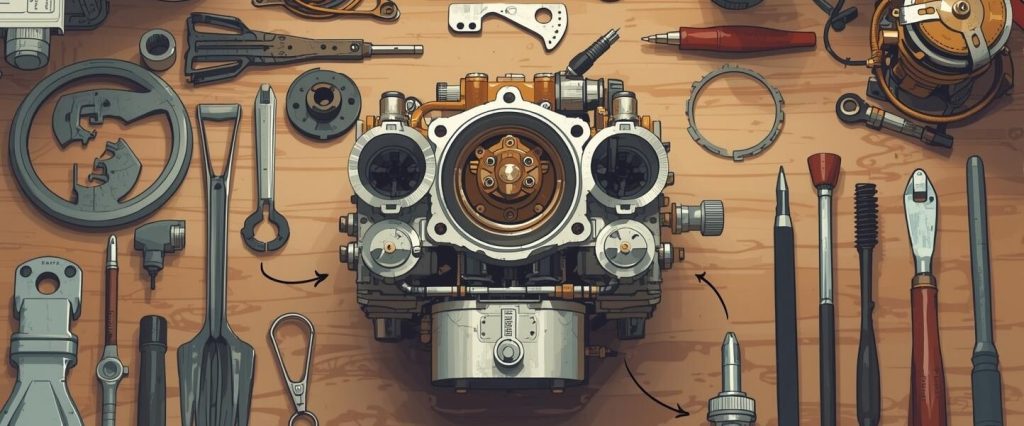
| Float & Float Chamber | A mini fuel reservoir that keeps a steady fuel level, like a toilet tank |
| Choke Valve | Restricts incoming air on cold starts, enriching the mixture so the engine fires more easily |
| Throttle Plate | Opens and closes to control airflow — connected to your gas pedal |
| Venturi | The narrow section that speeds up air and creates the vacuum that draws in fuel |
| Main Jet | A tiny nozzle that meters fuel at normal cruising speeds |
| Idle Jet | Supplies a small amount of fuel when the engine is idling |
| Accelerator Pump | Squirts a shot of extra fuel when you press the gas suddenly, preventing hesitation |
The float system is clever. As the float chamber feeds fuel to the carburetor, the fuel level drops and the float falls with it. When the float drops below a certain level, it opens a valve that allows fuel in from the main gas tank. Once the chamber refills, the float rises, closes the valve, and shuts off the fuel flow — just like a toilet tank.
Running Rich vs. Running Lean — What It Means
If the air-fuel ratio gets off balance, your engine will tell you. Two things can go wrong:
Running Rich — too much fuel, not enough air. You’ll often see black smoke coming from the exhaust, sluggish performance, and poor fuel economy. You may also notice a strong fuel smell.
Running Lean — too much air, not enough fuel. A lean mixture can cause engine backfiring, overheating, and in serious cases, engine damage. Lean is the more dangerous of the two.
A quick way to check: pull a spark plug and look at the tip. Heavy black, sooty deposits mean the mixture is too rich. If the ceramic insulator looks yellowish or blistered, the mixture is too lean — and a lean condition can cause engine-damaging preignition.
Who Still Uses Carburetors Today?
Modern cars don’t have carburetors. Every passenger car built since the early 1990s uses electronic fuel injection instead. But carburetors are far from extinct.
You’ll still find them on:
- Motorcycles — many budget and older models still use carbureted engines
- Lawnmowers and small engines — most still use simple carburetors to keep costs down
- Classic cars — any vehicle built before the late 1980s likely has one
- Generators and chainsaws — carburetors work fine for steady-state small engines
Even NASCAR ran carbureted race engines until 2012, when the series finally switched to fuel injection.
5 Warning Signs Your Carburetor Is Going Bad
Most carburetor problems show up gradually. Catch them early and you might just need a cleaning. Ignore them and you’re looking at a rebuild or replacement.
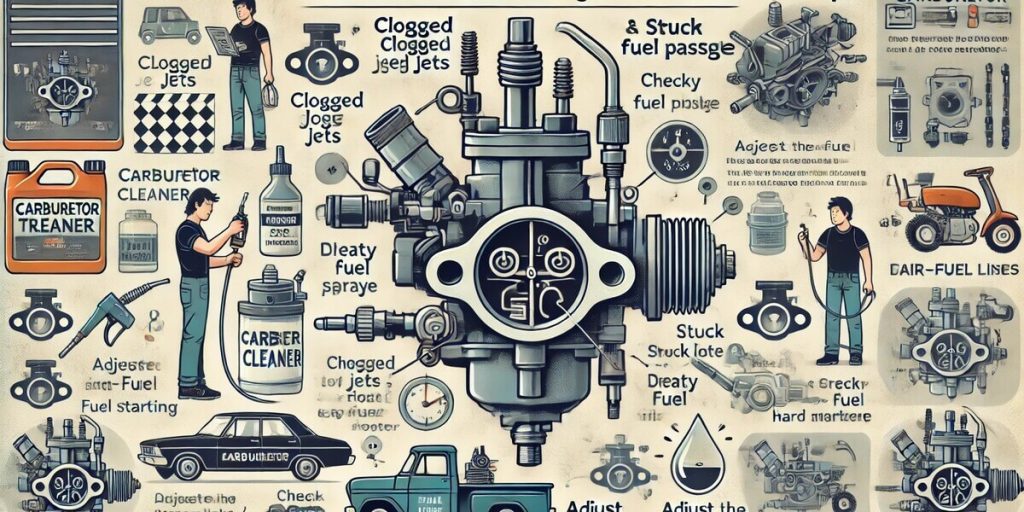
1. Hard to Start (Especially Cold) Cold starts require a rich mixture. If your choke is stuck or the jets are partially clogged, the engine will crank without firing — or fire weakly and die.
2. Engine Stalls at Idle A dirty carburetor with clogged jets or a gummed-up idle circuit won’t flow enough fuel, causing the air-fuel mixture to go too lean and the engine to stall.
3. Black Smoke From the Exhaust Black smoke means the carburetor is delivering more fuel than the engine can burn. That excess fuel passes through to the exhaust pipe, damages spark plugs, wastes gas, and increases emissions.
4. Hesitation When Accelerating Press the gas and the engine stumbles before catching up. That usually points to a failing accelerator pump — the part that gives a quick shot of fuel during sudden acceleration.
5. Worse Fuel Economy A carburetor running rich sends unburned fuel through the engine. You’ll notice you’re filling up more often without driving more miles.
Urgency note: Hard starting and rough idle are annoying but rarely dangerous. Black smoke and engine hesitation at highway speeds are more serious — get those checked promptly.
What Causes a Carburetor to Fail?
The most common culprit is old fuel. Gasoline left sitting in the float chamber can break down into sticky varnish deposits that clog the tiny jets and passages. This is especially common on vehicles or equipment that sit unused for months.
Ethanol in modern gasoline makes it worse. Ethanol absorbs water and can degrade the rubber seals and diaphragms inside older carburetors, causing fuel leaks and erratic behavior.
Other causes include:
- A stuck float causing the chamber to overfill and flood the engine
- Vacuum leaks from cracked hoses or a warped base gasket
- A worn accelerator pump diaphragm causing hesitation
- Debris in the fuel getting past the filter and lodging in the jets
Carburetor vs. Fuel Injection — Key Differences
| Feature | Carburetor | Fuel Injection |
|---|---|---|
| Fuel metering | Mechanical, vacuum-based | Electronic, ECU-controlled |
| Cold start performance | Needs manual or automatic choke | Adjusts automatically |
| Fuel efficiency | Lower | Significantly better |
| Emissions | Higher | Lower |
| Maintenance | More frequent tuning | Less user maintenance |
| Parts cost | Lower | Higher for electronics |
| Found in | Classic cars, small engines | All modern vehicles |
The precision of electronic fuel injection is why it won. A carburetor is always working from indirect signals — vacuum and throttle position. Fuel injection knows exactly how much oxygen is entering the engine and adjusts the fuel delivery in real time, hundreds of times per second.
Should You Clean, Rebuild, or Replace?
Start with the cheapest fix and work your way up.
| Fix | Skill Level | Cost |
|---|---|---|
| Carburetor cleaner spray | Beginner DIY | $10–$20 |
| Full cleaning + rebuild (1-barrel) | Intermediate DIY | $20–$60 |
| Professional rebuild (4-barrel) | Mechanic recommended | $150–$300 labor |
| Full replacement | Mechanic recommended | $200–$600+ for parts |
Replacement carburetors can cost $200 to $600 or more depending on the application. Cleaning and rebuilding an older one or two-barrel carburetor is a relatively simple job, but four-barrel carburetors are more difficult.
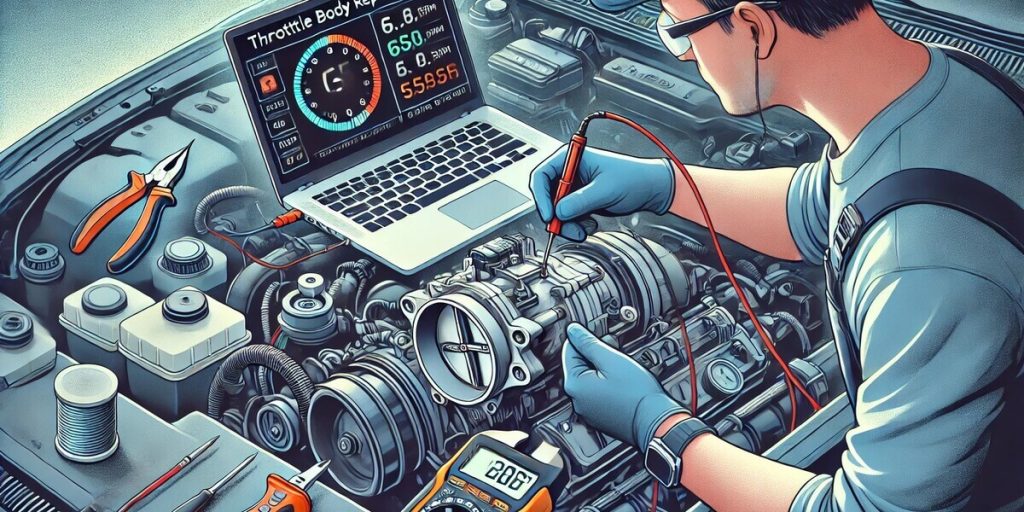
Before replacing anything, try a thorough cleaning with carburetor cleaner spray and check for vacuum leaks. A lot of “bad carburetor” diagnoses are actually just dirty jets or a cracked vacuum hose.
DIY-friendly: Cleaning, checking the choke, replacing the air filter Leave to a mechanic: Rebuilding a multi-barrel carb, diagnosing complex vacuum leaks, electronic feedback carburetors
FAQs About — How Does Carburetor Works
What does a carburetor do?
A carburetor mixes air and gasoline in the correct ratio before delivering the mixture to the engine’s combustion chambers. It controls fuel delivery based on engine speed and throttle position using purely mechanical means.
How does the Venturi effect create suction in a carburetor?
When air speeds up through the narrow venturi section of the carburetor, it creates a drop in pressure. That low-pressure zone acts like a vacuum, pulling fuel up through the jet nozzle and into the airstream.
What is the correct air-fuel ratio for a carburetor?
The ideal ratio for efficient combustion is 14.7:1 — 14.7 parts air to 1 part fuel by weight. This is called the stoichiometric ratio. Richer mixtures (more fuel) are used during cold starts; leaner mixtures (less fuel) improve fuel economy at light loads.
What are the signs of a bad carburetor?
Common signs include: hard starting (especially cold), rough or unstable idle, black exhaust smoke, engine hesitation when accelerating, and noticeably worse fuel economy.
Can I clean a carburetor myself?
Yes, a basic carburetor cleaning is beginner-friendly. Remove the air filter, spray carburetor cleaner into the throat and jets, and let it dissolve deposits. For a deeper clean, the carburetor will need to be removed and disassembled — a moderate DIY job.
How much does it cost to replace a carburetor?
Parts alone range from $200 to $600+ depending on the vehicle and carburetor type. Add shop labor and total repair costs can climb higher. A rebuild kit for a simple carburetor costs $20–$60 and is often a better value than full replacement.
The Bottom Line
A carburetor is a mechanical fuel-delivery device that uses the Venturi effect to pull gasoline into moving air and deliver the right mixture to the engine. Every part — the float, the jets, the choke, the throttle — plays a specific role in keeping that ratio balanced.
Modern cars don’t use them, but millions of older vehicles, motorcycles, and small engines still do. Knowing how a carburetor works makes it a lot easier to spot when something goes wrong — and helps you decide whether a $15 can of cleaner or a visit to the shop is the right call.
Quick Summary:
- A carburetor mixes air and fuel mechanically using the Venturi effect
- The ideal air-fuel ratio is 14.7:1 by weight
- Key parts include the venturi, float chamber, throttle plate, choke, and jets
- Warning signs include hard starting, black smoke, rough idle, and hesitation
- Most problems start with old, varnished fuel clogging the jets
- Start with cleaning before considering a rebuild or replacement
- Modern cars use fuel injection, but carbs remain common on small engines and classics