
This article was updated in April 26, 2026 with new products and information by Mark S. Taylor
You hear a strange grinding or whining noise. It comes from the manual transmission area. This is a classic sign of trouble. There are 7 key symptoms of a bad pilot bearing. This part is cheap, but the labor is expensive. Replacing it early might cost you $400. Ignoring it could cost over $1,000. This part is often confused with the throwout bearing. This guide will help you tell the difference and explain exactly what to do.
Contents
- 1 What Is a Pilot Bearing and What Does It Do?
- 2 Pilot Bearing vs. Pilot Bushing (What’s the Difference?)
- 3 7 Symptoms of a Bad Pilot Bearing
- 3.1 1. Grinding or Whining Noise When Clutch Is Fully Depressed
- 3.2 2. Clutch Noise That Continues in Neutral
- 3.3 3. Difficult or Hard Gear Shifts
- 3.4 4. Transmission Vibration Through Shifter or Floorboard
- 3.5 5. Clutch Engagement Point Changes
- 3.6 6. Squealing or Screeching During Clutch Operation
- 3.7 7. Increased Transmission Noise in Specific Gears
- 4 Bad Pilot Bearing vs. Throwout Bearing vs. Input Shaft Bearing (Critical Differences)
- 5 How to Diagnose a Bad Pilot Bearing at Home
- 6 What Causes Pilot Bearings to Fail?
- 7 Can You Drive with a Bad Pilot Bearing?
- 8 How Much Does Pilot Bearing Replacement Cost?
- 9 How to Replace a Pilot Bearing (Overview)
- 10 When to Replace the Pilot Bearing (Preventive)
- 11 FAQs About Symptoms of a Bad Pilot Bearing
- 12 The Bottom Line
What Is a Pilot Bearing and What Does It Do?
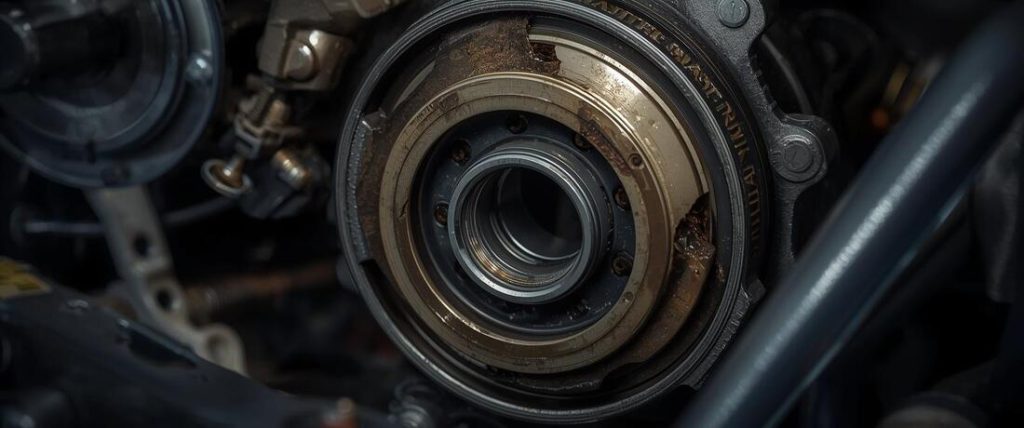
A pilot bearing is a small component located inside the crankshaft. It supports the tip of the transmission’s input shaft. This allows the input shaft and crankshaft to spin at different speeds. When you press the clutch pedal, the bearing works hard. It keeps the shaft centered while it spins independently. If it fails, the shaft can wobble or bind.
Pilot Bearing vs. Pilot Bushing (What’s the Difference?)
Not all cars use the same part. Some use a bearing, and some use a bushing.
- Pilot Bearing: This uses needle rollers or ball bearings. It is enclosed in a metal casing. It is found in cars with higher RPM capabilities.
- Pilot Bushing: This is a solid piece of sintered bronze. It is self-lubricating. You often find these in older or heavier duty vehicles.
The symptoms of failure are identical for both. However, the replacement method is slightly different. You can identify which one you have by checking your repair manual.
7 Symptoms of a Bad Pilot Bearing
1. Grinding or Whining Noise When Clutch Is Fully Depressed
This is the most definitive symptom. The noise happens specifically when the clutch pedal is pressed all the way down. This is when the crankshaft and input shaft spin at different speeds. A worn bearing creates a grinding sound. If the bearing is severely damaged, the noise is loud. It usually increases with engine RPM.
Urgency level: High — schedule repair soon.
2. Clutch Noise That Continues in Neutral
You might hear a whining or howling sound at idle. The car is in neutral, but the noise is there. This happens around 1,500 RPM. The noise is present even without pressing the clutch pedal. This is a classic advanced-stage symptom. It indicates significant bearing wear.
Urgency level: Urgent — bearing may be failing completely.
3. Difficult or Hard Gear Shifts
This symptom is very noticeable. It is hard to shift into first or reverse gear. The clutch disc is not fully disengaging. This is called “clutch drag.” A seized or damaged bearing restricts the input shaft. This causes the gears to grind during shifts.
Urgency level: High — driving is becoming unsafe.
4. Transmission Vibration Through Shifter or Floorboard
You might feel an unusual vibration. You feel it through the gear shifter. You might also feel it through the floorboard during acceleration. This happens because of input shaft misalignment. The worn bearing lets the shaft wobble. The vibration may come and go at different speeds.
Urgency level: Medium-High.
5. Clutch Engagement Point Changes
You might notice the clutch grabs lower than usual. It feels like the clutch is not fully releasing. The bearing interference stops the clutch disc from moving freely. This symptom is often confused with normal clutch wear.
Urgency level: Medium.
6. Squealing or Screeching During Clutch Operation
A high-pitched squeal can occur. You hear it when pressing or releasing the clutch. This is different from a throwout bearing squeal. This sound comes from metal-on-metal contact inside the crankshaft bore. It gets worse as the bearing deteriorates.
Urgency level: High.
7. Increased Transmission Noise in Specific Gears
The noise might be louder in lower gears. These gears put more torque load on the shaft. It is often quieter in 3rd, 4th, or 5th gear. This is an advanced symptom of severe bearing damage. It might indicate input shaft damage is beginning.
Urgency level: Urgent — stop driving.

Bad Pilot Bearing vs. Throwout Bearing vs. Input Shaft Bearing (Critical Differences)
It is vital to know which bearing is bad. The diagnosis depends on the noise pattern.
Pilot Bearing Noise Pattern
- Noise happens when clutch pedal IS FULLY DEPRESSED.
- Noise happens in neutral at idle.
- The bearing is active when clutch is disengaged (pedal down).
- Location: Crankshaft center / flywheel.
Throwout Bearing Noise Pattern
- Noise happens when clutch pedal is RELEASED or at light pedal pressure.
- The sound is usually a chirping or squealing, not grinding.
- Noise disappears when pedal is fully depressed.
- Location: Transmission input shaft collar.
Input Shaft Bearing Noise Pattern
- Noise is present in gear regardless of clutch position.
- It gets quieter when you press the clutch pedal.
- It is located inside the transmission housing.
- It is more expensive to repair.
Quick Comparison Table
| Symptom | Pilot Bearing | Throwout Bearing | Input Shaft Bearing |
|---|---|---|---|
| Noise: clutch fully depressed | ✓ | — | — |
| Noise: clutch released | — | ✓ | — |
| Noise: in-gear all positions | partial | — | ✓ |
| Grinding sound | ✓ | — | ✓ |
| Chirping sound | — | ✓ | — |
| Hard shifting | ✓ | — | — |
| Clutch drag | ✓ | — | — |
How to Diagnose a Bad Pilot Bearing at Home
You can do basic tests at home. These help you narrow down the problem.
Step 1: Note Exactly When the Noise Occurs
Pay close attention to the sound. If the noise is in neutral with the clutch in, it is likely the pilot bearing. If the noise only happens when pressing the clutch, it might be the throwout. If the noise is in gear regardless of the pedal, it is likely the input shaft bearing.
Step 2: Rev Test in Neutral
Start the engine. Put the transmission in neutral. Press the clutch fully down. Rev the engine to about 1,500 RPM. If you hear a whining or grinding sound, it is likely the pilot bearing.
Step 3: Shift Test
Try to shift into first and reverse. Note if there is difficulty. If the gears grind during the shift, you have clutch drag. This is often caused by a bad pilot bearing.
Step 4: Clutch Pedal Feel Test
Pay attention to where the clutch grabs. Compare it to where it used to grab. If the engagement point is lower and combined with hard shifting, suspect the pilot bearing.
Step 5: Professional Confirmation
Visual inspection requires removing the transmission. A mechanic can verify the problem before doing a full clutch job. It is smart to combine this with a clutch inspection.

What Causes Pilot Bearings to Fail?
Normal wear and age is the primary cause. The bearing spins millions of times over its life. Improper installation is another big cause. If the transmission is pulled with a misaligned disc, it damages the bearing. Grease contamination or dryness can also cause failure. Excessive heat cycles hurt the metal. Sometimes, input shaft scoring accelerates bearing wear. Manufacturing defects are rare but possible. Many people fail to replace this part during a clutch service.
Can You Drive with a Bad Pilot Bearing?
The short answer is briefly, but it is risky. If the symptoms are mild (noise only), you can monitor it. Schedule the repair soon. If you have hard shifting or clutch drag, avoid driving when possible. If the bearing is seized, stop driving immediately. You risk damaging the input shaft, clutch disc, or flywheel. If you damage the input shaft, the repair cost goes up by hundreds of dollars.
How Much Does Pilot Bearing Replacement Cost?
The part is very cheap. The labor cost is the main expense.
| Cost Item | Estimated Price |
|---|---|
| Pilot bearing part | $7 – $25 |
| Labor cost | $350 – $650 (transmission removal required) |
| Combined with clutch replacement | $800 – $1,500 (labor already paid for) |
| Full clutch job with pilot bearing | $900 – $1,800 at a shop |
Why replace at clutch service? The labor is already spent. The mechanic has already removed the transmission. The bearing part is cheap insurance against future failure.
How to Replace a Pilot Bearing (Overview)
Replacing this part is difficult. You must remove the transmission to access it.
Tools Required
- Pilot bearing puller (slide hammer with expanding plate).
- Pilot bearing installation tool (or same-size socket).
- Appropriate grease (high-temp wheel bearing grease).
- Transmission jack.
- Standard hand tools (sockets, wrenches).
Removal Methods
- Pilot bearing puller: This is the best method. It grabs the inside of the bearing and pulls it out.
- Grease-packing hydraulic method: You pack the center with grease and use a dowel to hydraulically push it out.
- Bread method: This is a DIY hack involving wet bread and a dowel.
Installation Tips
Clean the crankshaft bore thoroughly. Rust and dirt must be gone. Tap the new bearing in with a correct-size socket. Do not hit the edges. Apply the correct lubrication. For a bearing, use grease. For a bronze bushing, use oil or transmission fluid. Never grease a bronze bushing; it will clog the pores. Verify the seating before installing the transmission.
DIY vs Professional
DIY difficulty: Hard. You need to support a heavy transmission and align it. Most home mechanics hire a professional for this job. The cost savings if you DIY is the labor cost ($350–$650).
When to Replace the Pilot Bearing (Preventive)
You should always replace it when doing a clutch job. The lifespan of the bearing matches the clutch. It usually lasts 45,000 to 100,000+ miles. Always replace it during flywheel service. It is cheap insurance. A $7–$25 part saves you potential $500+ in labor later. Inspect it when any clutch noise develops.
FAQs About Symptoms of a Bad Pilot Bearing
Can you drive with a bad pilot bearing?
You can drive for a short time if the symptom is just noise. However, if it causes hard shifting or grinding, do not drive. You risk destroying the input shaft or transmission.
What can be mistaken for wheel bearing noise?
Wheel bearing noise changes with vehicle speed, not engine RPM. It creates a roaring drone that gets louder as you drive faster. Pilot bearing noise changes with engine RPM and clutch pedal position.
How much does it cost to fix a pilot bearing?
The part costs $7 to $25. The labor costs $350 to $650 because the transmission must be removed. If done with a clutch job, labor is usually included in the clutch price.
What is one of the first signs of bearing failure?
The first sign is usually a grinding or whining noise. It happens specifically when you press the clutch pedal all the way to the floor.
What is the difference between a pilot bearing and a pilot bushing?
A pilot bearing uses rollers or balls. A pilot bushing is a solid bronze sleeve. They do the same job, but the bearing is for higher speeds and the bushing is for heavy-duty applications.
The Bottom Line
A bad pilot bearing has a distinctive symptom. You hear a grinding or whining noise when the clutch is fully depressed. A whining noise in neutral at 1,500 RPM is a classic sign too. Do not confuse it with a throwout bearing. The throwout bearing makes noise when the pedal is up. The pilot part is cheap ($7–$25) but the labor is expensive ($350–$650). Always replace it during clutch jobs. It is cheap insurance. Act early before you damage the input shaft or the clutch.
Quick Summary
- Distinctive Noise: Grinding when the clutch is fully pressed down.
- Neutral Whine: Noise in neutral at idle indicates advanced wear.
- Hard Shifting: Difficulty putting the car in gear is a major sign.
- Cheap Part: The bearing itself costs very little ($7–$25).
- Expensive Labor: Replacing it costs $350–$650 in labor.
- Replace with Clutch: Always change it during a clutch job to save money later.
- Act Fast: Ignoring it can damage the input shaft and transmission.