
This article was updated in March 14, 2026 with new products and information by Mark S. Taylor
Your rear wheels are locking up in hard stops, the car lurches nose-first when you brake, and your rear brake pads are wearing out twice as fast as the fronts — these are classic signs of a failing brake proportioning valve. A bad proportioning valve shifts too much — or too little — pressure to the rear brakes, creating dangerous braking instability that increases stopping distance and the risk of a spin. Before diagnosing the proportioning valve, you must know if your car has one as a mechanical part, because most vehicles made after 2000 use ABS/EBD instead. We will cover 7 symptoms of a bad proportioning valve, the two failure directions, and a free brake temperature test to find the problem.
Contents
- 1 Does Your Car Even Have a Mechanical Proportioning Valve? (Check This First)
- 2 What Does a Proportioning Valve Actually Do?
- 3 The Three Types of Mechanical Proportioning Valves
- 4 Two Failure Directions — Which Way Did Your Valve Fail?
- 5 7 Symptoms of a Bad Proportioning Valve
- 5.1 1. Rear Wheels Locking Up During Hard Stops — The Primary Warning Sign
- 5.2 2. Excessive Nose Dive When Braking
- 5.3 3. Vehicle Pulls to One Side When Braking
- 5.4 4. Premature or Uneven Rear Brake Pad / Shoe Wear
- 5.5 5. Spongy Brake Pedal or Inconsistent Pedal Feel
- 5.6 6. Brake Warning Light on Dashboard
- 5.7 7. Longer Stopping Distances / Reduced Overall Braking Power
- 6 The Free Brake Temperature Diagnostic Test
- 7 The Parking Lot Brake Test
- 8 Load-Sensing Proportioning Valve (LSPV) — Specific Symptoms for Trucks and Vans
- 9 Proportioning Valve vs. ABS/EBD vs. Other Brake Components
- 10 How to Reset a Tripped Proportioning Valve After Brake Bleeding
- 11 Is It Safe to Drive With a Bad Proportioning Valve?
- 12 Proportioning Valve Replacement Cost
- 13 What Causes Proportioning Valve Failure?
- 14 FAQs About Symptoms of a Bad Proportioning Valve
- 15 Bottom Line — What to Do Right Now
Does Your Car Even Have a Mechanical Proportioning Valve? (Check This First)
This is the most important question. You must answer it before you look for symptoms.
| Vehicle Type | What Manages Rear Brake Pressure | What to Diagnose |
|---|---|---|
| Pre-2000 vehicles | Mechanical proportioning valve | This article |
| Post-2000 with ABS | Electronic Brake Distribution (EBD) | ABS module or sensors |
| Trucks/Vans with drums | Load-Sensing Valve (LSPV) | LSPV section below |
| Modified/Performance | Adjustable aftermarket valve | Valve tuning |
Short Answer: If your vehicle has ABS, rear wheel lockup is rarely a mechanical valve problem. It is likely the ABS system. The symptoms below apply to non-ABS vehicles or older trucks.

What Does a Proportioning Valve Actually Do?
The valve limits pressure to the rear brakes to prevent skids. During a hard stop, weight shifts forward. The rear of the vehicle gets lighter. If the rear brakes get full pressure, the light rear wheels will lock up and slide.
The proportioning valve reduces hydraulic pressure to the rear brakes above a certain point. This keeps the rear wheels from locking before the front wheels.
- RWD vehicles: Needs about 60% front / 40% rear braking.
- FWD vehicles: Needs about 80% front / 20% rear braking.
If the rear locks before the front, the car can spin. This is very dangerous. The valve ensures the front brakes do the heavy work.
The Three Types of Mechanical Proportioning Valves
You will find three main types of valves. Knowing which one you have helps you fix it.
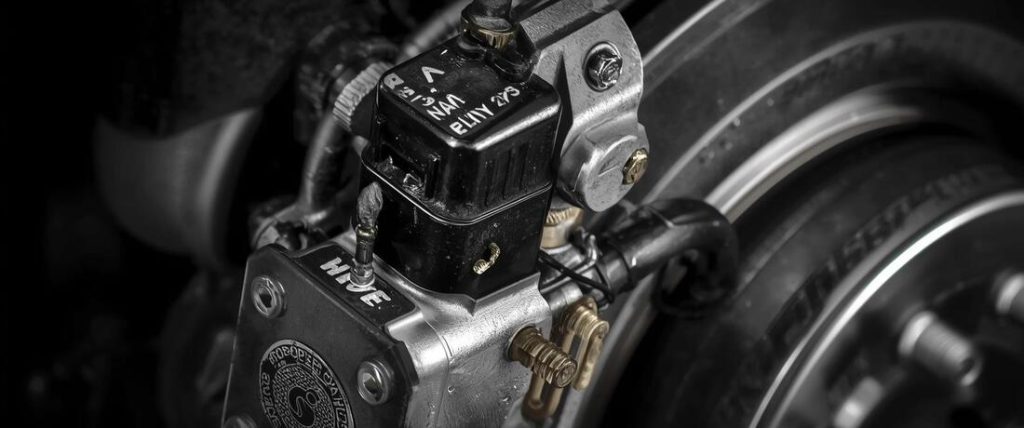
- Fixed Proportioning Valve: Found on older cars. It is near the master cylinder or in the rear brake line. It fails due to corrosion or blockage.
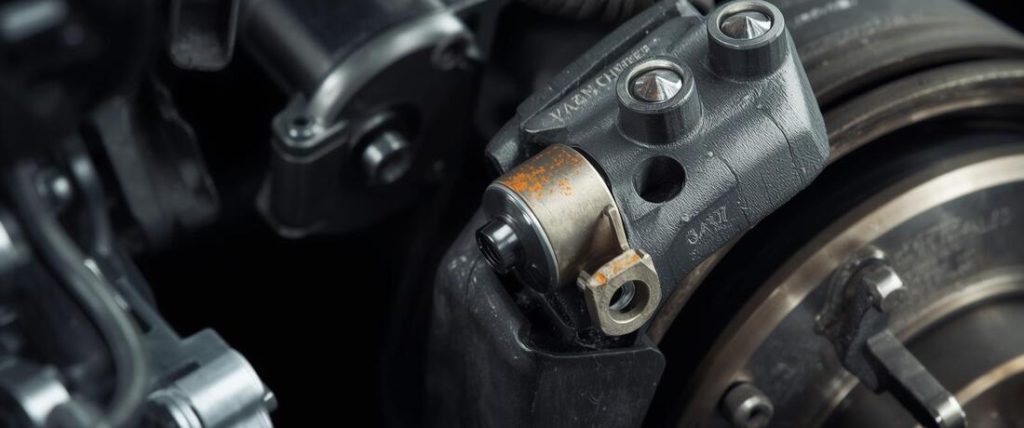
- Load-Sensing Proportioning Valve (LSPV): Found on trucks and SUVs. It mounts near the rear axle. It connects to the suspension by a lever. The lever moves with the load in the truck.
- Adjustable Aftermarket Valve: Found on modified cars or track cars. It is in the engine bay. You can turn a knob to change the pressure.
Two Failure Directions — Which Way Did Your Valve Fail?
A proportioning valve can fail in two opposite ways. The symptoms depend on which way it failed.
| Failure Direction | What Happens | Symptoms | Urgency |
|---|---|---|---|
| Stuck Restricting (Too little rear pressure) | Rear brakes get very little fluid. Fronts do all the work. | Nose dive; long stops; front pads wear fast. | High — Front brake overload. |
| Stuck Open (Too much rear pressure) | Rear brakes get full pressure all the time. | Rear wheels lock up; car spins; rear pads wear fast. | Critical — Loss of control. |
Most valves fail in the “stuck restricting” direction. Corrosion makes the piston stick. The rear brakes slowly stop working.
7 Symptoms of a Bad Proportioning Valve
1. Rear Wheels Locking Up During Hard Stops — The Primary Warning Sign
This is the most dangerous symptom. The rear wheels stop turning before the front wheels. The rear of the car loses traction.
- The Feel: The back of the car “steps out” or swings sideways. It feels like the car wants to spin.
- Wet Roads: This happens more on wet roads. The tires have less grip. The rear locks up even with light braking.
- The Test: Go to an empty parking lot. Stop from 30 mph. Have a friend watch the rear wheels. If the rears lock first, the valve is sending too much pressure.
2. Excessive Nose Dive When Braking
This happens when the valve restricts pressure too much. The rear brakes do not help. The front brakes do all the work.
- The Feel: The front of the car dives down sharply. It feels like you are pitching forward.
- Why: The weight transfers too fast because the rear brakes are not holding the car back.
- Normal vs. Bad: Some dip is normal. Excessive dive means the rears are not working. This often happens slowly. Drivers get used to the new feel.
3. Vehicle Pulls to One Side When Braking
A failing valve can send uneven pressure to the left and right rear brakes. This makes the car pull.
- The Feel: The car pulls to one side during a stop.
- Distinction: A stuck caliper pulls all the time. A valve issue pulls only when you brake.
- The Line Swap Test: Swap the left and right rear lines at the valve. If the pull moves to the other side, the valve is bad.
4. Premature or Uneven Rear Brake Pad / Shoe Wear
Your brake pad wear tells a story. Look at the difference between front and rear.
- Too Much Rear Wear: If rear pads wear out faster than fronts, the valve is sending too much pressure (Stuck Open).
- Too Little Rear Wear: If rear pads look new after 30,000 miles but fronts are gone, the valve is restricting pressure (Stuck Restricting).
- Check Often: Compare pad thickness at every service. A big difference points to the valve.
5. Spongy Brake Pedal or Inconsistent Pedal Feel
Air can get trapped inside the valve body. The valve has small passages where air hides.
- The Symptom: The pedal feels mushy. Bleeding the brakes does not fix it.
- Tripped Valve: Sometimes the valve “trips” during a brake job. The pedal feels spongy. The brake light turns on.
- Distinction: This is not the master cylinder. If you have a spongy pedal that won’t go away, check for air in the valve or a tripped shuttle. We cover more causes in our guide on why is my brake pedal spongy.
6. Brake Warning Light on Dashboard
Many valves are part of a “combination valve.” This unit has a pressure differential switch.
- What Happens: If one circuit loses pressure, a shuttle moves. It turns on the red brake warning light.
- Causes: The valve tripped during bleeding. Internal corrosion made the shuttle stick. There is a pressure imbalance.
- Note: This turns on the red “BRAKE” light. It does not turn on the amber “ABS” light. If your red light is on, check the fluid first. If the fluid is full, suspect the valve.
7. Longer Stopping Distances / Reduced Overall Braking Power
If the rear brakes do not help, the car takes longer to stop.
- The Feel: You press harder to stop. The car feels heavy.
- The Math: Rear brakes add 20% to 40% of your stopping power. If the valve blocks them, stopping distance increases by 50%.
- Temperature Check: The front rotors will be very hot. The rear rotors or drums will be cold. This confirms they are not working.
The Free Brake Temperature Diagnostic Test
This is a pro-level test you can do in your driveway. You need an infrared thermometer ($15 at a hardware store) or a careful hand.
- Drive: Make 3 to 5 firm stops from 35 mph. Press the pedal hard but do not slam it.
- Park: Stop safely. Keep the engine off.
- Check: Point the thermometer at the center of each rotor. Or hover your hand 2 inches away. Do not touch the rotor.
- Results:
- All Equal: Valve is likely fine.
- Fronts Hot / Rears Cold: Valve is restricting pressure. Rear brakes are lazy.
- Rears Hot / Fronts Warm: Valve is open too much. Rear brakes are overworking.
Do this check within 2 minutes of stopping. Brakes cool down fast.
The Parking Lot Brake Test
This is the standard visual test. It checks for rear lockup.
- Go to an empty lot. Make sure there are no people or poles.
- Drive to 30 mph.
- Brake firmly. Press the pedal down hard and hold it.
- Watch the wheels. Have a helper stand safely to the side.
- Rears lock first: Valve is bad (Stuck Open).
- Fronts lock / Rears roll: Valve is restricting (Stuck Closed).
- All slow together: Valve is normal.
This test works best on wet pavement. You will see the lockup sooner.
Load-Sensing Proportioning Valve (LSPV) — Specific Symptoms for Trucks and Vans
Trucks and vans often have a valve on the rear axle. It connects to the suspension with a lever.
- How it Works: When the truck carries a heavy load, the suspension squats. The lever moves. It tells the valve to send more pressure to the rear brakes.
- Symptom 1: Rear locks up when the truck is empty. The lever is disconnected or stuck.
- Symptom 2: Poor braking when loaded. The lever is not moving enough.
- Visual Check: Look at the rear axle. Find the lever arm. Make sure the spring is connected. If it is rusty or disconnected, that is your problem.
Proportioning Valve vs. ABS/EBD vs. Other Brake Components
Use this table to rule out other parts.
| Symptom | Proportioning Valve | ABS / EBD | Seized Caliper |
|---|---|---|---|
| Rear lockup on hard stops | Yes (Primary) | Yes (If ABS fails) | Rarely |
| Nose dive | Yes | No | No |
| Car pulls while braking | Possible | No | Yes (Primary) |
| Brake warning light | Yes (Red) | Yes (Amber) | No |
| Spongy pedal | Yes (Trapped air) | Yes (Modulator air) | No |
| Rear pads wear fast | Yes (Stuck open) | No | Yes (Sticking) |
How to Reset a Tripped Proportioning Valve After Brake Bleeding
Did your red brake light come on after you bled the brakes? You likely tripped the valve shuttle. You can reset it.
- Check Fluid: Make sure the reservoir is full.
- Start Engine: Turn the key.
- Pump: Press the brake pedal 3 times with gentle, even pressure.
- Watch Light: The light should turn off.
If the light stays on:
- Open the bleeder screw on the side that has normal pressure.
- Have a helper press the pedal slowly.
- Close the bleeder the moment the light goes out.
This re-centers the shuttle. If you have other master cylinder issues, read our article on symptoms of a bad brake master cylinder to rule that out.
Is It Safe to Drive With a Bad Proportioning Valve?
Direct Answer: No. It is unsafe to drive with a bad proportioning valve because it drastically alters your braking stability.
- Rear Lockup: Do not drive on highways. The car can spin unexpectedly. This is critical.
- Nose Dive / Long Stops: Stopping distance is longer. You might hit something you could have missed. Fix it within one week.
- Tripped Valve Light: Try to reset it. If it stays on, there is a pressure leak or blockage.
Proportioning Valve Replacement Cost
Here is what you can expect to pay at a shop in the US.
| Service | Estimated Cost |
|---|---|
| Part (Fixed Valve) | $30 – $150 |
| Part (Combination Valve) | $80 – $300 |
| Part (LSPV for Trucks) | $80 – $250 |
| Labor | $150 – $300 |
| Total Replacement | $300 – $600 |
If brake lines are rusty, add $100 to $400 for line repair.
What Causes Proportioning Valve Failure?
- Corrosion: Moisture in the brake fluid rusts the inside. The piston gets stuck. This is the most common cause.
- Contaminated Fluid: Dirty fluid blocks the small passages.
- Physical Damage: Road debris hits the valve. The LSPV lever on a truck can snap off.
- Age: Springs inside get weak over decades.
FAQs About Symptoms of a Bad Proportioning Valve
Can a bad proportioning valve cause a spongy brake pedal?
Yes, it can cause a spongy pedal. Air gets trapped in the valve body passages. This air does not come out during normal bleeding. Also, a “tripped” valve shuttle can block fluid flow. This creates an uneven, soft pedal feel.
How do I test a brake proportioning valve?
You use the parking lot test or the temperature test. For the parking lot test, brake hard from 30 mph. Watch to see if the rear wheels lock first. For the temperature test, check if the rear brakes are cold after a hard stop. Cold rears mean the valve is not sending pressure.
How much does it cost to replace a proportioning valve?
The average cost is $300 to $600 at a shop. The part itself costs $30 to $300 depending on the type. Labor takes 1 to 2 hours. If you have a truck with an LSPV, the part costs more.
What is a combination valve?
A combination valve is a single unit that does three jobs. It holds the proportioning valve. It holds the metering valve (for discs/drums). It holds the pressure differential switch (for the warning light). Most older cars have this one unit.
Why did my brake warning light come on after bleeding my brakes?
The light came on because the pressure differential switch tripped. The shuttle moved off-center. This happens if you open one side of the system without the other. You can reset it by pumping the pedal gently with the engine running.
Bottom Line — What to Do Right Now
- Rear Lockup: Stop driving on highways. This causes spins. Do the parking lot test. Book repair today.
- Nose Dive / Long Stops: Do the temperature test. If rears are cold, the valve is stuck closed. Fix it this week.
- Light On After Bleeding: Try the 3-pump reset. If the light turns off, you are safe.
- Uneven Wear: Check pad thickness. If rears are worn or brand new while fronts are gone, inspect the valve.
- Truck LSPV: Look under the truck. Check the lever arm on the rear axle. Reconnect it if it is loose.
Golden Rule: Rear wheel lockup is a vehicle control emergency. Do not wait to fix a bad proportioning valve. The cost of repair is small compared to the risk of a crash.
Quick Summary
- The proportioning valve limits pressure to the rear brakes to prevent skids.
- Valve failure causes rear wheel lockup (too much pressure) or nose dive (too little pressure).
- Check if your car has ABS first; ABS cars use electronic distribution, not a mechanical valve.
- Use the brake temperature test to see if rear brakes are working.
- A “tripped” valve after bleeding causes a soft pedal and red warning light.
- Replacement costs average $300 to $600 including labor.
- Trucks often have a Load-Sensing Valve on the rear axle that can seize.