
This article was updated in April 18, 2026 with new products and information by Mark S. Taylor
Hearing a bad noise when you stop? The symptoms of bad brake pads and rotors mean your car is not safe. I have fixed many brake jobs in my shop. Bad brakes cost much more money if you wait too long. This guide shows you ten pad signs and eight rotor signs. Read our brake repair tips to stay safe on the road.

Contents
- 1 How Brake Pads and Rotors Work Together
- 2 10 Warning Signs of Bad Brake Pads
- 2.1 1. Squealing or Squeaking Noise When Braking
- 2.2 2. Grinding or Growling Sound
- 2.3 3. Thin Brake Pads (Visual Check)
- 2.4 4. Brake Warning Light
- 2.5 5. Longer Stopping Distances
- 2.6 6. Soft or Spongy Brake Pedal
- 2.7 7. Pulling to One Side When Braking
- 2.8 8. Excessive Brake Dust
- 2.9 9. Brake Pedal Pulsation
- 2.10 10. Burning Smell After Braking
- 3 8 Warning Signs of Bad Brake Rotors
- 3.1 1. Vibration in Steering Wheel When Braking
- 3.2 2. Pulsating Brake Pedal
- 3.3 3. Vibration in Seat or Floor When Braking
- 3.4 4. Visible Grooves or Scoring on Rotor
- 3.5 5. Blue or Purple Discoloration on Rotor
- 3.6 6. Excessive Rust on Rotor Surface
- 3.7 7. Visible Cracks on Rotor
- 3.8 8. Scraping or Thumping Noise
- 4 How to Tell if It’s Brake Pads or Rotors (or Both)
- 5 When Do Brake Pads and Rotors Need Replacement?
- 6 How Dangerous Is It to Drive with Bad Brakes?
- 7 What Causes Brake Pads and Rotors to Wear Out?
- 8 How to Check Your Brake Pads and Rotors at Home
- 9 How Much Does It Cost to Replace Brake Pads and Rotors?
- 10 Can You Replace Just Pads or Just Rotors?
- 11 FAQs About Symptoms of Bad Brake Pads and Rotors
- 12 The Bottom Line
How Brake Pads and Rotors Work Together
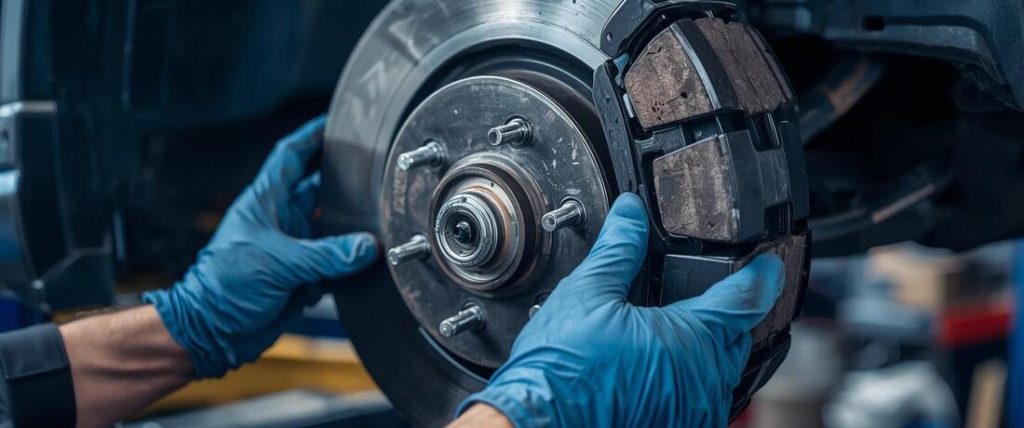
Brake pads and rotors work together to stop your car safely. The pad squeezes the flat rotor to slow the wheel down. The pad is a tough block of friction material. The rotor is a heavy metal disc. They touch every time you press the brake pedal. This rubbing creates heat and friction to stop the car. Over time, this hard rubbing wears both parts down. Normal wear is just a normal part of driving a car.
10 Warning Signs of Bad Brake Pads
Bad brake pads make loud noises, shed dust, and cause a soft brake pedal. You need to spot these signs fast to avoid a crash. Here are the top ten warnings.
1. Squealing or Squeaking Noise When Braking
A high squeal means your brake pads are getting too thin. A tiny metal tab rubs the rotor to warn you. It sounds like a loud screech when you slow down. This is a low to medium urgency issue. You should schedule a brake shop visit soon.
2. Grinding or Growling Sound
A harsh grinding sound means your brake pad is totally gone. The bare metal backing plate hits the metal rotor. This ruins the brake rotor very fast. This is an urgent issue. Stop driving the car and get it fixed now.
3. Thin Brake Pads (Visual Check)
You can see thin pads if you look through the wheel spokes. Good brake pads are nice and thick. Bad brake pads are less than a quarter inch thick. Look at the pad from the side of the caliper. This is the best way to see the real wear level.
4. Brake Warning Light
A brake warning light on the dash means the pads are worn out. Many new cars have smart electronic wear sensors. The sensor trips the dash light when the pad gets too low. Never ignore a red or yellow brake light.
5. Longer Stopping Distances
Bad brake pads make your car take much longer to stop. You have to push the brake pedal much harder. This is a huge safety risk for you and your family. You might not stop in time to avoid a crash.
6. Soft or Spongy Brake Pedal
A soft or spongy brake pedal can mean bad pads or a fluid leak. The pedal sinks too far down toward the floor. You might also have air trapped in the brake lines. This is a major safety issue. You must fix it right away.
7. Pulling to One Side When Braking
If the car pulls to one side, you have uneven brake pad wear. One brake pad grabs harder than the other side. A stuck brake caliper can also cause this exact problem. This makes the car very hard to steer in a panic stop.
8. Excessive Brake Dust
Too much black dust on your wheels means the pads wear out fast. Normal brake pads shed a little bit of dust. Heavy black dust means the pad material breaks down too quick. Cheap brake pads do this a lot.
9. Brake Pedal Pulsation
A vibrating brake pedal can mean bad pads or bad rotors. The brake pad might not sit flat on the metal anymore. You must check the rotors too if you feel this shake. It is a clear sign of deep brake trouble.
10. Burning Smell After Braking
A burning smell after you brake means the pads are way too hot. A stuck caliper makes the pad drag and overheat. This creates a very bad burning carpet smell. Stop driving to let the brakes cool down.

8 Warning Signs of Bad Brake Rotors
Bad brake rotors cause bad shaking, loud thumping, and change color from heat. Rotors take a lot of abuse every time you stop. Look for these eight clear signs.
1. Vibration in Steering Wheel When Braking
A shaking steering wheel means your front brake rotors are warped. The flat metal surface is now very uneven. You feel this shake in your hands when you slow down. This is the most common sign of a bad rotor.
2. Pulsating Brake Pedal
A pulsating brake pedal means the rotor has high and low spots. The brake pad hits these bumps as the wheel turns. This makes the brake pedal push back at your foot. It feels like a rapid clicking in your foot.
3. Vibration in Seat or Floor When Braking
A vibration in your car seat means the rear rotors are bad. Front brake issues shake the steering wheel. Rear brake issues shake the whole car body and floor. This tells you exactly which end of the car to fix.
4. Visible Grooves or Scoring on Rotor
Deep circular grooves on the rotor mean the pad dug into the metal. The flat surface feels rough and heavily scored. This happens if you drive too long on worn out brake pads. A scored rotor cannot stop the car well.
5. Blue or Purple Discoloration on Rotor
Blue or purple brake rotors mean they got way too hot. Extreme heat changes the hard metal structure. A blue rotor is too hard and does not grip the pad well. This often happens if you ride the brakes down a long hill.
6. Excessive Rust on Rotor Surface
Some surface rust on the rotor edges is very normal. Bad rust flaking off the flat face is a big problem. This means the rotor is rotting away from road salt and water. Flaking rust ruins the brake pad very fast.
7. Visible Cracks on Rotor
Visible cracks in the metal mean the brake rotor is about to fail. Tiny hairline cracks on the edge are sometimes okay. Deep cracks on the flat face mean the rotor can break apart. This is a major safety hazard.
8. Scraping or Thumping Noise
A rhythmic thumping or scraping noise means the rotor surface is very uneven. The noise matches the exact speed of the wheel spinning. It gets louder and faster as you drive faster. This requires a full brake rotor replacement.
How to Tell if It’s Brake Pads or Rotors (or Both)
You tell bad pads from bad rotors by the type of noise and shake you feel. Squealing usually means you just need new brake pads. Shaking usually means you have warped brake rotors. If you hear loud grinding, you likely need both parts replaced. Front brake issues shake the steering wheel. Rear brake issues shake the car seat. You can do a quick test drive to feel the exact difference.

When Do Brake Pads and Rotors Need Replacement?
Brake pads last 25,000 to 65,000 miles, and rotors last 30,000 to 70,000 miles. You must replace them when they get too thin or warped. City driving wears them out much faster than highway driving. Towing heavy trailers also kills the pads very quick. Always check them when you get your tires rotated. Check out the Car Care Council brake guide for a full service schedule.
| Part | Lifespan | When to Replace |
|---|---|---|
| Brake Pads | 25,000 – 65,000 miles | Less than 1/4 inch thick |
| Brake Rotors | 30,000 – 70,000 miles | Warped, grooved, or blue |
How Dangerous Is It to Drive with Bad Brakes?
Driving with bad brakes is very dangerous and can cause a deadly crash. Grinding noise means you should pull over right now. A soft brake pedal is also a major red flag. Squealing means you should book a shop visit soon. Do not risk your life to save a few bucks. Read the NHTSA brake safety facts to see the real risk of bad brakes.
What Causes Brake Pads and Rotors to Wear Out?
Normal friction causes brakes to wear out, but bad driving habits make it happen fast. Riding the brake pedal wears them out very quickly. Driving down steep mountains heats them up way too much. Hauling heavy loads puts extra stress on the metal parts. Cheap aftermarket parts also fail much faster than good factory parts.
How to Check Your Brake Pads and Rotors at Home
You can check your brakes at home by looking through the wheel spokes. Look at the pad thickness from the side of the caliper. Shine a flashlight on the rotor face to look for deep grooves. Spin the wheel by hand to see if it moves freely. Call a pro if you see deep rust, cracks, or blue spots. Learn more from our car maintenance safety checks before you crawl under your car.
How Much Does It Cost to Replace Brake Pads and Rotors?
New brake pads and rotors cost $300 to $700 per axle to fix right. Brake pads alone cost $150 to $300 per axle. Brake rotors alone cost $200 to $400 per axle. Doing both at the same time saves you money on labor costs. A fancy sports car costs much more to fix than a plain sedan. Read our car repair cost guides to budget your money.
| Repair Job | Average Cost |
|---|---|
| Brake pads only | $150 – $300 |
| Brake rotors only | $200 – $400 |
| Pads and rotors together | $300 – $700 |
Can You Replace Just Pads or Just Rotors?
You can replace just pads or just rotors, but doing both is usually much smarter. You can just do pads if the rotors are perfectly smooth and thick. You must replace rotors if they are warped or deeply grooved. Mechanics suggest doing both parts at the same time. This gives you a fresh, flat surface for the new pad to grip. It stops the new pads from ruining the old rotors.
FAQs About Symptoms of Bad Brake Pads and Rotors
How to tell if your brake pads and rotors are bad?
Bad brake pads and rotors make a loud noise. A shake in the wheel means bad brake pads and rotors. Bad brake pads and rotors also make the brake pedal feel soft.
What is the 30 30 30 rule for brakes?
The rule sets new bad brake pads and rotors. You stop 30 times from 30 miles per hour. Wait 30 seconds to cool the bad brake pads and rotors after each stop.
What does grinding brakes mean?
A grind means bad brake pads and rotors rub metal on metal. The pad is gone on bad brake pads and rotors. This ruins the bad brake pads and rotors very fast.
Can bad brake pads damage rotors?
Yes, bad brake pads and rotors will get hurt bad. The bare metal on bad brake pads and rotors cuts deep lines. You must fix bad brake pads and rotors right away.
What causes blue marks on brake rotors?
Too much heat makes blue marks on bad brake pads and rotors. A stuck part makes the bad brake pads and rotors get too hot. Blue bad brake pads and rotors are bad.
The Bottom Line
Never ignore the warning signs of bad brake pads and rotors. Safety comes first for you and your family on the road. Finding the brake problem early saves you a lot of cash. A simple squeal can turn into a huge repair bill fast. Fix the brakes at the very first sign of trouble to stay safe.
Quick Summary
- Squealing means thin brake pads.
- Grinding means metal hits metal.
- A shaking wheel means warped brake rotors.
- Blue rotors mean they got too hot.
- Fix brakes early to save money.
- Never wait if the pedal feels soft.
- Replace pads and rotors together for the best stop.