
This article was updated in October 1, 2026 with new products and information by Mark S. Taylor
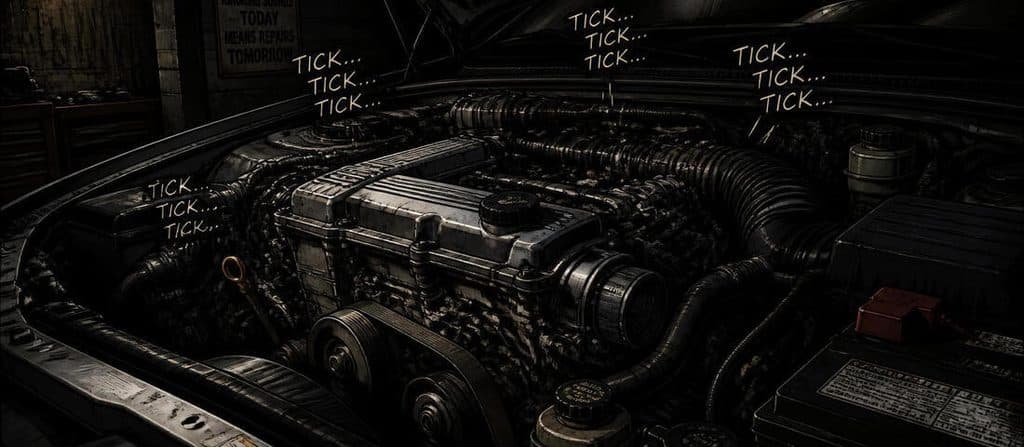
An engine ticking at idle often stems from normal direct-injection fuel components, low oil pressure, collapsed hydraulic lifters, or an exhaust manifold leak. If the sound resembles a fast sewing machine on a direct-injected engine, it is usually normal. Heavy metallic tapping or ticking with an oil light requires immediate shutdown.
Contents
- 1 Is a ticking engine at idle normal?
- 2 What does a normal engine tick sound like?
- 3 Warning signs that the ticking is serious
- 4 Common causes of a ticking sound at idle
- 4.1 1. Low engine oil
- 4.2 2. Low oil pressure or a failing oil pump
- 4.3 3. Worn lifter or other valvetrain part
- 4.4 4. Exhaust manifold leak
- 4.5 5. Timing-chain or tensioner trouble
- 4.6 6. Accessory belt, pulley, or bearing noise
- 4.7 7. Loose or damaged spark plug
- 4.8 8. Engine fan or loose component
- 4.9 9. Internal bearing damage
- 5 How to narrow down the noise safely
- 6 Can you drive with a ticking engine?
- 7 What a shop may test
- 8 Repair cost: why the cause matters
- 9 How to prevent ticking problems
- 10 FAQs About Ticking Sound in Engine While Idling
- 10.1 Is a ticking sound at idle always bad?
- 10.2 Can low oil cause a ticking sound?
- 10.3 What does low oil pressure sound like?
- 10.4 Why does the tick get faster when I accelerate?
- 10.5 Why does my engine tick only when cold?
- 10.6 Can an exhaust leak sound like an engine tick?
- 10.7 Can I fix an engine tick by changing the oil?
- 10.8 Should I use a mechanic’s stethoscope at home?
- 11 Bottom line
Is a ticking engine at idle normal?
Sometimes. Modern engines, especially direct-injection gas engines, can make a light, fast ticking sound while idling. That noise may come from the fuel injectors opening and closing.
A new, loud, uneven, or worsening tick is different. It can point to low oil, low oil pressure, worn valvetrain parts, an exhaust leak, a belt-driven accessory, timing-chain trouble, or internal engine damage.
The sound alone cannot identify the failed part. Start with the warning signs. If the red oil-pressure light is on, the engine is knocking, the oil level is very low, or the car is losing power, shut it off and arrange a tow. Do not keep driving to see what happens.
This guide explains how to separate a normal injector tick from a noise that needs immediate attention. It applies to most gasoline and diesel vehicles. Exact oil specifications, pressure limits, repair steps, and costs vary by vehicle.
What does a normal engine tick sound like?
Normal injector noise is usually quick, even, and steady. It may sound like a small sewing machine or a light plastic tapping from the top of the engine. It often stands out more at idle because there is less road and engine noise around it.
Direct-injection engines can sound more like diesel engines than older gasoline engines. AutoZone notes that the injectors on many modern engines make a noticeable clicking sound as they operate. Read its overview of common engine ticking causes.
A normal injector tick usually has these traits:
- It is light and consistent.
- It does not suddenly appear or get louder.
- The engine runs smoothly.
- There is no oil-pressure warning.
- There is no smoke, burning smell, or major oil leak.
- The car does not lose power or shake.
That does not make every idle tick harmless. It only means the noise pattern may fit normal injector operation. The vehicle’s year, engine, and fuel system still matter.
If the sound is new, record a short video with the hood closed and the engine idling. Note whether the engine is cold or warm, whether the sound changes with the air conditioner on, and whether it speeds up when engine RPM rises. That information helps a technician much more than “it makes a weird noise.”
Warning signs that the ticking is serious
Treat the noise as urgent if it comes with any of these signs:
- Red oil-pressure warning light or low-oil-pressure message
- Oil level below the dipstick’s safe range
- Deep knocking mixed with the lighter tick
- Rough idle, misfire, or strong shaking
- Loss of power or reduced engine response
- Smoke or a burning-oil smell
- A visible oil leak
- A ticking sound that gets louder quickly
- A noise that continues after the engine warms up and becomes more pronounced under load
- A check-engine light with poor running or stalling
The red oil-pressure light matters more than the noise itself. If that light comes on while the engine is running, shut the engine off as soon as you can do so safely. Low oil pressure can leave moving parts without enough lubrication. Firestone lists ticking or knocking noises among the possible signs of oil-pump or lubrication trouble and advises prompt inspection. See Firestone’s oil-pump symptom guide.
Common causes of a ticking sound at idle
1. Low engine oil
Low oil is one of the first things to check, but it is not always the final diagnosis.
When the oil level is low, parts in the upper engine may not receive the lubrication they need. Hydraulic lifters, rocker arms, camshafts, and other valvetrain parts can become noisy. Low oil can also cause broader engine wear if you continue driving.
Check the oil only as your owner’s manual describes. Park on a level surface, turn the engine off, and allow the vehicle to sit for the required amount of time. If the level is low, add the correct oil. Do not guess the oil grade.
Then ask why the level dropped. Look for a leak, blue exhaust smoke, an oil smell, or a pattern of oil loss between services. Adding oil may bring the level back up, but it does not repair a leak or confirm that oil pressure is healthy.
2. Low oil pressure or a failing oil pump
Oil level and oil pressure are not the same thing. An engine can have enough oil in the pan and still have poor oil pressure because of a worn pump, clogged pickup, internal wear, a damaged pressure-control part, or another fault.
Low oil pressure may produce ticking, tapping, or a deeper knock. It may also trigger the oil-pressure warning light. This is not a “drive it for a week and see” problem.
A technician normally confirms oil pressure with a mechanical gauge and compares the result with the vehicle manufacturer’s specification. Do not rely on a generic pressure number from the internet. The correct limit depends on the engine.
3. Worn lifter or other valvetrain part
The valvetrain opens and closes the engine’s intake and exhaust valves. It may include lifters, lash adjusters, rocker arms, pushrods, and camshafts, depending on the engine design.
A worn or sticking part can make a fast tick from the top of the engine. The noise may change as the engine warms up or oil pressure builds. It may also remain constant and become louder with engine speed.
That pattern points toward the valvetrain, but it does not prove which part is worn. Replacing lifters without checking oil pressure, oil condition, camshaft wear, and other causes can turn a diagnosis into expensive parts swapping.
4. Exhaust manifold leak
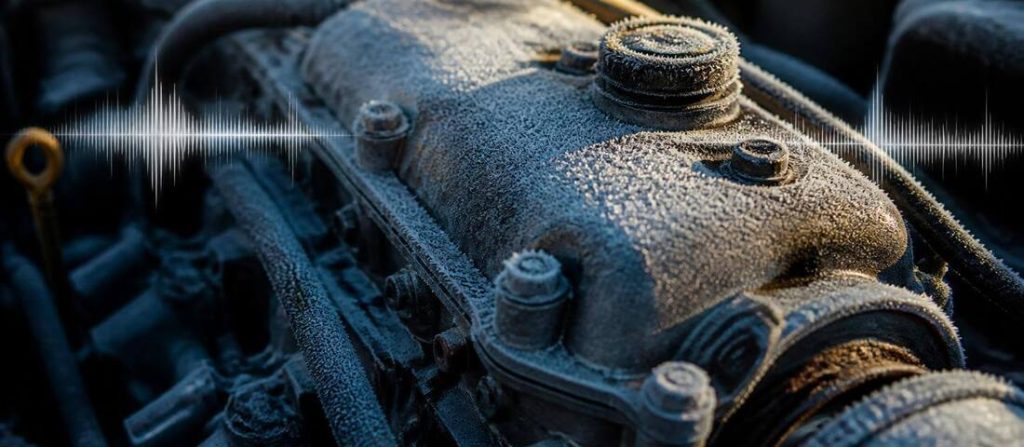
A small exhaust leak near the engine can sound exactly like a mechanical tick. Exhaust gases leave the manifold in pulses, creating a sharp tapping sound.
The noise may be louder during a cold start or when the engine is under load. You may also notice an exhaust smell, black soot near a gasket or flange, reduced performance, or a check-engine light.
Do not touch the manifold or nearby hardware with the engine hot. Exhaust parts can stay hot long after the engine is switched off. Exhaust fumes are also dangerous, especially if they enter the passenger compartment.
5. Timing-chain or tensioner trouble
The timing chain keeps the camshaft and crankshaft synchronized. A worn chain, guide, or tensioner can create a rattle or tick from the front of the engine.
Timing noise may be worse during startup, may change with RPM, or may appear with a check-engine light and poor running. If the chain jumps time, the engine may run badly or suffer internal damage, depending on its design.
Do not remove a timing cover or replace a tensioner based only on sound. This is vehicle-specific work that requires service information and often specialty tools.
6. Accessory belt, pulley, or bearing noise
Not every noise near the engine comes from inside the engine. A worn belt tensioner, idler pulley, alternator bearing, water pump, or air-conditioning compressor can make a ticking, chirping, grinding, or rattling sound.
The noise may come from the front or side of the engine. It may change when the air conditioner is switched on or when another accessory load changes.
Keep your hands, clothing, and tools away from moving belts and pulleys. Do not remove a drive belt and run the engine unless a trained technician is following the correct vehicle-specific procedure. Some engines will lose coolant circulation when the belt is removed.
7. Loose or damaged spark plug
A loose or damaged spark plug can allow combustion pressure to escape around the plug. That may sound like a sharp tick or puffing noise. The engine may also misfire, shake, or set a check-engine light.
Spark plugs are not universal. Thread size, reach, heat range, gap, and torque vary by vehicle. Do not tighten a plug by guesswork. An over-tightened plug can damage the cylinder head, while an under-tightened plug can leak or loosen.
8. Engine fan or loose component
A damaged fan blade, loose shroud, heat shield, bracket, or cover can tap as the engine idles. The noise may come from the front of the engine bay and may change when the fan cycles on.
Inspect only with the engine off and cool. Electric cooling fans can start without warning. Do not reach into the fan area while the engine is running.
9. Internal bearing damage
A worn connecting-rod bearing usually creates a deeper knock rather than a light tick. It may become louder under load or as engine speed changes. Some drivers describe early bearing noise as a tick, which is why sound labels are not enough.
If the noise is deep, loud, worsening, or paired with an oil-pressure warning, stop driving. Continued operation can turn an internal repair into a destroyed engine.

How to narrow down the noise safely
You do not need to diagnose the engine in your driveway. You need to collect useful clues and avoid making the problem worse.
Check the oil level with the engine off
Use the owner’s manual procedure. If the oil does not reach the dipstick’s safe range, do not keep driving until the correct oil has been added and the reason for the loss has been considered.
Look under the vehicle for fresh oil. Also check around the engine for wet areas or oil residue. Some leaks burn on hot components and never form a large puddle.
Note when the sound happens
Write down whether the tick occurs:
- Only during a cold start
- Only after the engine warms up
- All the time
- Only at idle
- At idle and while driving
- With the air conditioner on
- Under acceleration or load
A cold-only tick can fit several possibilities, including delayed oil flow or an exhaust leak. An idle-only noise can make injector or valvetrain noise easier to hear. These are clues, not diagnoses.
Locate the general area
A sound from the top of the engine may involve injectors or valvetrain parts. A sound from the front may involve a belt, pulley, timing component, or fan. A sound from lower in the engine deserves more caution.
Sound travels through metal and plastic. A noise that seems to come from one spot may start somewhere else. A mechanic may use a listening tool, scan data, oil-pressure testing, or component-specific checks to confirm the source.
The most useful clues are often not the noise itself. Note any oil warning, check-engine light, misfire, smoke, exhaust smell, loss of power, hard starting, overheating, or change in fuel economy.
The first thing to rule out is not always the loudest theory. If the oil-pressure light is on, oil pressure comes before injector noise. If there is an exhaust smell and black soot near the manifold, an exhaust leak deserves attention before anyone removes a valve cover.
Can you drive with a ticking engine?
There is no universal yes or no answer. It depends on the sound, the warning lights, the oil level, and how the engine runs.
Stop the engine and arrange a tow if:
- The red oil-pressure light is on.
- The oil level is too low to register.
- The noise is deep, loud, or getting worse.
- The engine is misfiring, shaking, stalling, or losing power.
- You see smoke or a major oil leak.
- The engine is overheating.
- You cannot tell where the noise is coming from and the symptoms are changing quickly.
A light, stable injector tick with no warning lights, oil loss, rough running, or performance change may not require an emergency tow. It still deserves comparison with the vehicle’s normal sound, especially if it is new.
Do not use “the car still drives” as proof that the engine is safe. Many serious problems begin with a vehicle that still starts and moves normally.
What a shop may test
A proper diagnosis should be based on more than listening for five seconds. Depending on the symptoms, a technician may:
- Check oil level and condition.
- Scan for diagnostic trouble codes.
- Test actual oil pressure with a mechanical gauge.
- Listen at different engine speeds and temperatures.
- Inspect the exhaust manifold and nearby heat shields.
- Check belt-driven accessories and pulleys.
- Compare injector noise with other engines of the same design.
- Check valvetrain, timing, or internal engine components when the evidence points there.
- Look for leaks, misfires, overheating, or other related faults.
Tell the shop exactly when the noise happens. “It ticks at idle after ten minutes, gets faster with RPM, and started after an oil change” is useful. “It sounds bad” is not.
Repair cost: why the cause matters
A ticking-noise repair cannot be priced honestly from the symptom alone. A normal injector sound may need no repair. A loose heat shield may be minor. Low oil pressure, timing-chain damage, or internal engine wear can require major work.
| Possible source | What the shop may need to do | Why the price varies |
|---|---|---|
| Low oil or oil leak | Check level, find the leak, inspect for damage | Leak location, access, oil loss, and related damage |
| Oil-pressure problem | Mechanical pressure test and lubrication-system diagnosis | Pump, pickup, internal wear, sensor, or engine condition |
| Injector noise | Compare sound with vehicle-specific normal operation | Engine design and whether drivability symptoms exist |
| Exhaust leak | Inspect manifold, gasket, studs, and nearby parts | Rust, broken hardware, access, and damaged components |
| Lifter or valvetrain wear | Test oiling and inspect top-end parts | Engine design, parts, labor, and camshaft damage |
| Timing-chain problem | Inspect chain, guides, and tensioner | Access, engine design, related parts, and internal damage |
| Pulley or accessory noise | Isolate the belt-side component | Which bearing or accessory failed and how accessible it is |
| Internal engine damage | Confirm the failure before teardown or replacement | Extent of damage, machining, labor, and replacement options |
Ask the shop for the test result behind the recommendation. “You need a lifter” is not enough. Ask what the technician heard, measured, or found.
How to prevent ticking problems
You cannot prevent every engine noise. You can reduce the risk of lubrication and wear problems.
- Check the oil level on the schedule in your owner’s manual.
- Use the oil specification approved for your vehicle.
- Change the oil and filter at the recommended interval.
- Fix oil leaks instead of repeatedly topping off the engine.
- Pay attention to warning lights and new sounds.
- Repair exhaust leaks before they damage nearby parts or expose the cabin to fumes.
- Have an unusual noise checked before it becomes a performance problem.
- Keep records of oil changes and repairs.
Do not use an oil additive as a substitute for diagnosis. If the engine has low pressure, worn parts, or a leak, an additive does not correct the underlying failure.
FAQs About Ticking Sound in Engine While Idling
Is a ticking sound at idle always bad?
No. Some direct-injection engines make a normal, steady injector tick at idle. A new, loud, uneven, or worsening tick needs attention, especially with an oil warning, rough running, smoke, or power loss.
Can low oil cause a ticking sound?
Yes. Low oil can reduce lubrication to valvetrain and other moving parts. Check the level when the engine is off and follow the owner’s manual. If the level is low, look for a leak or oil consumption problem instead of assuming adding oil solved it.
What does low oil pressure sound like?
It may produce ticking, tapping, or a deeper knock. The oil-pressure warning light or message is the more important clue. If that warning appears, shut the engine off safely and arrange diagnosis.
Why does the tick get faster when I accelerate?
Most engine-related noises change with engine speed. That pattern can fit injectors, valvetrain parts, exhaust leaks, accessories, or timing components. It does not identify one cause by itself.
Why does my engine tick only when cold?
Cold-only ticking can come from delayed oil flow, valvetrain noise, or a small exhaust leak that changes as metal heats and expands. If the noise is new or loud, have it checked rather than assuming it is normal.
Can an exhaust leak sound like an engine tick?
Yes. A leak near the exhaust manifold can create a sharp, rhythmic tick. An exhaust smell, black soot, or a cold-start noise that changes as the engine warms up can support that theory. Do not touch hot exhaust parts.
Can I fix an engine tick by changing the oil?
Only if the problem is related to low, incorrect, or badly degraded oil—and even then, the cause still needs attention. An oil change will not repair low oil pressure, a worn lifter, an exhaust leak, a timing problem, or internal damage.
Should I use a mechanic’s stethoscope at home?
A listening tool can help locate a noise, but it cannot confirm the failed part. Keep away from belts, fans, pulleys, hot exhaust components, and other moving parts. For a loud or worsening noise, professional diagnosis is safer.
Bottom line
A light, even tick at idle may be normal injector noise. A new, loud, worsening, or uneven tick may signal low oil, low oil pressure, a valvetrain problem, an exhaust leak, timing trouble, or internal engine damage.
Check the oil level with the engine off. Watch for warning lights and performance changes. If the oil-pressure light is on, the noise is deep or worsening, or the engine is running badly, shut it off and have it towed. Do not guess at the part from the sound alone.