
This article was updated in June 12, 2026 with new products and information by Mark S. Taylor
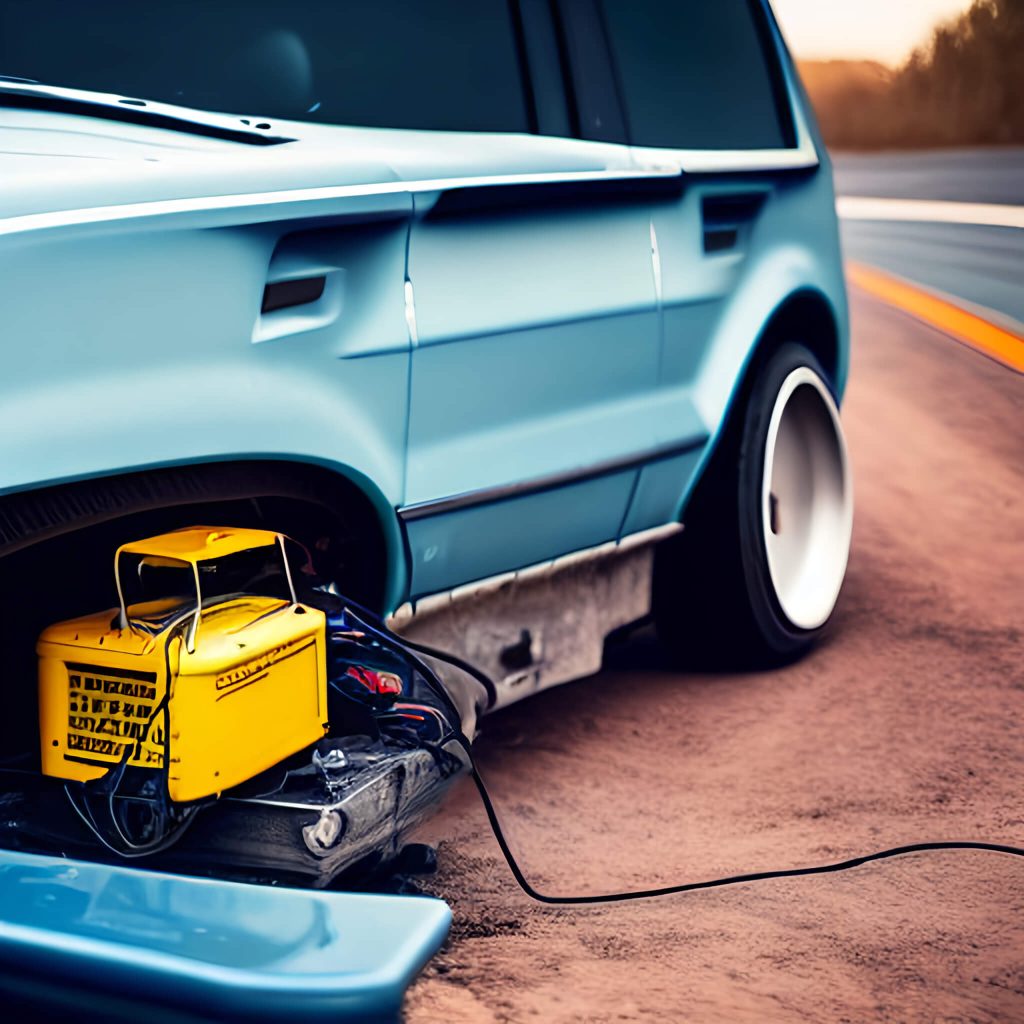
Have you ever walked out to your vehicle, turned the key, and heard nothing but a depressing clicking sound? Finding yourself with a dead car battery is frustrating, but it gets significantly worse if you are stranded alone in a parking lot or a remote area with no other vehicle around to give you a traditional jump-start.
The good news is that you don’t always need a second car to get your engine firing again. As a mechanic with over 20 years of experience under my hood, I have been stranded more than a few times. In this guide, I will walk you through the safest, manufacturer-approved methods to start your car with a dead battery completely by yourself.
Contents
- 1 CRITICAL WARNING: Automatic vs. Manual Transmissions
- 2 Essential Safety Precautions Before You Begin
- 3 Method 1: Using a Portable Jump Starter Pack (Best for All Cars)
- 4 Method 2: Push-Starting or “Bump-Starting” (Manual Transmissions ONLY)
- 5 Method 3: Using a Portable Smart Battery Charger or Trickle Charger
- 6 FAQs About How to Start a Car with a Dead Battery Without Another Car
- 7 The Bottom Line from the Garage
CRITICAL WARNING: Automatic vs. Manual Transmissions
Before attempting any troubleshooting, you must check your vehicle’s transmission type.
- Manual Transmission: Can be push-started (bump-started) safely if done correctly.
- Automatic Transmission: CANNOT be push-started. Attempting to push-start an automatic car by moving it and slamming it into “Drive” will cause catastrophic, expensive damage to your torque converter and transmission planetary gears. If your automatic car has a dead battery, you must use Method 1 or Method 3 below.
Essential Safety Precautions Before You Begin
Car batteries contain volatile lead-acid chemistry and can produce dangerous sparks if handled incorrectly. Always follow these steps before touching the battery:
- Turn the ignition completely off and remove the key from the slot.
- Engage the Emergency/Parking Brake firmly so the vehicle cannot roll unexpectedly.
- Put on protective gloves and safety glasses if you have them in your trunk.
- Ensure your battery terminals are free of heavy white or green powdery corrosion (if corroded, clean them with a wire brush or a baking soda solution first to ensure a proper connection).
Method 1: Using a Portable Jump Starter Pack (Best for All Cars)
A portable jump starter (or booster pack) is essentially a high-powered lithium-ion battery designed to mimic a rescue vehicle’s electrical output. This is the absolute safest and most reliable method for both automatic and manual cars.
Step 1: Prep the Booster Pack
Ensure your portable jump starter pack is fully charged (most require at least 50% to 80% charge capacity to successfully crank a dead engine). Turn the power switch on the booster pack to the OFF position before connecting clamps.
Step 2: Connect the Clamps in the Correct Order
Identify your battery terminals: Red is Positive (+) and Black is Negative (-).
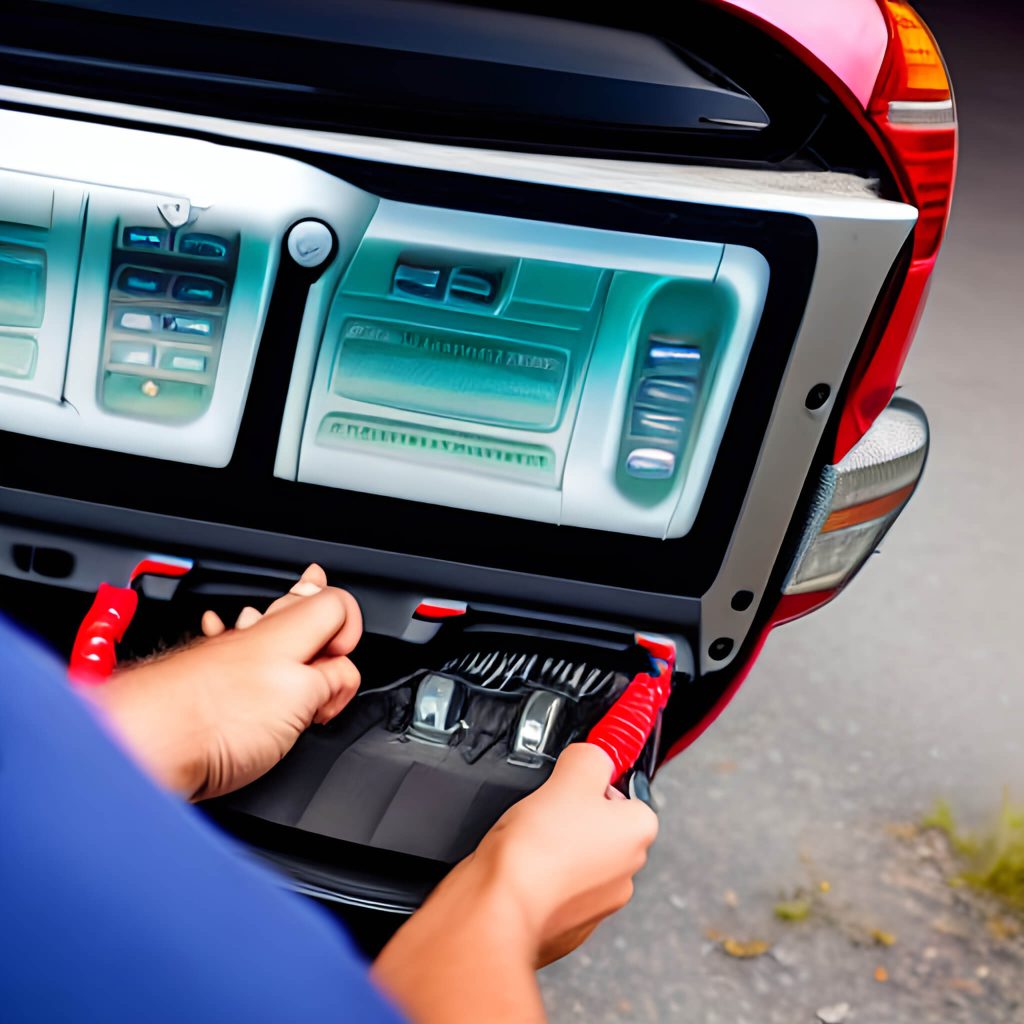
- Connect the RED (Positive) clamp of the jump starter to the positive (+) terminal of your dead battery.
- Connect the BLACK (Negative) clamp to a clean, unpainted structural metal part of your engine block or car frame away from the battery. Do not connect it directly to the negative terminal of the dead battery to minimize spark risks.
Step 3: Power On and Crank
- Turn the power switch on the portable jump starter pack to ON (or press the “Boost” button if it features a smart-clamp safety override).
- Get inside your vehicle and attempt to turn the key to start the engine. Do not crank for more than 5 to 6 seconds at a time.
- If the engine fires up, let it idle safely.
Step 4: Disconnect the Pack Safely
- Turn the jump starter pack OFF.
- Remove the BLACK (Negative) clamp first.
- Remove the RED (Positive) clamp last.
- Keep your car engine running or drive it for at least 30 minutes to allow the alternator to replenish your battery’s internal charge.
Method 2: Push-Starting or “Bump-Starting” (Manual Transmissions ONLY)
If you are driving a manual transmission car and don’t have emergency tools, you can harness kinetic energy to force the engine to turn over. You will need a flat road or a slight downhill slope, and ideally, one or two friends to assist you with pushing.
Step 1: Prepare the Cabin
- Take your seat behind the steering wheel and turn the ignition key to the ON/RUN position (this powers up the fuel pump and vehicle computer network).
- Press the Clutch Pedal completely down to the floorboard and hold it there.
- Shift the gear selector into 2nd Gear (Second gear provides a smoother mechanical transition than first gear, preventing the car from violently jerking or locking up the tires).
Step 2: Get the Vehicle Moving
- Keep the clutch held down, release the parking brake, and have your helpers push the vehicle from behind. If you are on an incline, let gravity roll the vehicle forward.
- Allow the vehicle to build momentum until it reaches roughly 5 to 10 MPH.
Step 3: Pop the Clutch
- Once you have reached a steady rolling speed, quickly and cleanly release (pop) the clutch pedal while gently pressing down on the gas pedal.
- The mechanical momentum of the turning wheels will force the transmission crankshaft to spin, firing up the engine pistons.
- The moment you hear the engine roar to life, immediately press the clutch back down and pop the shifter into Neutral so the car doesn’t stall out or drive away on you. Let it warm up at idle.
Method 3: Using a Portable Smart Battery Charger or Trickle Charger
If you are stranded at home in your garage or near an outdoor power outlet, a smart battery charger can safely re-introduce a baseline steady charge without requiring a donor car engine.
Step 1: Plug in the Unit
Connect your smart automotive battery charger into a wall socket. Keep the charger set to its manual “Off” or standby mode.
Step 2: Anchor the Terminal Leads
- Connect the charger’s RED lead to your dead battery’s positive (+) terminal post.
- Connect the charger’s BLACK lead to your dead battery’s negative (-) terminal post (or a ground metal frame line).
Step 3: Select Your Charging Mode
Set the charging rate profile on the digital interface screen:
- Trickle/Maintainer Charge (2A – 5A): Best for preserving battery longevity, but it will take 4 to 12 hours to accumulate enough cold cranking amps (CCA) to turn the starter engine over.
- Rapid/Engine Start Mode (20A+): Many modern smart chargers feature a high-amperage bypass option that allows you to start the engine within 10 to 15 minutes.
Once your charger indicates that the battery has stored enough voltage ($>12.4\text{V}$), try cranking the ignition slot. Turn off the charger and disconnect the leads in reverse order immediately after starting.
FAQs About How to Start a Car with a Dead Battery Without Another Car
Q: Can a totally dead car battery be jump-started?
A: If the battery’s internal voltage drops below roughly $10\text{V}$, it is severely depleted. A portable jump starter pack can start the vehicle, but if the internal lead plates are heavily sulfated or damaged, the battery will fail to hold that charge once you turn off the vehicle.
Q: Why do I hear a rapid clicking sound when trying to start my car?
A: A rapid clicking noise means your battery has enough power to trigger the starter solenoid switch, but it lacks the necessary amperage capacity to mechanically spin the heavy starter motor assembly. It is the classic sign of a dying car battery.
Q: How many years does a typical US car battery last?
A: On average, standard automotive batteries last between 3 to 5 years. Extreme seasonal cold climates in the North or high summer heat waves in Southern US states can accelerate structural plate degradation, causing premature failure.
The Bottom Line from the Garage
If your vehicle suffers from a dead battery, your safest, absolute best option is always keeping a $50 lithium portable jump starter pack stored inside your trunk or glove compartment. It completely removes your reliance on helpful strangers or a second vehicle. Remember, never attempt to push-start an automatic car unless you want an expensive towing bill to a local transmission rebuild shop!
(Did this guide help you safely diagnose your vehicle’s charging failure? Check out our complete companion guides on Symptoms of a Failing Alternator and our official The Car Buzz Editorial Policy to see how we maintain strict mechanical review criteria.)