
This article was updated in June 22, 2026 with new products and information by Mark S. Taylor
You press down firmly on the accelerator pedal to pass a slow-moving commercial truck on the highway. Your engine instantly roars to life, and the dashboard tachometer needle violently spikes upward toward 4,500 RPM—but your vehicle completely fails to accelerate. Instead, it behaves as if it has shifted itself randomly into neutral, leaving you coasting dangerously without any mechanical forward momentum.
This terrifying phenomenon is known as transmission slipping. In modern automotive engineering, an automatic transmission relies on high-pressure fluid dynamics and friction plates to securely transfer rotational energy from the engine crankshaft down to the drive axles. When internal hydraulic boundaries fail or friction linings wear completely flat, the transmission can no longer hold its gear ratio under load.
As an ASE-Certified Master Technician, I know that ignoring an intermittently slipping transmission for even a few days can easily convert a simple $150 solenoid fix into a catastrophic $5,000 complete transmission rebuild. In this workshop guide, we will break down the precise internal mechanics of gear slippage, the 5 definitive symptoms of failure, diagnostic trouble codes, and actual 2026 workshop repair bills.

Contents
- 1 The Physics of Transmission Slipping: How It Breaks Down
- 2 5 Critical Symptoms of a Slipping Transmission
- 3 The 3 Stages of Transmission Slipping Severity Matrix
- 4 Transmission Slipping vs. Torque Converter Failures
- 5 Can You Safely Drive with a Slipping Transmission?
- 6 Component Replacement and Repair Cost Matrix (2026 US Estimates)
- 7 Do Chemical Transmission Stop-Slip Additives Actually Work?
- 8 FAQs About What Is Transmission Slipping?
- 8.1 How much does it cost to fix a slipping transmission?
- 8.2 Can I drive with a slipping transmission or will it cause more damage?
- 8.3 Is transmission slipping the same as a bad torque converter?
- 8.4 Will changing the transmission fluid fix slipping?
- 8.5 How long can a transmission last once it starts slipping?
- 9 The Verdict: Address the Slips Immediately
The Physics of Transmission Slipping: How It Breaks Down
To understand why a transmission slips, you must bypass the standard consumer fluff and look at internal fluid engineering. An automatic transmission operates as a complex hydraulic computer.
Inside the housing sits a series of Planetary Gear Sets surrounded by multiple Friction Clutch Packs and steel bands. These clutch packs are lined with specialized friction materials. When the Transmission Control Module (TCM) commands a gear shift, it opens an electronic fluid switch called a Shift Solenoid. This channels automatic transmission fluid (ATF) under immense pressure (often exceeding 120 to 200 PSI) directly into a hydraulic piston assembly. This high-pressure piston clamps the spinning friction clutch plates tightly against the steel plates, locking the chosen gear ratio in place.
Mechanical slippage occurs when this clamping matrix fails due to one of three failures:
- Hydraulic Line Pressure Drop: If the ATF fluid volume is dangerously low or the internal fluid pump is weak, the hydraulic piston cannot apply enough clamping force. The clutch plates will slide against each other instead of locking flat.
- Friction Material Thermal Shear: Over thousands of heavy towing miles or prolonged overheating cycles, the abrasive friction paper lining caked onto the clutch discs literally shears or burns off, leaving behind bare, slick steel sliding against bare steel.
- Torque Converter Clutch (TCC) Slip: The torque converter bridges the fluid gap between the engine and transmission. If its internal lockup clutch fails, the engine’s rotational energy slips away as wasted kinetic heat before ever entering the main gear sets.
The transmission also contains heavy structural metal bands that wrap around drums to lock down specific rotational gear sets. If an internal hydraulic band stretches or snaps entirely, the specific gear it controls cannot hold traction under load. The engine will rev high as the transmission slips out of gear, culminating in a violent, delayed engagement slam.

5 Critical Symptoms of a Slipping Transmission
Before hooking up advanced scanning equipment, monitor your vehicle for these five definitive road behaviors:
1. Spiking Engine RPM Without Vehicle Acceleration
This is the classic, absolute signature of transmission slippage. While cruising at a consistent highway speed, you will notice your dashboard tachometer needle jump up by 500 to 2,000 RPM completely unprompted, accompanied by an audible engine revving noise, while your actual vehicle velocity remains dead flat or actively slows down.
2. Delayed, Harsh, or “Hard” Gear Engagement
When shifting the vehicle selector out of Park and into Drive or Reverse, there is a distinct, agonizing 3 to 5-second lag window where nothing happens. Then, the internal hydraulic pressure finally catches up, and the transmission violently slams or jerks into gear with a heavy metallic clunking sound that shakes the entire cabin frame.
3. Erratic and Unexpected Random Downshifts
While driving at a steady 50 mph cruise, the TCM detects that the internal gear speed doesn’t match the input shaft velocity. The computer assumes the current gear cannot hold the load and suddenly forces an abrupt, unexpected downshift into a lower gear, causing the vehicle to violently lurch forward and rev high.
4. A Deep Pungent, Burnt Chemical Odor Beneath the Hood
When clutch plates slip against each other under load, the intense friction generates extreme thermal spikes exceeding 400°F. This extreme heat literally cooks the automatic transmission fluid. If you open your hood and notice a sharp, acrid burnt-toast chemical smell, your fluid has experienced thermal breakdown and is actively destroying internal seals.
5. Transmission Warning Lamp and Active Diagnostic Trouble Codes
Modern drivetrains feature speed sensors that continuously calculate the input vs. output shaft velocity. When a gear slips, these ratios fall out of factory specifications. The computer illuminates the Check Engine Light or a specialized transmission temperature lamp, storing hard fault codes.
The 3 Stages of Transmission Slipping Severity Matrix
A transmission rarely fails completely without warning. The degradation of internal friction surfaces scales through three clear operational thresholds:
| Severity Classification | Driving Observations | Internal Diagnostic Status | Average 2026 Repair Target |
| Stage 1: Early-Onset | Soft shifts; slight acceleration hesitation; fluid turning dark | Minor line pressure leaks; clutch material mostly intact | $150 – $400 (Fluid refresh, filter, and seal swap) |
| Stage 2: Moderate | Harsh engagement thumps; gear hunting; Check Engine Light active | Solenoid failure; thinning friction material; pan metal debris | $800 – $2,500 (Solenoid block swap or partial rebuild) |
| Stage 3: Severe | Gear drops to neutral; intense acrid odor; hard Limp Mode lock | Clutch packs destroyed; snapped bands; full debris circulation | $2,500 – $5,000+ (Full remanufactured unit replacement) |
The critical factor is velocity: Stage 1 can degenerate into Stage 3 within a few hundred miles of continuous highway use. Every single milestone of slippage creates extreme heat. Heat oxidizes fluid, low pressure accelerates clutch wear, and the loop enters a rapid death spiral.

Transmission Slipping vs. Torque Converter Failures
Because both failure modes trigger elevated engine revs, DIY mechanics often misdiagnose them. However, their mechanical coordinates are completely separate:
- Transmission Slipping: Occurs across all forward gear ratios and operating speeds. Driven by worn internal friction clutches or fluid pressure loss, logging trouble codes P0730 to P0735.
- Torque Converter Shudder: Occurs almost exclusively at highway lockup thresholds between 45 mph and 55 mph. The vehicle exhibits a distinct, violent shuddering sensation that feels exactly like driving over a continuous strip of rumble strips. It logs converter-specific codes P0740 to P0742.
Can You Safely Drive with a Slipping Transmission?
You can physically drive it short distances to a localized repair shop, but every single mile of operation directly drives up your repair bill.
As friction material shreds off the clutch plates, the raw paper fiber and sharp metal grit circulate continuously throughout the assembly under high pressure. This debris behaves exactly like industrial liquid sandpaper—gouging fine aluminum valve body passages, seizing delicate solenoid plungers, and guaranteeing a massive replacement bill.
⚠️ Extreme Highway Safety Hazard: If your transmission suddenly slips into an unprompted neutral state while you are actively merging into high-speed interstate traffic, you lose all throttle acceleration control. The trailing motorists have zero warning of your rapid deceleration, creating an extreme rear-end collision risk. If you must creep to a garage, lock the transmission out of overdrive, stay in the far right lane, and keep your RPM profile below 2,500.
Component Replacement and Repair Cost Matrix (2026 US Estimates)
| Isolated Failure Source | Average Parts Cost | Professional Shop Labor Cost | Total Estimated Bill |
| Fluid Change & Pan Filter Service | $50 – $100 | $100 – $200 | $150 – $300 |
| Pan Gasket & Solenoid Seal Repair | $20 – $80 | $150 – $400 | $170 – $480 |
| Electronic Shift Solenoid Replacement | $100 – $300 | $400 – $800 | $500 – $1,100 |
| Internal Band Adjustment / Swap | $50 – $150 | $600 – $1,200 | $650 – $1,350 |
| Friction Clutch Pack Bench Overhaul | $200 – $500 | $1,000 – $2,000 | $1,200 – $2,500 |
| Complete Remanufactured Transmission | $1,500 – $3,500 | $800 – $1,500 | $2,300 – $5,000 |
| Standalone Torque Converter Unit | $300 – $800 | $400 – $800 | $700 – $1,600 |
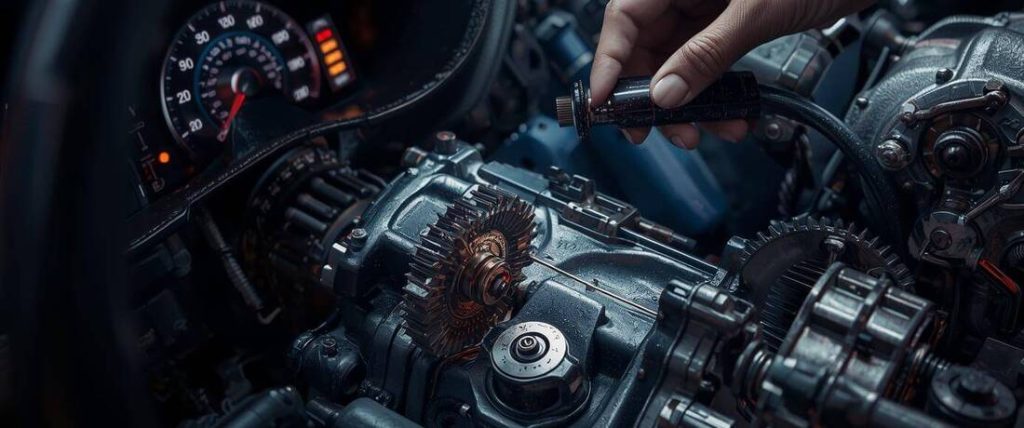
Do Chemical Transmission Stop-Slip Additives Actually Work?
As a Master Technician, I have utilized products like Lucas Transmission Fix in the shop. They can provide temporary stabilization—but exclusively during Stage 1 early-onset conditions.
These aftermarket chemical additives operate by using heavy polymers to artificially increase the fluid’s viscosity (making it thicker to seal internal pressure losses) and using chemical ester agents to swell hardened rubber internal seals.
However, additives cannot mechanically rebuild worn-away paper clutch linings, fix snapped metal bands, or clear out suspended metallic debris. If your transmission is entering Stage 2 or Stage 3, pouring a $15 bottle into your filler neck is an absolute waste of capital. It acts merely as a temporary delay tactic, frequently masking internal symptoms until a catastrophic failure occurs on the road.
FAQs About What Is Transmission Slipping?
How much does it cost to fix a slipping transmission?
Stage 1 (fluid-related): $150–$400. Stage 2 (solenoid/band/clutch): $800–$2,500. Stage 3 (internal damage): $2,500–$5,000+. The single biggest factor is how early you catch it. A $200 fluid change at the first sign of hesitation can prevent a $4,000 rebuild six months later.
Can I drive with a slipping transmission or will it cause more damage?
You can drive it to the shop, but every mile of slipping generates heat and metal debris that destroys more internal parts. The death spiral is real: slipping → heat → fluid breakdown → more slipping. If the transmission drops into neutral on the highway, you lose power suddenly. Tow it if you can. If you must drive, stay right, avoid hills, and keep RPMs low.
Is transmission slipping the same as a bad torque converter?
No, but they feel similar. Transmission slipping happens at all speeds when clutch packs or bands can’t hold. A bad torque converter usually causes a shudder or vibration at 45–55 mph when the lockup clutch should engage. Torque converter problems are upstream of the transmission — if the converter isn’t transferring power properly, the transmission can’t do its job regardless of its internal condition.
Will changing the transmission fluid fix slipping?
If you’re in Stage 1 — yes, often. Fresh fluid restores hydraulic pressure and cooling. If the fluid is burnt or low, a fluid change plus filter replacement can stop slipping entirely. But if you’re in Stage 2 or 3, fresh fluid won’t rebuild worn clutch material or fix broken bands. In fact, changing fluid on a severely damaged transmission can dislodge debris and make it worse. If the fluid is black and smells burnt, get a diagnosis before flushing.
How long can a transmission last once it starts slipping?
There’s no reliable timeline. A transmission can slip for weeks in Stage 1, or it can fail completely in days if the damage is severe. The only certainty is that it never gets better on its own. Heat accelerates everything — towing, hills, and stop-and-go traffic all shorten the remaining lifespan. If you catch it at the first hesitation, you might have months. If you’re already in limp mode, you might have days.
The Verdict: Address the Slips Immediately
A slipping transmission is an escalating mechanical crisis. If the loop slips because it is missing two quarts of automatic transmission fluid, topping it off immediately resolves the line pressure drop for under $20. However, if you continue to drive the vehicle with an active slip code, the continuous metal-on-metal friction shear will instantly overheat the casing, melting valve body passages and ensuring a massive $4,000 rebuilding bill. Pull your dipstick, scan for gear ratio codes early, and preserve your critical drivetrain infrastructure.
(Want to ensure your vehicle’s alternative mechanical components, engine sensors, and computer networks are operating with absolute factory precision? Read our master workshop guide on How to Read Check Engine Light Codes Without a Scanner or check out The Car Buzz Official Testing and Editorial Integrity Guidelines Page).