
This article was updated in April 25, 2026 with new products and information by Mark S. Taylor
Your automatic transmission feels rough. It shudders or feels like it is slipping. You might worry the whole transmission is broken. But the problem might be smaller. It could be the torque converter. There are 8 key symptoms that point specifically to torque converter failure. Catching it early means a $400 fix. Ignoring it can lead to a $3,000 rebuild. This guide explains the symptoms of a bad torque converter and what to do next.

Contents
- 1 What Does a Torque Converter Do?
- 2 8 Symptoms of a Bad Torque Converter
- 2.1 1. Transmission Shudder (Most Distinctive Symptom)
- 2.2 2. Gear Slipping
- 2.3 3. Rough or Delayed Gear Shifts
- 2.4 4. Transmission Overheating
- 2.5 5. Check Engine Light (P0740-P0744)
- 2.6 6. Contaminated or Dark Transmission Fluid
- 2.7 7. Unusual Noises from Transmission Area
- 2.8 8. Poor Acceleration and Sluggish Performance
- 3 Torque Converter vs. Transmission Problem (Critical Differences)
- 4 How to Diagnose a Bad Torque Converter (Step-by-Step)
- 5 What Causes Torque Converters to Fail?
- 6 Can You Drive with a Bad Torque Converter?
- 7 How Much Does Torque Converter Replacement Cost?
- 8 How to Prevent Torque Converter Problems
- 9 FAQs About Symptoms of a Bad Torque Converter
- 10 The Bottom Line
What Does a Torque Converter Do?
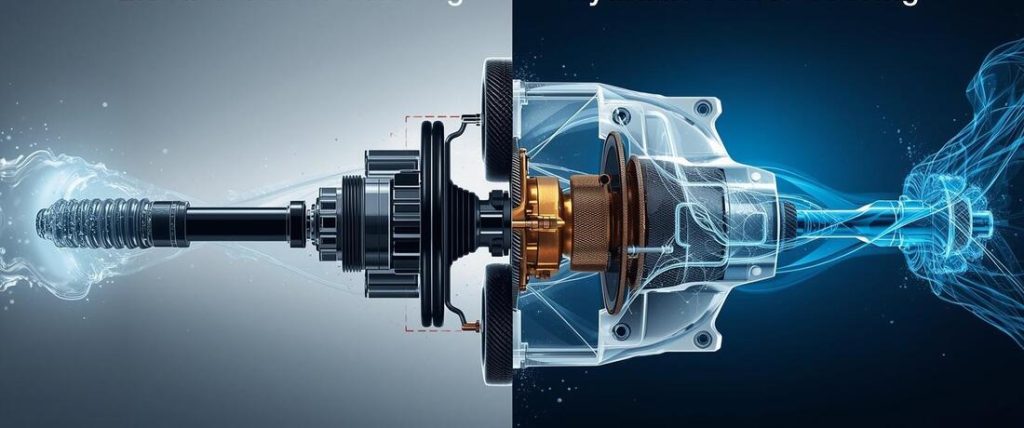
The torque converter connects your engine to your transmission. It acts like a fluid coupling. In a manual car, the clutch does this job. In an automatic car, the torque converter does it. It allows the engine to keep running while the car is stopped. It has three main phases: stall, acceleration, and coupling. Inside, it has parts called an impeller, turbine, and stator. If it fails, your car cannot move smoothly.
8 Symptoms of a Bad Torque Converter
1. Transmission Shudder (Most Distinctive Symptom)
This feels like driving over a rumble strip on a smooth road. It happens specifically at speeds between 30 and 45 mph. This is caused by the TCC (Torque Converter Clutch) failing to lock up. It usually disappears if you drive faster or slower. People often mistake this for bad tires or spark plugs.
2. Gear Slipping
Your engine revs go up, but the car does not accelerate. You might feel hesitation when you press the gas pedal. The transmission might hunt between gears. This is caused by insufficient hydraulic pressure inside the converter.
3. Rough or Delayed Gear Shifts
Shifts should feel crisp. A bad converter causes soft or sluggish shifts. You might notice a delay when shifting from Drive to Reverse. You might hear a banging or clunking sound. This happens because the failing converter causes a pressure drop.
4. Transmission Overheating
You might see a temperature warning light on the dashboard. The converter shudder creates excess heat. Transmission fluid breaks down fast when it gets too hot. This can lead to full transmission damage if you ignore it.
5. Check Engine Light (P0740-P0744)
Your car’s computer will detect converter issues. It will turn on the Check Engine Light. Look for specific codes using a scanner. Here are the common ones:
- P0740: TCC Circuit Malfunction
- P0741: TCC Circuit Performance or Stuck Off
- P0742: TCC Circuit Stuck On
- P0743: TCC Electrical
- P0744: TCC Circuit Intermittent
6. Contaminated or Dark Transmission Fluid
Healthy fluid is bright red and smells slightly sweet. Bad converter fluid looks dark brown or black. It smells burnt. You might see metal shavings in the fluid. If the fluid looks milky, coolant has leaked in. Check the fluid condition immediately.
7. Unusual Noises from Transmission Area
Listen for a whining noise while the car is in Park. This can be a bad stator bearing. A rattling noise that gets louder in Drive is another sign. You might hear clunking during gear changes. The noise comes from the space between the engine and transmission.
8. Poor Acceleration and Sluggish Performance
The car feels slow to respond. You notice a loss of power, especially going uphill. The engine RPM rises, but the speed does not match it. Heavy load situations make this symptom worse.

Torque Converter vs. Transmission Problem (Critical Differences)
It is hard to tell which part is bad. But the symptoms are slightly different. Here is how to tell the difference.
Signs It’s Specifically the Torque Converter
- You feel a shudder at a specific speed (30-45 mph).
- Symptoms improve briefly after a fluid change.
- You see P074X diagnostic codes.
- You hear rattling that increases when in gear.
- You see bouncing RPMs at cruise speed.
Signs It’s the Transmission (Not the Converter)
- No shudder at a specific speed.
- Multiple P07XX codes unrelated to TCC.
- Grinding in specific gears only.
- Fluid leak from the transmission pan.
Quick Comparison Table
| Symptom | Likely Converter | Likely Transmission |
|---|---|---|
| Shudder 30-45 mph | ✓ | — |
| General slipping | ✓ | ✓ |
| Gear won’t engage | — | ✓ |
| Overheating | ✓ | ✓ |
| Specific P074X codes | ✓ | — |
How to Diagnose a Bad Torque Converter (Step-by-Step)
You can do some tests at home. But some need a pro.
Step 1: Check Transmission Fluid
Check the fluid on the dipstick. Look at the color and smell it. Healthy fluid is red. Burnt fluid is brown or black. Look for metal shavings on the dipstick.
Step 2: Scan for OBD Codes
Use an OBD-II scanner tool. Plug it in under the dashboard. Look for codes P0740 through P0744. These codes point directly to the converter. Record the freeze-frame data too.
Step 3: Note When Symptoms Occur
Pay attention to the details.
- Speed range: Does it shudder at 30-45 mph?
- Temperature: Does it happen on cold starts or when warm?
- Load: Is it worse on the highway or in the city?
Step 4: Perform Stall Speed Test
This test measures the RPM while in gear with the brake on. It checks if the converter holds. This test can be dangerous if done wrong. It can damage the converter. It is best left to a professional.
Step 5: Professional Diagnosis
If you are unsure, see a transmission specialist. They can do a live data scan. They can watch the TCC engagement in real time. They can also do mechanical pressure testing.
What Causes Torque Converters to Fail?
Most failures happen because of poor maintenance. Dirty or degraded fluid is a top cause. If the fluid level is low, there is not enough hydraulic pressure. Excessive heat from towing heavy loads hurts it too. The lock-up clutch surfaces wear out over time. Needle bearings can fail. The stator overrun clutch might break. Age and mileage are factors too. Most are designed for a 200,000-mile life.
Can You Drive with a Bad Torque Converter?
The short answer is briefly, but not for long. Driving with a failing converter is risky. If the symptoms are mild, you can monitor and schedule a repair soon. If the symptoms are severe, stop driving. If the transmission is overheating or the car won’t move, do not drive it. The debris can contaminate the whole transmission. A $400 fix can become a $3,000 rebuild if you wait too long.
How Much Does Torque Converter Replacement Cost?
The part itself is not too expensive. The labor cost is what adds up.
| Cost Item | Estimated Price |
|---|---|
| Converter part only | $150 – $600 |
| DIY total | $150 – $600 (if you can do it) |
| Professional labor | $400 – $800 |
| Total professional replacement | $600 – $1,200 |
| Transmission rebuild | $2,000 – $4,500 |
The cost depends on your vehicle type. Labor access is harder on some cars. If the converter contaminated the transmission with debris, you need a rebuild. This is much more expensive.
How to Prevent Torque Converter Problems
Prevention is much cheaper than repair. Change your transmission fluid regularly. Do this every 30,000 to 60,000 miles. Always use the fluid type the maker specifies. If you tow a boat or trailer, install an auxiliary cooler. Avoid aggressive driving habits. Fix small fluid leaks immediately. Schedule a transmission inspection every 60,000 miles. If you see the check engine light, check the codes right away.
FAQs About Symptoms of a Bad Torque Converter
How do I know if my torque converter is bad?
The most common sign is a shudder between 30 and 45 mph. You might also feel the gears slipping. A burning smell from the transmission fluid is another clear sign.
What can be mistaken for a bad torque converter?
Many things can mimic these symptoms. Bad tires can feel like a shudder. Engine misfires can feel like a vibration. A bad flex plate can make similar rattling noises.
How to test a torque converter?
You can scan for P074X codes with an OBD-II tool. You can also check the transmission fluid condition. Mechanics perform a stall speed test to measure converter efficiency.
Can you fix the torque converter without replacing the transmission?
Yes, often you can. If the converter is bad but the transmission is clean, you just replace the converter. The transmission does not always need a rebuild.
What OBD codes indicate a bad torque converter?
Codes P0740, P0741, P0742, P0743, and P0744 are the specific codes. These indicate a problem with the Torque Converter Clutch circuit or solenoid.
The Bottom Line
Don’t ignore a shudder at 30-45 mph. Check your transmission fluid color and smell first. Scan the car for P0740-P0744 codes. Early replacement costs $400-$600. If you delay, you risk a $3,000-$5,000 rebuild. See a transmission specialist at the first sign of trouble. It saves you money in the long run.
Quick Summary
- Shudder: A vibration at 30-45 mph is the main sign.
- Slipping: RPMs go up but speed does not.
- Fluid Check: Look for dark brown or burnt fluid.
- Scan Codes: P0740-P0744 codes indicate converter issues.
- Noises: Listen for whining or rattling in Park/Drive.
- Act Fast: Early repair is cheap; delay is very expensive.
- Prevent: Change fluid regularly to keep it cool.