
This article was updated in June 17, 2026 with new products and information by Mark S. Taylor
Power windows are a modern convenience we take for granted until they suddenly stop working. You press the switch on a rainy day or at a drive-thru, and your glass either moves at a snail’s pace, makes a horrific grinding noise, or falls completely down inside the door panel.
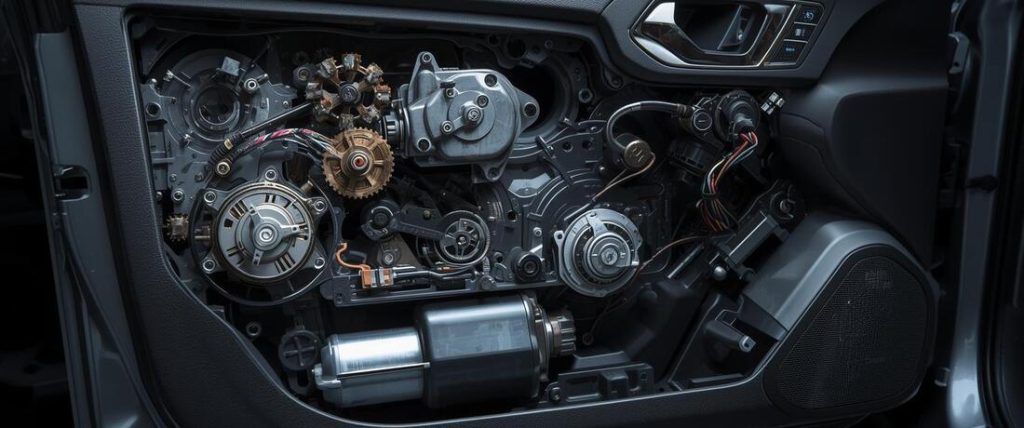
Power window assemblies fail for a few highly specific reasons: dry rubber channels, frayed steel cables, stripped plastic gears, or electric motor burnout. Because the motor and the regulator operate inside the dark, moisture-prone environment of your car door, they are highly susceptible to wear and tear.
As a mechanic who has taken apart thousands of door panels, I can tell you that misdiagnosing this issue is incredibly common. In this guide, we will examine the engineering reasons why window motors and regulators fail, how to isolate the culprit, and realistic US repair costs.
Contents
- 1 What’s the Difference Between a Window Motor and a Regulator?
- 2 9 Real Reasons Why Window Motors and Regulators Fail
- 2.1 1. Frayed or Broken Steel Regulator Cables
- 2.2 2. Stripped Main Drive Gears
- 2.3 3. Dry, High-Friction Window Channels
- 2.4 4. Broken Plastic Clips, Rollers, and Guides
- 2.5 5. Electric Motor Burnout
- 2.6 6. Corroded Door Wiring Harness Connectors
- 2.7 7. Faulty Window Switches
- 2.8 8. Blown Fuses or Bad Power Relays
- 2.9 9. Structural Alignment Damage from Door Slams
- 3 Motor vs. Regulator — How to Tell Which One Failed
- 4 Real Repair Costs for Power Windows in the US
- 5 DIY Fix vs. Taking It to a Shop — Which Is Right for You?
- 6 How to Prevent Window Motor and Regulator Failure
- 7 FAQs About Reasons Why Window Motors and Regulators Fail
- 8 The Bottom Line from the Workshop Garage
What’s the Difference Between a Window Motor and a Regulator?
Many drivers confuse these two components, but they perform completely different roles within your door hardware:
| Feature | Window Motor | Window Regulator |
| Job | Provides the electrical power to move the glass | Holds the glass steady and guides its path up/down |
| Component Type | 12V Electrical DC Motor Assembly | Mechanical Framework (Cables, Pulleys, Metal Arms) |
| Primary Failure Sign | Complete silence, a faint hum, or extremely slow movement | Window falls down, moves crooked, or jams with a loud clunk |
| Average Part Cost | $50 – $150 (OEM/Aftermarket) | $40 – $120 (Depending on vehicle make) |
9 Real Reasons Why Window Motors and Regulators Fail
1. Frayed or Broken Steel Regulator Cables
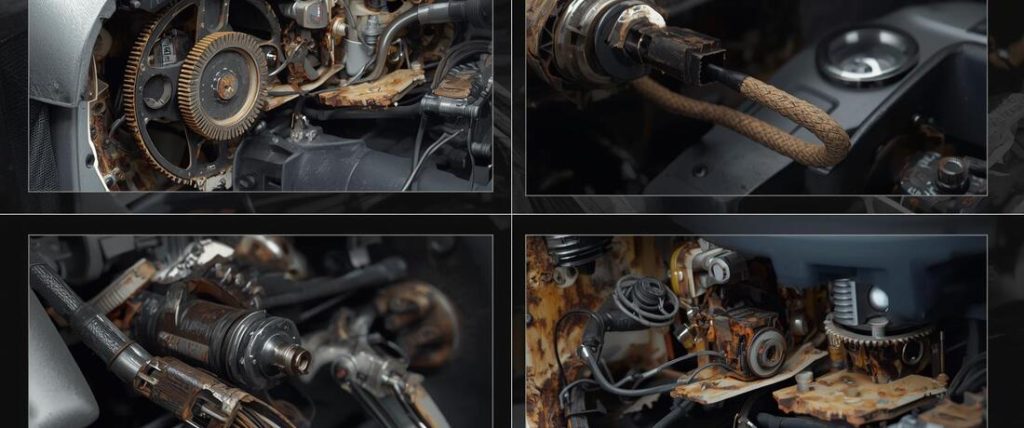
This is the single most common mechanical failure point in modern vehicles. Most modern cars utilize a cable-operated regulator system where a braided steel aircraft cable winds around a plastic spool driven by the motor. Over years of cycling, individual strands of this steel cable fray, catch on the pulleys, and eventually snap like a rusted bicycle chain.
- The Symptom: You will hear a sudden, loud “clunk” inside the door, and the glass will instantly drop down into the door frame. The motor will spin freely and whir loudly, but the window won’t budge. You must replace the entire regulator assembly, as these cables cannot be serviced individually.
2. Stripped Main Drive Gears
The electric motor transmits its high-torque rotational power into the regulator using a small plastic or composite drive gear. If the window glass binds or freezes to the frame during winter, and a driver continues to hold down the power button, the metal drive shaft will strip the softer plastic gear teeth clean off.
- The Symptom: You will hear the electric motor spinning smoothly inside the door, but the window remains stationary. It often leaves behind a subtle plastic whirring or chattering noise.
3. Dry, High-Friction Window Channels
Your door window runs up and down inside specialized felt-lined rubber channels. From the factory, these tracks are lubricated, but over 5 to 10 years of exposure to US seasonal weather, the lubricant dries out and accumulates road grime.
- The Symptom: This dry rubber creates intense friction resistance. The electric motor has to work twice as hard to pull the glass, causing it to move incredibly slowly. This continuous electrical strain overheats the motor windings and causes premature burnout.
- The Fix: Spray specialized aerosol silicone lubricant directly into the vertical rubber tracks once a year as part of your preventative maintenance routine.
4. Broken Plastic Clips, Rollers, and Guides
To keep parts lightweight, manufacturers attach the heavy glass panel to the metal regulator scissor arms using small plastic guide clips and rollers. As these plastic parts age in hot summer climates, they become extremely brittle.
- The Symptom: You will hear a loose rattling noise inside the door when hitting bumps. Eventually, the plastic clip snaps entirely, causing the window to tilt sideways, go up crooked, or fall straight out of its track.
5. Electric Motor Burnout
Like all DC electric motors, your window motor contains tight copper wire windings and carbon brushes. If the motor is continuously forced to fight against bent regulator arms or high-friction dry tracks, the internal temperature spikes, melting the wire insulation and burning out the armature.
- The Symptom: Complete electrical death. You press the switch, and there is zero sound, zero movement, and zero voltage draw from the door panel.
6. Corroded Door Wiring Harness Connectors
Every time it rains or you wash your car, water bypasses the exterior belt moldings and drains through the inside of the door shell. While doors have drain holes, moisture lingers, causing green copper oxidation to build up inside the multi-pin electrical plugs.
- The Symptom: Intermittent window operation. The window might work perfectly on Monday but fail completely on Tuesday, or act sluggishly until you slam the door.
7. Faulty Window Switches
Before buying an expensive new motor, check the button. The window switch contacts inside the master door panel wear out or collect carbon arc dust over time, breaking the electrical circuit.
- The Diagnostic Trick: Try operating the failing window from the driver’s master control panel and then from the passenger door’s individual switch. If it works from one but not the other, the motor is perfectly healthy—you simply have a failed switch block.
8. Blown Fuses or Bad Power Relays
Power window circuits draw high amperage (often 20 to 30 amps). If a motor binds or shorts out, the vehicle’s fuse will instantly blow to prevent an electrical fire inside the cabin.
- The Symptom: If none of your windows function simultaneously, it is statistically impossible for all four motors to die at once. Replacing a blown fuse is a very cheap $5 fix, but you must diagnose why it blew to ensure there isn’t a deeper short circuit in the wiring harness.
9. Structural Alignment Damage from Door Slams
Vehicles that experience aggressive door slamming or have been involved in a side-impact collision can suffer from bent internal door frames. If the metal guide tracks or regulator arms bend even a fraction of an inch, the glass will bind, causing instant stress on the motor gear teeth.
Motor vs. Regulator — How to Tell Which One Failed
You can diagnose the problem by listening to the window and watching how it moves.
It is frustrating to replace the wrong part. Use this guide to narrow down the issue.
| Symptom | Likely Cause | What to Check |
|---|---|---|
| Motor runs (humming), window stays still | Regulator failure | Broken cable or stripped gear |
| No sound at all | Motor or Electrical | Fuse, switch, or burned motor |
| Window moves crooked or falls | Regulator failure | Broken clips or bent track |
| Window moves slowly | Both or Friction | Dry channels or weak motor |
| Clicking sound inside door | Regulator failure | Stripped gear or broken clip |
Quick Test: Turn the key to the “On” position. Press the window switch. Listen close to the door panel.
- If you hear a hum or whir: The motor is getting power. It spins. The regulator is broken.
- If you hear nothing: The motor is not getting power. Check the fuse, switch, or wiring. The motor might be seized.
- If you hear a click: The relay works. The motor might be seized or the connection is loose.
Real Repair Costs for Power Windows in the US
The total cost to service a failing power window depends heavily on your vehicle make and whether the motor and regulator are sold as a combined assembly or independent components.
Professional Shop Cost (Labor + Parts): Typically ranges between $200 to $500 per door. Luxury vehicles (such as BMW, Mercedes, or Audi) use complex electronic modules with anti-pinch calibration and can easily push repair bills past $650+.
DIY Parts Only (Regulator Framework): $40 to $120
DIY Parts Only (Motor Unit): $50 to $150
Combined Motor/Regulator Assembly: $80 to $250
DIY Fix vs. Taking It to a Shop — Which Is Right for You?
DIY is a great option if you have basic tools and patience, but a shop is better for complex or integrated systems.
Do it yourself if:
- You have a socket set and trim tools.
- Your car allows separate motor/regulator replacement.
- You want to save money on labor.
- The window is stuck up (not an urgent security risk).
Go to a shop if:
- The motor and regulator are riveted in place (requires a special rivet gun).
- The window is smashed or stuck down (security risk).
- You have a luxury car with complex electronics (like BMW or Mercedes).
- You do not feel comfortable taking the door apart.
If you choose DIY, take a picture of the door assembly before you take it apart. It helps you put it back together correctly. For more general advice, browse our other guides on thecarbuzz.com.

How to Prevent Window Motor and Regulator Failure
You can make your window parts last longer with simple, regular maintenance.
Most failures happen because of friction or moisture. You can stop both.
- Lubricate the channels: Use silicone spray or white lithium grease. Spray into the window tracks. Wipe off the excess. Do this once a year or when the glass looks dry.
- Don’t force frozen windows: In winter, windows freeze to the rubber. Do not force them down. You will strip the gears or burn the motor. Start the car and let the defroster melt the ice first.
- Avoid rapid cycling: Don’t open and close the window repeatedly in a short time. This overheats the motor. Let it rest for a few seconds between cycles.
- Check the seals: Look at the weatherstripping around the door. If it is cracked, water gets inside. Water causes rust and corrosion. Replace bad seals to keep the inside dry.
FAQs About Reasons Why Window Motors and Regulators Fail
What are the most common reasons a window motor fails?
Worn gears, motor burnout from overuse, corroded wiring, and forcing frozen windows are the top causes. The motor works hard to lift heavy glass. If it meets resistance, it burns out.
How do I know if it’s my window motor or regulator that’s broken?
If you hear the motor running but the window doesn’t move, it’s usually the regulator. If nothing happens at all when you press the switch, suspect the motor, switch, or fuse. Listening is the best diagnostic tool.
Can I drive with a broken window regulator?
Yes, but it is a security and safety risk. If the window won’t stay up, thieves can easily enter your car. Rain can ruin your interior. If the glass is stuck up, you can drive, but get it fixed soon.
How long do window motors and regulators last?
Most last 8 to 12 years or 100,000+ miles under normal conditions. Harsh climates with extreme heat or cold shorten their lifespan. Lack of lubrication also shortens their life.
Is it worth replacing a window regulator on an older car?
If the rest of the car is in good shape, yes. Parts are generally affordable ($40-$100). It is a good investment to keep the car secure and comfortable. If the car has major engine issues, you might skip the repair.
The Bottom Line from the Workshop Garage
Fixing a power window is heavily reliant on acoustics. If you hear a mechanical motor whirring or grinding inside the door, your motor is electrically functional—you simply need a new mechanical regulator framework. If you hear absolute dead silence, start by swapping the cheapest components first: test the fuse, check the switch contacts, and look for corrosion before unbolting the motor assembly.
(Is your vehicle experiencing other electrical or dashboard warning light anomalies? Read our complete step-by-step diagnostic guide on How to Read OBD2 Check Engine Codes Without a Scanner or explore The Car Buzz Official Editorial and Testing Policy).