
This article was updated in June 3, 2026 with new products and information by Mark S. Taylor
Dashboard lights flickering with a no-start almost always means your battery voltage has collapsed below what the starter needs. The lights flicker because the battery sags under the enormous electrical load of the starter motor — which can draw 150–250 amps. A healthy battery holds steady. A dead or dying battery collapses, and everything flickers. The cause is usually a dead battery, but it can also be a bad alternator that drained the battery, a failing starter, or corroded connections.
I’ve been turning wrenches for 20 years, and I’ve heard this phone call a thousand times: “My dash lights are going crazy and my car won’t start.” In 90% of cases, it’s the battery or the connections. But the other 10% — starter, alternator, or ignition — won’t be fixed by a jump start, and I hate seeing customers waste money on tow trucks and jump starts for the wrong problem.
If you’re reading this in a parking lot right now, do this first:
- Stop turning the key. Every crank attempt with a weak battery overheats your starter solenoid. Three attempts max. If it hasn’t started by the third try, continuing will damage the starter and turn a $150 battery problem into a $500 starter problem.
- Listen carefully. Turn the key one more time and listen. Do you hear rapid clicking (like a machine gun)? A single loud click? Or nothing at all? Write down what you hear — it tells me exactly what’s wrong.
- Check your battery terminals. Pop the hood. Are the battery terminals covered in white or blue powder? Are the cables loose enough to wiggle by hand? If yes, you might have a free fix.
- Call for help if needed. If you hear a single loud click or silence, call a tow truck or roadside assistance. A jump start won’t help a bad starter or ignition switch.

Contents
- 1 What the Flickering and Clicking Actually Means
- 2 Diagnose by Sound: The Click Test
- 3 Common Causes (In Order of Likelihood)
- 4 The 5-Minute Multimeter Test
- 5 Jump Start or Tow? The Decision Tree
- 6 Repair Cost Breakdown
- 7 DIY vs. Mechanic: Should You Fix It Yourself?
- 8 Prevention Tips
- 9 FAQs About Dashboard Lights Flickering, Car Won’t Start
- 9.1 Q: Will a jump start fix flickering dashboard lights and a no-start?
- 9.2 Q: How do I know if it’s the battery or the starter?
- 9.3 Q: Can I damage anything by trying to start the car repeatedly?
- 9.4 Q: My car started after a jump but died again 10 minutes later. What’s wrong?
- 9.5 Q: What if my dashboard lights flicker but the engine cranks fine?
- 10 The Bottom Line
What the Flickering and Clicking Actually Means
Your car’s electrical system runs on 12 volts, but that number is misleading. What matters is how much voltage the battery can maintain under load. A healthy battery sits at 12.6 volts when the car is off. When you turn the key to start, the starter motor demands a massive surge of current — 150 to 250 amps on most cars.
If the battery is weak, that surge pulls the voltage down to 8 or 9 volts. At that voltage, your dashboard lights dim and flicker. The starter solenoid — the switch that connects the starter to the battery — tries to engage but can’t hold. It chatters on and off, creating the rapid clicking sound. Each click is the solenoid engaging, the voltage collapsing, and the solenoid releasing.
Think of it like a water balloon with a pinhole. You squeeze hard (turn the key), water shoots out (current flows), but the pressure drops instantly (voltage sags). The balloon collapses, then refills slightly, then you squeeze again. That’s your starter solenoid chattering.
The critical distinction: Flickering lights with rapid clicking = battery or connections. Flickering lights with a single loud click = starter. Flickering lights with silence = ignition switch, relay, or wiring. The sound is everything.
Diagnose by Sound: The Click Test
You don’t need tools to narrow this down. Turn the key to start and listen:
Table
| Sound You Hear | What It Means | Likely Cause | Will a Jump Start Help? |
|---|---|---|---|
| Rapid clicking (machine-gun fast) | Battery voltage too low to hold solenoid | Dead battery, bad connections, or failing alternator | Yes — try it |
| Single loud click | Solenoid engages but starter motor won’t turn | Bad starter, seized engine, or bad starter relay | No — call a tow |
| No sound at all | No power reaching starter circuit | Bad ignition switch, blown fuse, bad relay, or completely dead battery | Maybe — check connections first |
| Whirring/grinding | Starter spins but doesn’t engage flywheel | Bad starter drive gear or damaged flywheel | No — call a tow |
If you’re sitting in your car right now and you hear rapid clicking, you have a battery problem. Try a jump start or call for a battery boost. If you hear a single loud click, save your time — a jump won’t help. The starter is bad.
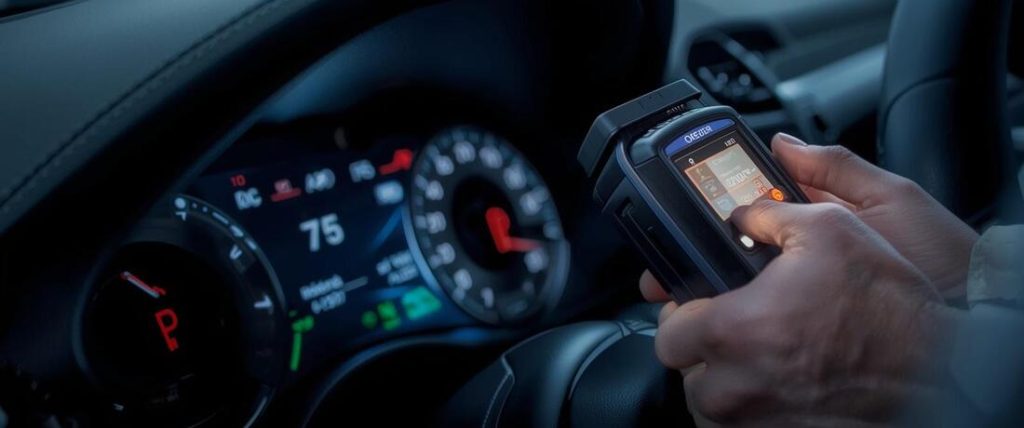
Common Causes (In Order of Likelihood)
1. Dead or Deeply Discharged Battery (80% of Cases)
This is the big one. Car batteries last 3–5 years on average. Heat, cold, short trips, and age all kill them. A battery can show 12.4 volts at rest and still collapse to 8 volts under starter load. That’s why a simple voltage check doesn’t always tell the whole story.
Test: If you have a multimeter, check voltage at the battery with the engine off. 12.6V = fully charged. 12.4V = 75% charged. 12.0V = 50% charged — probably won’t start. Below 11.8V = dead.
Fix: Jump start and drive for 30 minutes to recharge, or replace the battery. Cost: Jump start $0–$100; battery replacement $100–$300.
2. Corroded or Loose Battery Terminals (10% of Cases)
Corrosion creates resistance. The battery might be fine, but the electricity can’t get through. I’ve fixed countless “dead battery” calls by cleaning terminals with a wire brush.
Test: Wiggle the battery cables. If they move, they’re loose. Look for white, blue, or green powder on the terminals. Fix: Remove cables, clean terminals with baking soda and water or a wire brush, tighten securely. Cost: Free DIY; $30–$60 at a shop.
3. Bad Alternator (5% of Cases)
The alternator charges the battery while you drive. If it fails, the battery drains over time — usually over several days or weeks. You might notice dim headlights, a battery warning light, or slow power windows before the no-start.
Test: If a jump start gets the car running, check the battery voltage with the engine running. It should read 13.5–14.5 volts. If it’s 12.6V or lower, the alternator isn’t charging. Fix: Replace or rebuild the alternator. Cost: $300–$800.
4. Failing Starter Motor (3% of Cases)
A bad starter draws excessive current or won’t turn at all. You might hear a single loud click, or the starter might spin without engaging the engine.
Test: The single-click test above. You can also try tapping the starter gently with a wrench or hammer while someone turns the key — if it starts, the starter is failing. Fix: Replace the starter. Cost: $300–$600.
5. Bad Ground Connection (1% of Cases)
The ground strap connects the engine to the car’s chassis. If it’s corroded or loose, current can’t flow properly. This causes flickering and intermittent no-starts.
Test: Check the ground strap between the engine block and the body. Look for corrosion, looseness, or broken strands. Fix: Clean or replace the ground strap. Cost: $15–$50 DIY; $50–$100 shop.
6. Ignition Switch or Starter Relay (1% of Cases)
If you turn the key and hear nothing — no click, no dash lights, no response — the problem is upstream of the battery and starter. Could be a blown fuse, bad relay, or worn ignition switch.
Test: Check the starter relay in the fuse box. Swap it with a known-good relay of the same type. If the car starts, you found it. Fix: Replace relay ($10–$30) or ignition switch ($100–$300). Cost: Relay $10–$30; ignition switch $100–$300.
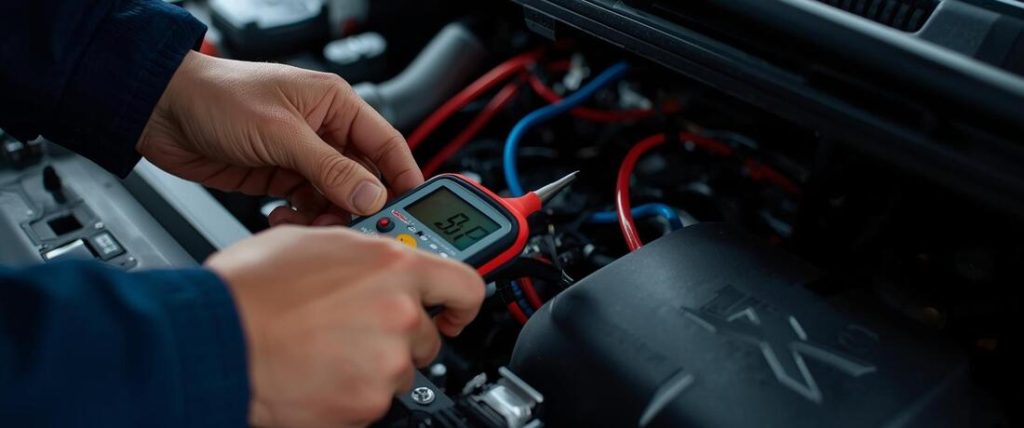
The 5-Minute Multimeter Test
If you have a multimeter — or a friend who does — this test tells you exactly what’s wrong:
Step 1: Battery Voltage (Engine Off) Set multimeter to DC volts. Red probe on positive terminal, black on negative.
- 12.6V = fully charged
- 12.4V = 75% charged
- 12.0V = 50% charged — marginal
- Below 11.8V = dead
Step 2: Voltage While Cranking Have a helper turn the key to start while you watch the meter.
- Above 10.0V = battery is probably okay, suspect starter
- 9.0–10.0V = battery is weak but might start with a jump
- Below 9.0V = battery is dead or terminals are badly corroded
Step 3: Voltage With Engine Running (If Jump Started) Let the engine idle. Check voltage at the battery.
- 13.5–14.5V = alternator is charging properly
- 12.6V or below = alternator is not charging — replace it
- Above 15.0V = voltage regulator is failing — replace alternator
Step 4: Parasitic Draw Test (For Recurring Dead Battery) If this keeps happening, something is draining the battery overnight. With the engine off and doors closed, remove the negative cable and connect the multimeter in series (red probe to battery negative, black probe to cable). You should see less than 50 milliamps (0.05A). Above 100mA means something is draining the battery.
Jump Start or Tow? The Decision Tree
Table
| Scenario | Action | Why |
|---|---|---|
| Rapid clicking, terminals look clean | Try jump start | Battery is dead but connections are good |
| Rapid clicking, terminals corroded | Clean terminals first, then jump | Corrosion may be the only problem |
| Single loud click, no crank | Call tow or roadside | Starter is bad — jump won’t help |
| No sound, no dash lights | Check connections, then tow | Could be ignition, relay, or completely dead battery |
| Jump start works, car dies again | Tow to shop | Alternator is not charging — you’ll be stranded again |
| Jump start works, car runs fine | Drive 30 min, test battery | Battery was discharged — may need replacement |
Repair Cost Breakdown
Here’s what you’re actually looking at, based on 2026 national averages:
Table
| Repair | Cost Range | When It’s Needed |
|---|---|---|
| Jump start / battery boost | $0 (with membership) – $100 | Dead battery, temporary fix |
| Battery terminal cleaning | Free DIY; $30–$60 shop | Corroded or loose terminals |
| Battery replacement | $100–$300 | Battery won’t hold charge or is 3+ years old |
| Alternator replacement | $300–$800 | Alternator not charging battery |
| Starter replacement | $300–$600 | Single click, starter won’t turn |
| Ground strap replacement | $15–$50 DIY; $50–$100 shop | Bad ground connection |
| Starter relay / ignition switch | $10–$30 (relay); $100–$300 (switch) | No click, no crank, silent failure |
| Tow truck | $75–$150 | When jump start won’t help |
The reality: Most no-start situations are fixed for under $200. The expensive mistake is letting a shop replace your battery, alternator, AND starter when only one part is bad. Test first, replace second.
DIY vs. Mechanic: Should You Fix It Yourself?
Table
| Task | DIY? | Skill Level | Tools Needed |
|---|---|---|---|
| Jump start | Yes | Beginner | Jumper cables or battery pack |
| Terminal cleaning | Yes | Beginner | Wrench, wire brush, baking soda |
| Battery replacement | Yes | Beginner | Wrench set, battery terminal puller |
| Starter relay swap | Yes | Beginner | None — pull and push |
| Multimeter voltage test | Yes | Beginner | Digital multimeter ($20) |
| Alternator replacement | Maybe | Intermediate | Socket set, belt tensioner tool |
| Starter replacement | Maybe | Intermediate | Socket set, jack, patience |
| Parasitic draw diagnosis | No | Advanced | Multimeter, electrical knowledge |
If you can change a tire, you can clean terminals, jump start, and replace a battery. Alternator and starter replacement is doable for experienced DIYers but often requires contorting around hot engine parts.
Prevention Tips
The best no-start is the one that never happens:
- Get a free battery test twice a year. AutoZone, O’Reilly, Advance Auto Parts — all offer free battery and alternator testing. It takes 5 minutes and costs nothing.
- Clean your terminals every 6 months. A $5 wire brush and 10 minutes prevents corrosion from killing your connection.
- Don’t take short trips only. Batteries recharge on the highway. If you only drive 5 minutes to work, your battery never fully recovers. Take a 30-minute highway drive once a week.
- Turn off accessories before shutting down. Headlights, heated seats, and phone chargers draw power when the engine is off if left on. Make it a habit to shut everything off before you turn the key.
- Address warning lights immediately. A battery warning light or dim headlights are your alternator’s way of asking for help. Don’t wait for the no-start.
- Replace your battery before it dies. Most batteries last 3–5 years. If yours is 4+ years old and you live in a hot climate, replace it proactively. A $150 battery is cheaper than a tow truck + emergency replacement.
FAQs About Dashboard Lights Flickering, Car Won’t Start
Q: Will a jump start fix flickering dashboard lights and a no-start?
A: Only if the battery is the problem. If you hear rapid clicking, a jump start will probably get you running. If you hear a single click or silence, a jump is a waste of time — the starter or ignition is bad. After a successful jump, drive for at least 30 minutes to recharge the battery. If the car dies again, the alternator is the real problem.
Q: How do I know if it’s the battery or the starter?
A: Listen. Rapid clicking = battery. Single loud click = starter. No sound = ignition or relay. A battery test with a multimeter confirms it: if voltage stays above 10V while cranking, the battery is fine and the starter is suspect.
Q: Can I damage anything by trying to start the car repeatedly?
A: Yes. Every crank attempt with a weak battery forces the starter solenoid to overheat. Three attempts is the safe maximum. After that, you’re risking starter damage that turns a $150 battery fix into a $500 starter replacement. If it doesn’t start in three tries, stop and diagnose.
Q: My car started after a jump but died again 10 minutes later. What’s wrong?
A: Your alternator isn’t charging the battery. The jump gave you enough juice to start, but the alternator couldn’t maintain the charge. You need an alternator replacement — not another jump start. Driving with a bad alternator will strand you again, guaranteed.
Q: What if my dashboard lights flicker but the engine cranks fine?
A: That’s a different problem. If the engine cranks and starts but lights flicker while driving, suspect a failing alternator, loose ground connection, or voltage regulator issue. The battery and starter are probably fine. Get the charging system tested.
The Bottom Line
Dashboard lights flickering with a no-start is your car’s electrical system screaming for help. The battery voltage has collapsed, and every electrical component is fighting for the scraps. The good news: in 90% of cases, it’s the battery or the connections — both cheap fixes. The bad news: if you keep cranking, you’ll damage the starter and turn a simple problem into an expensive one.
The first thing I do when a customer calls with flickering lights and a no-start? I ask them to turn the key one more time and tell me exactly what they hear. Rapid clicking means I’ll grab my jump pack. Single click means I’m loading the tow truck. That sound tells me everything I need to know before I even open the hood. Listen to your car. Test before you buy. And for the love of your starter, stop turning the key after the third try.