
This article was updated in November 17, 2026 with new products and information by Mark S. Taylor
You check your tires before a road trip and notice something unusual. The front tires look smooth in the middle, one rear tire has a rough inner edge, or the tread has a series of shallow dips around its circumference.
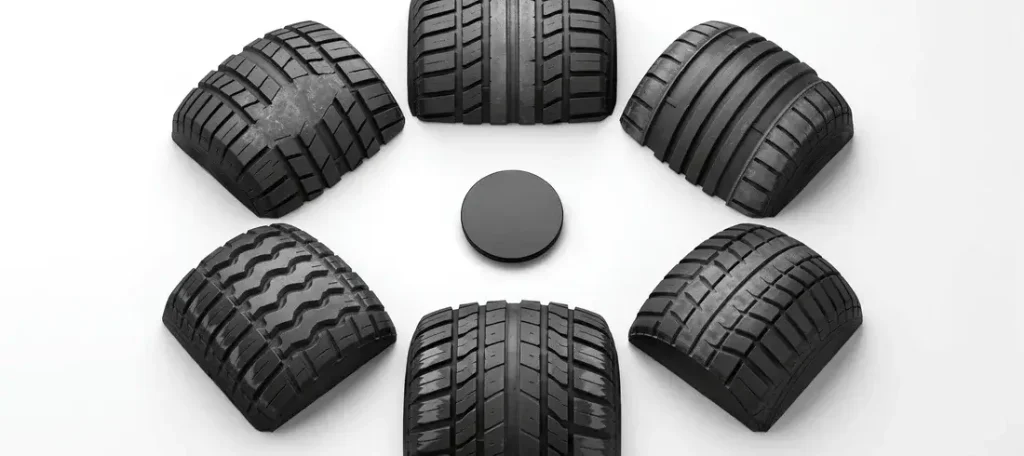
These patterns matter. Uneven tire wear can point toward tire-pressure problems, alignment issues, wheel imbalance, suspension wear, steering faults, or other conditions that need attention.


Quick answer: Tire wear patterns show where tread is wearing faster than the rest of the tire. Center wear may point to overinflation, both worn shoulders may suggest underinflation, and one-sided wear may indicate alignment or suspension problems. Feathering often points to toe misalignment, while cupping can involve imbalance, runout, or worn suspension parts.
A wear pattern is a starting point for inspection. It does not identify a failed component by itself. The right approach is to record what you see, check the basics safely, and confirm the cause before paying for an alignment or suspension repair.
Contents
- 1 1. Inspect the Tire Before Interpreting the Pattern
- 2 2. Center Tread Wear
- 3 3. Both Tire Shoulders Worn
- 4 4. Inner-Edge or Outer-Edge Wear
- 5 5. Feathering or Saw-Tooth Tire Wear
- 6 6. Cupping or Scalloping
- 7 7. Diagonal, Heel-and-Toe, and Localized Flat Spots
- 8 8. Tire Wear Pattern Quick Reference
- 9 9. Why a Tire Wear Pattern Is Not a Diagnosis
- 10 10. Can an Alignment Fix Uneven Tire Wear?
- 11 11. When Should You Stop Driving?
- 12 FAQs About Tire Wear Patterns Explained
- 13 The Bottom Line
1. Inspect the Tire Before Interpreting the Pattern
Park on a level surface away from traffic. Set the parking brake and allow the tires to cool before checking their pressure.
Look across the full tread width:
- Inner shoulder.
- Center ribs.
- Outer shoulder.
Then inspect as much of the tire’s circumference as you safely can. A single worn patch may indicate a different problem from a pattern that repeats around the tire.
A tread-depth gauge makes this inspection more useful. Compare readings at the inner, center, and outer portions of the tread. Take measurements at several points around the tire rather than relying on one reading.
Also look for:
- Cuts, cracks, or deep damage.
- Bulges or blisters.
- Exposed cords or fabric.
- Tread separation or lifting.
- Embedded nails or other objects.
- Unusual flat or bald patches.
Do not pull out an embedded object. Removing it may cause the tire to lose air. Have a tire professional inspect it and determine whether a proper repair is possible.
The National Highway Traffic Safety Administration (NHTSA) recommends regular tire inspections and professional attention when you notice irregular wear, damage, noise, or vibration. Its tire safety guidance also explains how to check tread wear indicators. NHTSA tire safety guidance.
2. Center Tread Wear
What it looks like
The middle of the tread is more worn than the inner and outer shoulders. The tire may have reasonable tread near both edges but much less in the center.
What it may mean
Chronic overinflation is a common cause of center tread wear. Excess pressure can change how the tread contacts the road and concentrate wear toward the middle.
However, the appearance alone cannot confirm the cause. Tire construction, vehicle load, operating conditions, and previous pressure history can affect the wear pattern.
What to check next
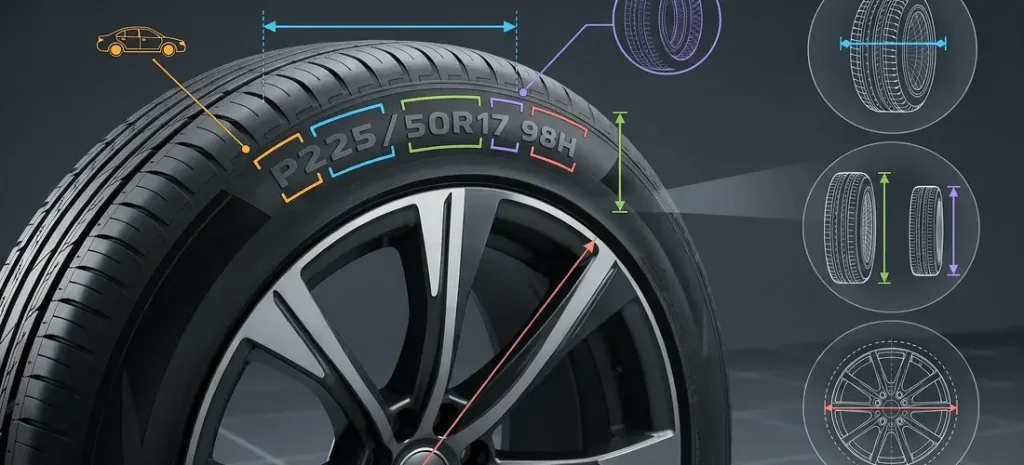
- Check cold tire pressure with a reliable gauge.
- Compare the reading with the driver’s door placard or owner’s manual.
- Do not use the maximum pressure molded into the tire sidewall as the normal pressure target.
- Compare the wear pattern across all four tires.
Correcting the pressure can help prevent additional abnormal wear. It cannot replace tread that has already worn away.
3. Both Tire Shoulders Worn
What it looks like
The inner and outer edges of the tread are more worn than the center. The middle may still have noticeably more tread than either shoulder.
What it may mean
Chronic underinflation is a common cause. An underinflated tire flexes more during operation, which can increase heat and accelerate wear.
Excessive vehicle load and operating conditions can also contribute. The U.S. Tire Manufacturers Association (USTMA) warns that improper inflation and overloading can cause excessive heat and internal tire damage.
What to check next
- Check all tires when cold.
- Look for a slow leak, damaged valve, or puncture.
- Confirm that the vehicle is not carrying more weight than its specified limit.
- Compare the pattern across the tires.
Do not simply add air and assume the tire is safe. A tire driven significantly underinflated may have internal damage even after its pressure is corrected.
Have a tire professional inspect it if it has been driven underinflated for an extended period or shows signs of damage. Internal damage may not be visible from the outside.
4. Inner-Edge or Outer-Edge Wear
What it looks like
One shoulder of the tread is noticeably more worn than the rest.
Inner-edge wear can be difficult to see from outside the vehicle. It may be hidden behind the tire and suspension, so inspect it carefully or ask a tire professional to check it.
What it may mean
One-sided wear can point toward wheel-alignment geometry, including camber or toe. Worn or damaged steering and suspension parts can also change wheel angles.
Possible contributors include:
- Alignment angles outside the vehicle’s specifications.
- Worn control-arm bushings.
- Loose ball joints or tie-rod ends.
- Bent or damaged suspension components.
- Changes in ride height or incorrect replacement parts.
The pattern does not prove that the vehicle needs only an alignment. If a worn joint or bushing allows the wheel to move, an alignment may not hold until the mechanical problem is corrected.
What to check next
Ask the shop to inspect the steering and suspension before performing the final alignment. Request the before-and-after alignment readings and confirm that the correct vehicle specifications were used.
If you also notice steering looseness, pulling, or suspension noise, mention those symptoms. They may help the technician decide which components need closer inspection.
For related symptoms, see Bad Steering Knuckle Symptoms.
5. Feathering or Saw-Tooth Tire Wear
What it looks like
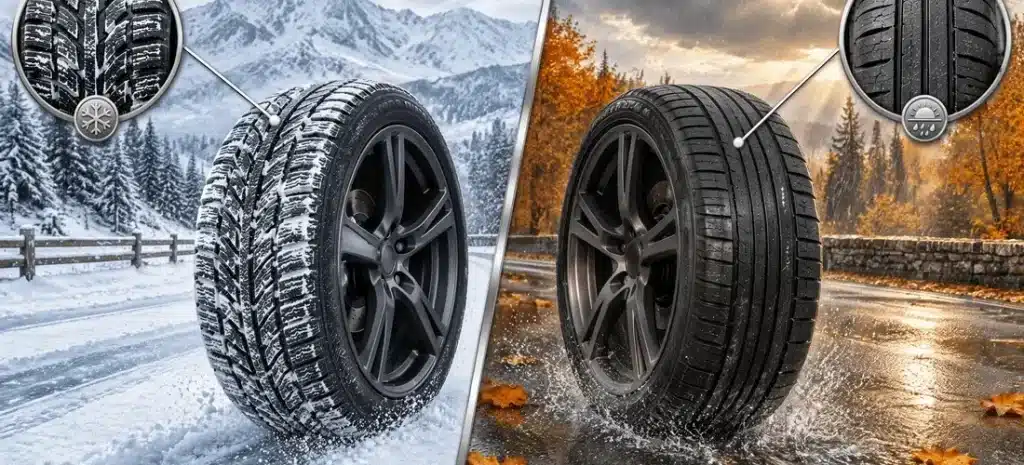
The tread blocks or ribs feel smooth in one direction and sharper in the other. The edges may look like a series of small feathers or saw teeth.
You may notice the roughness by lightly running your hand across the tread, but do this only when the tire is stationary and has no visible damage. Do not reach under the vehicle or put your hand near moving parts.
What it may mean
Feathering commonly points to toe misalignment. Toe describes whether the front edges of the tires point slightly toward or away from each other when viewed from above.
When toe is outside specification, the tire may scrub sideways as it rolls. That repeated movement can create a feathered tread surface.
A worn tie-rod end, bushing, or other steering or suspension component may also contribute by allowing the alignment angle to change.
What to check next
A shop should inspect the steering and suspension for looseness or damage, then measure alignment using the vehicle’s specifications.
Replacing or rotating the tire does not correct the underlying geometry. Do not try to adjust tie rods by eye. Steering components and alignment angles require the correct procedures and equipment.
6. Cupping or Scalloping
What it looks like
The tread has repeated dips or high-and-low patches around the circumference. Instead of wearing evenly, the surface looks wavy or uneven.
You may also notice humming, rumbling, or a repeating road noise that changes with vehicle speed.
What it may mean
Cupping can be associated with several conditions:
- Worn shocks or struts that no longer control wheel movement properly.
- Wheel or tire imbalance.
- Tire or wheel runout.
- Loose or worn suspension components.
- Wheel-bearing or hub problems.
- Irregular pressure or maintenance history.
Michelin identifies wheel balance and suspension problems among common contributors to cupping and scalloping. USTMA also lists worn shocks or struts, damaged wheels, imbalance, and steering or suspension looseness among conditions that can contribute to abnormal tread wear.
What to check next
A technician may need to inspect the dampers, suspension joints, wheel and tire assembly, balance, and runout.
Do not replace shocks or struts solely because a tire is cupped. The technician should confirm the condition of the parts and identify the source of the wear.
A severely cupped tire may continue to make noise even after the underlying mechanical problem is corrected. The remaining tread condition determines whether it can stay in service.
If the noise changes while turning, the shop may also need to inspect the wheel bearings and hubs. See Wheel Bearing Noise When Turning.
7. Diagonal, Heel-and-Toe, and Localized Flat Spots
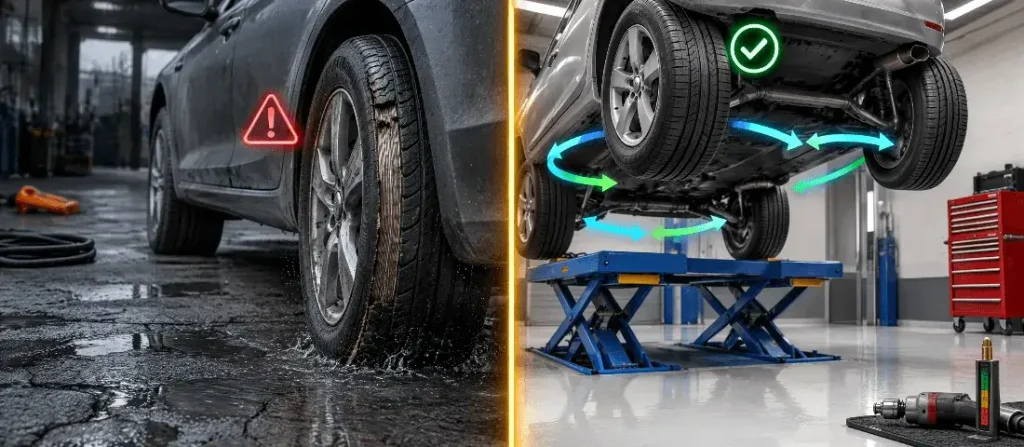
Not every irregular pattern fits neatly into center, shoulder, feathering, or cupping wear.
Diagonal wear
Diagonal patches or bands can be associated with alignment, rotation history, axle geometry, or other mechanical conditions. A shop should compare all four tires and inspect the vehicle before assigning a cause.
Do not assume that diagonal wear automatically means the vehicle needs an alignment. The pattern needs to be considered alongside tire history and mechanical inspection.
Heel-and-toe wear
Some tread blocks wear more on one edge than the other. This can create a stepped appearance across individual blocks.
The pattern may be influenced by tire design, rotation history, vehicle load, and operating conditions. Some variation in tread-block wear can occur depending on the tire’s design.
Severe or unusual heel-and-toe wear deserves inspection rather than an automatic alignment recommendation.
Flat spots or localized patches
A single bald or flattened area can follow hard braking, a locked wheel, extended storage, or tire damage.
If the spot causes vibration, have the tire and wheel assembly inspected. A localized worn area may also require an internal tire inspection to rule out structural damage.
A tire that suddenly develops a flat spot or vibration should not be treated as a routine wear issue until damage has been ruled out.
8. Tire Wear Pattern Quick Reference
Use this table to narrow down which inspection should come next. It is a guide to possible causes, not a replacement for measurements or a physical inspection.
| Wear pattern | Common possible causes | Useful next checks |
|---|---|---|
| Center tread wear | Chronic overinflation | Cold tire pressure, tire history |
| Both shoulders worn | Chronic underinflation, load, operating conditions | Cold pressure, leaks, vehicle load |
| Inner-edge wear | Alignment geometry, worn suspension parts | Camber, toe, joints, bushings |
| Outer-edge wear | Alignment geometry, suspension or operating conditions | Alignment readings, steering and suspension |
| Feathering | Often toe misalignment | Tie-rod ends, bushings, alignment |
| Cupping or scalloping | Imbalance, runout, dampers, suspension or wheel-end problems | Balance, runout, dampers, joints, hubs |
| Diagonal wear | Alignment, rotation history, axle geometry | All-tire comparison, alignment and mechanical inspection |
| Heel-and-toe wear | Tire design, rotation history, load, operating conditions | Tire condition, rotation history |
| Localized flat spot | Hard braking, locked wheel, storage, damage | Tire and wheel inspection |
A single tire can show more than one pattern. For example, it may have inner-edge wear along with feathering. That is one reason a visual diagnosis should be followed by proper checks.
9. Why a Tire Wear Pattern Is Not a Diagnosis
One pattern can have several possible causes. More than one fault can also exist at the same time.
For example, cupping may be related to worn dampers, imbalance, runout, or loose suspension components. An inner-edge wear pattern may involve alignment angles, but worn bushings or joints could be the reason those angles are out of range.
A proper inspection may include:
- Tread-depth measurements across the tire.
- Cold inflation-pressure checks.
- Wheel and tire balance.
- Wheel and tire runout measurements.
- Four-wheel alignment measurements where applicable.
- Steering and suspension inspection.
- Wheel-bearing and hub inspection when symptoms support it.
- Vehicle load and tire-rotation history review.
The correct test depends on the wear pattern and the vehicle. Do not authorize a part replacement based only on a visual description.
A useful shop inspection should explain what was measured, what was outside specification, and why the recommended repair addresses the cause. If the shop recommends replacing a steering or suspension component, ask what physical inspection or measurement supports that recommendation.
10. Can an Alignment Fix Uneven Tire Wear?
An alignment can correct wheel angles that are outside the vehicle manufacturer’s specifications. It cannot restore tread that has already worn away.
If the cause is a loose ball joint, worn bushing, bent component, damaged wheel, or another mechanical problem, that issue may need to be corrected before the final alignment.
If a tire is structurally damaged or has too little tread remaining, it may need replacement even after the vehicle is repaired.
Rotation may help manage wear when the tires are suitable for rotation and the vehicle manufacturer allows it. The correct rotation pattern and interval depend on the vehicle and tire setup.
For a broader maintenance routine, see The Car Buzz Tire Maintenance Tips. If the issue involves uneven wear across an axle, review the Tire Rotation Interval Schedule.
11. When Should You Stop Driving?
Do not keep driving on a tire with exposed cords, a serious bulge, tread separation, a major cut, or another sign of structural damage. These conditions can lead to sudden tire failure.
A tire with a tread depth of 2/32 inch or less at any point in the tread is considered worn out under USTMA guidance. Built-in tread-wear indicators can also show when the tire has reached its wear limit. Check the applicable vehicle, tire, and local inspection requirements.
If you feel a sudden vibration or ride disturbance, USTMA advises gradually reducing speed. Avoid abrupt braking or steering. Pull over in a safe place as soon as possible.
If you cannot identify the cause, arrange a tow rather than continuing to drive. A sudden tire or wheel problem can affect steering, braking, and vehicle control.
If the vehicle is pulling, vibrating, or making a new wheel-end noise, have it inspected promptly. Do not assume that a new noise is harmless just because the tire still has visible tread.
FAQs About Tire Wear Patterns Explained
What does it mean when the center of a tire is worn?
Center tread wear can point to chronic overinflation. Check the pressure when the tire is cold and compare it with the vehicle’s door placard or owner’s manual. The pattern is a clue, not proof, because load, tire design, and operating conditions also affect wear.
What causes both edges of a tire to wear?
Both-shoulder wear commonly points to underinflation. Excess load and driving conditions can also contribute. Check for leaks and use the vehicle’s recommended cold pressure. If the tire has been driven significantly underinflated, have it inspected for internal damage.
What does feathering on a tire mean?
Feathering is a saw-tooth feel across tread blocks or ribs. It commonly points to toe misalignment, but worn steering or suspension parts may be involved. A technician should inspect for looseness and measure alignment before parts are replaced.
What causes tire cupping?
Cupping can be associated with worn shocks or struts, imbalance, wheel or tire runout, and other suspension or wheel-end conditions. It does not prove that the shocks are bad. The tire and vehicle need a proper inspection.
Can an alignment fix cupped tires?
An alignment may correct one possible cause, but it cannot restore the tread already removed. Cupping can also come from balance, runout, or suspension problems. Confirm the cause before choosing the repair.
The Bottom Line
Tire wear patterns can help narrow down an inspection, but they do not identify a failed part by themselves. Center wear may point to pressure, feathering may point to toe, and cupping may point to balance or suspension problems.
Check tire pressure, measure tread depth, and inspect for damage first. Then have alignment, balance, runout, steering, and suspension checked as the evidence requires.
Correct the cause before fitting a replacement tire. Otherwise, the new tire may develop the same wear pattern.