
This article was updated in November 18, 2026 with new products and information by Mark S. Taylor
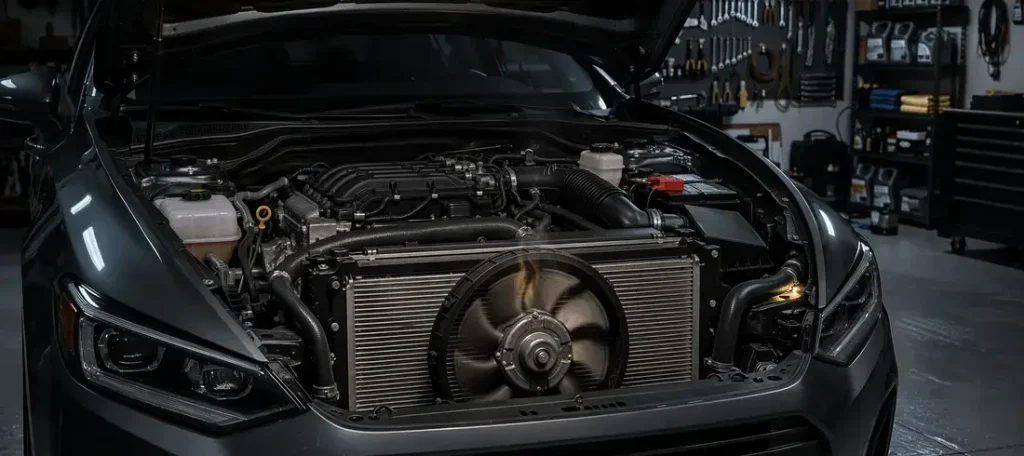
A cooling fan that keeps running after you park is not automatically broken. Some vehicles use an after-run strategy to manage heat after the ignition is switched off. The correct time limit depends on the vehicle, engine, software, and operating conditions.
Ford documents several minutes of fan operation under certain conditions. A Volkswagen bulletin allows up to 15 minutes on specified gasoline applications and 16 minutes on specified diesel applications. A Mercedes-Benz bulletin documents up to 20 minutes for a particular engine and software combination. These are examples, not universal limits.
Contents
- 1 Is It Normal for a Radiator Fan to Run After Shutdown?
- 2 Why Does the Fan Keep Running After I Turn Off the Car?
- 3 How Long Should a Radiator Fan Run After Shutdown?
- 4 When Is a Fan That Keeps Running a Problem?
- 5 What Can Cause the Fan to Keep Running Too Long?
- 6 What Can You Check Safely?
- 7 What Should a Technician Test Before Replacing Parts?
- 8 Should You Pull the Fan Fuse or Disconnect the Battery?
- 9 When Should You Stop Driving?
- 10 FAQs About Radiator Fan Keeps Running After Shutdown
- 10.1 Is it normal for a radiator fan to run for 10 minutes after I turn off the car?
- 10.2 Can a radiator fan running after shutdown drain the battery?
- 10.3 Does a fan that runs after shutdown mean the thermostat is bad?
- 10.4 Why does my fan run after a short drive?
- 10.5 Can I drive if the fan keeps running after I park?
- 11 The Bottom Line
Is It Normal for a Radiator Fan to Run After Shutdown?
Yes, it can be normal. The engine bay, turbocharger, radiator, and coolant can remain hot after the engine stops. Some control systems keep the electric fan running for a programmed period to manage that heat.
It becomes a concern when the fan runs longer than the vehicle’s documented strategy, operates unexpectedly on a cold vehicle, causes a battery-drain problem, or appears with an overheating warning or coolant loss.
Why Does the Fan Keep Running After I Turn Off the Car?
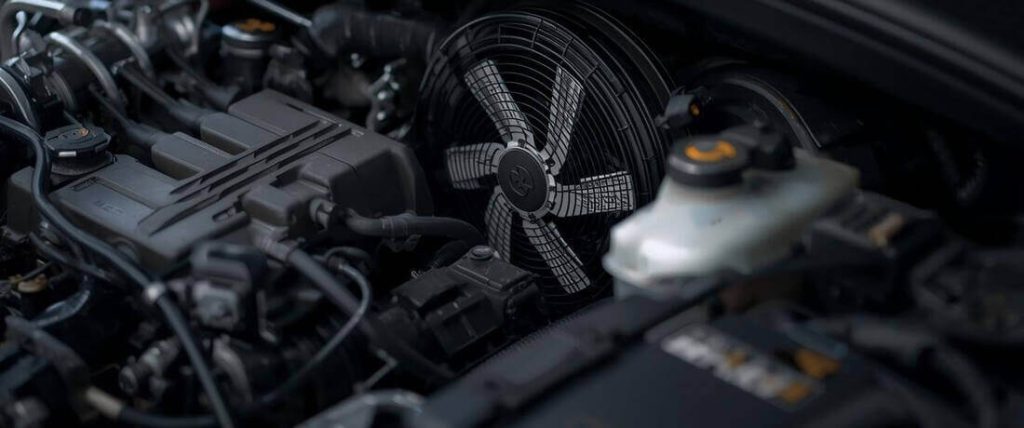
The electric cooling fan moves air through the radiator and other heat exchangers. Depending on the vehicle, it may also help cool the air-conditioning condenser.
When you switch off the engine, the fan may continue to operate because the control system still sees a reason to remove heat.
Common operating conditions can include:
- A hot engine after a long drive
- High ambient temperature
- Heavy traffic or extended idling
- High engine load before parking
- Turbocharger thermal-management needs
- A vehicle-specific after-run strategy
Some vehicles also use electric coolant pumps that can operate independently of engine speed. Modern thermal-management systems are more complex than a simple fan controlled by one temperature switch.
How Long Should a Radiator Fan Run After Shutdown?
There is no single time limit for every car. Use the owner’s manual or service information for your exact year, make, model, and engine.
The following examples show why a universal time rule can be misleading.
| Manufacturer | Vehicle or engine scope | Documented behavior |
|---|---|---|
| Ford | Mustang application shown in the linked manual | Fan may continue for several minutes under certain conditions |
| Volkswagen | Listed 2005–2016 vehicles, except Routan | Up to 15 minutes for gasoline applications and up to 16 minutes for diesel applications |
| Mercedes-Benz | Passenger cars with M256.9 engine and specified PTCU software | Up to 20 minutes described as normal |
| General Motors | Listed 2013–2015 Buick/Chevrolet applications with specified engines | Control module may command a calibrated after-run period to reduce turbocharger temperature |
These documents do not establish a universal limit. A 20-minute run time that is normal for one covered application could be outside the strategy of another vehicle.
If you cannot find an after-run description in the owner’s manual, ask a dealer or qualified shop to check the service information for your vehicle.
When Is a Fan That Keeps Running a Problem?
Pay attention to the pattern, not just the sound.
A fan that runs briefly after a hot drive and then shuts off may be operating normally. A fan that continues until the battery is weak, starts when the engine is cold without an explained command, or runs much longer than the vehicle’s documented strategy deserves diagnosis.
Other warning signs include:
- The temperature gauge rises above its normal range.
- An engine-temperature warning appears.
- Coolant is leaking or the reservoir level repeatedly drops.
- Steam appears from the engine compartment.
- The fan operates at unusual times and the battery repeatedly loses charge.
- The fan runs continuously even when the vehicle is cold and the ignition has been off for an extended period.
Do not ignore an overheating warning just because the fan is running. A fan cannot correct every cooling-system problem.
What Can Cause the Fan to Keep Running Too Long?
Several faults can produce similar behavior. The fan’s operation must be compared with the vehicle’s control strategy.
Actual High Coolant Temperature
The engine may still be too hot after shutdown. Possible reasons include restricted airflow, a cooling-system leak, a thermostat problem, a radiator restriction, or inadequate coolant circulation.
The fan may be doing exactly what the control module requested. The underlying cooling-system condition still needs to be checked.
Coolant-Temperature Sensor or Circuit Problem
The control module uses temperature information to decide when the fan should operate. A faulty sensor, connector, wiring circuit, or inaccurate signal can affect that decision.
A temperature-related trouble code does not prove the sensor itself has failed. A technician should compare scan data with the actual engine temperature and test the circuit using the manufacturer’s procedure.
Fan Relay or Fan-Control Module
A relay with stuck contacts or a control-module fault can keep power flowing to the fan when it should be off.
The correct test depends on the vehicle’s wiring and fan-control design. Some systems do not use a simple replaceable relay as the only control point.
Turbocharger Thermal Management
Some turbocharged engines use a programmed fan or coolant-pump run-on to manage heat after shutdown. GM’s PI0675B documents this type of strategy for specific applications.
Do not replace the fan simply because it runs after a hard drive. Check whether the vehicle has a documented turbocharger cooling routine.

What Can You Check Safely?
You can collect useful information without touching the fan or opening the cooling system.
- Record how long it runs. Use a clock. Do not estimate from memory.
- Note the driving conditions. Record whether the last trip involved hot weather, traffic, a long climb, towing, or heavy acceleration.
- Check the temperature gauge and warnings. Note whether the engine was running hotter than usual before you parked.
- Look for visible coolant leaks from a safe position. Do not reach near the fan, belts, or hot engine parts.
- Check the coolant reservoir only when the engine is fully cold. Use the location and procedure in the owner’s manual.
- Compare the behavior with the owner’s manual. If the manual describes fan after-run, follow that model-specific guidance.
Safety warning: Do not remove a radiator cap or pressurized coolant-reservoir cap while the system is hot. Hot coolant and steam can escape under pressure and cause serious burns.
Do not put your hands, clothing, tools, or a phone near the fan. The cooling fan may continue operating after the vehicle is switched off or start unexpectedly.
What Should a Technician Test Before Replacing Parts?
A sound diagnosis starts by confirming the complaint and checking the vehicle’s operating strategy.
A technician may need to:
- Verify the exact model, engine, and applicable service bulletin.
- Scan all relevant control modules for stored and pending diagnostic trouble codes.
- Compare the coolant-temperature reading with actual temperature.
- Review the fan command and the fan’s actual operation.
- Inspect the fan relay, control module, wiring, connectors, and grounds where applicable.
- Check coolant level and inspect for leaks.
- Evaluate thermostat operation, radiator airflow, coolant-pump operation, and cooling-system pressure when the symptoms support those tests.
- Check for turbocharger or hybrid/EV thermal-management strategies where applicable.
Cooling-system diagnostics should include the fan’s switch-on point, fuse, thermal switch, fan-control unit, temperature-sensor reading, thermostat, radiator airflow, coolant pump, and related conditions when appropriate.
A fan motor should not be replaced just because it runs after shutdown. A relay should not be replaced just because the fan remains on. Confirm the command and circuit first.
Should You Pull the Fan Fuse or Disconnect the Battery?
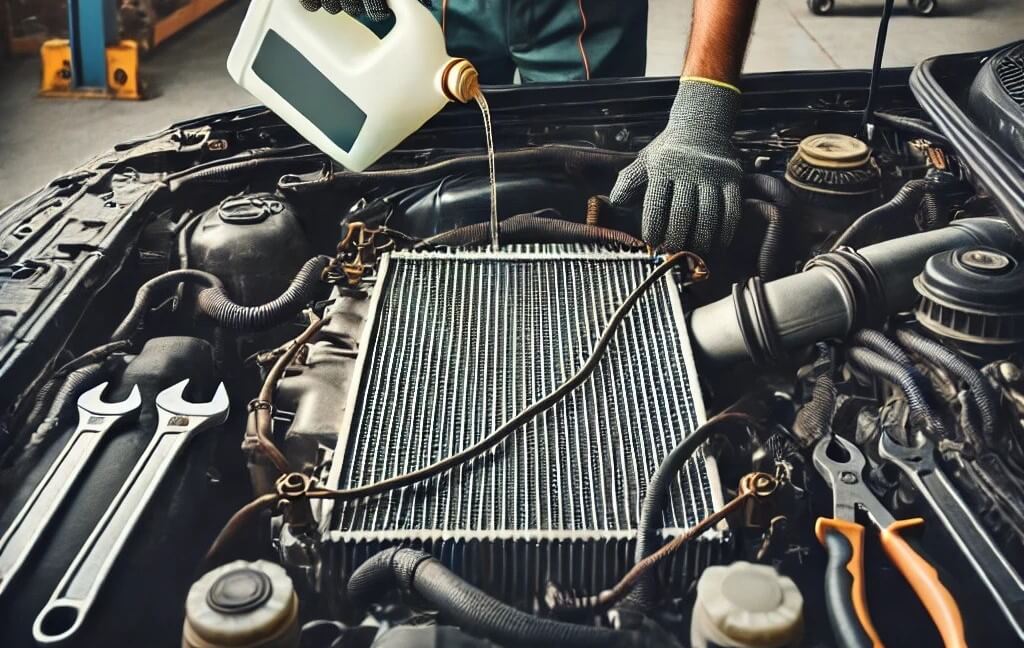
No. Do not use a generic fuse-pulling or battery-disconnection trick to stop the fan.
The fuse may also protect other components. Removing it can disable cooling or create additional faults. Disconnecting the battery can affect vehicle settings and may interfere with diagnostic information or procedures.
If the fan will not stop and the battery is at risk, follow the vehicle manufacturer’s instructions or arrange professional help. Do not reach into the fan area while it is powered.
When Should You Stop Driving?
A fan that runs after shutdown, by itself, does not always mean the car is unsafe to drive.
Stop in a safe place if the temperature gauge rises into the warning range, an overheat warning appears, steam is visible, or coolant is leaking rapidly. Switch off the engine and arrange assistance if the vehicle is overheating.
Do not open the cooling system while it is hot. If the engine repeatedly overheats, do not keep driving in the hope that the fan will cool it down.
FAQs About Radiator Fan Keeps Running After Shutdown
Is it normal for a radiator fan to run for 10 minutes after I turn off the car?
It can be normal on some vehicles, but the time limit is model-specific. Volkswagen documents up to 15 minutes on certain gasoline applications and 16 minutes on certain diesel applications. Mercedes-Benz documents up to 20 minutes for a specific M256.9 application. Check your own manual before using another vehicle’s time as a rule.
Can a radiator fan running after shutdown drain the battery?
A fan that runs for its programmed after-run period should be managed by the vehicle’s control system. If it continues far beyond the documented period or repeatedly leaves the battery discharged, have the fan command, relay/control circuit, and battery condition checked.
Does a fan that runs after shutdown mean the thermostat is bad?
No. The fan can run because of normal thermal management, high coolant temperature, turbocharger cooling, or a control-system issue. A thermostat is only one possible part of the cooling system. It should be tested before replacement.
Why does my fan run after a short drive?
The duration of the trip alone does not determine whether after-run is normal. Ambient temperature, engine load, A/C use, turbocharger temperature, and the vehicle’s software strategy can affect fan operation. Compare the behavior with the exact owner’s manual and service information.
Can I drive if the fan keeps running after I park?
If the vehicle has normal temperature readings, no warnings, no coolant leak, and the fan stops within the documented strategy, the after-run may be normal. If the engine overheats, coolant leaks, or the fan causes repeated battery discharge, arrange diagnosis instead of ignoring the condition.
The Bottom Line
A cooling fan that runs after the engine is switched off may be doing exactly what the manufacturer designed it to do. Ford, Volkswagen, Mercedes-Benz, and GM documents show that after-run behavior and duration vary by vehicle.
Record the run time, check the owner’s manual, and look for overheating or coolant-loss warnings. If the fan operates outside the documented strategy, test the control command and cooling system before replacing the fan, relay, or sensor.