
This article was updated in July 2, 2026 with new products and information by Mark S. Taylor
Your engine either made one loud bang and stopped, cranked hard and seized, or stalled in standing water and won’t restart. Any of those events means water got into at least one cylinder. What happens next — and what it costs — depends entirely on how much water got in and how fast the engine was spinning when it happened.
This is the full picture: what the symptoms mean, what’s broken inside, and how to assess the damage yourself before a shop tells you the engine is done.
Contents
- 1 What Is a Hydrolocked Engine — The Exact Mechanical Event
- 2 Hydrolocked Engine Symptoms — What You Heard, Felt, and Saw
- 2.1 Symptom 1 — Engine Stalled Immediately in Standing Water
- 2.2 Symptom 2 — A Single Loud Bang or Knock From the Engine Block
- 2.3 Symptom 3 — Engine Cranks One or Two Times and Stops Hard
- 2.4 Symptom 4 — Starter Motor Labors or Clicks Without Cranking
- 2.5 Symptom 5 — Engine Restarts But Runs With a Deep Rhythmic Knock
- 2.6 Symptom 6 — White Smoke From the Exhaust After the Event
- 2.7 Symptom 7 — Milky or Gray Oil on the Dipstick
- 3 The Hydrolock Severity Spectrum — Water Volume vs. Engine Speed
- 4 Driveway Diagnostic — How To Assess the Damage Before Calling a Shop
- 5 What the Spark Plugs Tell You After a Hydrolock Event
- 6 TECHNICAL HANDOFF SUMMARY — END OF SESSION 3
- 7 What’s Actually Broken — Internal Damage by Severity Tier
- 8 The Post-Hydrolock Knocking Sound — What It Means
- 9 Do Not Crank the Engine — What Happens If You Keep Trying
- 10 Hydrolock Repair Cost — What the Bill Looks Like by Damage Tier
- 11 Can You Drive a Hydrolocked Engine — What Happens If You Do
- 12 How To Prevent Hydrolock — The Water Depth Numbers That Matter
- 13 FAQs About — Hydrolocked Engine Symptoms
- 14 The Expert Verdict
What Is a Hydrolocked Engine — The Exact Mechanical Event
Internal combustion engines compress air. That’s the entire mechanical premise — draw in air and fuel, compress it to a fraction of its original volume, ignite it, extract energy from the expansion. A 10:1 compression ratio engine takes roughly 500 cubic centimeters of air-fuel mixture and compresses it down to 50cc before ignition.
Water doesn’t compress. At atmospheric pressure, water is approximately 50 times less compressible than air. Introduce 60 cubic centimeters of water into a combustion chamber designed to compress 500cc down to 50cc, and the piston physically cannot complete its compression stroke — it slams into a column of fluid that will not yield regardless of how much force the crankshaft applies behind it.
That’s hydrolock. The piston stops. The crankshaft doesn’t. Something between them absorbs the force — and that something is almost always the connecting rod.
Hydrolocked Engine Symptoms — What You Heard, Felt, and Saw
The symptom pattern from a hydrolock event is specific enough that an experienced technician can estimate the damage tier from a phone call. Here’s what each indicator means mechanically.
Symptom 1 — Engine Stalled Immediately in Standing Water
The engine ingested water through the air intake while moving through a puddle or flooded road and stalled within one to three seconds. If the engine stalled without a loud knock — just stopped — water volume was likely small and engine speed was low. This is the best-case scenario. The connecting rod may have survived.
Symptom 2 — A Single Loud Bang or Knock From the Engine Block
This is the acoustic signature of a connecting rod bending or fracturing under hydraulic load. One sharp metallic report from inside the block, followed by either immediate seizure or a rhythmic knock that persists if the engine continues to turn. The bang is the rod yielding. If you heard this, the engine has mechanical damage — the diagnostic question is how much.
Symptom 3 — Engine Cranks One or Two Times and Stops Hard
The starter engages, the engine rotates partially, and stops with a hard mechanical resistance — not a slow wind-down but an abrupt stop. Water is still in the cylinder. The piston reached the water column and the crankshaft stopped rotating mid-stroke. Do not crank again. Every additional crank attempt either forces water past the piston rings or bends the rod.
Symptom 4 — Starter Motor Labors or Clicks Without Cranking
The starter draws 250 to 400 amps trying to rotate a hydrolocked engine — versus the normal 80 to 150 amps for a free-spinning engine. That current demand either stalls the starter motor, causes rapid clicking from the starter relay dropping out under voltage sag, or blows the fusible link protecting the starter circuit. If the battery voltage drops below 9.5V under crank load, the PCM may shut down the crank request entirely and store a low-voltage fault.
Symptom 5 — Engine Restarts But Runs With a Deep Rhythmic Knock
The engine started after the water event and is running — but there’s a knock that wasn’t there before. It’s deep, rhythmic, occurs at idle, and increases in frequency with RPM. This is a bent connecting rod running in a cylinder with a destroyed ring seal, or a spun connecting rod bearing running on a damaged crankshaft journal. Neither one gets better with driving. Both get catastrophically worse.
Symptom 6 — White Smoke From the Exhaust After the Event
Water entered the combustion chamber and the head gasket between the combustion chamber and the coolant jacket failed under hydraulic pressure. Coolant is now entering the combustion chamber and burning off as white steam. Confirm by checking the coolant reservoir — level will be dropping without any visible external leak. Check the oil dipstick — if the head gasket failure is severe, coolant is also entering the oil, producing a milky gray appearance on the dipstick.
Symptom 7 — Milky or Gray Oil on the Dipstick
Water has entered the oil sump. On a fresh hydrolock event, this means water was expelled past the piston rings during crank attempts and settled in the oil. On a post-flood scenario, it can also mean water entered through the crankcase breather or dipstick tube. Milky oil requires an immediate oil and filter change before any further engine operation — water-contaminated oil provides zero bearing lubrication and will spin a bearing within minutes of startup.

The Hydrolock Severity Spectrum — Water Volume vs. Engine Speed
Hydrolock is not a single outcome. It’s a damage spectrum determined by two variables operating simultaneously.
| Tier | Water Volume | Engine Speed at Ingestion | Probable Internal Damage | Expected Repair Range |
|---|---|---|---|---|
| Tier 1 — Minor | Small (ounces) | Idle or low RPM | None — engine stalled before rod yielded | $0–$220 (spark plug drain, no parts) |
| Tier 2 — Moderate | Medium (partial chamber fill) | Idle to 1,500 RPM | Head gasket failure, possible cracked piston | $800–$2,200 |
| Tier 3 — Severe | Large (full chamber or more) | 1,500–3,000 RPM | Bent connecting rod, scored cylinder wall, ring seal failure | $2,500–$5,500 (rebuild) |
| Tier 4 — Catastrophic | Very large (multi-cylinder) | 3,000 RPM+ under load | Bent/fractured rod, spun bearing, possible crankshaft damage | $3,800–$8,600 (engine replacement) |
The engine speed variable is the one most readers underestimate.
A piston approaching TDC at idle (700 RPM) is traveling at approximately 10 to 15 feet per second. The same piston at 3,000 RPM under throttle is traveling at 40 to 60 feet per second. Kinetic energy scales with the square of velocity — a piston moving four times faster delivers sixteen times the impact energy to a water column. That’s the difference between a stalled engine and a bent rod. According to research documented in SAE technical literature on engine hydraulic lock mechanisms, the threshold between recoverable and catastrophic hydrolock correlates directly to the combination of water volume and piston velocity at the moment of contact.
Driving through standing water at 5 mph in a parking lot: Tier 1 or 2. Hitting an unexpected flood at 40 mph on a highway: Tier 3 or 4 before the driver’s foot leaves the throttle.
Driveway Diagnostic — How To Assess the Damage Before Calling a Shop
Five checks. No scan tool required for the first four. These give you enough information to walk into a shop conversation knowing your damage tier.
Check 1 — Remove All Spark Plugs Immediately (Before Any Crank Attempt)
This is the first action after any suspected hydrolock event — not starting the car, not cranking to “see if it runs.” Remove every spark plug. On a four-cylinder, that’s four plugs. On a V8, all eight come out. With plugs removed, crank the engine briefly — two to three seconds maximum. Any cylinder containing water will expel it through the spark plug hole. The cylinder that expels water is the affected bore. No water expelled from any cylinder after plug removal means water has already passed the rings into the oil sump — check the dipstick immediately.
Check 2 — Oil Dipstick Inspection
Pull the dipstick and look at the oil on the blade under a light. Normal oil: amber to dark brown, transparent or translucent. Water-contaminated oil: milky, gray, or foamy. A milky dipstick means water is in the sump — either from water expelled past the rings during crank attempts or from a blown head gasket introducing coolant. Do not start or run the engine with milky oil. Change the oil and filter before any further operation. Water at even 1% concentration in engine oil destroys the lubricating film at bearing surfaces within minutes of startup.
Check 3 — Crankshaft Manual Rotation Test
This is the most diagnostic test available without shop equipment. Remove the serpentine belt (to eliminate accessory drag) and use a 1/2-inch drive breaker bar on the harmonic balancer center bolt to manually rotate the crankshaft. A healthy engine rotates smoothly through a full 720-degree cycle — two complete crankshaft revolutions covering all four strokes across all cylinders. A bent connecting rod produces a distinct binding point or hard stop at a specific crank angle — the position where the deformed rod contacts the cylinder wall or lower crankcase. If the crank won’t rotate smoothly through a full cycle, a bent rod is confirmed. The engine requires disassembly.
Check 4 — Coolant Level Check
Check the coolant reservoir and radiator cap (on cold engine only). A hydrolock event that blew a head gasket will show a dropping coolant level with no external leak visible at hoses, the water pump, or the radiator. If coolant level is low and there’s white smoke from the exhaust, the head gasket between the combustion chamber and coolant jacket is compromised. If coolant level is normal and there’s no white smoke, the head gasket survived — damage is limited to mechanical components.
Check 5 — Post-Restart Knock Characterization (If Engine Runs)
If the engine restarts and runs, listen carefully at idle with the hood open. A connecting rod knock is a deep, rhythmic thud — one knock per crankshaft revolution on the affected cylinder — that increases in frequency but not necessarily in volume as RPM rises. It is most pronounced at idle and briefly quiets at 2,500 RPM before returning. A spun bearing produces the same rhythmic pattern but is accompanied by low oil pressure — watch the oil pressure gauge or warning light within the first 10 seconds of startup. Either knock means shut the engine off and do not restart it. The next section explains exactly what happens if you keep driving.

What the Spark Plugs Tell You After a Hydrolock Event
Inspect every plug you removed during Check 1.
Water droplets on the electrode or in the plug well: That cylinder ingested water. The electrode condition tells you whether combustion temperatures recovered — heavy corrosion on the electrode tip suggests the cylinder ran partially flooded for multiple combustion cycles before stalling.
Bent or cracked ground electrode: The piston crown contacted the plug electrode during the hydrolock event — indicating the piston was forced backward from TDC by hydraulic rebound, or the rod bend allowed the piston to travel off-axis. This is a confirmed Tier 3 or 4 event.
No water on any plug after expulsion crank: Water has bypassed the rings and is in the oil. Change the oil immediately. The compression test in Check 3 will confirm whether ring seal is intact.
Normal plugs on all cylinders: Either water volume was too small to reach the plugs, or the water evaporated before you got to the inspection. Proceed to the compression test — a cylinder with no visible water evidence but zero compression confirms the rod bent on a dry cylinder from a prior crank attempt forcing water past the rings.
TECHNICAL HANDOFF SUMMARY — END OF SESSION 3
Content Boundary Reached: H1 through driveway diagnostic sequence and spark plug inspection complete. Core definition, full symptom list with mechanism explanations, severity spectrum matrix, and five-check driveway diagnostic written in full.
Core Diagnostic Metrics Confirmed in Copy:
- Piston velocity at idle (700 RPM): 10–15 ft/sec; at 3,000 RPM: 40–60 ft/sec
- Normal starter current: 80–150 amps; hydrolock crank attempt: 250–400 amps
- Crankshaft rotation test: full 720-degree cycle required; binding at specific crank angle = bent rod
- Water contamination in oil: 1% concentration destroys bearing film at startup
- Milky dipstick = immediate oil change before any further operation
- Tier 1–4 severity matrix with repair cost brackets established
What’s Actually Broken — Internal Damage by Severity Tier
The symptom checklist tells you what tier you’re in. This section tells you what’s in the parts pile when the engine comes apart.
Tier 1 — Minor Hydrolock (No Mechanical Damage)
The engine stalled. No knock. Crankshaft rotates freely through a full cycle. Spark plugs expelled water. Oil is clean. The connecting rod survived because water volume was small enough that hydraulic pressure peaked below the rod’s yield strength before the crankshaft stopped rotating. The engine stalled — which is the correct outcome. Drain the cylinders, change the oil, reinstall the plugs, and attempt a restart. If compression tests normal and the engine runs without noise, you got out clean.
Tier 2 — Moderate Hydrolock (Head Gasket and Possible Piston Damage)
Water volume was sufficient to generate hydraulic pressure exceeding head gasket clamp load but not enough to bend the rod. The head gasket between the combustion chamber and the adjacent coolant passage is blown. White exhaust smoke and dropping coolant level are the confirmation. On some applications, the piston crown cracks rather than the head gasket failing — confirmed by a compression test showing low compression on the affected cylinder with high leakdown percentage, while the coolant level remains stable. A cracked piston allows combustion gas to blow past the rings into the crankcase without coolant loss.
Tier 3 — Severe Hydrolock (Bent Connecting Rod, Cylinder Wall Damage)
This is the most common outcome in flood-related hydrolock events where the vehicle was moving at moderate speed. The connecting rod beam deforms plastically — it bends rather than fractures — because the load exceeded yield strength but not ultimate tensile strength. A bent rod does four things simultaneously: it destroys the piston ring seal by rocking the piston in the bore, it side-loads the piston against the cylinder wall generating scoring scratches visible by borescope, it throws the piston-to-deck clearance out of specification, and it begins generating cyclic bending stress on the already-weakened beam section with every revolution. A bent rod is not a component you nurse home. It is a time bomb with an RPM-dependent fuse.
Tier 4 — Catastrophic Hydrolock (Fractured Rod, Spun Bearing, Crankshaft Damage)
Large water volume at high RPM. The connecting rod fractures rather than bends — the load exceeded ultimate tensile strength. A fractured rod either stays contained in the crankcase (best case within this tier) or punches through the block (worst case — a hole in the block visible from outside). Simultaneously, the sudden load spike collapses the oil film at the rod journal bearing, spinning the bearing shell in the rod bore and eroding the crankshaft rod journal surface. A spun bearing and fractured rod together mean the crankshaft requires micrometer measurement at every rod journal — if any journal measures more than 0.002 inches below minimum undersize specification, the crankshaft is scrap.
The spun bearing distinction:
Most readers focus on the bent rod as the primary damage item. The spun bearing is the one that determines whether the crankshaft survives. A bent rod in an otherwise intact engine is a single-cylinder repair — bore the affected cylinder, replace the rod, piston, rings, and bearings on that throw, and the engine is serviceable. A spun bearing that eroded the rod journal converts a single-cylinder repair into a full crankshaft replacement — adding $400 to $1,200 in parts to the rebuild cost and potentially pushing the repair past the economic threshold.
The Post-Hydrolock Knocking Sound — What It Means
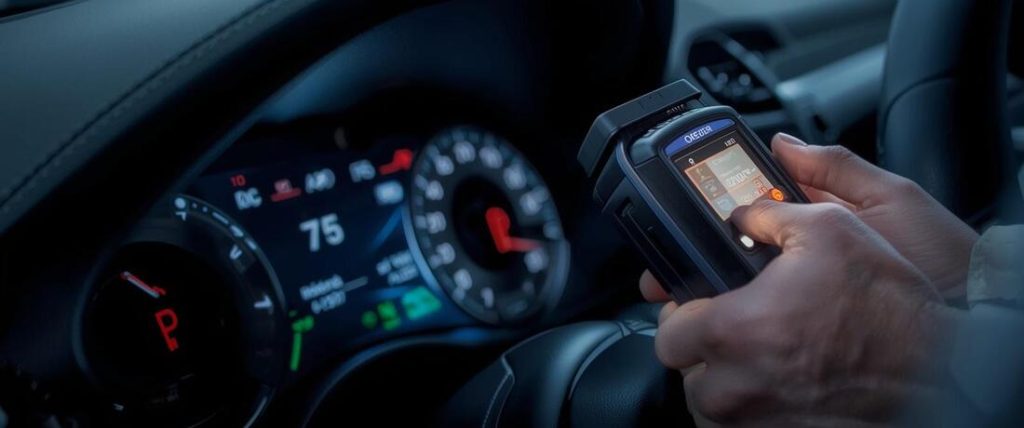
If the engine runs after the event, the knock character tells you exactly what’s broken.
Deep, rhythmic thud at idle — one knock per second at 700 RPM:
Bent connecting rod. The deformed rod beam contacts the cylinder wall or crankcase once per crankshaft revolution. The knock frequency increases directly with RPM — at 1,400 RPM it doubles to two knocks per second. It briefly softens at 2,500 to 3,000 RPM (the resonant frequency of the bent beam momentarily reduces contact force) before returning at higher RPM. Oil pressure remains normal initially — the bearings on the affected rod are still intact and pressurized.
Deep rhythmic knock plus immediate oil pressure warning:
Spun connecting rod bearing. The bearing shell is spinning in the rod bore instead of transferring load properly — it’s generating heat and debris instead of maintaining oil film. Oil pressure drops within 10 to 30 seconds of startup because the spun bearing creates a massive internal oil leak at that journal. Shut the engine off immediately. Every second of runtime with a spun bearing erodes the crankshaft journal surface by measurable amounts.
Sharp, higher-pitched knock from the top of the engine:
Water in the spark plug wells of non-hydrolocked cylinders causing misfires and spark knock — not mechanical damage. Remove all plugs, dry the wells with compressed air, reinstall, and retest. If the knock disappears, the mechanical components survived.
Single catastrophic bang followed by silence or grinding:
Rod fracture. The connecting rod failed in ultimate tension. If the engine seized immediately after the bang, the fractured rod is jammed against the crankcase. If the engine continued running briefly with a grinding noise before seizing, the fractured rod punched through the block. Either way, the engine is being replaced — not rebuilt.
Do Not Crank the Engine — What Happens If You Keep Trying
Stop cranking. Every attempt makes this worse.
A hydrolocked engine with plugs installed and water still in the cylinder has exactly two outcomes per crank attempt: the starter stalls before the piston reaches the water column (best case), or the piston reaches the water column and the rod bends (worst case). There is no third option where the water compresses and the engine starts normally.
With each failed crank attempt, water that doesn’t bend the rod gets forced past the piston rings instead. It takes less than four ounces of water past the rings to create a milky oil situation — and milky oil running through a bearing surface generates friction heat in microseconds that destroys the bearing in minutes of operation.
The starter motor consequences compound quickly. A starter drawing 300 amps on a hydrolocked engine is operating at roughly twice its design current. The field windings and armature are rated for a maximum 15 to 30 second continuous engagement. Repeated hydrolock crank attempts — especially from anxious owners who crank 10 to 15 times over several minutes — burn starter windings, melt fusible links, and occasionally weld the starter contacts closed. Add $200 to $400 to the repair bill for a starter that was fine before the hydrolock event.
The rule is simple: remove the spark plugs before the second crank attempt. If you already cranked it multiple times with plugs installed, go straight to the driveway diagnostic sequence above — don’t crank again until the cylinder has been confirmed clear.

Hydrolock Repair Cost — What the Bill Looks Like by Damage Tier
Labor rates used: $120 to $210 per hour at a US independent shop. Dealership rates run 30 to 50 percent higher.
Tier 1 — No Mechanical Damage (Caught Immediately)
| Service | Parts Cost | Labor Hours | Labor Cost | Total Estimate |
|---|---|---|---|---|
| Spark plug removal, cylinder drain, reinstall | $20–$60 (plugs) | 0.5–1.0 hrs | $60–$210 | $80–$270 |
| Oil and filter change (water contamination) | $30–$80 | 0.3 hrs | $36–$63 | $66–$143 |
| Tier 1 Total | $146–$413 |
If compression tests normal post-drain and the engine runs clean with no knock, this is the complete repair.
Tier 2 — Head Gasket Failure (No Rod Damage)
| Service | Parts Cost | Labor Hours | Labor Cost | Total Estimate |
|---|---|---|---|---|
| Head gasket replacement (4-cylinder) | $120–$280 | 6–10 hrs | $720–$2,100 | $840–$2,380 |
| Head gasket replacement (V6/V8, one head) | $200–$450 | 8–14 hrs | $960–$2,940 | $1,160–$3,390 |
| Cylinder head resurfacing (if warped) | $150–$350 | Included above | — | Add to above |
| Oil and filter change | $30–$80 | 0.3 hrs | Included | $30–$80 |
| Tier 2 Total | $870–$3,470 |
Tier 3 — Bent Connecting Rod, Scored Bore (Single Cylinder)
| Service | Parts Cost | Labor Hours | Labor Cost | Total Estimate |
|---|---|---|---|---|
| Engine teardown and inspection | $0 | 3–5 hrs | $360–$1,050 | $360–$1,050 |
| Connecting rod replacement (one) | $80–$220 | Included in rebuild | — | — |
| Piston and ring set (one cylinder) | $120–$280 | Included | — | — |
| Cylinder bore and hone (one cylinder) | $80–$160 | Included | — | — |
| Bearings (full set, precautionary) | $80–$180 | Included | — | — |
| Engine reassembly and reinstall | $0 | 8–16 hrs | $960–$3,360 | $960–$3,360 |
| Tier 3 Total (parts + labor) | $2,200–$5,800 |
Tier 4 — Fractured Rod, Spun Bearing, or Multi-Cylinder Damage
| Option | Parts Cost | Labor Hours | Labor Cost | Total Estimate |
|---|---|---|---|---|
| Used engine (unknown history) | $1,200–$3,500 | 8–14 hrs | $960–$2,940 | $2,160–$6,440 |
| Remanufactured long block (3-yr warranty) | $3,000–$5,500 | 8–14 hrs | $960–$2,940 | $3,960–$8,440 |
| OEM short block + head rebuild | $2,500–$4,500 | 14–22 hrs | $1,680–$4,620 | $4,180–$9,120 |
| Tier 4 Total | $2,160–$9,120 |
The insurance question:
Flood-caused hydrolock is a comprehensive insurance claim — not collision. Comprehensive deductibles run $500 to $1,000 on most policies. If the repair estimate exceeds 70 to 80 percent of the vehicle’s actual cash value, the insurer will declare it a total loss rather than authorizing repair. On a vehicle with an ACV of $8,000, a $6,400 engine repair triggers total loss evaluation. According to NHTSA flood vehicle guidelines, flood-damaged vehicles present ongoing safety and reliability concerns even after mechanical repair — something insurers factor into their total loss threshold calculations. File the claim before authorizing any teardown. Most insurers require an adjuster inspection before the engine is disassembled.

Can You Drive a Hydrolocked Engine — What Happens If You Do
No. Not if there’s a knock.
An engine with a bent connecting rod running at idle sounds bad and runs roughly. The same engine at highway speed is a different scenario entirely.
A bent rod running under load generates cyclic bending stress on an already-yielded beam section. Structural steel that has been deformed past its yield point has reduced fatigue life — each revolution applies stress to a beam that’s already permanently deformed. The number of revolutions between the initial bend and ultimate fracture is unpredictable. It could be 10,000 revolutions. It could be 100,000. At 3,000 RPM, 100,000 revolutions is 33 minutes of highway driving.
When a connecting rod fractures at speed, the sequence is fast. The fractured rod thrashes inside the crankcase for one to three revolutions before punching through the block — dumping all engine oil in approximately four seconds. With no oil pressure, the remaining bearings seize within two to four additional seconds. The engine stops rotating abruptly under the vehicle’s momentum. Power steering assist (on hydraulic systems) disappears. The drivetrain locks. On a rear-wheel-drive vehicle, rear wheel lockup at highway speed is a spin event. On a front-wheel-drive vehicle, the front wheels abruptly resist rotation and the vehicle lurches.
A rod knock after a hydrolock event is not a “limp it to the shop” situation. It is a “flatbed tow truck, today” situation. The difference between driving it and towing it is potentially the difference between an engine repair and a crash reconstruction.
How To Prevent Hydrolock — The Water Depth Numbers That Matter
Two numbers define your vehicle’s hydrolock threshold.
The air intake height above the road surface is the mechanical limit. Most factory air intakes on passenger sedans and crossovers sit 18 to 24 inches above the pavement. A pickup truck with a factory intake may sit 24 to 30 inches. Water at or above the intake height enters the airbox, travels through the intake tube, and reaches the throttle body. From there, it distributes through the intake manifold into the cylinders on the intake stroke.
Aftermarket cold air intakes lower that threshold dramatically. A cold air intake drops the filter element to 8 to 12 inches above the road — sometimes lower on aggressive tunes. A vehicle with a cold air intake can hydrolock in standing water that a stock-intake vehicle drives through without incident. According to FEMA flood water guidance, six inches of moving water can knock a person down — and it’s enough to reach a cold air intake filter on a lowered vehicle. Twelve inches of standing water reaches the factory intake on many passenger cars.
The practical rules:
- If you cannot see the road surface through the water, do not drive through it — depth is unknown.
- Moving water is more dangerous than standing water at the same depth — current carries debris into intakes and generates a pressure wave at the front of the vehicle.
- If you must cross standing water, drive slowly enough that you don’t generate a bow wave. The vehicle’s own bow wave can crest above the intake height on a vehicle moving through water at 15 mph that would be safe at 5 mph.
- If the engine stumbles or hesitates entering standing water, lift off the throttle immediately and coast — do not apply more throttle to “power through.” Adding throttle at the moment of water ingestion converts a Tier 1 event into a Tier 3.
FAQs About — Hydrolocked Engine Symptoms
Can a hydrolocked engine be fixed?
Yes — in most cases, depending on damage tier. A minor hydrolock with no mechanical damage requires only a cylinder drain and oil change: $146 to $413. A bent connecting rod requires an engine rebuild or replacement: $2,200 to $9,120. The determining factor is whether the crankshaft rotates freely through a full 720-degree cycle after the event. If it does, mechanical damage is unlikely. If it binds or stops at a specific crank angle, internal damage is confirmed.
What does a hydrolocked engine sound like?
A minor hydrolock is silent — the engine stalls without a knock. A severe hydrolock produces a single sharp metallic bang from inside the engine block at the moment of rod failure, followed by either immediate seizure or a deep rhythmic knock at idle. The post-event knock increases in frequency with RPM and is most pronounced at idle and light load.
How much water does it take to hydrolock an engine?
Less than most people expect. The combustion chamber on a 2.0-liter four-cylinder engine has a volume of approximately 50 to 60cc at TDC (top dead center) on a 10:1 compression ratio engine. That’s roughly 1.7 to 2.0 fluid ounces. Any water volume exceeding the compressed chamber volume at TDC creates hydraulic lock conditions. At higher engine speeds, even smaller water volumes generate sufficient hydraulic pressure to damage internal components because the piston arrives at TDC with greater kinetic energy.
Will insurance cover a hydrolocked engine?
Flood-related hydrolock is covered under comprehensive insurance, not collision. Most comprehensive policies cover water damage from flooding with a deductible of $500 to $1,000. Contact your insurer before authorizing engine teardown — adjusters typically require inspection before disassembly. If repair cost exceeds 70 to 80 percent of the vehicle’s actual cash value, expect a total loss evaluation rather than a repair authorization.
How do I know if my engine is hydrolocked vs. seized from oil starvation?
Both conditions prevent the engine from cranking normally, but the event history differentiates them. Hydrolock follows a water ingestion event — flood driving, deep puddle, or coolant system failure filling a cylinder. Oil starvation seizure follows a period of low oil pressure — typically after ignoring an oil pressure warning light for miles. Post-event, pull the spark plugs on a suspected hydrolock — water expelled from plug holes confirms the diagnosis. No water expelled but no oil pressure prior to the event points toward seizure from bearing failure.
The Expert Verdict
Hydrolock kills more engines than almost any other single event — and most of them die on the second or third crank attempt, not the first. The engine stalled in the water. That’s the system working correctly — a stalled engine is better than a bent rod. The mistake is reaching for the key again before pulling the plugs.
Remove the plugs. Expel the water. Check the oil. Rotate the crank by hand. Four checks, fifteen minutes, and you know your damage tier before a shop charges you $200 to tell you the same thing. If the crank rotates smoothly and the oil is clean — you may have gotten out with a drain and an oil change. If the crank binds — call a flatbed, not a friend with jumper cables.