
This article was updated in August 25, 2026 with new products and information by Mark S. Taylor
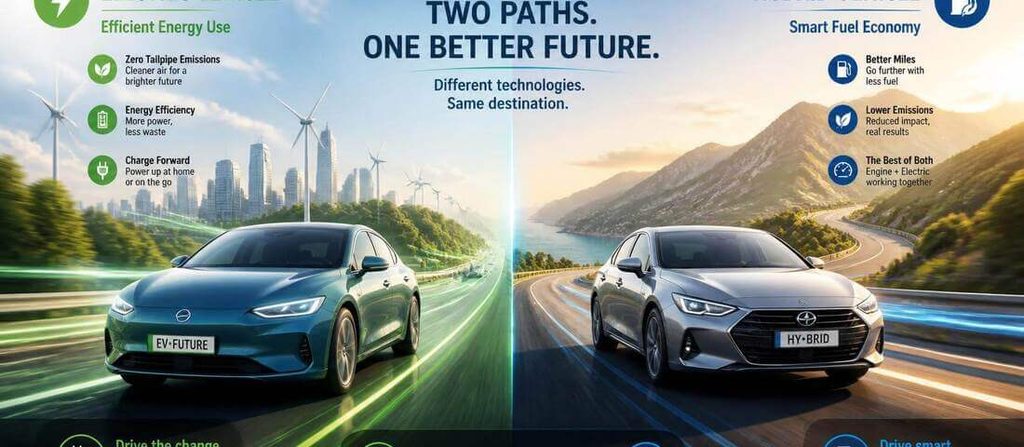
Choosing between a pure electric vehicle (EV) and a hybrid comes down to your daily driving routine, budget, and where you park at night. Both powertrains cut fuel consumption and reduce emissions, but they operate on fundamentally different ownership models.
Electric vehicles run entirely on battery power, offering zero tailpipe emissions, lower maintenance, and home charging savings, but require charging access and cost more upfront. Hybrids pair gas engines with electric motors for 45–55 mpg without plug-in charging, making them ideal for long-distance drivers and apartment dwellers.
Contents
- 1 Quick Comparison: BEV vs. HEV vs. PHEV
- 2 Pros and Cons of Electric Vehicles (EVs)
- 3 Pros and Cons of Traditional Hybrids (HEVs)
- 4 What About Plug-in Hybrids (PHEVs)?
- 5 Real-World Cost Analysis: Fuel, Maintenance, and Insurance
- 6 2. 5-Year Total Cost of Ownership (TCO) Breakdown (60,000 Miles)
- 7 High-Voltage Battery Longevity and Warranty Coverage
- 8 Lifestyle Decision Matrix: Which One Fits You?
- 9 FAQs About EV vs Hybrid: Pros, Cons, and True Ownership Costs
- 9.1 Q1: Can I comfortably own an EV without a home charger?
- 9.2 Q2: Do hybrid batteries need to be replaced after 100,000 miles?
- 9.3 Q3: Are maintenance costs really that much lower on an electric car?
- 9.4 Q4: How much range do electric cars lose in the winter?
- 9.5 Q5: Which holds its resale value better: an EV or a hybrid?
- 10 Technician Verdict
Quick Comparison: BEV vs. HEV vs. PHEV
Understanding the mechanical differences helps you choose the right powertrain:
| Feature | Battery Electric Vehicle (BEV) | Traditional Hybrid (HEV) | Plug-in Hybrid (PHEV) |
| Power Source | 100% Electricity | Gasoline + Regenerative Electric | Grid Electricity + Gasoline Backup |
| Battery Size | Large (50 – 100+ kWh) | Tiny (1 – 2 kWh) | Medium (10 – 25 kWh) |
| Plug-in Required? | Yes (Home or Public) | No (Self-charging only) | Optional, but required for EV mode |
| Electric Range | 220 – 350+ miles | 0.5 – 1 mile (low-speed only) | 25 – 50 miles |
| Gasoline Range | None | 450 – 600 miles per tank | 400 – 550 miles total |
| Tailpipe Emissions | Zero | Reduced (vs. standard gas) | Zero in EV mode; low in hybrid mode |
Pros and Cons of Electric Vehicles (EVs)
Advantages of Electric Vehicles
- Lowest Fuel Costs (With Home Charging): Charging overnight at residential utility rates (12¢–16¢/kWh) costs roughly 3¢ to 4¢ per mile, compared to 7¢ to 9¢ per mile for a 50 mpg hybrid.
- Minimal Powertrain Maintenance: EVs eliminate engine oil, oil filters, spark plugs, engine air filters, drive belts, and complex multi-speed transmissions. This cuts routine maintenance expenses by roughly 50%.
- Instant Torque and Smooth Driving: Electric motors produce full torque instantly from zero RPM, delivering smooth, responsive acceleration without gear shift hesitations.
- Extended Brake Pad Life: Aggressive regenerative braking converts kinetic energy back into battery power, allowing brake pads and rotors to last over 100,000 miles in typical driving conditions.
Disadvantages of Electric Vehicles
- Higher Upfront Purchase Price: New EVs typically carry higher initial sticker prices than comparable gas or hybrid models, though used EV prices have become much more competitive.
- Public Fast Charging Expense: Relying exclusively on commercial DC fast chargers (costing 35¢–50¢/kWh) eliminates your fuel savings advantage over a hybrid.
- Cold-Weather Range Reduction: Sub-freezing winter temperatures reduce EV battery range by 20% to 30% due to battery chemistry slowdowns and cabin heating demands.
- Faster Tire Wear: Due to heavy battery pack curb weight and instant motor torque, EV tires wear out roughly 20% to 30% faster than hybrid tires.

Pros and Cons of Traditional Hybrids (HEVs)
Traditional hybrids (such as the Toyota Prius, Camry Hybrid, or Honda CR-V Hybrid) combine a gas engine with an electric motor and a small battery pack that recharges entirely through regenerative braking and engine power.
Advantages of Hybrids
- No Charging Infrastructure Needed: You never plug in a traditional hybrid. You refuel in five minutes at any standard gas station while achieving 45 to 55 mpg.
- Lower Initial Cost: Hybrid trims generally cost only $1,500 to $2,500 more than their non-hybrid gas equivalents, making them accessible to buyers without high initial budgets.
- Excellent Resale Value: High fuel efficiency paired with zero charging requirements makes traditional hybrids among the fastest-selling and highest-retaining vehicles on the pre-owned market.
- Consistent All-Weather Usability: Winter weather causes only a mild 10% to 15% drop in hybrid fuel economy, and engine waste heat warms the cabin without draining battery propulsion range.
Disadvantages of Hybrids
- Dual-Powertrain Maintenance: Hybrids contain both an internal combustion engine and high-voltage electrical components. You still have to perform regular oil changes, coolant flushes, and engine mechanical upkeep.
- Tailpipe Emissions: While hybrids burn less fuel than standard gasoline cars, they still produce tailpipe exhaust and greenhouse gases whenever the internal combustion engine runs.
- Modest Acceleration: Most mass-market hybrids are tuned strictly for maximum fuel economy, resulting in modest acceleration compared to the brisk performance of full EVs.
What About Plug-in Hybrids (PHEVs)?
A Plug-in Hybrid Electric Vehicle (PHEV) acts as a bridge between pure electric and hybrid driving. With a battery pack sized between 10 kWh and 20 kWh, a PHEV can travel 25 to 50 miles purely on electricity (BYD UK Guides).
- When a PHEV Excels: If your daily commute is under 35 miles and you plug in every night at home, you can complete nearly all daily errands on cheap electricity while retaining full gas-engine flexibility for weekend road trips.
- When a PHEV Falls Short: If you fail to plug it in regularly, you are hauling hundreds of pounds of dead battery weight with a small gas engine, resulting in worse fuel economy than a standard hybrid.

Real-World Cost Analysis: Fuel, Maintenance, and Insurance
1. Energy Cost per 100 Miles Driven
Assuming an average fuel price of $3.50/gallon and residential electricity at $0.15/kWh:
| Vehicle Type | Efficiency Rating | Energy Required per 100 Miles | Total Cost per 100 Miles |
| EV (Home Charging) | 3.5 miles / kWh | 28.5 kWh | $4.28 |
| EV (Public DC Fast Charging) | 3.5 miles / kWh (@ $0.45/kWh) | 28.5 kWh | $12.83 |
| Plug-in Hybrid (PHEV) | 35 mi electric + 65 mi hybrid (42 mpg) | 10 kWh ($1.50) + 1.55 gal gas ($5.43) | $6.93 |
| Traditional Hybrid (HEV) | 50 mpg combined | 2.0 gallons gas | $7.00 |
| Standard Gas Vehicle | 28 mpg combined | 3.57 gallons gas | $12.50 |
2. 5-Year Total Cost of Ownership (TCO) Breakdown (60,000 Miles)
| Expense Category | Battery Electric (BEV) | Traditional Hybrid (HEV) | Plug-in Hybrid (PHEV) |
| Initial Purchase Premium | High (+$3,000 – $6,000) | Low (+$1,500 – $2,500) | Moderate (+$4,000 – $7,000) |
| Energy / Fuel Cost (60k mi) | $2,570 (Home Charging) | $4,200 | $3,450 (Nightly Home Charge) |
| Scheduled Maintenance | $1,200 – $1,600 | $2,400 – $3,200 | $2,500 – $3,400 |
| Tire Replacement Cycles | $1,100 – $1,500 (Faster wear) | $800 – $1,100 | $950 – $1,300 |
| Insurance Cost (5 Years) | $8,500 – $10,500 | $7,000 – $8,500 | $7,500 – $9,200 |
| 3-Year Resale Value Retention | 45% – 55% | 58% – 66% | 50% – 60% |
High-Voltage Battery Longevity and Warranty Coverage
- Federal Warranty Protections: Federal law requires all automakers to cover high-voltage hybrid and EV batteries for at least 8 years or 100,000 miles. In California and CARB-compliant states, hybrid and EV emissions components are covered for 10 years or 150,000 miles.
- Degradation Rates: Modern liquid-cooled EV battery packs typically degrade by only 1% to 2% per year. Most high-voltage batteries outlive the functional life of the vehicle chassis.
- Out-of-Warranty Replacement: If a battery fails outside warranty, replacing a full EV pack costs $5,000 to $18,000, while replacing a smaller hybrid battery pack costs $2,000 to $5,000.
Lifestyle Decision Matrix: Which One Fits You?
| Your Driving Profile | Best Vehicle Choice | Why It Wins |
| Single-Family Homeowner / Suburban Commuter | Full EV (BEV) | Maximizes cheap overnight home charging, low maintenance, and effortless daily torque. |
| Apartment Renter / Street Parker | Traditional Hybrid (HEV) | Delivers 50 mpg without relying on expensive, inconvenient public fast-charging stations. |
| Mixed Commuter + Weekend Road Tripper | Plug-in Hybrid (PHEV) | Runs on cheap electric power for work commutes and regular gasoline for zero-delay road trips. |
| Severe Cold-Climate Driver | Traditional Hybrid (HEV) | Immune to major sub-zero range loss; engine heat warms the cabin without sacrificing travel range. |
FAQs About EV vs Hybrid: Pros, Cons, and True Ownership Costs
Q1: Can I comfortably own an EV without a home charger?
You can, but relying exclusively on commercial public chargers is less convenient and significantly more expensive. Public DC fast charging rates can equal or exceed the per-mile gasoline cost of a 50 mpg hybrid, making a traditional hybrid the more practical and economical choice for drivers without home charging.
Q2: Do hybrid batteries need to be replaced after 100,000 miles?
No, modern hybrid battery packs regularly last 150,000 to 200,000 miles or more without failure. Federal regulations mandate a minimum warranty of 8 years or 100,000 miles (10 years/150,000 miles in CARB states), protecting owners against early defect costs..
Q3: Are maintenance costs really that much lower on an electric car?
Yes, data from Consumer Reports shows that full electric vehicles cost roughly 50% less to maintain over their lifetimes than gas-powered vehicles. EVs eliminate oil changes, engine air filters, drive belts, spark plugs, and transmission fluid services (Consumer Reports / Better Energy).
Q4: How much range do electric cars lose in the winter?
Electric vehicles typically lose 20% to 30% of their rated driving range in freezing winter temperatures. This reduction occurs because cold batteries transfer ions more slowly and electric resistance heaters draw significant energy to warm the cabin.
Q5: Which holds its resale value better: an EV or a hybrid?
Currently, traditional hybrids hold higher 3-year resale value percentages than electric vehicles (Road Ethos). Steady consumer demand, lower initial purchase prices, and universal refueling access give hybrids strong resale stability.
Technician Verdict
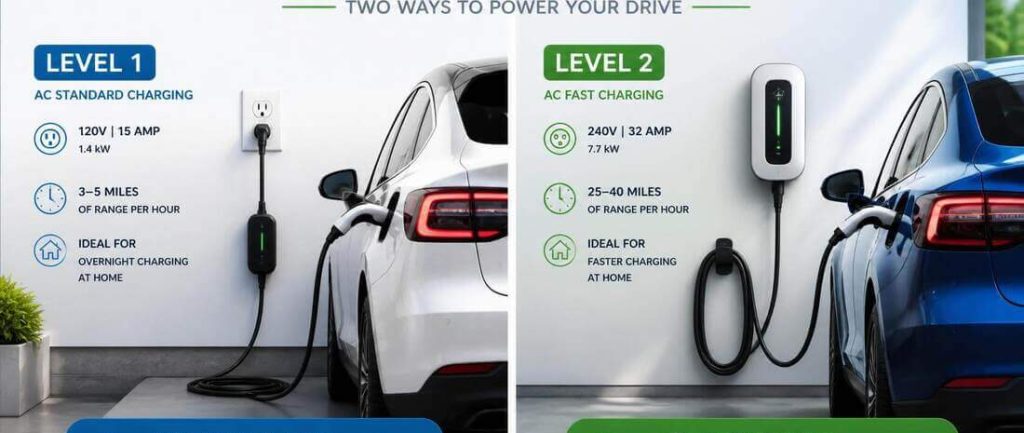
- Buy an EV if: You have a dedicated garage or driveway where you can install a 240V Level 2 charger. The fuel and maintenance savings will reward you every month.
- Buy a Hybrid if: You park on the street, live in an apartment, or regularly drive hundreds of highway miles through rural areas without established charging networks.
- Buy a Plug-in Hybrid (PHEV) if: You want pure electric commuting around town Monday through Friday, but want zero range anxiety when driving out of town on the weekend.