
This article was updated in July 30, 2026 with new products and information by Mark S. Taylor
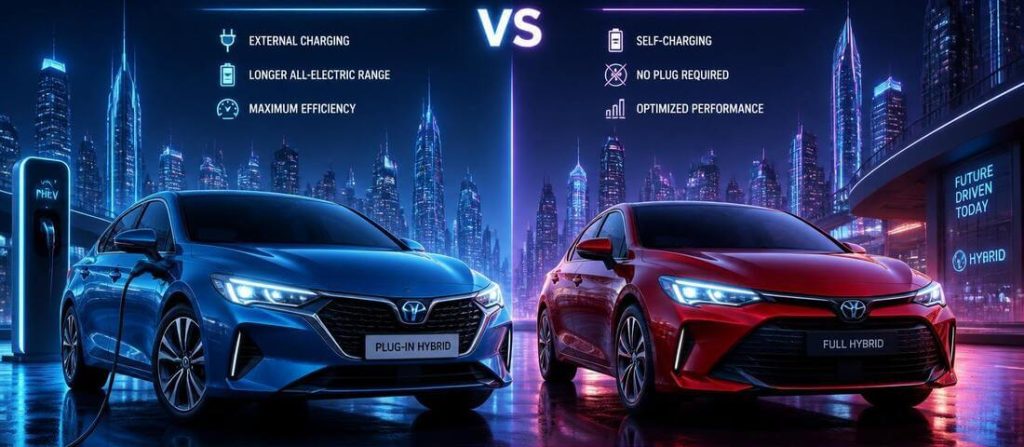
A plug-in hybrid (PHEV) and a full hybrid (HEV) share the same core idea — an electric motor working alongside a gas engine — but they wear differently. A PHEV adds charging hardware and a bigger battery that need their own upkeep, while a full hybrid’s engine cycles on and off constantly and never gets a break from combustion. Neither one is simply “the low-maintenance option.” The costs just show up in different places.
Contents
What’s Actually Different Under the Hood
A full hybrid can’t be plugged in. Its battery is small — usually 1 to 2 kWh — and exists only to assist the gas engine during acceleration and to enable short bursts of electric-only driving at low speed. The engine is the primary power source, and it starts and stops constantly as the car’s computer juggles the two power sources.
A plug-in hybrid carries a much larger battery — typically 8 to 18 kWh — plus an onboard charger, a charge port, and often a dedicated cooling circuit to keep that battery in its happy temperature range. Driven on a short commute and charged nightly, a PHEV can go days without the gas engine turning over at all.
That single difference — engine idle time versus engine-off time — is what drives almost every maintenance divergence between the two.
The 5 Maintenance Differences That Matter Most
Most comparison articles stop at “hybrids need fewer brake jobs.” That’s true, but incomplete. Here’s what actually separates the two systems in the real world, ranked by how often it catches owners off guard.
1. Charging Hardware Is a PHEV-Only Cost Center
Urgency: Low, but ongoing
A full hybrid has no charge port, no onboard charger unit, and no home charging cable to maintain. A PHEV has all three, and each is a part that can fail or degrade.
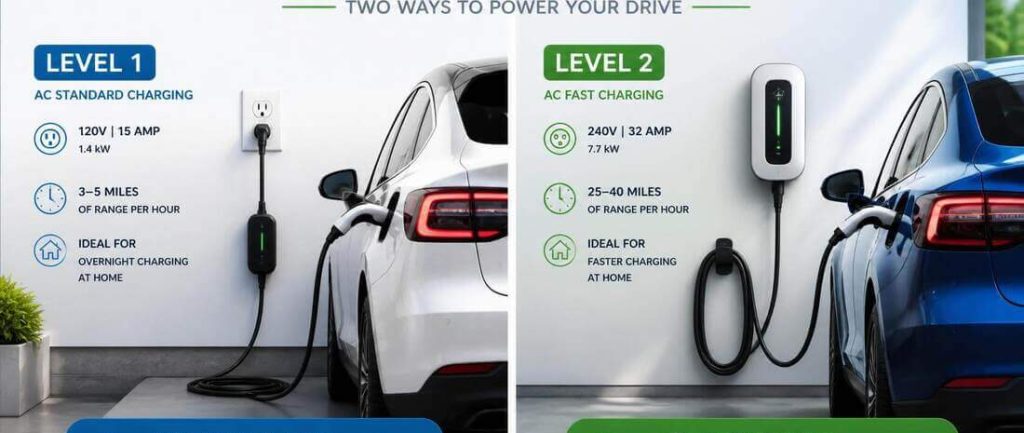
Charge port door seals crack in cold climates. Onboard charger units — the hardware that converts AC household power into DC for the battery — can fail outright, and replacement isn’t a $50 fix; it’s closer to $600–$1,500 depending on the model. Level 1 and Level 2 charging cables also wear at the connector end with daily use, the same way any cable does.
None of this exists on a full hybrid’s maintenance sheet, because none of this hardware is there.
2. Stale Fuel Is a Real Risk — Only on PHEVs
Urgency: Moderate, easy to miss
This is the one almost nobody mentions. A full hybrid’s engine runs often enough that fuel never sits long. A PHEV, especially one driven mostly on short trips with nightly charging, can leave the same tank of gas sitting for months.
Old gasoline degrades. It can gum up injectors, foul spark plugs, and in worst cases leave a check-engine light and a rough-running engine the next time the PHEV actually needs its gas motor — like on a highway trip. Most PHEV manufacturers build in a “fuel maintenance mode” that forces periodic engine runs specifically to prevent this, but it only works if the owner isn’t overriding it or ignoring the dashboard notice.
The fix: if a PHEV is driven almost entirely on electric power, top off with fresh gas every few months and don’t disable the automatic engine-run cycle.
3. Brake Wear Drops on Both — But Not Equally
Urgency: Low
Both systems use regenerative braking, which means the electric motor does a chunk of the slowing-down work and the friction brake pads see less heat and less wear. Pad life on either type commonly stretches to 80,000–100,000 miles versus 30,000–50,000 on a comparable gas-only vehicle.
The gap between PHEV and HEV shows up based on driving pattern, not hardware. A PHEV owner who does most driving on battery power leans on regen almost exclusively, stretching pad life even further. A full hybrid owner sees the same regen benefit, but the smaller battery means the gas engine (and sometimes the friction brakes) picks up more of the load during hard stops.
4. The 12V Battery Is the Overlooked Cost on Both
Urgency: High when it hits — average driver won’t see it coming
Neither system runs on its high-voltage battery alone. Both PHEVs and full hybrids still carry a small 12V battery that powers the computer systems, lights, and the process of “waking up” the rest of the hybrid system. When that 12V battery dies, the car won’t start — even though the massive traction battery sitting behind it is completely fine.
This trips up owners on both sides equally, and it’s rarely mentioned in hybrid buying guides. Expect a 12V replacement every 3–5 years on either type, running $150–$300 installed.
5. High-Voltage System Inspections Cost More on PHEVs
Urgency: Moderate
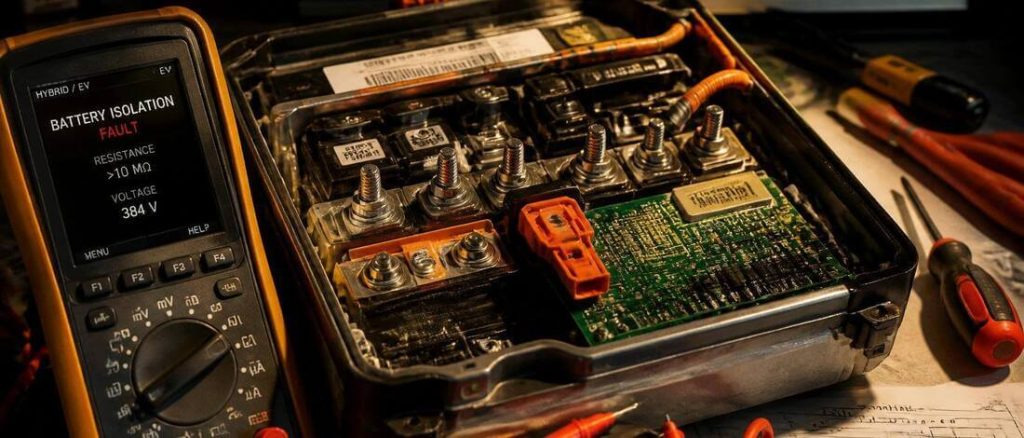
Both vehicles require periodic high-voltage system checks as part of scheduled maintenance — insulation testing, coolant loop checks for the battery, and connector inspections. Because a PHEV’s battery and cooling system are larger and more complex, these inspections tend to run longer and cost more at the dealer, particularly once the vehicle is out of its complimentary maintenance window.
100,000-Mile Maintenance Cost Comparison
| Cost Category | Full Hybrid (HEV) | Plug-In Hybrid (PHEV) |
|---|---|---|
| Engine oil & filter changes | Higher frequency (engine runs more) | Lower frequency (engine runs less) |
| Brake pads/rotors | Extended, ~80–100k miles | Extended further with EV-heavy driving |
| 12V battery replacement | 1–2 replacements | 1–2 replacements |
| Charging hardware (port, onboard charger, cable) | None | $0–$1,500+ if hardware fails |
| High-voltage system inspection | Standard cost | 15–30% higher due to system complexity |
| Fuel system issues from stale gas | Rare | Possible if EV-only driving is heavy |
| Estimated total maintenance delta | Baseline | Roughly comparable, cost shifted from engine to electrical hardware |
The headline number for both types tends to land close to each other over 100,000 miles. What changes is where the money goes — a full hybrid owner spends more on conventional engine upkeep, and a PHEV owner spends more on electrical and charging components, offset by a lighter load on the gas engine.
Which One Actually Costs Less to Maintain?
Neither wins outright — it depends on how the car gets driven. A PHEV that’s charged every night and used mostly for short trips will see very little engine wear and can come out ahead on maintenance, provided the owner doesn’t neglect the fuel side of things. A PHEV that’s rarely plugged in behaves almost exactly like a heavier, more complex full hybrid — worst of both setups.
A full hybrid is the more predictable choice for a driver who won’t reliably plug in, since there’s no charging hardware to fail and no stale-fuel risk to manage.
DIY vs. Shop: What Owners Can Handle Themselves
Things a confident DIYer can do on either type:
Check and top off coolant levels for the battery cooling loop. Most owner’s manuals mark the correct check interval.
Replace wiper blades, cabin air filters, and engine air filters. These are identical to any gas car and don’t involve the hybrid system.
Monitor tire wear and rotate on schedule. Hybrids and PHEVs are often heavier than their gas counterparts, which can accelerate front tire wear.
Things that belong at a qualified shop:
Any work involving the high-voltage orange cabling, the traction battery, or the inverter. This isn’t a place to save money with a DIY attempt — the voltages involved can be lethal, and most independent shops require hybrid-specific certification before touching this system.
Onboard charger diagnostics and charge port repairs on a PHEV. These require manufacturer-specific scan tools most home mechanics don’t have.
FAQs About Plug-In Hybrid vs. Full Hybrid Maintenance
Do plug-in hybrids need more maintenance than full hybrids?
Not more overall — the maintenance burden shifts. PHEVs add charging-hardware upkeep and a stale-fuel risk; full hybrids put more hours on the engine and its related fluids.
Do I need to change the oil in a plug-in hybrid if I never use gas?
Yes. Oil still degrades over time even if the engine barely runs, and manufacturers set a mileage-or-time interval, whichever comes first.
Is the traction battery on either type expensive to replace?
Both use warrantied batteries — a minimum of 8 years/100,000 miles under federal rules — and outright failures inside that window are rare. Out-of-warranty replacement costs vary widely by model and pack size.
Does a full hybrid’s engine wear out faster since it’s on and off constantly?
No — hybrid engines are engineered specifically for frequent start-stop cycling, and this isn’t a significant wear factor in modern designs.
The Bottom Line
- PHEVs shift cost toward electrical components — charge port, onboard charger, cooling loop for the bigger battery — and away from the engine, which runs less often.
- Full hybrids shift cost toward the engine and standard fluids since the gas motor still does most of the heavy lifting on longer drives.
- Both cut brake wear dramatically through regenerative braking, but PHEVs cut it further if the owner actually plugs in and drives on electric power most of the time.
- The 12V battery is the sleeper cost on both — it’s small, cheap, and almost never mentioned, yet it’s one of the most common reasons either type won’t start.
- Stale fuel is a PHEV-specific risk that full hybrid owners rarely think about, since a full hybrid’s engine runs regularly no matter what.