
This article was updated in September 26, 2026 with new products and information by Mark S. Taylor
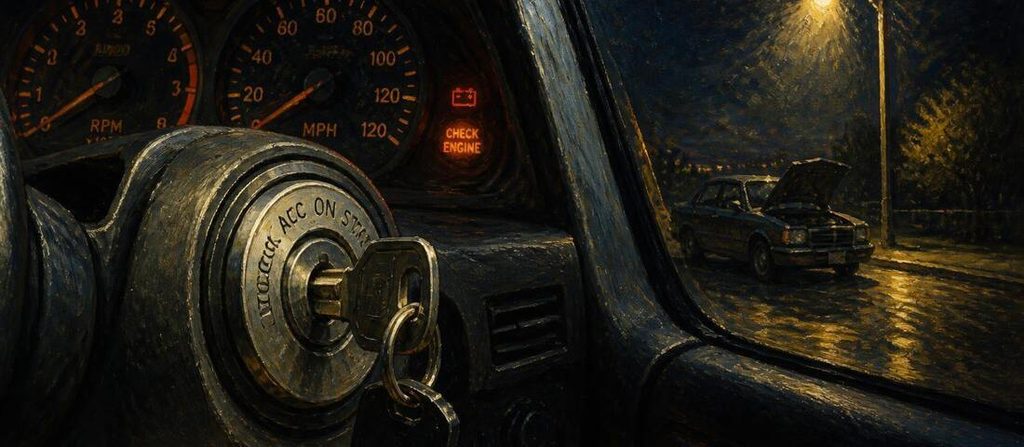
If your car cranks but does not start, the starter is turning the engine, but the engine is not beginning normal combustion. Common causes include no fuel, no spark, incorrect engine timing, low compression, a failed crankshaft or camshaft sensor, ignition problems, wiring faults, or an immobilizer issue.
The first step is to stop guessing which part failed.
A gasoline engine needs the correct air-fuel mixture, ignition at the correct time, and enough compression to produce combustion. A problem in any of these areas can create a crank-no-start condition.
Contents
- 1 10 Causes of a Car That Cranks But Does Not Start
- 1.1 1. No Fuel or Incorrect Fuel
- 1.2 Important diagnostic point
- 1.3 2. Failed Fuel Pump
- 1.4 3. No Spark
- 1.5 4. Bad Spark Plugs or Ignition Coils
- 1.6 5. Failed Crankshaft or Camshaft Position Sensor
- 1.7 Important
- 1.8 6. Incorrect Engine Timing
- 1.9 7. Low Compression
- 1.10 Diagnostic principle
- 1.11 8. Flooded Engine or Incorrect Air/Fuel Mixture
- 1.12 9. Immobilizer or Anti-Theft System Problem
- 1.13 10. Fuse, Relay, Wiring, Ground, or ECU Problem
- 2 What Should You Check First?
- 3 Car Cranks Slowly vs. Cranks Normally
- 4 Car Cranks But Won’t Start With No Check Engine Light
- 5 What If the Engine Cranks Faster Than Normal?
- 6 How to Diagnose a Crank-No-Start Condition
- 7 Is It Safe to Keep Cranking the Engine?
- 8 When Should You Call a Mechanic?
- 9 FAQs About Car Cranks But Does Not Start
- 9.1 Why does my car crank but not start?
- 9.2 Can a bad battery cause a car to crank but not start?
- 9.3 Can a bad fuel pump cause a crank-no-start?
- 9.4 Can a bad crankshaft sensor cause a car to crank but not start?
- 9.5 Can bad spark plugs cause a crank-no-start?
- 9.6 Can a timing chain cause a car to crank but not start?
- 10 The Bottom Line
What Does “Cranks But Won’t Start” Mean?
When you turn the key or press the start button, the starter motor turns the engine.
You hear something like:
“rrr-rrr-rrr”
but the engine never actually starts and runs.
That is different from:
- A single click
- Rapid clicking
- No sound
- A very slow crank
- A starter that spins without turning the engine
Those symptoms point toward the starting system rather than a true crank-no-start condition. Haynes specifically recommends separating an engine that does not turn from one that turns normally but fails to start because the causes are different.
10 Causes of a Car That Cranks But Does Not Start
1. No Fuel or Incorrect Fuel
Start with the obvious.
Check the fuel gauge and confirm that the vehicle actually has fuel.
A failed fuel pump is not the only possibility. The problem could involve:
- Fuel pump
- Fuel pump fuse
- Fuel pump relay
- Fuel pressure
- Fuel injector power
- Fuel-pressure control
- Fuel contamination
- Incorrect fuel
Haynes lists an empty tank, bad fuel, fuel-pump failure, and fuel-system faults among possible crank-no-start causes.
Important diagnostic point
Hearing the fuel pump run does not prove that the engine has correct fuel pressure.
A pump can run and still fail to provide the pressure or flow the engine needs.
2. Failed Fuel Pump
A failing fuel pump can prevent the engine from receiving enough fuel to start.
Possible clues include:
- Engine cranks normally
- Engine does not fire
- Previous hesitation or stalling
- Loss of power before the no-start
- Fuel-pump noise missing or abnormal
On many vehicles, the fuel pump briefly runs when the ignition is switched on. But the exact operating strategy varies by vehicle.
Don’t condemn the pump based only on whether you hear it.
A fuel-pressure test is more useful.
3. No Spark
A gasoline engine needs an ignition spark at the correct time.
If spark is missing, the engine may crank normally without starting.
Possible causes include:
- Failed ignition coil
- Faulty spark plug
- Ignition-module problem
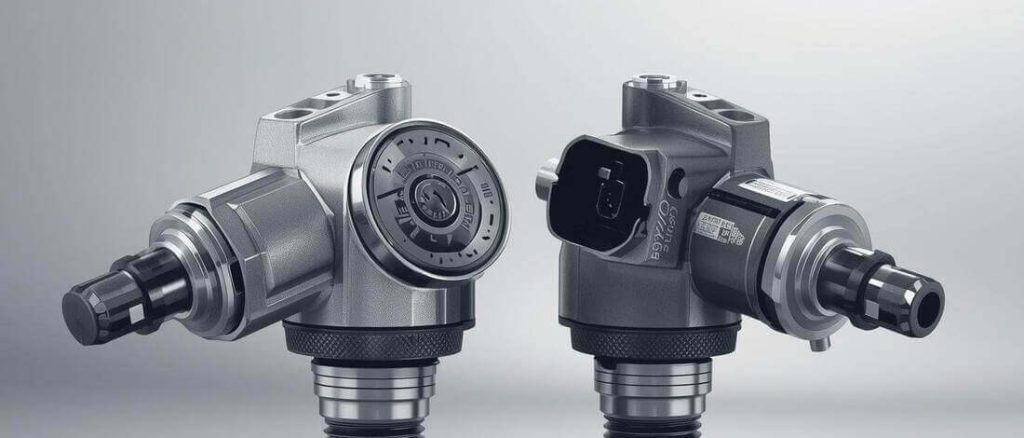
- Crankshaft position sensor
- Camshaft position sensor
- Wiring problem
- Power or ground problem
- Engine-control problem
- Security-system intervention
AA1Car identifies ignition-system faults, crankshaft sensors, ignition modules, wiring, coils, and anti-theft problems among potential causes of no spark during a crank-no-start.
Don’t assume the spark plugs are bad
A no-spark condition can originate upstream.
For example, if the engine computer does not receive the expected crankshaft-position signal, it may not control ignition and fuel injection correctly.
4. Bad Spark Plugs or Ignition Coils
Worn or fouled spark plugs can cause starting problems.
A failed ignition coil can also prevent one or more cylinders from producing the required spark. Firestone notes that ignition-coil failures can cause difficulty starting, misfires, stalling, and other ignition-related symptoms.
Look for clues such as:
- Previous misfires
- Rough running before the failure
- Check-engine light
- Poor acceleration
- Hard starting
- Fouled plugs
If the vehicle ran normally and suddenly became a crank-no-start, don’t automatically assume normal plug wear is the cause.
5. Failed Crankshaft or Camshaft Position Sensor
The engine computer needs position information to control ignition and fuel injection.
A failed or missing crankshaft-position signal can therefore create a crank-no-start condition.
Possible clues include:
- Engine suddenly stalls
- Engine cranks but won’t restart
- Tachometer behavior changes during cranking
- Check-engine light
- Related diagnostic trouble codes
AA1Car identifies crankshaft-position sensor codes among codes that can appear with no-start problems, while also noting that a no-start condition can exist with no stored code.
Important
A stored sensor code does not automatically mean the sensor itself is defective.
The wiring, connector, reluctor/tone wheel, power supply, ground, and signal circuit may also need testing.
6. Incorrect Engine Timing
The engine can have fuel and spark but still refuse to start if those events occur at the wrong time.
Possible causes include:
- Broken timing belt
- Jumped timing belt
- Timing-chain failure
- Incorrectly installed timing components
- Cam/crank synchronization problem
Haynes lists timing-belt or timing-chain failure among possible causes when an engine turns normally but will not start.
A major clue
If the engine suddenly begins cranking faster and more freely than normal, don’t keep cranking it repeatedly.
That can indicate a mechanical problem such as loss of compression from a timing failure, depending on the engine design.
The exact diagnosis requires vehicle-specific testing.
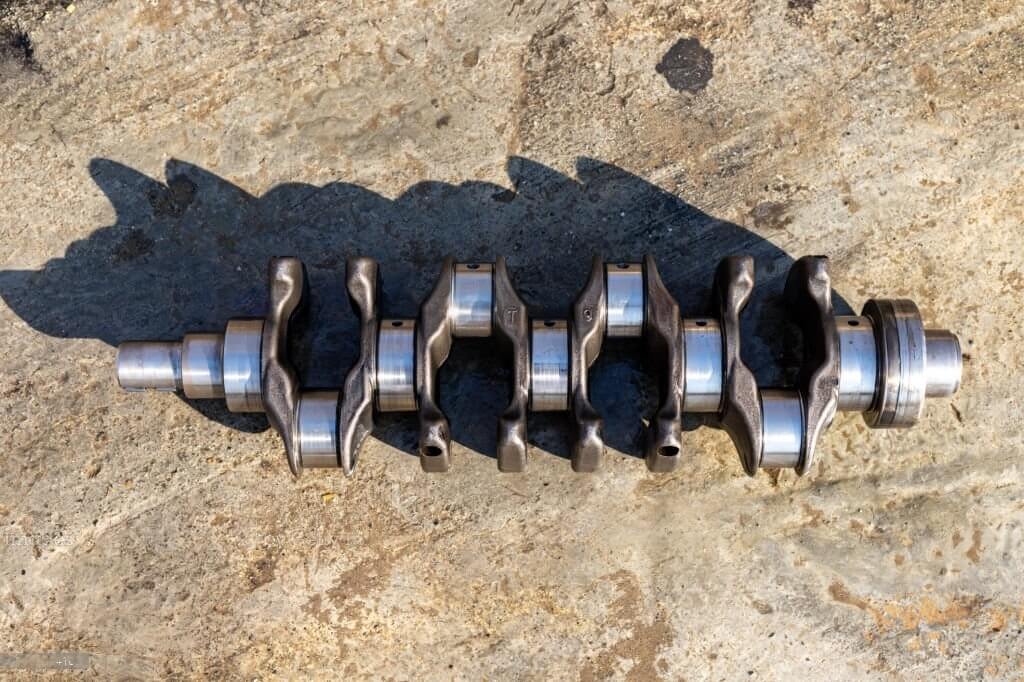
7. Low Compression
Even with fuel and spark, the engine needs adequate compression for combustion.
Low compression can result from:
- Valve damage
- Timing failure
- Piston or ring problems
- Head-gasket failure
- Other internal engine damage
A compression test can help determine whether the engine is mechanically capable of starting.
A leak-down test may provide additional information when compression is low.
Diagnostic principle
If you have:
Fuel + spark + correct timing
but the engine still will not start, mechanical compression becomes increasingly important to investigate.
8. Flooded Engine or Incorrect Air/Fuel Mixture
Too much fuel can make a gasoline engine difficult or impossible to start.
A flooded engine may show:
- Strong fuel smell
- Wet spark plugs
- Repeated unsuccessful starting attempts
- Engine trying to fire but failing
However, don’t automatically assume flooding.
A fuel-injection problem, ignition problem, or sensor issue can produce similar symptoms.
Follow the vehicle-specific starting procedure rather than repeatedly pressing the accelerator or spraying starting fluid without knowing the engine’s requirements.
9. Immobilizer or Anti-Theft System Problem
Modern vehicles can prevent the engine from starting when the security system does not authorize the key or electronic credentials.
Possible clues include:
- Security warning light
- Key/transponder warning
- Recent key replacement
- Key battery or communication issue
- Engine cranks but does not fire
The exact behavior varies significantly by vehicle.
If the security indicator is flashing or behaving differently from normal, consult the vehicle’s owner’s manual and diagnostic information before replacing engine components.
10. Fuse, Relay, Wiring, Ground, or ECU Problem
Sometimes the failed component is not the pump, coil, injector, or sensor.
The component may simply not be receiving the required:
- Power
- Ground
- Control signal
- Communication
Possible causes include:
- Blown fuse
- Failed relay
- Corroded connector
- Broken wire
- Poor engine ground
- Damaged harness
- ECU/PCM problem
Haynes recommends checking power, grounds, wiring, and connections when tracing electrical faults.
This is why replacing parts based only on a symptom or code can become expensive very quickly.
What Should You Check First?
Use this order:
1. Confirm the engine is actually cranking
Is the crank speed normal?
If it is only clicking or cranking very slowly, you’re dealing with a different problem.
2. Check fuel
Confirm fuel is present.
Then test fuel pressure when appropriate.
3. Check spark
Determine whether the ignition system is producing spark.
4. Check engine-speed/position data
Use a scan tool when appropriate to determine whether the engine computer is seeing crankshaft/camshaft signals.
5. Check timing
If fuel and spark are present but the engine still will not start, investigate mechanical timing.
6. Check compression
A compression test can help identify mechanical problems.
7. Check security and electrical systems
Inspect relevant fuses, relays, wiring, grounds, and immobilizer behavior.
This sequence prevents you from replacing parts randomly.
Car Cranks Slowly vs. Cranks Normally
This distinction matters.
Slow Cranking
Possible causes include:
- Weak battery
- Poor battery connection
- Corroded terminals
- Poor engine ground
- Starter problem
- Mechanical engine resistance
Haynes lists battery, battery connections, grounds, and starter faults among causes of slow or failed cranking.
Normal Cranking but No Start
Now shift your attention toward:
- Fuel
- Spark
- Timing
- Compression
- Engine-control signals
- Immobilizer/security
That’s the diagnostic fork that matters most.

Car Cranks But Won’t Start With No Check Engine Light
A missing check-engine light does not prove there is no engine-management problem.
Some faults may not immediately set a diagnostic trouble code.
AA1Car specifically notes that a crank-no-start condition can occur with no codes stored in memory.
Therefore:
No code ≠ no problem.
Test the systems rather than waiting for the scan tool to give you the answer.
What If the Engine Cranks Faster Than Normal?
This deserves attention.
If the engine suddenly sounds like it is spinning much faster than usual, one possibility is a loss of compression.
A broken or failed timing component can prevent the camshaft and valves from operating correctly.
Do not keep cranking indefinitely.
The appropriate diagnostic procedure depends on the engine design.
How to Diagnose a Crank-No-Start Condition
The strongest diagnostic approach is to answer four questions:
Question 1: Is there adequate fuel?
Test rather than assume.
Question 2: Is there ignition spark?
Confirm spark at the appropriate location using the correct vehicle-specific procedure.
Question 3: Is engine timing correct?
Verify crank/cam synchronization and mechanical timing when indicated.
Question 4: Is there adequate compression?
Perform compression or related mechanical testing when the earlier checks don’t explain the problem.
Think of the process as:
Crank → Fuel → Spark → Timing → Compression → Control/Authorization
The exact order can change based on symptoms and vehicle-specific information, but the principle is the same:
Find what the engine is missing before replacing a part.
Is It Safe to Keep Cranking the Engine?
Avoid endless starting attempts.
Repeated cranking can:
- Discharge the battery
- Overheat the starter
- Flood some gasoline engines
- Put additional stress on the starting system
If you smell strong fuel, see smoke, hear abnormal mechanical noises, or suspect a timing or internal-engine failure, stop and diagnose the problem rather than repeatedly trying to start it.
When Should You Call a Mechanic?
Professional diagnosis makes sense when:
- The engine suddenly cranks differently
- You suspect a broken timing component
- Compression is low
- Fuel pressure testing is required
- There is an electrical/ECU problem
- The immobilizer is involved
- You cannot safely perform the required tests
- The vehicle is in a location where repeated starting attempts are unsafe
A diagnostic scan is useful, but a scan tool should be part of the diagnostic process—not a replacement for testing. Firestone describes vehicle diagnostics as using scan data plus targeted testing to identify the root cause.
FAQs About Car Cranks But Does Not Start
Why does my car crank but not start?
A car can crank normally but fail to start because of a fuel-delivery problem, lack of spark, incorrect engine timing, low compression, sensor or wiring problems, or an immobilizer issue.
Can a bad battery cause a car to crank but not start?
Yes, if the battery is weak enough that cranking speed or system voltage becomes inadequate. However, if the engine is cranking at normal speed, the battery becomes less likely to be the primary cause of the no-start condition.
Can a bad fuel pump cause a crank-no-start?
Yes. A failed fuel pump can prevent adequate fuel delivery. However, a fuel pump should be tested rather than replaced simply because the engine will not start.
Can a bad crankshaft sensor cause a car to crank but not start?
Yes. A crankshaft-position sensor or its circuit can prevent the engine computer from receiving the position information needed for proper engine control. However, the sensor itself should be tested before replacement.
Can bad spark plugs cause a crank-no-start?
Yes. Fouled or failed spark plugs can prevent normal ignition. Ignition coils, wiring, and engine-control problems can also cause a no-spark condition.
Can a timing chain cause a car to crank but not start?
Yes. A failed or incorrectly timed timing chain can prevent the engine from maintaining correct valve and ignition timing. Haynes lists timing-chain failure among possible crank-no-start causes.
The Bottom Line
If your car cranks but does not start, don’t start by replacing the battery, fuel pump, or spark plugs.
First confirm that the engine is cranking at normal speed.
Then determine what the engine is missing:
- Fuel
- Spark
- Correct timing
- Compression
- Required control/authorization
Common causes include fuel-pump or fuel-system problems, ignition faults, crankshaft/camshaft sensor problems, timing-belt or timing-chain failures, low compression, immobilizer issues, and electrical faults.
The most important diagnostic rule is simple:
A crank-no-start symptom tells you the engine is not starting. It does not tell you which part failed. Test the missing requirement before replacing the part.