
This article was updated in October 17, 2026 with new products and information by Mark S. Taylor
Your Car Battery Charges, Then Dies Again. Why?
You charge the battery.
The car starts.
Then you park it for a while, and the battery is dead again.
That’s frustrating. And it usually means there’s more going on than a simple low battery.
When a car battery will not hold a charge, there are three main possibilities:
- The battery is damaged or worn out.
- The charging system isn’t charging it properly.
- Something in the vehicle is draining the battery after the engine is off.
A battery can also appear unable to hold a charge when it was never fully charged in the first place.
So before replacing the battery, you need to figure out which problem you’re actually dealing with.

Contents
- 1 The Battery Is Old or Worn Out
- 2 A Bad Cell Can Make the Battery Seem Dead
- 3 Sulfation Can Reduce Battery Capacity
- 4 The Alternator Isn’t Charging the Battery Properly
- 5 A Parasitic Drain Is Pulling Power From the Battery
- 6 A Light May Be Staying On
- 7 An Aftermarket Accessory Could Be the Problem
- 8 The Battery Was Never Fully Charged
- 9 Corroded or Loose Battery Connections Can Cause Problems
- 10 Extreme Temperatures Can Expose a Weak Battery
- 11 How to Tell If the Battery Is Bad
- 12 How to Tell If the Alternator Is the Problem
- 13 How to Check for a Parasitic Battery Drain
- 14 Can a Battery Be Recharged If It Won’t Hold a Charge?
- 15 Why Does My Battery Die After I Charge It?
- 16 Why Does My Car Battery Keep Dying After a Jump-Start?
- 17 Bad Battery or Bad Alternator? Use the Symptoms
- 18 What Should You Do If Your Car Battery Won’t Hold a Charge?
- 19 When Should You Replace the Battery?
- 20 The Biggest Mistake: Assuming the Battery Is the Problem
- 21 FAQs About Car Battery Will Not Hold a Charge
- 21.1 1. Why won’t my car battery hold a charge?
- 21.2 2. How do I know if my battery is bad or my alternator is bad?
- 21.3 3. Can a bad alternator cause a battery to keep dying?
- 21.4 4. Can a car battery be bad even if it shows good voltage?
- 21.5 5. Why does my battery die overnight but work after a jump-start?
- 22 Quick Summary
Quick Answer: Why Will a Car Battery Not Hold a Charge?
The most common causes include:
- An old or internally damaged battery
- Sulfation from repeated deep discharge
- A bad cell inside the battery
- An alternator or charging-system problem
- Loose or corroded battery connections
- A parasitic electrical drain
- Leaving lights or accessories on
- An aftermarket accessory drawing power
- Repeated short trips
- A battery that was not fully recharged
- Extreme temperatures exposing a weak battery
The important distinction is this:
A battery that won’t hold a charge is not always a bad battery.
If the alternator isn’t charging it or something is draining it while the car is parked, a perfectly good battery can keep going dead.
The Battery Is Old or Worn Out
This is the most obvious cause, and often the correct one.
Car batteries have a limited service life. AAA says a typical automotive battery lasts around three to five years, although climate, vehicle use, and maintenance can change that.
As a battery ages, its ability to store and deliver energy decreases.
You may notice:
- Slow engine cranking
- Clicking when starting
- Dim lights
- Repeated dead-battery situations
- The battery going flat after sitting for a short time
- The car needing frequent jump-starts
An old battery may still accept a charge.
That’s the part that confuses people.
You connect a charger, the voltage rises, and the battery appears fine.
But it may not have enough usable capacity left to start the engine reliably.

A Bad Cell Can Make the Battery Seem Dead
A typical automotive battery contains multiple cells.
If one cell fails, the battery may no longer be capable of producing the voltage and capacity the vehicle needs.
You can charge it repeatedly and still have the same problem.
This is one reason a simple voltage reading isn’t enough to diagnose battery health.
A battery can show a reasonable voltage immediately after charging but fail when placed under a starting load.
That’s why a proper battery test matters.
Sulfation Can Reduce Battery Capacity
A battery that has been repeatedly left discharged can develop sulfate buildup on its internal plates.
This process is called sulfation.
Some sulfation occurs naturally as a battery ages. Repeated deep discharges can make the problem worse.
The result is a battery that may accept a charge but has much less usable capacity than it once had.
That’s why repeatedly jump-starting and recharging a weak battery isn’t a long-term repair.
If the battery has been deeply discharged several times, it may already be damaged.
The Alternator Isn’t Charging the Battery Properly
Here’s an important distinction:
The battery stores electrical energy. The alternator replaces that energy while the engine is running.
If the alternator or charging system isn’t working correctly, the battery may never reach a full state of charge.
You shut the engine off.
The battery is already low.
A few hours later, the car may not start.
That can look exactly like a battery that won’t hold a charge.
Possible charging-system problems include:
- Weak alternator output
- Faulty voltage regulation
- Damaged charging wiring
- Poor electrical connections
- Ground problems
- A slipping or damaged drive belt
If the charging system is the real problem, installing another battery won’t solve it.
You’ll simply end up with another discharged battery.
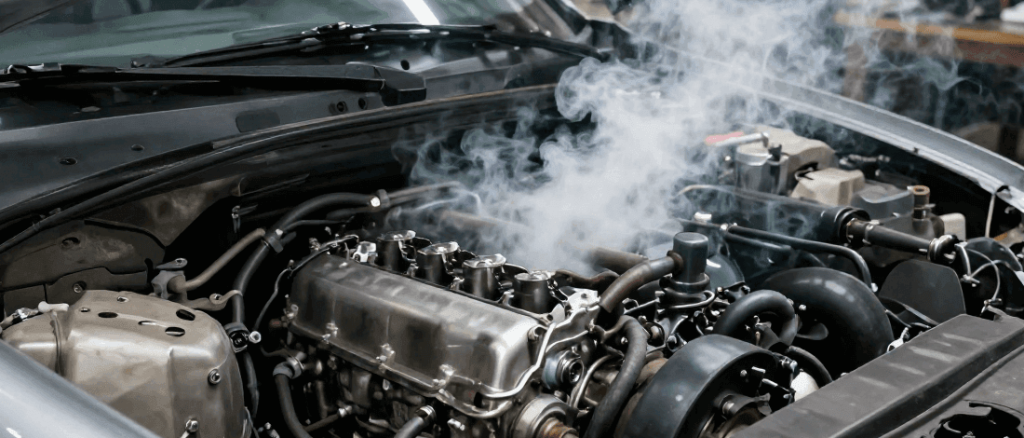
A Parasitic Drain Is Pulling Power From the Battery
This is another major possibility.
Your car does use a small amount of electricity when the engine is off.
That’s normal.
Security systems, clocks, memory functions, computers, and other systems may remain active.
The problem is when something continues drawing more power than it should.
That’s called a parasitic draw.
Possible sources include:
- Interior lights
- Trunk or cargo lights
- Glove-box lights
- Aftermarket alarms
- Dash cams
- Stereo equipment
- GPS trackers
- Remote starters
- Faulty electronic modules
- Relays that don’t switch off properly
A parasitic drain can slowly discharge a good battery while the vehicle is parked.
A Light May Be Staying On
Don’t overlook the simple stuff.
A trunk can look closed while the trunk light remains on.
A glove-box switch can fail.
A door may not fully trigger its latch sensor.
An interior light may stay illuminated.
During the day, you may never notice.
Overnight, however, that small electrical load can make a difference.
Check:
- Headlights
- Interior lights
- Trunk lights
- Cargo lights
- Glove-box lights
- Vanity-mirror lights
- Reading lights
If the battery repeatedly dies after using one particular door, trunk, or hatch, that’s a useful clue.
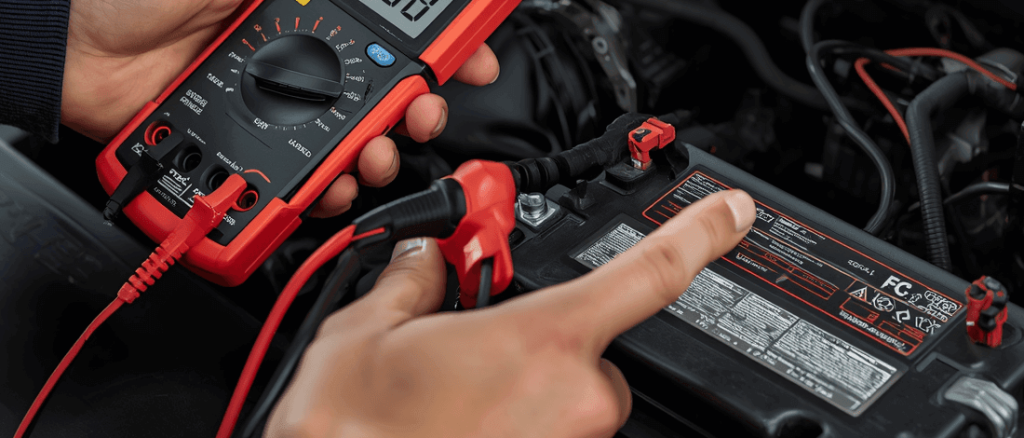
An Aftermarket Accessory Could Be the Problem
Think about anything you’ve added to the car.
A dash cam is a common example.
Some dash cams continue operating when the vehicle is parked. That’s not necessarily a problem if the system is installed correctly and has a proper low-voltage cutoff.
But a wiring problem or faulty accessory can drain the battery.
Other possible culprits include:
- Aftermarket stereos
- Amplifiers
- Alarm systems
- Remote starters
- GPS trackers
- USB accessories
- Auxiliary lighting
- Other electronics wired directly to the battery
If the battery problem started soon after an accessory was installed, investigate that connection first.
The Battery Was Never Fully Charged
Sometimes the battery isn’t losing its charge.
It simply never received enough charge in the first place.
This happens frequently with cars that make lots of short trips.
Starting the engine uses a significant amount of battery energy.
The alternator then has to replace it.
If you drive only a few minutes before shutting the engine off, the battery may not get enough time to recover fully.
Do this repeatedly, and the battery can remain partially charged.
Eventually, it may not have enough reserve to start the vehicle.
A battery charger can help in this situation, but if the battery repeatedly stays undercharged, you still need to find out why.
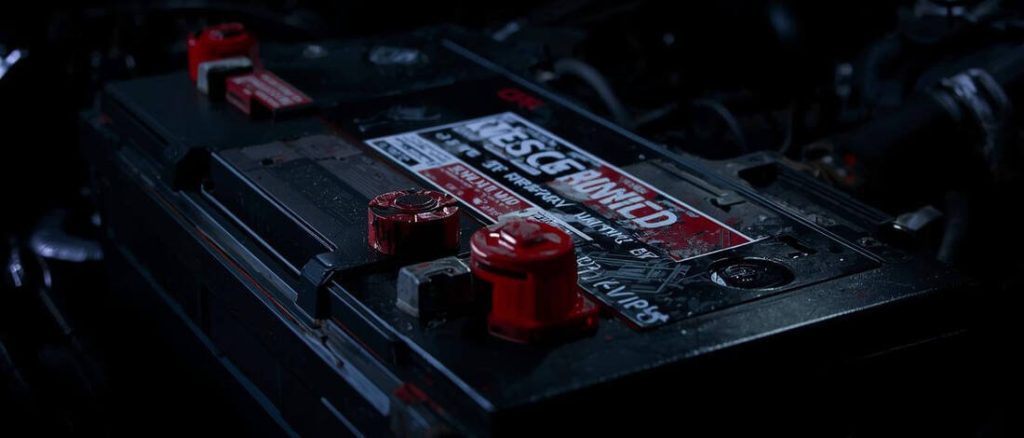
Corroded or Loose Battery Connections Can Cause Problems
Sometimes the battery is fine.
The connection isn’t.
Look at the battery terminals.
They should be clean and tight.
Heavy corrosion can interfere with electrical flow. A loose terminal can also cause starting and charging problems.
Don’t stop at the battery posts, either.
The battery cables and engine/body ground connections also matter.
A poor ground can create confusing symptoms that look like a bad battery or alternator.
Extreme Temperatures Can Expose a Weak Battery
Temperature can make an existing battery problem much more obvious.
Cold weather makes it harder for a battery to deliver enough power to start the engine.
Hot weather can accelerate battery aging and deterioration.
So a battery that seemed acceptable for months may suddenly fail during a cold snap or after a period of extreme heat.
The weather may not have caused the problem.
It may simply have exposed a battery that was already near the end of its useful life.
How to Tell If the Battery Is Bad
This is where testing beats guessing.
A basic voltage reading can tell you something about the battery’s state of charge.
It does not tell you everything about its health.
A proper battery test checks whether the battery can deliver the power needed for starting.
If the battery fails that test after being properly charged, replacement may be justified.
If it passes, look elsewhere.
That’s the point where you should investigate the charging system and possible parasitic drain.
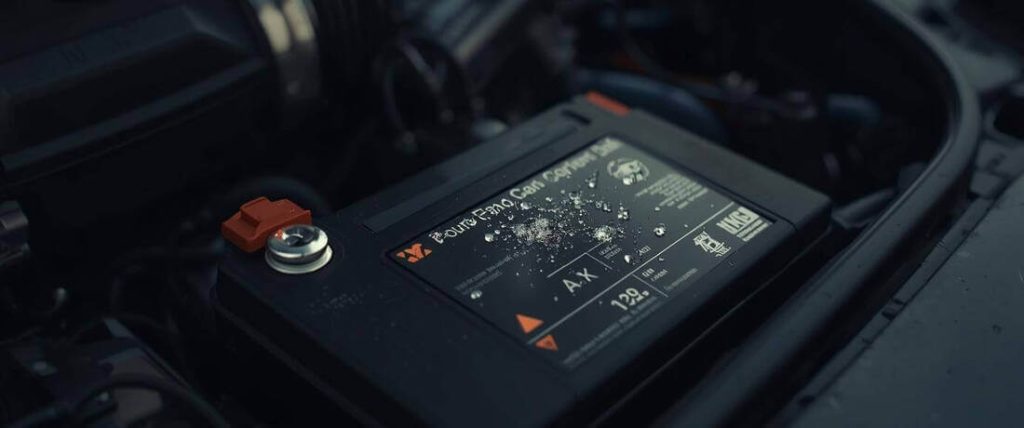
How to Tell If the Alternator Is the Problem
The alternator needs to be tested with the vehicle running.
A technician can check charging-system output and compare it with the vehicle manufacturer’s specifications.
Don’t rely on one generic voltage number for every vehicle.
Modern charging systems can vary their output depending on battery condition, temperature, electrical load, and vehicle design.
If the charging system isn’t doing its job, the battery can repeatedly end up discharged even if the battery itself is healthy.
How to Check for a Parasitic Battery Drain
A proper parasitic-draw test is more involved than simply putting a meter on the battery.
The vehicle’s electronic modules need time to shut down and enter their normal sleep state.
Once the vehicle is asleep, a technician can measure the key-off current and determine whether it is higher than expected.
If excessive current is found, the next step is isolating the circuit responsible.
That may involve:
- Fuse testing
- Circuit testing
- Module diagnosis
- Relay testing
- Accessory inspection
- Wiring checks
- Scan-tool data
This is one situation where guessing can get expensive.
Pulling random fuses may tell you which circuit is affected, but it doesn’t necessarily tell you why.
The goal is to find the component causing the draw.
Can a Battery Be Recharged If It Won’t Hold a Charge?
Sometimes.
If the battery is simply discharged but still healthy, a proper recharge may restore it.
But if the battery has a failed cell, severe internal damage, or significantly reduced capacity, charging won’t restore it to normal condition.
That’s why the correct sequence is:
Charge → test → diagnose.
Not:
Charge → assume it’s fixed → get stranded.

Why Does My Battery Die After I Charge It?
If the battery dies again shortly after charging, consider three possibilities first:
The battery is damaged.
It accepts a surface charge but doesn’t have enough capacity to hold it.
The alternator isn’t charging it.
The battery becomes depleted again while you drive.
Something is draining it.
The battery loses power while the car is parked.
The timing can help narrow things down.
If the car dies while sitting overnight, think about a parasitic drain or weak battery.
If the car dies while you’re driving, the charging system becomes much more concerning.
If the battery is weak immediately after being fully charged, have the battery tested.
Why Does My Car Battery Keep Dying After a Jump-Start?
A jump-start only gets the engine running.
It doesn’t repair the underlying problem.
If the alternator isn’t charging properly, the vehicle may continue running until the available battery power is exhausted.
If the battery itself is damaged, it may fail again.
If there’s a parasitic draw, the battery may go dead the next time the vehicle sits.
So don’t treat a successful jump-start as proof that the battery is fine.
It’s simply a way to get the vehicle running again.
Bad Battery or Bad Alternator? Use the Symptoms
| Symptom | More likely cause |
|---|---|
| Battery fails a proper battery test | Bad battery |
| Battery goes dead after sitting | Weak battery or parasitic draw |
| Battery warning light comes on while driving | Charging-system problem |
| Battery repeatedly needs jump-starts | Battery, charging system, or parasitic draw |
| Battery is new but keeps going dead | Look for charging problem or parasitic draw |
| Battery starts car after charging but quickly dies again | Battery or charging problem |
| Problem began after accessory installation | Possible aftermarket electrical drain |
| Battery has swollen or damaged case | Battery replacement and professional inspection |
These symptoms aren’t a diagnosis by themselves.
They’re clues.

What Should You Do If Your Car Battery Won’t Hold a Charge?
Follow this order:
1. Fully charge the battery
Don’t diagnose a battery that is simply discharged.
2. Test the battery
Find out whether it can actually hold and deliver a charge.
3. Check the battery connections
Look for corrosion, loose terminals, and damaged cables.
4. Test the charging system
Make sure the alternator is properly charging the battery.
5. Check for parasitic draw
If the battery and charging system pass, look for something consuming power while the car is off.
6. Check recent changes
Think about accessories, repairs, wiring work, or modifications that happened before the problem started.
This approach prevents you from throwing parts at the car.
When Should You Replace the Battery?
Replacement makes sense when the battery fails a proper test or has clear physical damage.
Age also matters.
If the battery is several years old and repeatedly struggles, replacement may be more practical than trying to squeeze another few months out of it.
But don’t replace it blindly.
If a new battery goes dead too, you’ll be right back at the beginning.
Find the cause first.
The Biggest Mistake: Assuming the Battery Is the Problem
When a battery won’t hold a charge, it’s tempting to blame the battery.
Sometimes that’s exactly right.
But a battery is part of a larger electrical system.
The alternator charges it.
Cables connect it.
Electronic systems draw power from it.
Accessories can consume power after the engine is shut off.
That’s why the best diagnosis follows the whole system instead of replacing the most obvious part.
FAQs About Car Battery Will Not Hold a Charge
1. Why won’t my car battery hold a charge?
The battery may be worn out or internally damaged, but that’s not the only possibility. A faulty alternator, poor battery connections, parasitic electrical draw, or repeated short trips can also leave the battery unable to stay charged.
2. How do I know if my battery is bad or my alternator is bad?
Have the battery fully charged and tested first. Then test the vehicle’s charging system with the engine running. A battery that fails a proper battery test is likely bad. If the battery passes but isn’t being properly recharged while driving, investigate the charging system.
3. Can a bad alternator cause a battery to keep dying?
Yes. If the alternator isn’t replacing the energy the battery uses during starting and driving, the battery can become progressively discharged. A charging-system problem can therefore look like a battery that won’t hold a charge.
4. Can a car battery be bad even if it shows good voltage?
Yes. Voltage alone doesn’t prove that a battery is healthy. A battery can show acceptable voltage and still have poor capacity or fail when placed under a starting load. That’s why a proper battery test is more useful than checking voltage alone.
5. Why does my battery die overnight but work after a jump-start?
A weak battery or parasitic electrical drain are common possibilities. A jump-start only provides enough energy to get the engine running. If the battery is damaged or something is consuming power while the car is parked, the problem can return the next morning.
Quick Summary
If your car battery will not hold a charge, check these areas:
- Battery: Is it old, damaged, sulfated, or failing a load/capacity test?
- Alternator: Is the charging system actually replacing the energy used?
- Connections: Are the terminals and grounds clean and tight?
- Parasitic draw: Is something consuming power while the car is off?
- Accessories: Did an aftermarket device or recent installation cause the problem?
- Driving habits: Are repeated short trips leaving the battery undercharged?
The right diagnosis saves you from replacing parts twice.
And if the battery keeps dying after you’ve already replaced it, stop buying batteries and start looking for the reason they’re going dead.