
This article was updated in October 23, 2026 with new products and information by Mark S. Taylor
You’re wondering if skipping tire rotation is actually going to cost you money, or if it’s just a shop upsell. Short answer: for most drivers, yes, it’s worth doing, since it’s usually free and it protects an expensive set of tires. Keep scrolling for the real evidence, the one real counterargument, and when rotation genuinely doesn’t apply to you.
Here’s the thing most articles on this topic won’t tell you: the debate is real. Tire shops love to say rotation is “essential.” Some car manufacturers, BMW among them, say don’t bother on their vehicles. Both sides have a point, and which one applies to you depends on your specific car.
Contents
What Rotation Actually Does
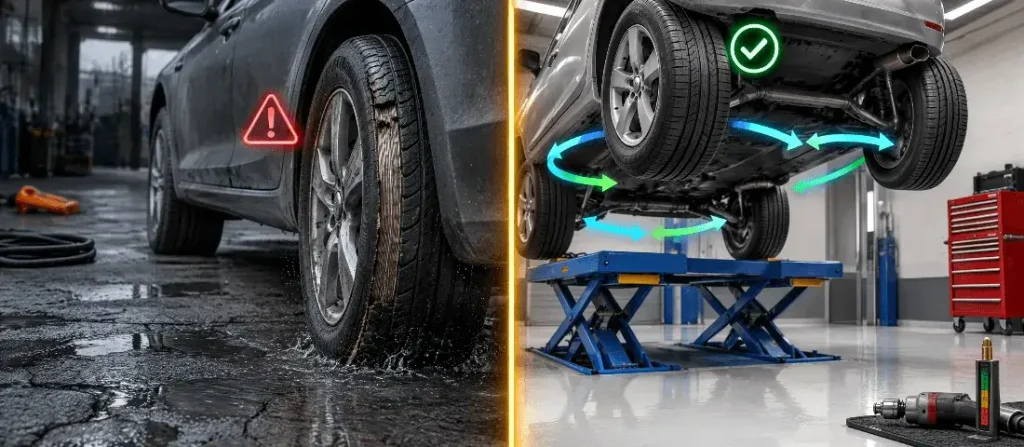
Your front tires work harder than your rear ones. They handle most of the steering, carry more weight during braking, and absorb the forces of every turn. On a front-wheel-drive car, they also do the driving. Left alone, front tires wear down faster, and the car ends up riding on four tires at four different stages of life.
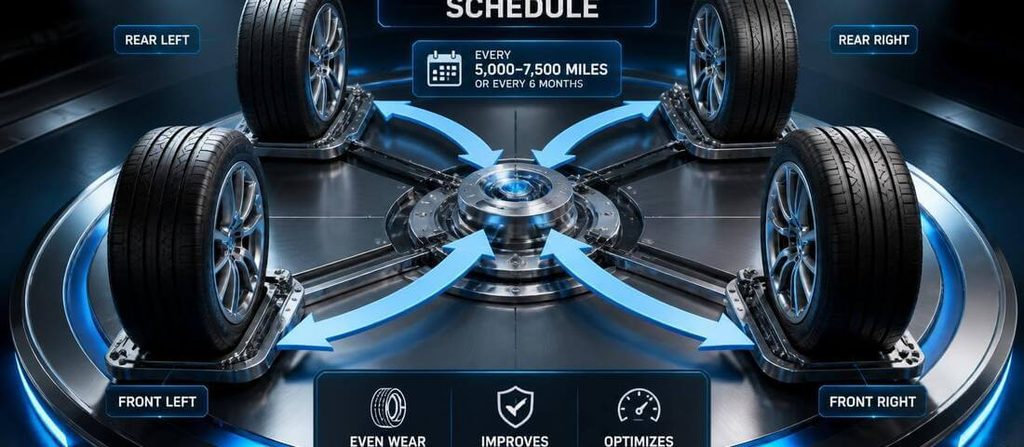
Rotation moves each tire to a new position so the workload, and the wear, gets shared across all four. Think of it like rotating which tire gets the hard job each time, so no single one takes the brunt of it for the tire’s entire life.
The commonly cited benefits:
- More even tread depth across all four tires
- More predictable handling, since tires with similar tread respond more consistently
- A tire set that tends to need replacing together, rather than one tire failing early while the other three still have life left
- A routine check-in point to catch a nail, a bulge, or low tread before it becomes a roadside problem
Most shops recommend every 5,000 to 8,000 miles, often tied to your oil change interval.
The Strongest Case For It
It’s usually free. Buy your tires at Discount Tire, Costco, Sam’s Club, or Les Schwab, and rotation is included for the life of the tire set, no coupon needed. At that price, free, there’s not much of a financial argument against it.
It protects the bigger purchase. A set of four tires commonly runs several hundred dollars or more. Consumer Reports ran the math on this years ago: even at $20 a rotation out of pocket, getting meaningfully more life out of a $400+ tire set usually comes out ahead. When the rotation itself is free, that math gets even easier.
Warranty coverage often assumes it. GM’s own tire warranty bulletin, hosted by NHTSA, lists rotation and balancing alongside alignment as expected maintenance that supports a tire’s wear-out coverage. Skip it, and you’re arguably not holding up your end of standard tire care.
It doubles as a free inspection. Every rotation is a chance for a tech to catch a nail, uneven wear from an alignment problem, or low tread before it becomes a flat on the highway.
The Strongest Case Against It (Yes, This Is Real)
This part gets left out of almost every article on this topic, and it shouldn’t be.
BMW, among other manufacturers, doesn’t recommend rotating tires on many of its models. The reasoning: many BMWs run staggered setups, wider tires in the rear than the front. You physically can’t move a rear tire to the front position. Kwik Fit, a major UK tire chain, states outright that it does not recommend tire rotation and instead recommends always putting the newest or best tires on the rear axle for stability. Multiple sources document this exact disagreement, including the fact that tire manufacturers and vehicle manufacturers sometimes give conflicting advice on the same car.
There’s also a handling trade-off, however minor. Front and rear tires develop slightly different wear patterns for a reason, they’re doing different jobs. Right after a rotation, before the new wear pattern evens back out, handling can be marginally different. One auto-advice column calls this a real but very minor effect that few drivers would ever notice.
The economic case isn’t a slam dunk if you’re paying out of pocket every time. If you’re paying $20 to $90 per rotation at a shop where you didn’t buy your tires, the math gets closer. One long-running consumer-advice estimate put the savings from routine rotation at roughly breaking even with the cost of paying for it, before free retail programs became as widespread as they are now.
The honest verdict: if your vehicle has a staggered tire setup (different sizes front and rear), check your owner’s manual first, rotation may not even be an option. For everyone else, rotation is cheap or free insurance on an expensive purchase, and the case against it mostly applies to specific vehicles, not drivers in general.
When to Skip It (or Do Something Different)
- Staggered tire setups (common on performance and some luxury cars): rotation front-to-back isn’t physically possible since the sizes don’t match. Follow your owner’s manual.
- Directional tires: these can only be rotated front-to-back on the same side, never side-to-side, unless they’re dismounted and remounted. Ask your shop which pattern applies to your tires.
- Replacing just one or two tires: industry guidance generally says put the tires with the most tread on the rear axle, regardless of which axle wore out first. That’s a different decision from routine rotation.
- Your owner’s manual says otherwise: the vehicle manufacturer’s guidance should win over generic advice, including this article’s.
What It Costs
These are U.S. ranges from tire retailer and repair-cost guides as of late 2026, not quotes.
| Option | Typical cost | Notes |
|---|---|---|
| Free with tire purchase | $0 | Discount Tire, Costco, Sam’s Club, Les Schwab, and others include this for the life of the tire set |
| Independent tire shop or quick-lube chain | About $20 to $50 | Often bundled with an oil change |
| Dealership | About $40 to $90 | Higher labor rate; same basic service |
| Rotation plus rebalancing | About $40 to $160 | Balancing addresses a different problem (vibration), often done together |
| DIY | Near $0 if you already own a jack, stands, and a torque wrench | Tools alone run $80 to $200 if you’re buying them new just for this |
DIY or pay? Rotating your own tires is a reasonable weekend job if you already have the equipment and are comfortable safely supporting a car on stands. For most drivers, especially anyone eligible for a free program through where they bought their tires, there’s little reason to DIY it.

Common Mistakes
- Assuming your car doesn’t need it because it’s all-wheel drive. AWD helps acceleration grip, not tire wear. One Globe and Mail advice column specifically debunks this myth. Front tires still wear faster on most AWD vehicles.
- Rotating staggered or directional tires the wrong way. This can cause handling problems and isn’t easily reversible without remounting.
- Paying full price when you already qualify for free rotation. Check if your tire purchase came with a lifetime program before you pay anywhere else.
- Ignoring your owner’s manual in favor of generic advice, including advice like this article. Your vehicle manufacturer’s guidance is specific to your car for a reason.
FAQs About How Important Is Tire Rotation
Is tire rotation actually necessary?
For most vehicles, it’s not strictly required to keep the car running, but it meaningfully extends tread life and is usually free where you bought your tires. Some manufacturers, BMW among them, don’t recommend it on certain models with staggered tire sizes. Check your owner’s manual for your specific vehicle.
What happens if you never rotate your tires?
The front tires, which do more of the steering, braking, and (on front-wheel-drive cars) the driving, will wear out noticeably faster than the rear tires. You’ll likely end up replacing tires in pairs or one at a time instead of as a full, evenly worn set.
Does tire rotation really make a difference?
Yes, for most vehicles. It spreads wear evenly across all four tires, which extends overall tread life and keeps handling more consistent. The effect is smaller on vehicles with staggered tire sizes, where rotation front-to-back isn’t even possible.
Is it worth paying for a tire rotation?
If it’s free where you bought your tires, yes, there’s no real argument against it. If you’re paying $20 to $90 out of pocket every time, the savings still tend to outweigh the cost over a tire set’s life, though the margin is narrower.
Does all-wheel drive mean I don’t need to rotate my tires?
No. All-wheel drive affects how power gets to the wheels, not how quickly the front tires wear from steering and braking forces. Front tires still wear faster on most AWD vehicles.
Bottom Line
- For most drivers, rotation is worth it, and often free. That alone settles most of the debate.
- The real exception is staggered and directional tire setups, where rotation may not even be possible the normal way.
- All-wheel drive doesn’t exempt your tires from uneven wear.
- Your owner’s manual beats generic advice, including this article, if the two disagree.