
This article was updated in May 30, 2026 with new products and information by Mark S. Taylor
Your car drove smoothly when you pulled into the tire shop. You drove out after a routine rotation and now the steering wheel shakes, the seat vibrates, or the whole front end shudders at highway speed. Something changed — and it happened during that service.
You’re not imagining it. Wheel vibration that appears immediately after a tire rotation is almost always caused by something that happened during the rotation itself. In most cases it’s fixable quickly, often for free if you go back to the same shop. In some cases it’s a safety issue that needs attention before you drive further.
This guide explains every reason why rotation causes new vibration, how to figure out which one you’re dealing with, and exactly what to do about it.
Contents
- 1 Why Tire Rotation Can Cause New Vibration
- 2 8 Causes of Vibration After Tire Rotation
- 2.1 1. Tires Not Rebalanced After Rotation
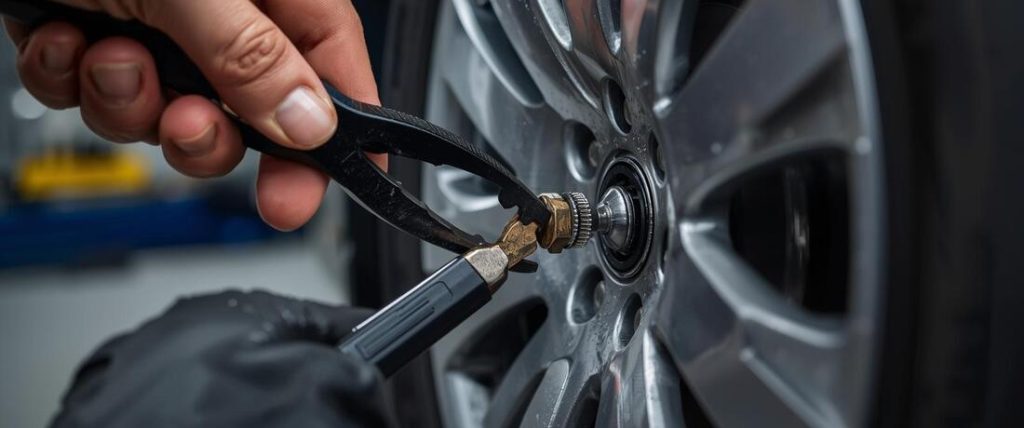
- 2.2 2. Loose or Improperly Torqued Lug Nuts
- 2.3 3. Directional Tires Installed in the Wrong Direction
- 2.4 4. Corrosion or Debris on the Hub Face
- 2.5 5. Previously Hidden Tire Wear Now in a More Sensitive Position
- 2.6 6. Tire Bead Not Seated Properly
- 2.7 7. Brake Rotor Contact or Caliper Issue
- 2.8 8. Wheel Bearing Exposed by Tire Position Change
- 3 Where Is the Vibration — Front, Rear, or Steering Wheel?
- 4 Is This the Shop’s Fault?
- 5 Safety Warning — Loose Lug Nuts After Rotation
- 6 How to Check It Yourself Before Going Back to the Shop
- 7 Should Tires Always Be Balanced With Rotation?
- 8 Is It Safe to Drive With Vibration After Rotation?
- 9 Repair Cost Summary
- 10 FAQs About Wheel Vibration After Tire Rotation
- 10.1 Why is my car vibrating after a tire rotation?
- 10.2 Should tires be balanced every time they are rotated?
- 10.3 Can loose lug nuts cause vibration after a tire rotation?
- 10.4 Is it normal to have some vibration after a tire rotation?
- 10.5 What is road force balancing and when do I need it?
- 10.6 Can a tire rotation cause a wheel bearing to fail?
- 10.7 The Bottom Line
Why Tire Rotation Can Cause New Vibration
Before listing causes, it helps to understand why rotation creates new vibration in the first place.
Each wheel and tire assembly has its own unique balance characteristics. When a set of tires is balanced at the factory and mounted on your car, the balance weights are positioned for that specific wheel in that specific position. When a tire moves from the rear-left to the front-right during rotation, its balance characteristics are now in a completely different location — one that may be far more sensitive to imbalance.
The front wheels are connected to the steering system. Any imbalance felt by a front wheel travels directly through the steering column into your hands. The same tire in a rear position might produce a barely noticeable vibration in the seat. Moved to the front, that same imbalance can produce a steering wheel shake that feels alarming.
This is why rotation should almost always include rebalancing — and why it often doesn’t, and why vibration follows.
8 Causes of Vibration After Tire Rotation
1. Tires Not Rebalanced After Rotation
This is the most common cause by a significant margin.
When tires are rotated without rebalancing, each tire moves to a new position carrying the balance weights that were set for its old position. A tire that was balanced for the rear-right is now on the front-left — and the counterweights that corrected its imbalance are now in the wrong position relative to the new wheel.
Additionally, tires wear unevenly over time. A tire that was acceptably balanced when new may have developed small imbalances from wear that the original weights no longer correct. Moving it to a more sensitive position — specifically the front, which feeds directly into the steering — makes those imbalances felt for the first time.
What it feels like: Steering wheel or seat vibration at highway speeds — typically felt between 55–75 mph. The vibration often has a rhythmic quality that changes with speed. It may be worse at one specific speed and slightly better above or below that range.
The fix: Return to the shop and request rebalancing of all four tires. This should be included with a rotation at most reputable shops. If it was not, ask them to balance at no additional charge.
Repair cost: $0 (if shop corrects their omission) or $60–$100 (four-wheel balance if paying out of pocket)
2. Loose or Improperly Torqued Lug Nuts
This is the most dangerous cause and the first thing to check physically.
When tires are removed and remounted during a rotation, every lug nut is loosened and retightened. If any lug nut is not tightened to the correct torque specification — or if an impact gun was used without a torque stick and the nuts were undertightened — the wheel can develop slight movement on the hub. That movement creates vibration. In severe cases, loose lug nuts allow the wheel to wobble or eventually separate from the vehicle entirely.
What it feels like: Vibration that may worsen progressively as you drive. A loose wheel produces a distinctive wobble or shimmy that gets worse at speed and may be accompanied by a rhythmic clunking or knocking sound. The vibration often feels different from a balance vibration — more of a wobble than a buzz.
Urgency: This is a safety emergency. If you suspect loose lug nuts — particularly if the vibration appeared immediately after leaving the shop and is getting worse — pull over safely and check the lug nuts by hand. If any turn easily by hand, do not drive the vehicle. Call the shop and have it towed back or tow it yourself.
The fix: Retorque all lug nuts to the manufacturer’s specification using a calibrated torque wrench. Most passenger vehicles specify 80–120 ft-lbs depending on the make and model.
Important: Even correctly tightened lug nuts should be retorqued after approximately 50 miles of driving following any tire service. As the wheel settles against the hub, lug nuts can lose a small amount of clamping force. Most shops don’t mention this — but it’s a real recommendation from virtually every wheel and tire manufacturer.
Repair cost: $0 (if returned to shop) or $20–$50 (retorque service at any shop)
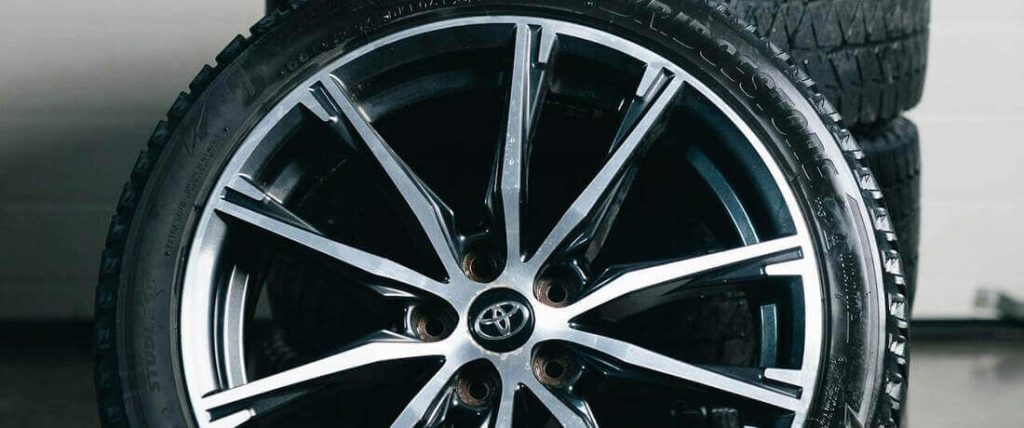
3. Directional Tires Installed in the Wrong Direction
Many modern performance and all-season tires are directional — designed to rotate in one specific direction. The tread pattern is optimized for water evacuation, grip, and noise in that direction only. A directional tire has a rotation arrow on the sidewall indicating which way it should spin.
During a cross-rotation (moving tires from one side of the vehicle to the other), a directional tire ends up on the wrong side and spins backwards relative to its designed direction. This is completely incorrect and causes vibration, increased road noise, reduced wet weather traction, and in some designs, increased hydroplaning risk.
What it feels like: Vibration combined with noticeably increased road noise — a harsh roaring or humming that wasn’t present before. The character of the vibration is rougher than a simple imbalance vibration. Wet weather handling may feel noticeably worse.
How to check: Look at the outer sidewall of each tire. If there’s an arrow or the word “Rotation” with a directional indicator, verify that each tire’s arrow points in the direction the wheel rotates when moving forward. If any arrow points backward relative to forward travel, the tire is installed incorrectly.
The fix: Return to the shop immediately and have the incorrectly mounted tires swapped. Directional tires can only be rotated front-to-back on the same side of the vehicle — not crossed. This is a shop error.
Urgency: High. Beyond vibration, incorrect directional tire installation reduces wet weather safety significantly.
Repair cost: $0 (shop error — should be corrected at no charge)
4. Corrosion or Debris on the Hub Face
The hub face is the flat metal surface on the axle that the wheel sits against. Over time — particularly in regions with road salt — this surface develops rust, corrosion, or mineral deposits. When tires are rotated and wheels are remounted, any debris or corrosion on the hub face prevents the wheel from sitting completely flat against the hub. This creates a tiny angle between the wheel and the hub — called hub runout — that produces vibration at speed.
What it feels like: Vibration that often appears after the first rotation on a higher-mileage vehicle or one driven in harsh winter conditions. The vibration may be felt as a pulsing or shuddering rather than a smooth buzz. It often doesn’t respond well to standard rebalancing because the cause is geometric rather than a mass imbalance.
How to check: After the tires are removed (safely, on a jack stand), run your hand across the hub face. Any roughness, visible rust buildup, or debris indicates the hub face needs cleaning before remounting.
The fix: Clean the hub face with a wire brush or scotch-brite pad to remove corrosion, then remount the wheel. Applying a thin coat of anti-seize compound to the hub face prevents future corrosion buildup.
Repair cost: $0–$50 (cleaning during remount) — often done at no charge by a conscientious shop
5. Previously Hidden Tire Wear Now in a More Sensitive Position
Sometimes the tire rotation itself is correct — but moving a worn tire to the front reveals a vibration that was previously masked in the rear.
Tires develop wear patterns over time. Cupping (scalloped wear), flat spots, or uneven wear across the tread width can create vibration. When a worn rear tire moves to the front, its wear-induced vibration now feeds directly into the steering system — making it feel far more dramatic than it did in the rear.
What it feels like: Vibration that rebalancing doesn’t fully resolve. The steering wheel shake may improve with balancing but never disappears completely. Road noise is often increased as well — a droning or humming that changes slightly with speed.
How to identify: Run your hand across the tread of each front tire. Cupping (alternating high and low spots) feels like small bumps across the tread. Flat spots feel like a flattened section. Either indicates the tire is the source of vibration, not the balance.
The fix: If wear is significant, tire replacement is the only full solution. Road force balancing can sometimes minimize the vibration but cannot eliminate wear-induced runout.
Repair cost: $400–$800 (two or four new tires depending on wear extent)
6. Tire Bead Not Seated Properly
The tire bead is the stiff inner edge of the tire that seals against the wheel rim. If a tire is dismounted during rotation service and remounted incorrectly — or if the bead was not fully inflated into its seat — the tire can sit slightly off-center on the rim. This creates lateral runout — the tire wobbling slightly side to side as it rotates.
What it feels like: A wobbling or shimmy at lower speeds — often noticeable starting around 30–45 mph — that may or may not persist at highway speed. Unlike imbalance vibration which tends to peak at specific speeds, bead seating issues often produce a more consistent wobble across a range of speeds.
How to check: With the vehicle on a lift or jack stand, look at the rim bead seat area on both sides of each wheel. There should be a visible uniform line around the entire circumference of the tire where the bead meets the rim. Any section where the tire appears to sit higher or lower than the rest indicates improper bead seating.
The fix: The tire needs to be demounted and remounted correctly with proper bead lubrication and inflation. The shop is responsible for this at no charge.
Repair cost: $0 (shop error) or $20–$40 per tire if paying elsewhere
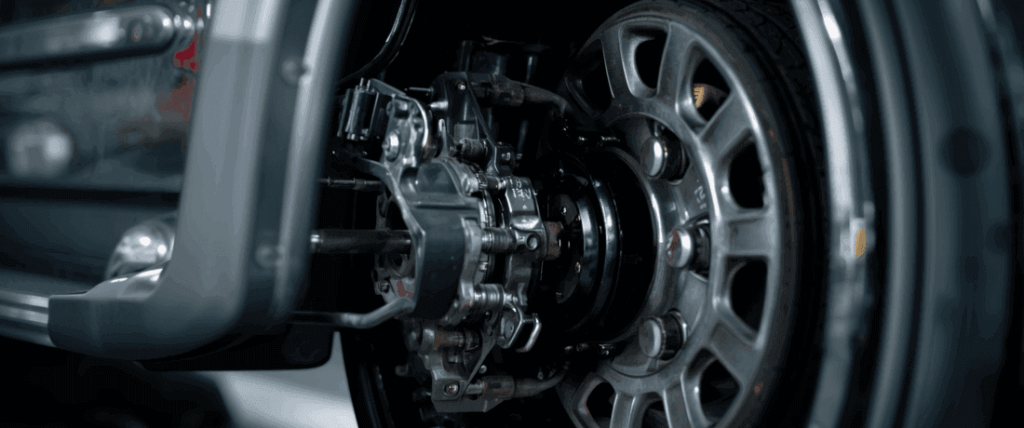
7. Brake Rotor Contact or Caliper Issue
During a tire rotation, the technician moves the wheel through a range of positions and angles that normal driving doesn’t replicate. Occasionally this disturbs a brake caliper, loosens a brake dust shield, or reveals a warped rotor that was borderline before. A warped rotor produces a pulsation that’s often confused with vibration — particularly when braking.
What it feels like: Pulsation through the brake pedal when stopping, sometimes accompanied by a vibration felt through the steering wheel specifically during braking. If the vibration only appears when you apply the brakes and not while cruising, the rotors are the cause rather than the tires or wheels.
Important distinction: True wheel/tire vibration is present while cruising at speed with no braking. Brake rotor pulsation is specifically triggered by brake application. Test by driving at 60 mph on an empty road with no braking — if vibration is absent and only appears when stopping, focus on the brake system.
The fix: Resurfacing or replacing warped rotors. This is typically not caused by the rotation itself but may be a pre-existing issue the service visit coincidentally highlighted.
Repair cost: $150–$400 per axle (brake rotor resurfacing or replacement)
8. Wheel Bearing Exposed by Tire Position Change
A wheel bearing that was borderline worn may have been producing a very subtle noise in one position. After rotation, a different wheel bearing is now under increased load from the heavier end of the vehicle. Or a tire that was previously masking a bearing noise with its own tread noise has moved to a quieter position, making the bearing noise suddenly audible.
What it feels like: A humming, droning, or growling noise that changes with vehicle speed but not with engine RPM. May increase when changing lanes (shifting weight laterally). The sound is often directional — louder when turning one way than the other. Vibration from a wheel bearing tends to be felt more in the seat and floor than in the steering wheel.
How to test: While driving at 50–60 mph on a safe road, weave gently left and right. If the noise increases when turning right and decreases turning left, the right-side bearing is failing. The opposite pattern points to the left bearing.
The fix: Wheel bearing replacement. This is a pre-existing condition that rotation exposed rather than caused — but it’s urgent regardless of the cause.
Repair cost: $250–$600 per bearing (parts and labor)
Where Is the Vibration — Front, Rear, or Steering Wheel?
The location of the vibration narrows down the cause significantly.
| Vibration Location | Most Likely Cause | First Check |
|---|---|---|
| Steering wheel shake at highway speed | Front tire imbalance or loose front lug nuts | Rebalance front tires, check lug torque |
| Seat or floor vibration | Rear tire imbalance | Rebalance rear tires |
| Whole car vibration | All tires unbalanced or loose lug nuts | Full four-wheel balance, torque check |
| Vibration only when braking | Warped brake rotor | Brake system inspection |
| Wobble at low speed | Bead seating issue or very loose lug nut | Immediate lug nut check |
| Humming noise that changes in turns | Wheel bearing | Bearing inspection |
| Vibration plus roaring road noise | Directional tire backwards or cupped tire | Check tire direction and tread wear |
Is This the Shop’s Fault?
In most cases — yes, at least partially.
If your car drove smoothly before the rotation and vibrates after, the rotation service introduced or revealed the problem. Here’s how to approach going back:
What to say: “My car was driving smoothly before the rotation. It started vibrating immediately after. I’d like you to rebalance all four tires, retorque the lug nuts to spec, and inspect for any installation issues at no charge.”
What you’re entitled to:
- Free rebalancing if balancing was not included in the original rotation service
- Free correction of any directional tire installation errors — these are clear shop errors
- Free remounting if bead seating is incorrect
- Free retorque of lug nuts if they were improperly tightened
What the shop is not necessarily responsible for:
- Pre-existing tire wear that rotation moved to a more noticeable position
- Pre-existing wheel bearing issues that rotation exposed
- Pre-existing rotor warping
If the shop is uncooperative: Request to speak with the service manager. Document the date of service, the mileage at drop-off and pickup, and describe the vibration in writing. A reputable shop will correct rotation-related vibration at no charge — it’s in their interest to do so.
Safety Warning — Loose Lug Nuts After Rotation
This deserves its own section because it’s the only cause on this list that can kill you.
A wheel that separates from a moving vehicle is one of the most dangerous automotive failures possible. It causes immediate loss of control at whatever speed the vehicle is traveling. Wheel separation after improper lug nut torquing following tire service has caused fatal accidents.
If any of these are true, stop driving immediately:
- Vibration appeared within miles of leaving the tire shop
- The vibration is getting progressively worse
- You hear a rhythmic clunking or knocking alongside the vibration
- The car pulls noticeably to one side in addition to vibrating
Pull over safely, turn on hazard lights, and physically check each wheel. Try to turn each lug nut by hand. If any move at all, the wheel is dangerously loose. Do not drive — call for assistance.
The 50-mile retorque: After any tire service involving wheel removal, have the lug nuts retorqued after 50 miles of driving. As the wheel beds against the hub under load, lug nuts can relax slightly. Many shops offer this free. It takes five minutes and is genuinely important.
How to Check It Yourself Before Going Back to the Shop
Run through these checks before your return visit so you can describe the problem precisely:
- Check lug nut tightness. With the car safely parked on level ground, try to turn each lug nut by hand. If any move, call for assistance — do not drive.
- Check tire direction. On each tire, look for an arrow or “Rotation” marking on the sidewall. The arrow should point in the direction the wheel spins when moving forward. If any point backward, the tire is installed incorrectly.
- Note the vibration speed. Drive carefully on a quiet road. Note the exact speed range where vibration is worst — 45 mph, 60 mph, 70 mph. This tells the technician which tire is most likely causing the problem.
- Note the vibration location. Steering wheel = front tires. Seat = rear tires. Both = multiple tires or all four.
- Check braking behavior. Does the vibration appear while cruising or specifically during braking? Braking-only vibration points to rotors, not tires.
- Run your hand across the tread. Feel for cupping, flat spots, or irregular wear patterns on the front tires. This tells you whether tire wear is contributing.
- Listen for changes in turns. On a safe road, weave gently at 50 mph. If noise changes when turning, a wheel bearing may be involved.
Should Tires Always Be Balanced With Rotation?
This is one of the most common follow-up questions — and the honest answer is: ideally yes, but not always strictly necessary.
The case for always balancing with rotation:
- Tires wear unevenly and can develop new imbalances over time
- Moving a tire to a new position changes which imbalances are felt and where
- The front wheels feed directly into the steering — any imbalance is felt dramatically
- The incremental cost of balancing during rotation is small ($15–$25 extra at most shops)
When rotation without balancing is acceptable:
- Tires are relatively new with even wear
- The vehicle has been vibration-free throughout the tire’s life
- The rotation is front-to-back only on the same side (less position change)
- The shop performs a basic runout check and confirms no new imbalances
Best practice: Always include balancing with rotation, especially after the first rotation, after any significant mileage increase since last balance, or any time the vehicle has developed new vibration. Many shops offer rotation and balance as a combined service for $50–$100 — it’s worth paying for.
Is It Safe to Drive With Vibration After Rotation?
| Cause | Safe to Drive? | Action |
|---|---|---|
| Tire imbalance | Yes, short term | Return for rebalancing within a week |
| Directional tire backwards | Caution | Return immediately — wet traction compromised |
| Corrosion on hub face | Yes, short term | Return for proper remount |
| Tire wear exposed by rotation | Yes, short term | Plan tire replacement |
| Bead seating issue | Caution | Return promptly — air loss risk |
| Brake rotor pulsation | Caution | Diagnose brake system within a week |
| Wheel bearing exposed | No — worsens rapidly | Fix within days |
| Loose lug nuts | No — immediate safety risk | Stop driving immediately |
Repair Cost Summary
| Service | DIY Friendly? | Average Cost |
|---|---|---|
| Lug nut retorque | Yes (with torque wrench) | $0–$20 |
| Four-wheel tire balance | No | $60–$100 |
| Road force balance (stubborn vibration) | No | $100–$150 |
| Tire remount (bead reseating) | No | $20–$40 per tire |
| Hub face cleaning | Yes (wire brush) | $0–$20 |
| New tires (worn pair) | No | $200–$500 per pair |
| Brake rotor replacement | Intermediate | $150–$400 per axle |
| Wheel bearing replacement | Mechanic recommended | $250–$600 per bearing |
FAQs About Wheel Vibration After Tire Rotation
Why is my car vibrating after a tire rotation?
The most common reason is that the tires were rotated without being rebalanced. Each tire moves to a new position where its existing imbalance characteristics are felt differently — especially when a tire moves from the rear to the front, where any imbalance feeds directly into the steering wheel. Loose lug nuts, incorrect directional tire installation, and corrosion on the hub face are other common causes.
Should tires be balanced every time they are rotated?
Ideally yes. Tires develop new imbalances from wear over time, and moving them to new positions — especially front positions — changes how those imbalances are felt. Balancing during rotation is inexpensive and prevents the vibration that commonly follows rotation-only service.
Can loose lug nuts cause vibration after a tire rotation?
Yes — and this is the most dangerous possibility. Improperly torqued lug nuts allow the wheel to develop slight movement on the hub, causing vibration that worsens progressively. If the vibration appeared immediately after leaving the shop and is getting worse, check lug nut tightness immediately. A wheel that separates from a moving car is a catastrophic failure.
Is it normal to have some vibration after a tire rotation?
No. A correctly performed tire rotation with proper balancing, lug nut torque, and installation should produce zero new vibration. Any vibration that wasn’t present before the rotation indicates something was done incorrectly or that the rotation revealed a pre-existing condition.
What is road force balancing and when do I need it?
Road force balancing simulates the force of the road on the tire while spinning it. It detects tire stiffness variations (called road force) that standard spin balancing cannot find. If standard rebalancing doesn’t resolve vibration after rotation, road force balancing is the next step. It costs $25–$50 more than standard balancing and resolves the majority of stubborn post-rotation vibration cases.
Can a tire rotation cause a wheel bearing to fail?
Not directly. But rotation can reveal a wheel bearing that was already marginal. If a tire that was producing noise in one position moves to a quieter position, the bearing noise it was masking becomes suddenly noticeable. The rotation exposed the problem — it didn’t cause it.
The Bottom Line
Wheel vibration after a tire rotation is almost never a coincidence. Something changed during the service — and in most cases, going back to the shop and asking for a rebalance and lug nut retorque resolves it quickly and at no cost to you. The vast majority of post-rotation vibration cases are caused by tires not being rebalanced after moving to new positions.
The exception is loose lug nuts. If the vibration appeared immediately, is getting worse, or is accompanied by a clunking sound — check lug nut tightness before driving anywhere. That is the only cause on this list that requires you to stop right now.
Quick Summary:
- Vibration after rotation is almost always caused by something that happened during the service
- The most common cause is failing to rebalance tires after moving them to new positions
- Loose lug nuts are the most dangerous cause — check immediately if vibration is sudden and worsening
- Directional tires installed backwards cause vibration and reduce wet weather safety — check tire sidewalls
- Hub face corrosion prevents wheels from sitting flat and causes vibration that doesn’t respond to standard balancing
- Steering wheel vibration = front tires; seat vibration = rear tires
- Return to the shop and request free rebalancing, retorque, and inspection — you are entitled to this
- Road force balancing resolves stubborn vibration cases that standard balancing cannot fix
- Always have lug nuts retorqued after 50 miles following any tire service