
This article was updated in November 19, 2026 with new products and information by Mark S. Taylor
A noisy car A/C can involve the cabin blower, accessory belt, compressor clutch, compressor, refrigerant lines, or an HVAC component. The sound’s location and timing help narrow the cause. Notice whether it changes with fan speed, engine speed, or the A/C setting before approving a repair.


Contents
- 1 Why Is My Car AC Making Noise?
- 2 Common Car A/C Noises and What They May Mean
- 3 1. One Click When the A/C Turns On
- 4 2. Repeated Clicking or Rapid Compressor Cycling
- 5 3. Squealing When the A/C Is Switched On
- 6 4. Rattling Behind the Dashboard
- 7 5. Grinding, Growling, or Knocking From the Engine Bay
- 8 6. Hissing After the A/C Is Switched Off
- 9 7. What Changes the A/C Noise?
- 10 8. What Manufacturer Service Bulletins Show
- 11 9. Safe Checks You Can Make
- 12 10. What Should a Repair Shop Test?
- 13 11. When Should You Stop Using the A/C?
- 14 12. A/C Refrigerant and Hybrid Safety
- 15 FAQs About Car AC Making Noise?
- 16 The Bottom Line
Why Is My Car AC Making Noise?
You switch on the air conditioning, and a new sound starts. It might be a click under the hood, a rattle behind the dashboard, or a squeal from the engine bay.
These noises can come from different parts of the vehicle. A sound that changes with the cabin fan is different from one that starts when the compressor operates.
Start by identifying two things:
- Where does the sound come from: inside the cabin or under the hood?
- What makes it change: fan speed, A/C operation, engine speed, or temperature and vent settings?
These observations help narrow the system that needs attention. They do not identify a failed part by themselves.
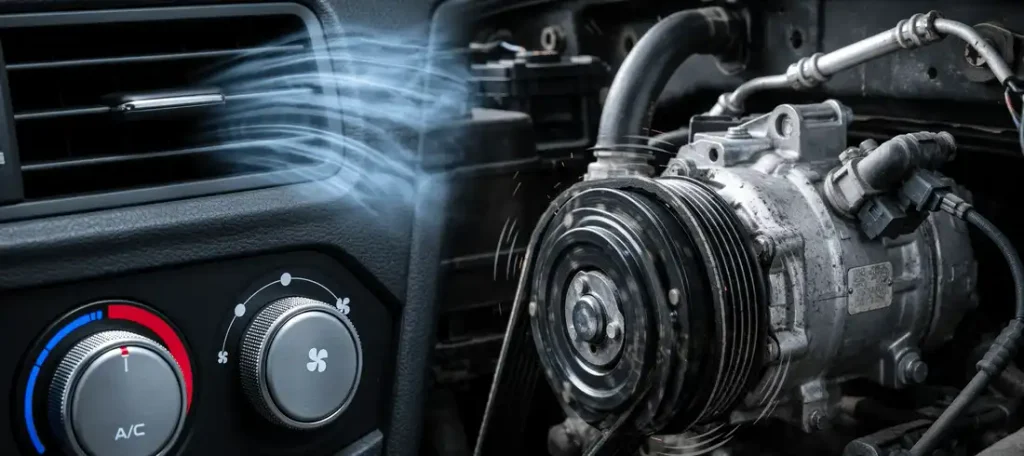
Common Car A/C Noises and What They May Mean
Use this table as a starting point. The possible causes are diagnostic directions, not confirmed failures.
| Noise | Possible source | What to do next |
|---|---|---|
| One brief click | Compressor clutch on some vehicles | Monitor it if cooling and operation remain normal |
| Repeated clicking | Compressor cycling, pressure control, relay, sensor, or electrical issue | Record when it happens and arrange testing |
| Squealing or chirping | Belt, tensioner, idler pulley, clutch, or accessory-drive load | Stop using the A/C if the squeal is severe or the belt appears damaged |
| Rattle behind dashboard | Blower debris, loose trim, actuator, or HVAC housing | Compare the sound at different fan speeds |
| Grinding or growling | Bearing, pulley, compressor, or mounting problem | Switch the A/C off and arrange prompt inspection |
| Hissing | Pressure equalization or possible refrigerant leak | Persistent hissing with poor cooling needs professional testing |
A sound can travel through the body and make its source difficult to locate. For example, a vibration from an engine-bay refrigerant line may seem to come from the dashboard.
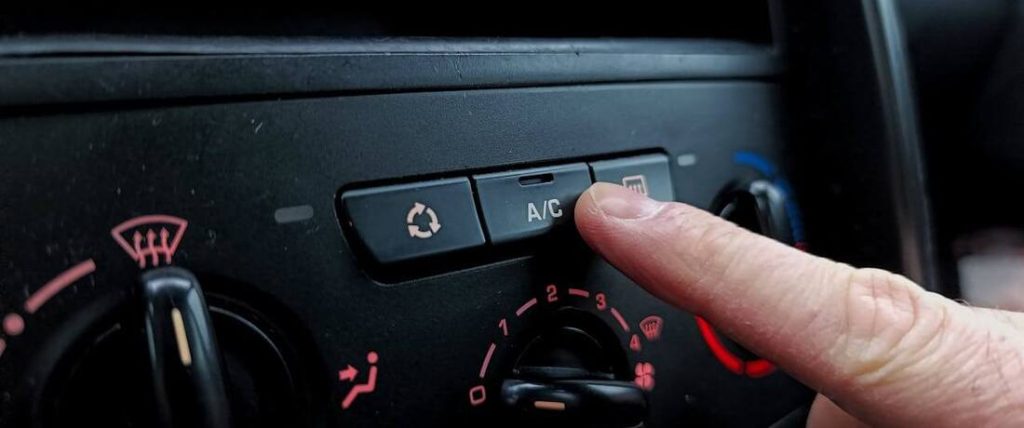
1. One Click When the A/C Turns On
A single click when you switch on the A/C can be normal on a vehicle with an electromagnetic compressor clutch.
The clutch connects the compressor to the engine-driven pulley when the system requests compressor operation. Engagement can produce a brief sound.
However, not every vehicle uses this design. Some systems use variable-displacement compressors, while many hybrids and electric vehicles use electric compressors. These systems may not make the same clutch-engagement sound.
A brief click with normal cooling may not indicate a problem. Repeated clacking, grinding, or a harsh metallic noise deserves further investigation.
Pay attention to what happens after the click. Does the A/C cool normally? Does the sound continue? Does it return every few seconds?
Those details help a technician distinguish normal engagement from repeated cycling or a mechanical problem.
2. Repeated Clicking or Rapid Compressor Cycling
Repeated clicking from the engine bay may mean the compressor is switching on and off.
Possible causes include:
- A refrigerant-pressure problem
- A refrigerant leak
- A faulty pressure sensor or control circuit
- A compressor-clutch problem on vehicles that use one
- A control-system fault
Low refrigerant can contribute to short cycling on some systems. However, repeated clicking does not prove the system is low.
The system may be responding to a pressure condition, an electrical signal, or another control issue. Some vehicles also change compressor operation according to cabin temperature, outside temperature, and engine-management strategy.
What should you observe?
Note whether the clicking happens:
- Every few seconds while the A/C is running
- Only when the engine is idling
- When the cabin is already cool
- Along with warm air from the vents
- With an unusual change in engine idle
A technician can check relevant HVAC and powertrain data, inspect for leaks, and test system operation using the correct equipment.
Do not treat a recharge can as a diagnostic test. The system needs the correct refrigerant charge, and any leak should be identified and repaired rather than repeatedly topped up.

3. Squealing When the A/C Is Switched On
A squealing sound from the engine bay may involve the accessory belt drive.
On some vehicles, the compressor adds load to the belt when it operates. A worn belt, weak tensioner, damaged idler pulley, or compressor pulley problem may become noisy under that load.
The compressor itself is not the only possible source. Another belt-driven component may also become louder when engine load changes.
Signs that point toward a belt-drive problem
- A sharp squeal starts when the A/C is switched on.
- The sound changes with engine speed.
- You hear chirping near the belt area.
- The belt has visible cracks, missing ribs, or frayed edges.
- You notice rubber dust around a pulley.
A technician should inspect the belt, tensioner, idler pulley, pulley alignment, and related accessories.
If the belt is frayed, smoking, shedding rubber, or visibly damaged, do not keep running the system to see whether the sound disappears. Arrange an inspection.
A belt-drive failure can affect other engine-driven systems, depending on the vehicle’s layout.
Related reading: Serpentine Belt Tensioner Symptoms. This page should receive a technical review before publication of this article’s link is finalized.
4. Rattling Behind the Dashboard
A rattle behind the dashboard may come from the cabin blower or another HVAC component.
The blower motor moves air through the heating and air-conditioning system. If leaves, small debris, or a loose component enters the blower housing, it can make noise as the fan turns.
A loose panel or HVAC component may also vibrate when the fan operates.
How to narrow it down
Change the cabin fan speed while the vehicle is parked safely.
- If the rattle changes as fan speed increases, inspect the blower area.
- If the sound remains the same at different fan speeds, another HVAC component or loose trim may be involved.
- If the sound changes when you switch between face, floor, and windshield vents, an air-distribution door or actuator may be involved.
- If the noise changes when you adjust the temperature, a temperature blend-door actuator may deserve inspection.
A cabin blower can make noise even when the A/C compressor is not operating. This is why a dashboard rattle should not automatically lead to compressor replacement.
If the problem appears to involve debris around the vents, see Cleaning Car Air Vents. That guide covers vent cleaning, not blower-motor repair.
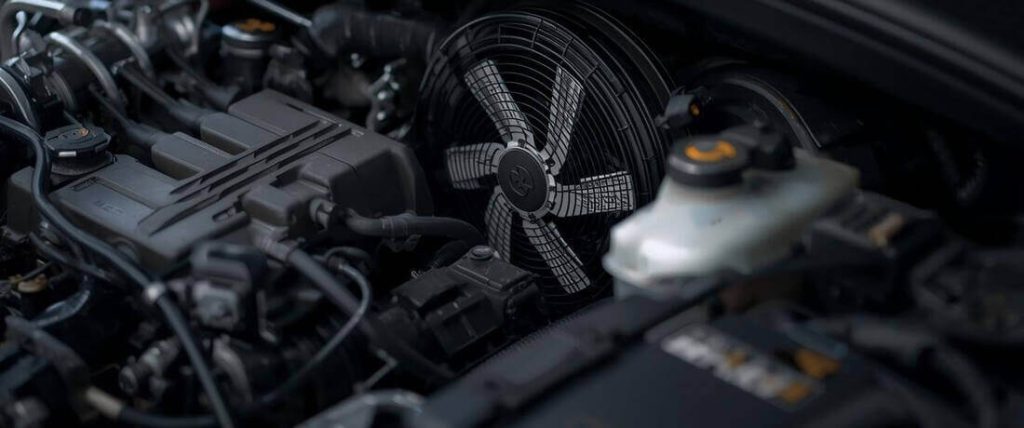
5. Grinding, Growling, or Knocking From the Engine Bay
A rough mechanical sound from the engine bay deserves prompt attention.
Possible sources include:
- Compressor internal components
- Compressor clutch bearing
- Compressor pulley bearing
- Accessory belt tensioner
- Idler pulley
- Loose compressor mounting hardware
- Another belt-driven accessory
A bearing may growl or grind as it rotates. A loose mounting point can also create vibration or knocking when the compressor operates.
The sound’s location and relationship to engine speed matter. A noise that follows engine RPM may involve the accessory drive, while one that appears only during compressor operation may involve the compressor or its mounting and connections.
What should you do?
Switch the A/C off if the grinding or knocking is severe. Arrange an inspection rather than continuing to operate the system.
If you notice smoke, a burning-rubber smell, belt debris, or an engine-temperature or charging-system warning, pull over safely. Shut the engine off when appropriate and seek assistance.
Never put your hand, clothing, or a tool near a moving belt, pulley, or cooling fan to locate the sound. Electric cooling fans can start unexpectedly.
6. Hissing After the A/C Is Switched Off
A brief hiss after the A/C shuts down may come from pressure equalization inside the refrigerant system.
That does not automatically mean refrigerant is leaking.
A persistent hiss while the system is running, especially when the A/C is not cooling properly, needs further investigation. The sound may come from refrigerant flow through a component, or it may indicate a leak.
A technician can inspect the system and use suitable leak-detection equipment to confirm whether refrigerant is escaping.
Do not use sound alone to diagnose a refrigerant leak. Do not open the refrigerant circuit or release refrigerant to test it.
7. What Changes the A/C Noise?
The operating condition can be more useful than the sound description alone.
| When the noise changes | System area to investigate |
|---|---|
| When cabin fan speed changes | Blower motor, blower housing, debris, or HVAC airflow |
| When A/C is switched on or off | Compressor operation, clutch, belt load, cooling fan, or refrigerant lines |
| When engine speed changes | Accessory belt, tensioner, pulley, or compressor drive |
| When temperature setting changes | Blend door or temperature-control actuator |
| When vent mode changes | Mode door, actuator, or HVAC housing |
| Along with poor cooling | Refrigerant charge, leak, compressor operation, condenser fan, or system controls |
Some vehicles do not operate the compressor under every condition. Outside temperature, engine-management strategy, and system design can affect when the compressor runs.
Record the conditions instead of repeatedly switching the A/C on and off to reproduce a severe noise.
8. What Manufacturer Service Bulletins Show
Manufacturer documents provide useful examples of why a noise does not always mean the compressor itself has failed.
These examples apply only to the vehicles and conditions listed in each document.
Infiniti M37 and M56: Whine, Hum, or Moan
Infiniti bulletin ITB13-021 addresses a whine, hum, or low-pitched moan heard inside specified 2011–2012 M37 and M56 vehicles while the A/C compressor is running.
The diagnostic flow first checks for refrigerant leakage. If no leak is found, technicians are directed to investigate A/C pipe brackets and line contact.
This example shows that a noise associated with compressor operation can involve refrigerant-line vibration or bracket resonance. It does not automatically mean the compressor has failed.
Honda CR-V: Compressor-Clutch Wear
Honda Service Bulletin 12-072 covers specified 2007–2011 CR-V vehicles.
Honda documented compressor-clutch wear that could cause poor A/C performance, warm air, or noise from the compressor area.
This bulletin is specific to the listed CR-V vehicles. It should not be used as a diagnosis for another vehicle simply because the sound seems similar.
2026 Cadillac OPTIQ: Compressor Noise and High-Voltage Harness
GM preliminary information PIC6537F addresses a helicopter-like or knocking noise and vibration while the A/C compressor runs on specified 2026 Cadillac OPTIQ vehicles.
The document lists the cause as under investigation. It directs technicians to verify the correct refrigerant charge, check for debris in the oil, and inspect whether the high-voltage cable harness is too tight and placing a side load on the compressor.
This is a vehicle-specific example involving an electric compressor and high-voltage components. It is not an owner repair procedure.
These bulletins reinforce an important diagnostic point: the sound, vehicle design, and manufacturer service information must be considered together.
9. Safe Checks You Can Make
You can collect useful information without opening the refrigerant system or touching moving components.
Check 1: Park Safely
Park on a level surface, apply the parking brake, and keep people, loose clothing, and tools away from moving parts.
Do not reach into the engine bay while the engine is running.
Check 2: Compare Fan Speeds
Change the cabin blower speed.
If the sound changes with fan speed, the blower motor or its housing deserves attention.
Check 3: Compare A/C On and Off
Note whether the sound starts or changes when you request A/C.
Some vehicles may not engage the compressor under every condition, so the result is only a clue.
Check 4: Change Temperature and Vent Mode
Switch between face, floor, and windshield modes. Adjust the temperature setting.
A clicking sound that follows these changes may involve an HVAC door or actuator.
Check 5: Inspect the Belt With the Engine Off
Wait until the engine is off and cool. Look for fraying, missing ribs, or obvious belt damage.
Do not touch a moving belt or pulley. If you see damage, arrange an inspection.
Check 6: Record Cooling Performance
Note whether the air stays cold, becomes warm, or changes as the noise starts.
Also record whether the sound happens at idle, during acceleration, or at highway speed.
These observations can help a repair shop reproduce the complaint.
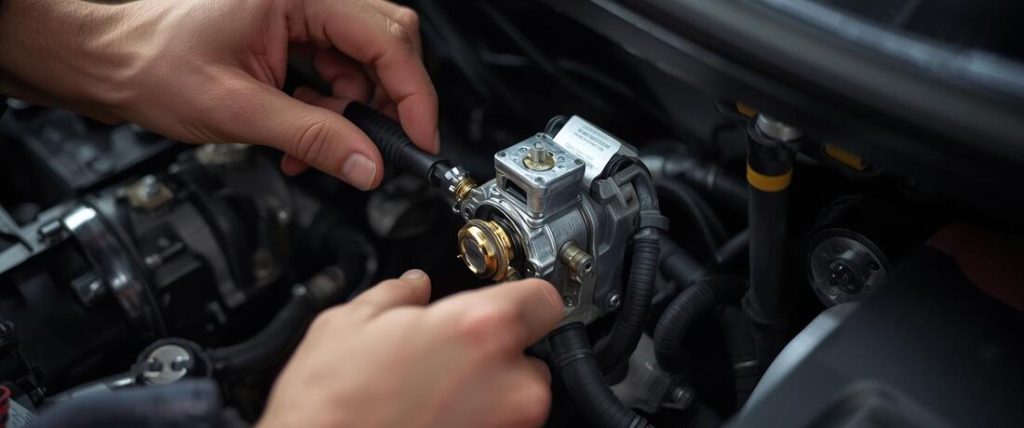
10. What Should a Repair Shop Test?
Ask the shop to locate the noise before approving compressor replacement.
Depending on the vehicle, the technician may need to:
- Inspect the accessory belt, tensioner, idler, and pulley bearings.
- Check compressor mounting points and A/C line brackets for contact or vibration.
- Verify clutch operation if the vehicle uses a clutch-equipped compressor.
- Check condenser and cooling-fan operation.
- Scan relevant HVAC and powertrain modules.
- Measure A/C pressures and temperatures using the vehicle-specific service procedure.
- Check for refrigerant leaks before correcting the charge.
- Follow the manufacturer’s procedure for electric compressors and high-voltage systems.
A trouble code or a noise complaint is a starting point, not proof that the compressor needs replacement.
A good repair estimate should explain what component produced the noise, what test confirmed the problem, and why the proposed repair addresses it.
11. When Should You Stop Using the A/C?
Switch the A/C off and arrange an inspection if the noise becomes loud, metallic, or continuous.
Stop safely and seek assistance if you notice:
- Smoke or a burning-rubber smell
- A belt that is fraying, shredding, or slipping badly
- Sudden grinding or knocking
- An engine-temperature warning
- A charging-system warning that appears with belt noise
If the engine overheats or the belt drive is damaged, do not continue driving just because the A/C can be switched off. The belt may drive other important components.
A mild cabin blower rattle with normal vehicle operation is a different situation from a severe mechanical noise under the hood.
12. A/C Refrigerant and Hybrid Safety
Do not open refrigerant lines or intentionally release refrigerant.
Under EPA Section 609, anyone servicing or repairing a motor-vehicle A/C system for payment must be properly trained and certified and use approved refrigerant-handling equipment.
Refrigerant work requires the correct recovery, handling, and charging equipment. A recharge can is not a substitute for leak diagnosis or a proper service procedure.
Hybrid and electric vehicles may use high-voltage electric compressors. Do not touch orange high-voltage cables, compressor connectors, or related components.
Use the manufacturer’s service information and a qualified technician for work involving high-voltage A/C systems.
FAQs About Car AC Making Noise?
Is one click when the car A/C turns on normal?
It can be normal on a vehicle with an electromagnetic compressor clutch. Other vehicles use different compressor designs, so the sound depends on the system. A repeated or harsh click needs diagnosis.
Can low refrigerant make the A/C click?
Low refrigerant can contribute to repeated compressor cycling on some systems. But clicking alone does not prove low refrigerant. A leak and the system’s pressure and control data need to be checked.
Why does my car make noise only when the A/C is on?
The A/C request can change compressor operation, belt load, fan operation, or HVAC controls. The noise may come from the compressor area, a belt-driven part, a line bracket, or a cabin component. The timing narrows the search but does not identify the failed part.
Does A/C noise mean I need a new compressor?
No. A belt, tensioner, pulley, clutch, bracket, blower motor, actuator, or another component may be responsible. Confirm the source before replacing the compressor.
Can I drive with a noisy A/C?
A mild cabin blower rattle with no other symptoms may not affect how the vehicle drives. A severe under-hood grind, belt squeal, smoke, burning smell, or warning light is different. Switch the A/C off, stop safely when needed, and arrange an inspection.
The Bottom Line
A noisy car A/C does not automatically mean the compressor is bad. First identify whether the sound comes from the cabin or engine bay. Then note what changes it: fan speed, A/C request, engine speed, or HVAC setting.
Use those observations to guide testing. Do not recharge the system, replace the compressor, or open refrigerant lines based on sound alone.