
This article was updated in June 16, 2026 with new products and information by Mark S. Taylor
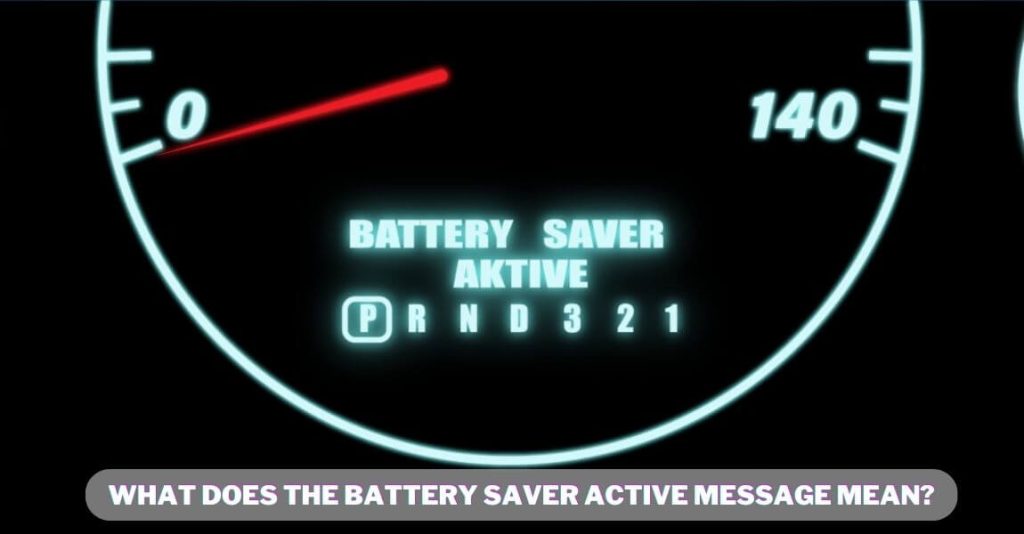
You are driving your Chevrolet, GMC, Cadillac, or Buick, and suddenly a clear text warning flashes across your driver information center (DIC): “Battery Saver Active” Within minutes, you might notice your dashboard lights dim, your air conditioning fan slow down, or your heated seats turn off by themselves.
This dashboard message is a built-in protective algorithm unique to General Motors (GM) vehicles. It is not an emergency notification for your smartphone—it is a critical warning that your car’s electrical charging infrastructure is failing.
As an ASE-Certified Master Technician, I see drivers mistake this for a simple dead car battery. In this technical guide, we will break down the exact engineering reasons behind the GM “Battery Saver Active Message” alert, how to diagnose the root cause, and real-world repair costs. Check your “Car Battery Life Calculator“
Contents
- 1 The Engineering Logic: What “Battery Saver Active” Actually Means
- 2 4 Common Mechanical Causes for the Warning Message
- 3 Technical Troubleshooting: How to Diagnose the Issue at Home
- 4 Repair Costs: What It Costs to Fix in the US (2026 Prices)
- 5 How to Handle the “Battery Saver Active” Message While Driving
- 6 Preventative Maintenance: How to Extend GM Electrical Infrastructure
- 7 FAQs About What Does The Battery Saver Active Message Mean?
- 7.1 Q: Can a bad car battery trigger the “Battery Saver Active” message even if the alternator is brand new?
- 7.2 Q: Why does the “Battery Saver Active” message flash intermittently while driving?
- 7.3 Q: How long can a car run once the Battery Saver Active mode is engaged?
- 7.4 Q: Which direction do I turn an oil filter to loosen it?
- 7.5 Q: Can I leave an old oil filter in place for two oil changes?
- 8 The Bottom Line from the Shop Garage
The Engineering Logic: What “Battery Saver Active” Actually Means
Your car features an Engine Control Module (ECM) and a Regulated Voltage Control (RVC) system that monitors the health of your 12V car battery via a current sensor clamped to the negative battery cable.
When the engine is running, your alternator should continuously pump between $13.8\text{V}$ and $14.5\text{V}$ of electricity into the system. If the alternator fails and that voltage drops below $11.5\text{V}$, the car begins running purely off the reserve juice of the battery.
To prevent the engine from stalling in active traffic, the computer enters emergency power-shedding mode. It cuts power to non-essential accessories (AC compressor, radio, heated glass, infotainment) to save the remaining voltage for the spark plugs, fuel pump, and electronic power steering.
4 Common Mechanical Causes for the Warning Message
1. A Failing or Dead Alternator (Most Common)
The alternator is the small generator driven by your engine’s serpentine belt.
- The Failure: As alternators age past 100,000 miles, their internal voltage regulators fail, or their carbon brushes wear down. Once the alternator stops generating electricity, the entire electrical load falls on the battery, triggering the “Battery Saver Active” message.
- The Symptom: The warning stays on continuously, and a red battery icon illumination joins it shortly after.
2. Failing Car Battery with Low Cold Cranking Amps (CCA)
Car batteries in the US typically last between 3 to 5 years.
- The Failure: If your battery has developed a dead internal cell, it can no longer hold a charge above $12\text{V}$, even if the alternator is working perfectly. The computer detects the low voltage retention and triggers the alert.
3. Corroded Battery Terminals or Loose Ground Cables
Electricity must flow through a clean, unbroken loop.
- The Failure: If your battery terminals are covered in white or green acid crust (copper sulfate insulation), or if the main chassis ground wire is loose, it creates intense electrical resistance. The alternator’s voltage cannot physically cross into the vehicle’s electrical bus.
4. Faulty Battery Current Sensor
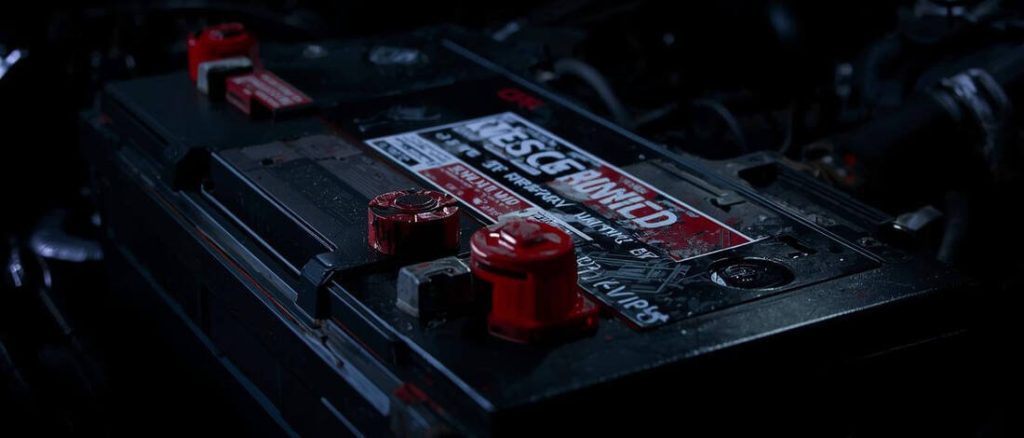
GM vehicles utilize a small donut-shaped Battery Current Sensor slipped right over the negative battery cable.
- The Failure: If this sensor fails or its wiring harness breaks due to engine bay heat, it transmits corrupted voltage data to the ECM. The computer assumes the battery is dying and forces the vehicle into an unnecessary energy-saving loop.

Technical Troubleshooting: How to Diagnose the Issue at Home
You can isolate the exact point of failure using a basic $15 digital multimeter:
Step 1: Park the car and pop the hood. Turn off all lights and accessories.
Step 2: Set your multimeter to DC Volts (20V scale).
Step 3: Touch the red probe to the positive (+) terminal and black probe to the negative (-) terminal.
Test A (Engine OFF): A healthy, fully-charged battery should read between $12.4\text{V}$ and $12.6\text{V}$. If it reads below $12.0\text{V}$, your battery is severely discharged or worn out.
Test B (Engine Running): Start the car and check the meter again. A healthy alternator must drive the reading up to $13.8\text{V}$ to $14.5\text{V}$. If the meter stays at $12.0\text{V}$ or keeps dropping while the engine idles, your alternator is dead and must be replaced.
Repair Costs: What It Costs to Fix in the US (2026 Prices)
| Damaged Component | DIY Parts Cost | Professional Shop Cost (Labor Included) |
| Standard 12V Car Battery | $120 – $220 | $180 – $300 |
| New Alternator Assembly | $150 – $350 | $400 – $750 (Depending on engine space) |
| Battery Current Sensor | $30 – $60 | $110 – $180 |
| Terminal Cleaning & Cable Tightening | $5 (Wire Brush) | $50 – $90 |

How to Handle the “Battery Saver Active” Message While Driving
If this text triggers on your dashboard while you are navigating active traffic, follow this emergency technician protocol to safely protect your vehicle:
- Turn Off All Auxiliary Power Loads: Instantly shut off your air conditioning or cabin heater climate fan, radio/infotainment display, heated or ventilated seats, phone chargers, and rear window defrosters. Minimizing the live amperage draw buys your spark plugs and fuel pump extra minutes of operating time.
- Do Not Shut Off the Engine Immediately: If you are far from home or a repair garage, do not turn off the key. If your alternator is completely dead, the battery will not have enough structural cranking amps left to start the vehicle back up, leaving you instantly stranded.
- Drive Directly to a Safe Haven: Navigate immediately to your home, a local auto parts store, or a trusted repair facility. Avoid turning into heavy bumper-to-bumper gridlock where the electrical cooling fans have to work overtime.
Preventative Maintenance: How to Extend GM Electrical Infrastructure
You can minimize the risk of a sudden highway alternator failure by practicing these basic garage maintenance habits:
- Clean Terminal Corrosion Annually: Spray a dedicated battery cleaner or a mix of baking soda and water onto your top/side posts to dissolve insulating acid crusts. Secure the terminal nuts with a 10mm wrench to ensure zero movement.
- Inspect the Serpentine Belt Tension: Check your main accessory drive belt every 15,000 miles for dry-rot cracking, fraying, or a loose automatic tensioner pulley. A slipping belt cannot rotate the alternator pulley fast enough to hit peak output amperage.
- Never Overload the 12V System: Avoid running high-draw aftermarket electronic modifications—such as heavy competitive audio subwoofers or massive LED light bars—without upgrading to a high-output aftermarket alternator and an AGM battery.
FAQs About What Does The Battery Saver Active Message Mean?
Q: Can a bad car battery trigger the “Battery Saver Active” message even if the alternator is brand new?
A: Yes. If your car battery has an internal short circuit, structural plate sulfation, or can no longer retain an electrical charge above 11.5 volts, the Regulated Voltage Control (RVC) network will assume a system failure and trip the battery saver protocol to protect the vehicle computer modules.
Q: Why does the “Battery Saver Active” message flash intermittently while driving?
A: Intermittent alerts typically point to a loose or corroded battery cable connection, a slipping serpentine accessory belt, or an internal alternator voltage regulator that is beginning to fail specifically when the engine bay gets hot.
Q: How long can a car run once the Battery Saver Active mode is engaged?
A: This depends entirely on the reserve capacity of your battery and how many electronics you keep running. On average, a modern vehicle can operate for 15 to 45 minutes before the battery drops below 9 volts, causing the fuel injectors to stop firing and the engine to stall completely.
Q: Which direction do I turn an oil filter to loosen it?
A: Always rotate the filter counterclockwise to remove it. When laying on your back underneath a vehicle facing upward, it is incredibly easy to get visually disoriented. Always double-check your rotation vector before applying heavy force.
Q: Can I leave an old oil filter in place for two oil changes?
A: No. An old filter holds roughly half a quart of highly contaminated, dirty oil. Leaving it in place immediately pollutes your expensive new fresh engine oil. Furthermore, if the paper element inside the old filter clogs entirely, it will trigger an internal bypass valve, sending unfiltered abrasive sludge directly into your engine bearings.
The Bottom Line from the Shop Garage
If your dashboard flashes a battery saver alert, do not ignore it thinking your vehicle is simply being eco-friendly or running an eco-mode. It means your vehicle’s charging system is running on borrowed time. Grab a basic digital multimeter, test your alternator’s live output idling voltage, and clean off any surface terminal corrosion before blindly paying for diagnostic services.
(Want to ensure your vehicle’s engine control sensors, electrical ignition loops, and dashboard diagnostic networks are functioning flawlessly? Read our complete master guide on How to Read Check Engine Light Codes Without a Scanner or explore The Car Buzz Official Editorial Standards and Testing Policy to see how we maintain strict mechanical review criteria).