
This article was updated in August 1, 2026 with new products and information by Mark S. Taylor
You’re driving down the highway, minding your own business, when a new sound starts to creep in: a low hum that gets louder with speed. Or maybe it’s a growl that changes when you turn. You know something’s not right, and deep down, you’re wondering, “Can I drive with a bad wheel bearing?” The short answer from any mechanic worth their salt is usually, “No, not if you value your life, your car, or your wallet.” I’ve seen the aftermath of ignored wheel bearings—and it’s not pretty. This isn’t just an annoying noise; it’s a critical safety issue that can lead to catastrophic failure. Let’s break down exactly what that sound means, how fast it can get dangerous, and why putting off this repair is a gamble you absolutely cannot afford to lose.
Contents
- 1 The Hum That Hints at Danger: What Your Wheel Bearing Does
- 2 The Mechanic’s Progressive Danger Scale: What a Bad Wheel Bearing Sounds Like (And Feels Like)
- 3 The Catastrophic Consequences: What Happens When a Wheel Bearing Fails Completely
- 4 Can You Drive With It? The Hard Truth (Safety Matrix)
- 5 Mechanic’s Quick Check: How to Safely Test for Bearing Play at Home
- 6 Repairing the Noise: What to Expect When You Get It Fixed
- 7 Preventing Future Bearing Blues: Maintenance Tips
- 8 FAQs About Can I Drive With a Bad Wheel Bearing?
- 8.1 Q1: What does a bad wheel bearing sound like specifically?
- 8.2 Q2: Can a bad wheel bearing cause my ABS light to come on?
- 8.3 Q3: How much does it cost to replace a wheel bearing?
- 8.4 Q4: Can a bad wheel bearing cause uneven tire wear?
- 8.5 Q5: Is it possible for a bad wheel bearing to affect my steering?
- 9 The Shop Verdict: Listen to Your Car, Save Your Life
The Hum That Hints at Danger: What Your Wheel Bearing Does
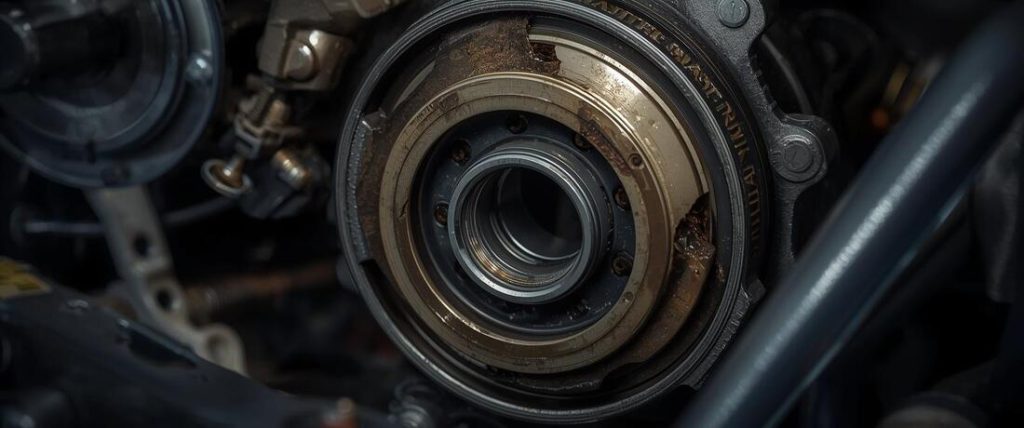
Every wheel on your vehicle spins on a set of bearings, hidden inside what’s usually called the hub assembly. These wheel bearings are precision components packed with grease and sealed to keep out dirt and moisture. Their job is simple: allow your wheel to rotate smoothly and quietly, with minimal friction, while supporting the entire weight of your car and handling all the stresses of braking, accelerating, and turning. They’re critical for everything from basic steering to how your ABS and traction control systems function. That hum isn’t just annoying; it’s a warning. Think of it like a train coming down the track, and your wheel is the train car. It’s only going to get louder until it derails.
The Mechanic’s Progressive Danger Scale: What a Bad Wheel Bearing Sounds Like (And Feels Like)
A wheel bearing doesn’t just go from perfect to catastrophically failed in an instant. It’s a slow, agonizing death, and it provides plenty of warning signs. The key is knowing what those warnings mean and how quickly they escalate.
Stage 1: The Faint Hum (Early Warning)
- Sound: A subtle, low-pitched humming or droning noise, often mistaken for tire noise. It typically gets louder with vehicle speed. You might notice it’s more prominent when turning, especially when putting weight on the failing side.
- Feel: Generally, no noticeable difference in driving feel yet, beyond the sound.
- Risk Level: Low immediate danger, but this is your first and best chance to fix it before it causes more damage or becomes a major safety hazard.
Stage 2: The Growl or Roar (Developing Problem)
- Sound: The hum progresses into a more distinct growling or roaring sound. This is much harder to mistake for road noise. It will be noticeably louder when turning. You might find it gets louder when turning one direction (e.g., left turn, right front bearing) and quieter when turning the opposite way.
- Feel: You might start to feel a subtle vibration in the steering wheel or floorboards, especially at certain speeds.
- Risk Level: Moderate. The bearing is actively degrading, generating heat, and losing its internal integrity. Driving long distances, especially at highway speeds, is becoming dangerous.
Stage 3: Grinding, Knocking, or Clunking (Serious Degradation)
- Sound: The growl turns into a harsh grinding noise, often metallic, especially during acceleration, braking, or turning. You might also hear knocking or clunking sounds as the internal components break apart.
- Feel: The vibration in the steering wheel becomes more pronounced, and you might feel a definite looseness or “play” in the wheel when driving. The car might start to pull to one side.
- Risk Level: High. This is a critical stage. The bearing is severely damaged, potentially allowing excessive play in the wheel. Further driving significantly increases the chance of catastrophic failure.
Stage 4: Loose Wheel / Severe Vibration (Imminent Catastrophe)
- Sound: All previous noises are present, often accompanied by very loud, violent banging or clunking.
- Feel: The wheel itself will feel visibly loose or wobbly. Steering will be severely compromised, and the car will likely pull violently. The brake pedal might pulse erratically due to the wobbly rotor.
- Risk Level: Extreme. Do NOT drive the vehicle. The wheel could separate from the car, or seize, at any moment.
The sound often changes when you turn. If it gets louder turning one way and quieter the other, you’ve likely pinpointed the side. But by the time it’s grinding, you’re on borrowed time, and it’s affecting everything else.

The Catastrophic Consequences: What Happens When a Wheel Bearing Fails Completely
You might think a bad wheel bearing is just a noise. I’m here to tell you it’s a ticking time bomb. When a wheel bearing completely gives up, it doesn’t just make your day inconvenient; it puts your life and the lives of others on the road at severe risk.
- Wheel Separation: This is the absolute worst-case scenario, and it’s terrifyingly real. As the bearing breaks down, it can disintegrate, allowing the wheel assembly to literally separate from the vehicle while you’re driving. Imagine your front wheel detaching at 65 miles per hour on the interstate. Loss of control is instantaneous and almost certainly leads to a severe accident.
- Wheel Seizure: Instead of separating, the bearing can lock up solid due to extreme friction and heat. This causes the wheel to stop rotating. If a front wheel seizes, you lose steering control and the car can violently swerve. If a rear wheel seizes, it’s like slamming on the emergency brake on one side, leading to a spin-out.
- Brake Failure: The wheel bearing supports the brake rotor and caliper. When it goes bad, the rotor can wobble excessively, pushing the brake pads away from the rotor. This can lead to a soft brake pedal, reduced braking effectiveness, or even complete loss of braking on that wheel.
- Damage to Surrounding Components: A failing bearing generates immense heat and vibration. This can cook your ABS sensor, damage your brake rotor, wear out your tire unevenly, or even stress your axle shaft and suspension components. What started as a $300 bearing repair can quickly become a $1,000+ repair involving brakes, suspension, and sensors.
- Complete Loss of Control: Whether the wheel separates, seizes, or severely compromises your steering and braking, the end result is the same: you lose the ability to safely control your vehicle. This is not a “limp it home” situation if it reaches an advanced stage.
I’ve seen wheels fall off. Not kidding. It’s a miracle when it happens at low speeds. At highway speeds, you’re looking at a complete loss of control, a potential rollover, and a multi-car pileup. This isn’t a “maybe it’ll be fine” kind of repair.
Can You Drive With It? The Hard Truth (Safety Matrix)
Let me be blunt: there is no “safe” amount of time to drive with a genuinely bad wheel bearing. Once it starts making noise, it’s compromised. Your question shouldn’t be “Can I drive with it?” but “How much risk am I willing to take?” Here’s my no-nonsense safety matrix:
- Faint Hum (Stage 1): You might be able to drive it to a repair shop, cautiously. Avoid highway speeds, hard braking, and sharp turns. Schedule a repair immediately. This is a grace period, not an invitation to procrastinate.
- Growl or Roar (Stage 2): You should drive it only if absolutely necessary, and only for very short distances at low speeds, directly to a repair facility. Seriously consider calling a tow truck. The risk of accelerated failure and further damage is significant.
- Grinding, Knocking, Clunking, or Vibration (Stage 3): Do NOT drive the vehicle. The bearing is severely compromised, and catastrophic failure is imminent. This is a tow-truck-only situation. Every mile you drive compounds the danger and the cost.
- Visible Wheel Wobble or Severe Steering Issues (Stage 4): Absolutely, unequivocally, DO NOT DRIVE. Even a few feet could lead to the wheel coming off or seizing. This is an emergency. Call a tow truck immediately.
There’s no safe amount of time to drive with a truly bad bearing. Once it’s loose, the damage is exponential. If it’s more than a faint hum, don’t even think about the highway. Call a tow truck. Your life, and everyone else’s on the road, is worth more than a tow bill.
Mechanic’s Quick Check: How to Safely Test for Bearing Play at Home
Before you call the shop, you can often do a simple, safe test in your driveway to confirm if a wheel bearing is truly bad. This isn’t a substitute for a professional diagnosis, but it can give you a clearer picture.
Safety First:
- Always work on a flat, level surface.
- Block the wheels that are remaining on the ground (e.g., if testing a front wheel, block the rear wheels).
- Use a sturdy jack and then ALWAYS support the vehicle with a jack stand under the frame or a strong suspension component. Never rely solely on the jack.
The Test:
- Lift and Support: Safely raise the suspected corner of the vehicle off the ground and secure it with a jack stand. The wheel should be free to spin.
- Visual Inspection: Give the wheel a spin. Does it sound rough? Does it immediately stop or continue to spin freely? Does it look like it’s wobbling?
- The “Wiggle” Test (12 & 6 O’clock): Grab the tire firmly at the 12 o’clock (top) and 6 o’clock (bottom) positions. Try to push the top in and pull the bottom out, then reverse. You’re trying to rock the wheel along a vertical axis.
- What you’re looking for: If you feel or hear a clunking, clicking, or movement (play) in the wheel, it’s a strong indicator of a worn wheel bearing.
- The “Wiggle” Test (3 & 9 O’clock): Now, grab the tire at the 3 o’clock (front) and 9 o’clock (rear) positions. Try to push and pull it along a horizontal axis.
- What you’re looking for: Again, any noticeable play, clunking, or movement points to a bad bearing or possibly other worn suspension components like tie rods. If it’s a wheel bearing, you’ll often notice a more consistent “play” from both tests.
- Listen While Spinning: With the car safely on the jack stand, spin the wheel by hand as fast as you can. Listen closely. Do you hear any grinding, humming, or roaring that wasn’t there before? Sometimes this can be faint but noticeable.
This test isn’t foolproof, but if you feel any clunking or significant play, you’ve got your answer. But remember, the car needs to be safely lifted and supported. Don’t cheap out on jack stands.
Repairing the Noise: What to Expect When You Get It Fixed
Once you’ve identified a bad wheel bearing, the repair process varies slightly depending on your vehicle’s make and model. The cost can also differ significantly.
Two Main Types of Repair:
- Hub Assembly Replacement: Many modern vehicles use a sealed “hub assembly” where the wheel bearing, hub, and often the ABS sensor are all one unit. This is generally an easier and quicker repair as the old assembly bolts off and a new one bolts on.
- Parts Cost: $100 – $400 per side (depending on vehicle)
- Labor Cost: $150 – $350 per side (1-3 hours)
- Total (Parts + Labor): $250 – $750+ per side
- Pressed-In Bearing Replacement: Older vehicles, or some higher-performance models, use a design where the bearing is pressed directly into the steering knuckle or wheel hub using a hydraulic press. This requires specialized tools and more labor-intensive work.
- Parts Cost: $50 – $200 per side (bearing only)
- Labor Cost: $250 – $500+ per side (2-5 hours, sometimes requires removal of the entire knuckle for pressing)
- Total (Parts + Labor): $300 – $700+ per side
Additional Considerations:
- Alignment: Any time suspension components are disconnected (which is required for a wheel bearing job), a wheel alignment is recommended to ensure proper handling and prevent uneven tire wear. ($80 – $150)
- ABS Sensor: If your vehicle has ABS, the sensor is often integrated or located near the wheel bearing. It can sometimes be damaged during removal or installation, or it might have been compromised by the failing bearing. A new sensor could be an additional $50-$200.
- Pair Replacement: While not always necessary, if one wheel bearing is bad, the opposing one on the same axle may not be far behind, especially if they have similar mileage. Discuss this with your mechanic.
Some cars are easy (bolt-on hub assemblies), some are a nightmare (pressed-in bearings that require a special hydraulic press). The labor cost differences are huge. And never let a shop tell you they don’t need to do an alignment after touching suspension components.

Preventing Future Bearing Blues: Maintenance Tips
While wheel bearings will eventually wear out, you can extend their life and prevent premature failure with a few simple practices:
- Avoid Potholes and Curbs: Repeated, harsh impacts are a major cause of wheel bearing failure. Drive carefully, especially on rough roads.
- Proper Tire Maintenance: Keep your tires properly inflated and ensure they are balanced and rotated regularly. Uneven tire wear or out-of-balance tires can put undue stress on bearings.
- Timely Wheel Alignment: Maintain proper wheel alignment. Incorrect alignment can cause abnormal stress on suspension components, including wheel bearings.
- Avoid Driving Through Deep Water: Submerging your hubs in deep water can force water past the bearing seals, washing out the lubricating grease and leading to corrosion and premature failure.
- Use Quality Replacement Parts: When a bearing needs replacement, don’t skimp on cheap aftermarket parts. A high-quality bearing will last much longer and perform better.
- Proper Torque: If you ever work on your wheels (e.g., tire rotations), ensure the lug nuts are torqued to the manufacturer’s specifications. Incorrect torque can affect the bearing’s preload and lifespan.
Hitting potholes is a huge killer of bearings. Also, driving through deep water can contaminate the grease. Pay attention to anything that hits your wheels hard.
FAQs About Can I Drive With a Bad Wheel Bearing?
Q1: What does a bad wheel bearing sound like specifically?
A: It often starts as a low hum or drone that gets louder with speed. It can progress to a growl, a rumble, and eventually a harsh grinding or roaring noise. The sound often changes in intensity when you turn, getting louder when putting weight on the failing side.
Q2: Can a bad wheel bearing cause my ABS light to come on?
A: Yes, absolutely. Many modern wheel bearings have an integrated ABS sensor or a magnetic ring that the ABS sensor reads. If the bearing is failing, it can damage the sensor or cause an erratic signal, triggering your ABS warning light. Don’t assume it’s just the ABS unit.
Q3: How much does it cost to replace a wheel bearing?
A: The cost varies significantly based on your vehicle’s make and model, and whether it requires a hub assembly replacement or a pressed-in bearing. Expect anywhere from $250 to $750+ per wheel, including parts and labor. This doesn’t include potential additional costs like alignment or ABS sensors.
Q4: Can a bad wheel bearing cause uneven tire wear?
A: Yes, an excessively loose or wobbling wheel bearing can lead to uneven tire wear, as the tire is not making consistent contact with the road. This can appear as feathering or cupping on the tire tread. However, many other issues can cause uneven tire wear, so it’s not the sole indicator.
Q5: Is it possible for a bad wheel bearing to affect my steering?
A: Yes. As a wheel bearing degrades and develops excessive play, it can directly affect your steering. You might feel looseness or sloppiness in the steering wheel, a vibration, or even a noticeable pull to one side, especially as the problem worsens. This is a critical safety issue.
The Shop Verdict: Listen to Your Car, Save Your Life
That grinding, humming, or roaring from your wheel isn’t just an annoying sound; it’s a critical warning. A bad wheel bearing is not a component you can “nurse” for months or even weeks. It’s a progressive failure that puts extreme stress on your vehicle’s suspension and braking systems, and most importantly, directly jeopardizes your safety. The cost of replacing a wheel bearing pales in comparison to the potential cost of an accident caused by catastrophic failure. Get it diagnosed, get it fixed, and get it fixed now. Your life, and everyone else’s on the road, depends on it.