
This article was updated in April 14, 2026 with new products and information by Mark S. Taylor
Pressing the gas pedal but your car feels like it’s stuck in molasses? Sluggish acceleration has many causes—most fixable. The reasons your car is slow to accelerate usually involve the fuel, air, or spark systems. A quick severity check helps narrow it down. A gradual power loss is different from a sudden change. This guide covers 12 common causes, how to diagnose them, and repair costs. It matters because slow acceleration affects safety. Merging and climbing hills can become dangerous.

Contents
- 1 Quick Diagnosis: When Does the Slow Acceleration Happen?
- 2 12 Common Reasons Your Car Is Slow to Accelerate
- 2.1 1. Clogged or Dirty Air Filter
- 2.2 2. Clogged Fuel Filter
- 2.3 3. Failing Fuel Pump
- 2.4 4. Dirty or Clogged Fuel Injectors
- 2.5 5. Worn or Fouled Spark Plugs
- 2.6 6. Faulty Ignition Coils
- 2.7 7. Dirty or Faulty Mass Airflow (MAF) Sensor
- 2.8 8. Failed Oxygen Sensor(s)
- 2.9 9. Clogged Catalytic Converter
- 2.10 10. Transmission Problems (Slipping, Low Fluid)
- 2.11 11. Vacuum Leak
- 2.12 12. Low Engine Compression
- 3 Other Possible Causes (Less Common)
- 4 How to Diagnose Slow Acceleration (Step-by-Step)
- 5 Can You Drive with Slow Acceleration?
- 6 Repair Cost Summary
- 7 How to Prevent Slow Acceleration Problems
- 8 Automatic vs. Manual Transmission: Different Causes
- 9 FAQs About Reasons Why Your Car is Slow to Accelerate
- 10 Bottom Line: Start with Simple, Cheap Fixes First
Quick Diagnosis: When Does the Slow Acceleration Happen?
Symptom Timing Helps Narrow the Cause
When the problem happens tells you a lot.
- All the time: It is likely a fuel system, air intake, or exhaust issue.
- Only when cold: It could be a sensor like the MAF or oxygen sensor.
- Only when hot: It might be a cooling system issue or vapor lock.
- Uphill or under load: This points to a weak fuel pump or transmission slip.
- Sudden onset: A check engine light often comes on with this.
12 Common Reasons Your Car Is Slow to Accelerate
1. Clogged or Dirty Air Filter
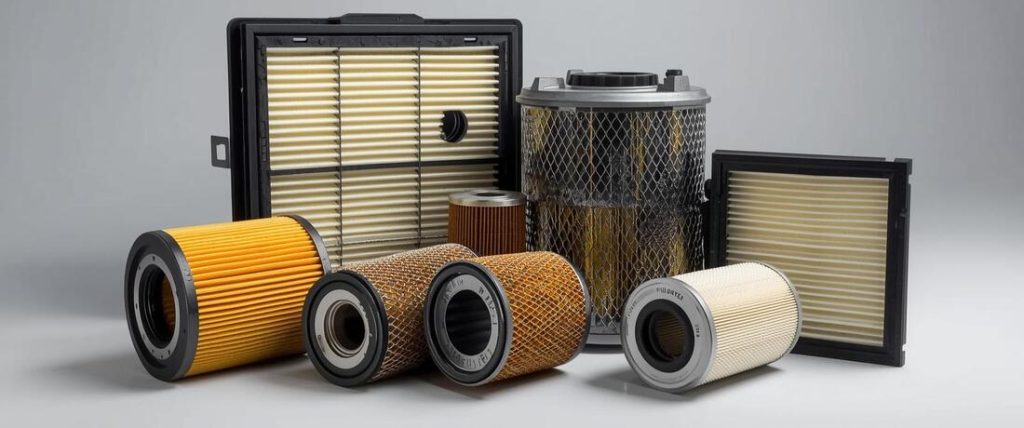
A dirty air filter restricts airflow to the engine. The engine needs air to burn fuel. Symptoms include gradual power loss and poor gas mileage. The engine might sound strained. How to check: Open the air box and hold the filter to the light. You should see light through it. Fix: Replace the air filter. Cost: $15–$30 DIY / $30–$60 professional. Prevention: Replace it every 15,000 miles.
2. Clogged Fuel Filter
A clogged fuel filter restricts fuel flow to the engine. The engine cannot get enough gas to go fast. Symptoms include hesitation under acceleration and sputtering. How to check: A fuel pressure test is best. Some external filters can be inspected visually. Fix: Replace the fuel filter. Cost: $20–$40 DIY / $50–$150 professional. Prevention: Replace it every 30,000 to 40,000 miles.
3. Failing Fuel Pump
A bad fuel pump cannot deliver enough fuel pressure. The car will struggle to go uphill. It might sputter at high speeds. You may hear a whining noise from the gas tank. How to check: Use a fuel pressure gauge. Pressure should be 30–80 PSI. Fix: Replace the fuel pump. Cost: $400–$800. Lifespan: They typically fail after 100,000 miles.
4. Dirty or Clogged Fuel Injectors
Dirty injectors disrupt the fuel spray pattern. The fuel does not atomize well. This causes rough idle and hesitation. You might notice poor fuel economy. How to check: A professional flow test is best. Scan for misfire codes. Fix: Use a cleaning service or replace them. Cost: $100–$200 service / $300–$800 replacement. Prevention: Use top-tier gas and cleaner additives.
5. Worn or Fouled Spark Plugs
Bad spark plugs cause weak or inconsistent combustion. The engine might misfire or idle roughly. You will feel hesitation when you step on the gas. How to check: Remove a plug and look at it. Look for worn electrodes or oil fouling. Fix: Replace the spark plugs. Cost: $80–$200 for 4-cyl / $150–$400 for V6-V8. Interval: Every 30,000 to 100,000 miles.
6. Faulty Ignition Coils
Ignition coils provide the spark to the cylinders. A weak coil causes a misfire. The car might jerk during acceleration. The check engine light will often flash. How to check: Scan for misfire codes. Swap coils to see if the code moves. Fix: Replace the bad coil(s). Cost: $150–$400. Note: Modern cars have one coil per plug.
7. Dirty or Faulty Mass Airflow (MAF) Sensor
The MAF sensor measures how much air enters the engine. A dirty sensor sends the wrong data. The computer mixes the fuel incorrectly. This causes hesitation and stalling. How to check: Scan for codes P0100-P0104. Fix: Clean it with MAF cleaner spray. Cost: $10 DIY / $150–$400 replacement.
8. Failed Oxygen Sensor(s)
Oxygen sensors monitor the exhaust. They tell the computer to adjust the fuel mix. A failed sensor hurts fuel economy and response. How to check: Scan for O2 codes (P0130-P0167). Fix: Replace the sensor. Cost: $150–$400. Lifespan: 60,000 to 100,000 miles.
9. Clogged Catalytic Converter
A clogged converter restricts exhaust flow. This creates backpressure. It feels like you are driving with the parking brake on. You might smell rotten eggs. Cause: This often happens from running rich or burning oil. How to check: A backpressure test or temp check. Fix: Replace the catalytic converter. Cost: $500–$2,500.
10. Transmission Problems (Slipping, Low Fluid)
The transmission transfers power to the wheels. If it slips, the car will not speed up. The RPMs will go up, but the speed will not. How to check: Check the fluid level and color. Fix: A fluid change might help. Cost: $150–$250. Severe fix: A rebuild costs $1,500–$3,500. Manual: A slipping clutch costs $800–$1,500 to fix.
11. Vacuum Leak
A vacuum leak lets unmetered air into the engine. This creates a lean fuel mixture. The engine will idle roughly or hiss. You might notice high idle speed. How to check: Inspect hoses for cracks. A smoke test works best. Fix: Replace cracked hoses or the intake gasket. Cost: $20–$600.
12. Low Engine Compression
Low compression means the engine is worn internally. Worn piston rings or valves cause this. Symptoms include gradual power loss and hard starting. How to check: A compression test is required. Fix: This depends on the cause. Cost: Valve adjustment is cheap. An engine rebuild is expensive ($2,500+).

Other Possible Causes (Less Common)
Throttle Position Sensor (TPS) Failure
The TPS tells the computer the pedal position. If it fails, acceleration is erratic. Fix: Replace the TPS. Cost: $100–$300.
Throttle Body Dirty or Sticking
Carbon buildup can block the throttle plate. This restricts airflow. Fix: Clean the throttle body. Cost: $10–$20 DIY / $75–$150 service.
EGR Valve Stuck Open
The EGR valve recirculates exhaust gas. If stuck open, it hurts performance. Fix: Clean or replace the valve. Cost: $150–$400.
Turbocharger Failure (Turbocharged Engines)
A failing turbo cannot build boost pressure. The car will feel sluggish and laggy. Fix: Replace the turbo. Cost: $1,000–$3,000+.
Clutch Slipping (Manual Transmission)
A worn clutch disc cannot grip the flywheel. The engine revs, but the car does not move. Fix: Replace the clutch. Cost: $800–$1,500.
Limp Mode Activated
The computer limits power to protect the car. This happens with serious sensor failures. Fix: Diagnose the underlying issue.
How to Diagnose Slow Acceleration (Step-by-Step)
Step 1: Check for Warning Lights
Look at the dashboard. Is the check engine light on? Is the transmission light on? Get an OBD-II scan. Many parts stores do this for free. Note any fault codes.
Step 2: Inspect Air Filter
Open the air filter housing. Remove the filter. Hold it up to a light source. If you cannot see through it, replace it. This is a cheap and easy fix.
Step 3: Check Transmission Fluid
Find the dipstick (if equipped). Check the fluid level. It should be pink or red. Brown or burnt fluid is bad. Low or dirty fluid means you need a service.
Step 4: Test Fuel Pressure (Requires Gauge)
Connect a fuel pressure gauge to the test port. Turn the key to “On.” It should read 30–80 PSI. Low pressure means a bad pump or filter.
Step 5: Scan for Codes
Use an OBD-II scanner. Look for these common codes:
- P0300-P0308: Misfire
- P0100-P0104: MAF sensor
- P0130-P0167: Oxygen sensor
- P0420: Catalytic converter
Step 6: Visual Inspection
Look for cracked vacuum hoses. Check for exhaust leaks. Inspect spark plug wires for damage. Look for obvious fluid leaks under the car.
Step 7: Professional Diagnostics (If Needed)
If you cannot find the problem, see a pro. They can do a compression test or smoke test. Cost: $100–$200.
Can You Drive with Slow Acceleration?
Safety Concerns
Driving with slow power is risky. Merging onto highways becomes dangerous. You cannot match the speed of traffic. Climbing steep hills might be impossible. You cannot pass slow cars safely. It reduces your ability to avoid accidents.
When to Stop Driving Immediately
Stop driving if the check engine light is flashing. This means a misfire that can ruin the converter. Stop if the transmission is slipping severely. It might fail completely. Stop if you smell something burning or hear loud noises.
Short-Term Driving (If You Must)
Avoid highways and high-speed roads. Plan extra time for your trip. Do not drive up steep hills. Do not push the engine hard. Drive gently and get it fixed soon.
Repair Cost Summary
| Cause | DIY Cost | Professional Cost | Difficulty |
|---|---|---|---|
| Air filter | $15–$30 | $30–$60 | Very easy |
| Fuel filter | $20–$40 | $50–$150 | Easy to moderate |
| Spark plugs | $40–$100 | $80–$400 | Easy to moderate |
| MAF sensor cleaning | $10 | $75–$150 | Very easy |
| MAF sensor replacement | $100–$250 | $150–$400 | Easy |
| Oxygen sensor | $80–$200 | $150–$400 | Moderate |
| Fuel pump | $150–$350 | $400–$800 | Moderate to hard |
| Ignition coils | $50–$150 | $150–$400 | Easy to moderate |
| Vacuum hose | $10–$50 | $50–$200 | Easy |
| Catalytic converter | N/A | $500–$2,500 | Professional only |
| Transmission fluid | $50–$80 | $150–$250 | Moderate |
| Clutch replacement | $400–$800 | $800–$1,500 | Hard |
How to Prevent Slow Acceleration Problems
Regular Maintenance Schedule
Stick to a schedule to prevent problems.
- Air filter: Every 12,000–15,000 miles.
- Fuel filter: Every 30,000–40,000 miles.
- Spark plugs: Every 30,000–100,000 miles.
- Transmission fluid: Every 30,000–60,000 miles.
Use Quality Fuel
Buy gas from top-tier stations. Brands like Chevron or Shell have good detergents. This prevents carbon buildup. Avoid cheap, no-name gas stations.
Drive Regularly
Cars that sit often develop issues. Fuel can go bad and gum up the system. Run the car to operating temperature at least once a week.
Don’t Ignore Warning Lights
A check engine light means something is wrong. Get it scanned immediately. Small problems become big ones. For example, ignoring an oxygen sensor can ruin the catalytic converter.
Fuel System Cleaning
Use a fuel injector cleaner every 5,000 miles. Get a professional cleaning every 30,000 miles. This keeps injectors flowing well.
Monitor Transmission Health
Check the fluid regularly. Look at the color and smell. Change the fluid on schedule. Fix slipping immediately to save the transmission.

Automatic vs. Manual Transmission: Different Causes
Automatic Transmission Specific
- Low transmission fluid is a common cause.
- Worn transmission bands can cause slipping.
- Torque converter failure hurts acceleration.
- Valve body issues can affect shifting.
- Limp mode activates to protect the transmission.
Manual Transmission Specific
- A worn clutch disc is the main cause of slipping.
- The clutch might not release fully (dragging).
- Pressure plate failure can occur.
- The flywheel might need resurfacing.
- Clutch hydraulics can fail.
FAQs About Reasons Why Your Car is Slow to Accelerate
Why is my car accelerating so slowly?
Your car is likely not getting enough air, fuel, or spark. Common causes are a clogged air filter, bad fuel pump, or dirty fuel injectors. A clogged catalytic converter can also restrict power.
Why is my car not letting me speed up?
If the engine revs but the car does not speed up, your transmission might be slipping. If the engine struggles to rev, it is likely a fuel or air issue.
Why is my Tahoe not accelerating?
Large SUVs like a Tahoe need good airflow and fuel. A clogged air filter or a failing fuel pump are common causes. Transmission issues are also common in heavier vehicles.
Why is my Nissan not accelerating?
Nissan cars often face issues with the Mass Air Flow (MAF) sensor. A dirty throttle body is also a common cause of sluggishness in these cars.
Will a tune-up fix slow acceleration?
Yes, often a tune-up fixes the problem. Replacing spark plugs, air filters, and fuel filters restores power. However, it will not fix mechanical issues like a slipping transmission.
Bottom Line: Start with Simple, Cheap Fixes First
The air filter and fuel filter are the cheapest and easiest checks. They cost very little to replace. Scan for error codes at an auto parts store. Most acceleration issues are fuel, air, or ignition related. They are not usually transmission problems. Do not ignore the issue. It is a safety risk and can cause expensive damage. Get a professional diagnostic if DIY checks do not help. Regular maintenance prevents 80% of these problems.
Slow acceleration has many possible causes. The fuel system is the most common culprit. Start your diagnosis with cheap checks. Look at the air filter and scan for codes. Most fixes are under $500. Expensive issues are less common. Driving with slow power is unsafe. Get the car diagnosed within a few days. Regular maintenance prevents most problems.
Quick Summary
- The basics: Most issues are air, fuel, or spark related.
- First check: Inspect the air filter and check for warning lights.
- Fuel system: A clogged filter or bad pump restricts power.
- Ignition: Worn spark plugs and coils cause misfires and hesitation.
- Transmission: Slipping causes RPMs to rise without speed gain.
- Exhaust: A clogged catalytic converter feels like a brake is on.
- Action: Diagnose early to prevent safety risks and expensive repairs.