
This article was updated in July 28, 2026 with new products and information by Mark S. Taylor
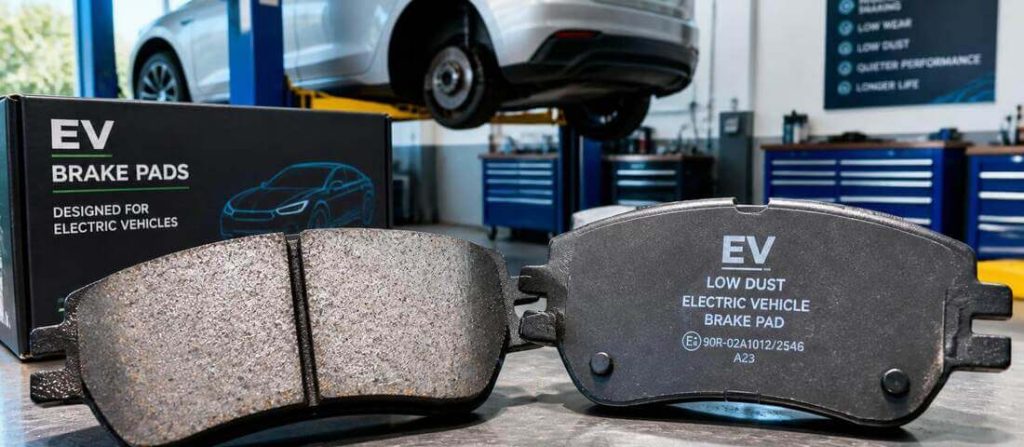
Brake pads on a fully electric vehicle (EV) routinely last 80,000 to 100,000 miles, with many high-mileage EV owners easily passing 150,000 miles on their original factory pads without ever replacing them. Compare that to a traditional gasoline vehicle, where friction pads typically tap out and squeal between 30,000 and 50,000 miles.
However, there is a critical mechanical twist that catches new EV owners completely off guard: on an electric car, structural rotor rust and friction disuse usually ruin the braking system long before mechanical pad wear ever does.
In this workshop guide, we will break down the precise fluid dynamics of regenerative braking, explain why low-mileage EVs can suddenly face heavy brake repair bills, and outline 2026 real-world shop replacement metrics.
Contents
- 1 Why EV Brake Pads Outlast Gas Vehicles
- 2 EV vs Hybrid vs Gas Vehicle Lifespan Matrix
- 3 The Catch: Why Rust Kills EV Brakes Before Wear Does
- 4 Warning Signs Your EV Brakes Need Immediate Inspection
- 5 US EV Brake Service & Repair Cost Matrix
- 6 How to Extend Your EV Brake Lifespan
- 7 FAQs About How Long Do EV Brake Pads Last
- 8 The Bottom Line
Why EV Brake Pads Outlast Gas Vehicles
The primary engineering reason behind extreme EV brake pad longevity is Regenerative Braking.
When you release the accelerator pedal or lightly depress the brake pedal, the vehicle’s electric traction motor instantly reverses its electromagnetic loop. Instead of drawing power from the high-voltage battery to propel the car, the spinning wheels force the motor to act as a heavy generator. This creates immense magnetic resistance that slows the vehicle down while harvesting kinetic energy and pumping it straight back into the battery pack.
Because everyday city stopping happens electrically through magnetic drag, your vehicle’s physical friction brake pads only step in during hard emergency stops, low-speed crawling (below 5 mph), or complete vehicle hold states. Less physical contact directly yields zero friction heat, minimal brake dust, and pads that can easily outlive the vehicle itself.
EV vs Hybrid vs Gas Vehicle Lifespan Matrix
| Vehicle Powertrain Architecture | Typical Friction Brake Pad Lifespan | Primary Deceleration Driver |
| Traditional Gas Vehicle | 30,000 – 50,000 Miles | 100% Hydraulic Friction Pads |
| Traditional Hybrid (HEV) | 50,000 – 80,000 Miles | Blended Regen + Hydraulic Friction |
| Battery Electric Vehicle (BEV) | 80,000 – 100,000+ Miles | 80%+ Electromagnetic Regeneration |
The Catch: Why Rust Kills EV Brakes Before Wear Does
On a conventional gas car, every single traffic stop forces the hard ceramic pads to scrub the cast-iron brake rotor face completely clean, stripping away microscopic surface rust.
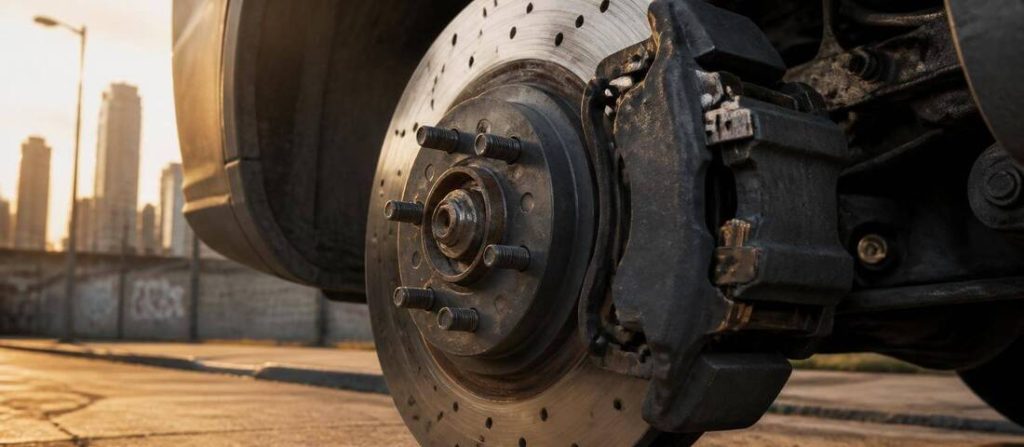
On an electric car that decelerates magnetically, that daily physical scrubbing action rarely occurs. In humid, rainy, or northern road-salt climates, atmospheric moisture settles onto the bare iron discs, creating a thick layer of orange surface oxidation (rust).
Over several months of disuse, this surface rust turns into deep metallic pitting. When you finally hit the physical brakes hard in an emergency, the rough pitted rotor acts like sandpaper, chewing through the pad material unevenly and causing violent pedal shuddering.
The 3 Core Failure Vectors of EV Brakes:
- Rotor Face Deep Pitting: Iron oxidation burrows into the rotor core, destroying the flat friction surface.
- Pad Surface Glazing: Because the pads rarely reach high operating temperatures, the pad friction compound hardens into a slick, glazed layer that loses its stopping grip.
- Seized Caliper Guide Pins: Moisture traps behind the rubber dust boots of unused slide pins, causing the metal pins to rust and lock the caliper solid in its bracket.
Warning Signs Your EV Brakes Need Immediate Inspection
Do not rely on mileage counters alone. Bring your EV in for a visual chassis inspection if you observe any of these warning signs:
- Scraping or Grinding Noise: A sharp metallic grinding sound during low-speed stopping, indicating deep rust ridges on the rotor edges.
- Pulsing or Vibration Through the Brake Pedal: A distinct shudder in the pedal or steering wheel when slowing down from highway speeds (warped or severely pitted rotors).
- Asymmetric Steering Pull: The vehicle pulls aggressively to the left or right when braking, confirming a seized caliper slide pin on one side.
- Reduced Regenerative Performance Light: Dashboard warnings indicating the computer is disabling regen and forcing the car onto 100% mechanical friction brakes due to system faults.
US EV Brake Service & Repair Cost Matrix
| Service / Replacement Scope | Average Hardware Parts Cost | Professional Shop Labor | Total Estimated Repair Bill |
| Front or Rear Axle Pad Replacement | $60 – $130 | $90 – $220 | $150 – $350 |
| Complete 4-Wheel Pad Replacement | $120 – $250 | $180 – $350 | $300 – $600 |
| Full Brake Overhaul (Pads + Rotors Resurface/Swap) | $220 – $450 | $280 – $450 | 💰 $500 – $900+ |
| Annual EV Caliper Slide Cleaning & Lubrication | $10 (Grease/Cleaner) | 0.8 – 1.2 Hours | $90 – $160 |
How to Extend Your EV Brake Lifespan
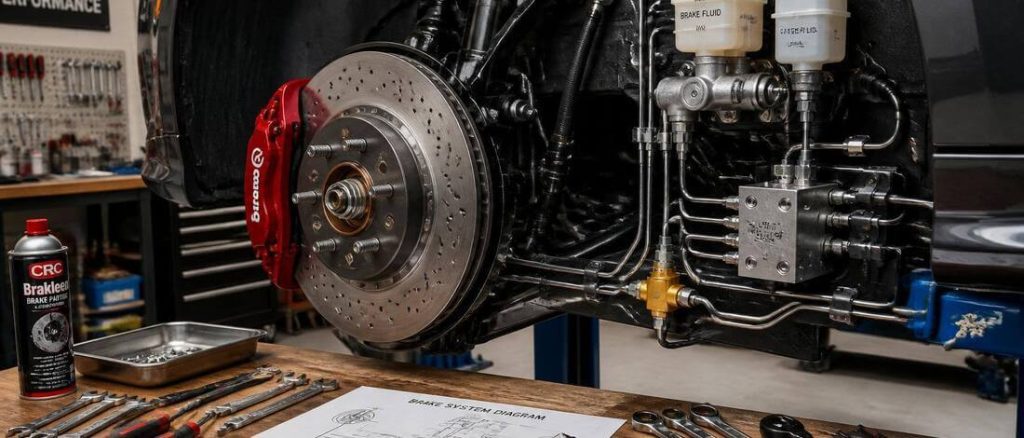
To stop rust from forcing an early brake job on your low-mileage EV, implement these factory technician practices:
1. Execute Weekly Friction Scrubbing Stops: 1 min.
Once a week, find a safe, clear road section. Shift your EV out of single-pedal regen mode (or place the transmission in Neutral) and execute 2 to 3 firm, controlled stops from 30 mph. This forces the physical hydraulic calipers to squeeze the rotors directly, scraping off fresh surface rust and polishing the metal shiny.
2. Maximize One-Pedal Driving Settings: 1 min.
Enable maximum regenerative driving modes during daily city commutes. This minimizes unnecessary pad contact, cuts brake dust particle emissions by up to two-thirds, and preserves friction material.
3. Perform Post-Winter Chassis Undercarriage Rinses: 2 min.
If you drive through salted winter roads, wash the underbody and wheel wells thoroughly with fresh water every two weeks. Salt accelerates chemical rotor pitting by up to 400%.
FAQs About How Long Do EV Brake Pads Last
Why do EV brake pads last so long?
Regenerative braking uses the electric motor to do most of the slowing, so the friction pads engage far less often than in a gas car. Less use means dramatically less wear.
Why did my low-mileage EV need brakes already?
Almost always rust. Because the friction brakes get used so little, the rotors can corrode from disuse — especially in humid or salty climates — and a pitted rotor forces a repair even with plenty of pad left.
How much does an EV brake job cost?
Roughly $230 to $600 for pads on all four wheels. If corroded rotors also need resurfacing or replacing, expect $500 to $900 or more.
Does one-pedal driving make EV brake pads last longer?
Yes, significantly. One-pedal driving maximizes the electric motor’s regenerative braking capability, handling up to 90% of your daily deceleration without ever activating the physical hydraulic brake calipers. This dramatically reduces physical friction wear on the pads.
Why was I quoted for a full brake job on an EV with only 10,000 miles?
This is almost universally driven by rotor corrosion rather than pad wear. If an EV sits parked outside in humid or salty environments and is driven gently, the metal rotors rust and pit severely. The mechanic must replace or turn the rotors to eliminate dangerous pedal vibrations, requiring new pads to match the fresh surface.
The Bottom Line
Electric vehicle brake pads are engineered to last 80,000 to 100,000 miles or more—frequently lasting the entire operational lifespan of the vehicle. However, your primary enemy is not pad wear, but surface rust and frozen caliper pins born from disuse. Practice weekly firm friction stops to scrub your rotors clean, rinse away winter road salt, and get an annual caliper pin lubrication to keep your stopping system flawless.
Powertrain Monitoring & Calibration: If your EV brake maintenance or fluid service has triggered unexpected ABS warning indicators or left your vehicle’s onboard computers displaying fault codes during air pocket purges, check our master workshop guide on How to Read Check Engine Light Codes Without a Scannerto clear historical trouble codes. For alternative fueling imbalances or isolating mechanical problems across hybrid variants, read our in-depth diagnostic analysis on Why an Engine Runs Rich.