
This article was updated in May 22, 2026 with new products and information by Mark S. Taylor
Here’s the approach I use in the shop, laid out so you can either do it yourself or know exactly what your mechanic should be doing. In this guide, How to fix p0300 code
Contents
- 1 What P0300 Actually Means
- 2 P0300 vs. Cylinder-Specific Codes: Why the Difference Matters
- 3 Symptoms You’ll Notice
- 4 Can You Drive With a P0300 Code?
- 5 Mechanic’s Diagnostic Sequence: What I Check and Why
- 6 Common Causes Ranked by Likelihood
- 7 Repair Cost Breakdown
- 8 DIY vs. Mechanic: Which Path Makes Sense
- 9 How to Prevent P0300 From Coming Back
- 10 FAQs About How to Fix a P0300 Code
- 11 The Bottom Line
What P0300 Actually Means
P0300 means the computer detected misfires happening across multiple cylinders with no consistent pattern. The misfire might jump from cylinder 2 to cylinder 4 to cylinder 1. This is different from a P0301 (cylinder 1 misfire) that stays in one place.
The key insight: “Random” misfires almost always point to a problem with a SHARED component — something that affects all cylinders — rather than individual cylinder issues like one bad spark plug.
P0300 vs. Cylinder-Specific Codes: Why the Difference Matters
| Code Type | What It Means | Likely Cause | Diagnostic Priority |
|---|---|---|---|
| P0300 only | Misfires jumping between cylinders | Shared component (fuel, air, sensor) | Check common systems first |
| P0301-P0306 | Misfire in one specific cylinder | Individual component (plug, coil, injector) | Focus on that cylinder |
| P0300 + P0302 | Random misfires + cylinder 2 specific | Cylinder 2 problem causing cascading misfires | Fix cylinder 2 first |
If you’re seeing P0300 alongside a cylinder-specific code, start with that cylinder. I’ve seen a single bad ignition coil trigger random misfires in other cylinders as the engine computer tries to compensate.
Symptoms You’ll Notice
- Rough idle — your car shakes at stoplights more than usual
- Engine vibration — you feel it through the steering wheel or seat
- Loss of power — sluggish acceleration, especially under load
- Poor fuel economy — unburned fuel means you’re burning more to go the same distance
- Check engine light — steady means misfire detected; flashing means active misfire happening right now
If that check engine light is flashing, don’t ignore it. Pull over if it’s flashing aggressively — you’re dumping raw fuel into your exhaust.
Can You Drive With a P0300 Code?
Short answer: To the shop, yes. On a road trip, no.
A steady check engine light with P0300 means the misfire happened at some point but might not be active right now. You’re probably fine driving to your mechanic.
Real scenario: A customer drove 40 miles home with a flashing light because “it was still running.” He saved himself a tow bill and paid $2,100 for a new catalytic converter instead of $180 for two ignition coils. That’s the math you’re playing with.
Mechanic’s Diagnostic Sequence: What I Check and Why
The first thing I check when a customer brings in a P0300 isn’t the spark plugs. It’s the freeze frame data.
- Pull Freeze Frame Data Your OBD-II scanner captures a snapshot of engine conditions when the code set. This tells me RPM when misfire occurred, engine load, coolant temperature, and fuel trims. If the freeze frame shows misfire at idle with low fuel trims, I’m looking at a vacuum leak. If it shows misfire at 3,500 RPM under load, I’m looking at ignition components. You need a scanner that shows freeze frame data. A $20 code reader won’t cut it.
- Check for Additional Codes P0300 rarely travels alone. Look for P0171/P0174 (lean codes pointing to vacuum leak or MAF sensor), P0420/P0430 (catalyst efficiency meaning misfire damage), or P0316 (misfire at startup pointing to fuel pressure or coils).
- Check Misfire Counts by Cylinder A decent scanner shows you misfire counts for each cylinder. Even with a P0300, you might see cylinder 3 has 47 misfires while others have 2-3. That tells me cylinder 3 is the primary problem.
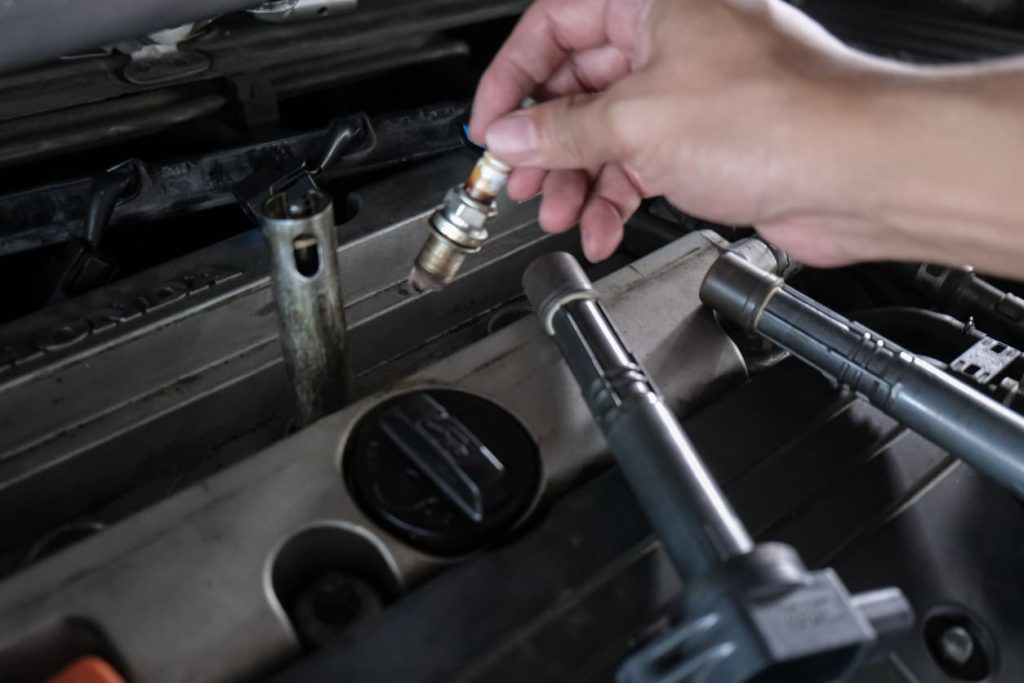
- Visual Inspection of Ignition System Remove ignition coils — look for cracks, burn marks, carbon tracking. Pull spark plugs — check for fouling, damage, improper gap. A spark plug wet with fuel tells me it isn’t firing.
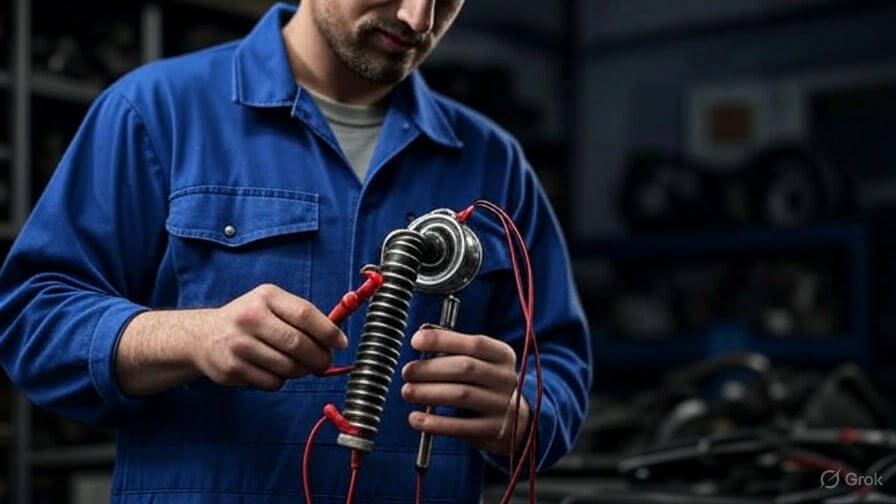
- Test Ignition Coils Swap method: Move the coil from the suspected bad cylinder to a good cylinder. Clear the code, drive it, see if the misfire follows the coil. Simple and effective.
- Check for Vacuum Leaks Vacuum leaks let unmetered air into the engine. Common sources: intake manifold gaskets, PCV valve, brake booster hose. Spray carb cleaner around intake connections while idling. If the RPM changes, you found your leak.
- Check Fuel System If ignition and vacuum check out, look at fuel pressure (low pressure causes lean misfires) and fuel injector balance. Did they just fill up at a sketchy station?
- Compression Test (Last Resort) If everything above checks out, run a compression test. Low compression in multiple cylinders points to timing chain/belt issues. This is rare for P0300. Most cases never make it to step 8.
Common Causes Ranked by Likelihood
Based on 20 years of shop data, here’s what actually causes P0300:
- 35% Ignition coils failing — especially on Ford, GM, and Volkswagen
- 25% Spark plugs worn out — people going 100,000 miles on 60,000-mile plugs
- 15% Vacuum leaks — intake gaskets, especially on older engines
- 10% Dirty MAF sensor — simple fix, often overlooked
- 8% Fuel injector issues — clogging or electrical failure
- 4% Fuel quality — water contamination, bad batch of gas
- 3% Mechanical issues — low compression, timing problems
Notice what’s NOT on that list: your oxygen sensor, your catalytic converter, your transmission. Those get blamed constantly but rarely cause P0300.
Repair Cost Breakdown
| Repair | Parts Cost | Labor Cost | Total |
|---|---|---|---|
| Spark plugs (all) | $40 – $120 | $80 – $200 | $120 – $320 |
| Single ignition coil | $50 – $150 | $50 – $100 | $100 – $250 |
| All ignition coils | $200 – $600 | $100 – $250 | $300 – $850 |
| MAF sensor cleaning | $10 | $0 (DIY) | $10 |
| Vacuum leak repair | $5 – $50 | $100 – $300 | $105 – $350 |
| Fuel injector (one) | $80 – $200 | $100 – $200 | $180 – $400 |
| Diagnostic fee | — | — | $100 – $150 |
The diagnostic fee is not a scam. It’s the most important money you’ll spend. A $150 diagnosis that finds a $50 vacuum leak saves you from spending $400 on coils you didn’t need.
DIY vs. Mechanic: Which Path Makes Sense
DIY This If:
- You own a scanner with freeze frame and misfire count data ($80-$150)
- You’re comfortable removing ignition coils and spark plugs
- Your vehicle has accessible plugs (not buried under intake manifolds)
- You have basic hand tools and a spark plug socket
Pay a Mechanic If:
- You don’t have a capable scanner
- Your engine has coil-on-plug ignition buried under a plenum
- You’ve already tried replacing parts and the code came back
- The car is flashing a check engine light and you need it fixed now
How to Prevent P0300 From Coming Back
- Replace spark plugs at the recommended interval — not when they fail. A $100 plug job prevents a $400 misfire diagnosis.
- Use quality fuel — Top Tier detergent gasoline keeps injectors clean
- Address small problems early — a slight rough idle today becomes a flashing check engine light next month
- Consider coil replacement at 100k miles — on vehicles known for coil failures, replacing them preventively is cheaper than waiting for failure
FAQs About How to Fix a P0300 Code
The Bottom Line
P0300 is a symptom, not a diagnosis. The code tells you WHAT is happening (random misfires) but not WHY. Your job — whether you’re a DIYer or paying a shop — is to follow a logical diagnostic sequence that eliminates possibilities until you find the actual cause.
Start with freeze frame data. Check for additional codes. Look at misfire counts. Inspect ignition components. Check for vacuum leaks. Test fuel pressure if needed. Most P0300 cases are ignition-related — plugs or coils — and most can be diagnosed in under an hour if you approach it methodically instead of guessing. Diagnose first, replace second, and you’ll save hundreds of dollars and hours of frustration.