
This article was updated in April 9, 2026 with new products and information by Mark S. Taylor
Your temperature gauge is creeping toward the red zone on a hot day. Or maybe you smell something sweet under the hood after a long drive. Most engine overheating problems trace back to one failed part in the cooling system. The good news: the parts of a cooling system are not complicated. It has about 12 key parts, each with a specific job. Understand what each one does — and what happens when it fails — and you’ll catch problems early and save thousands in engine repair costs. Let’s break it all down.

Contents
- 1 How the Car Cooling System Works — Quick Overview
- 2 The 12 Main Parts of a Cooling System
- 2.1 1. Radiator
- 2.2 2. Water Pump
- 2.3 3. Thermostat
- 2.4 4. Radiator Cap (Pressure Cap)
- 2.5 5. Coolant / Antifreeze
- 2.6 6. Coolant Overflow Reservoir (Expansion Tank)
- 2.7 7. Cooling Fan(s)
- 2.8 8. Upper and Lower Radiator Hoses
- 2.9 9. Heater Core
- 2.10 10. Heater Hoses
- 2.11 11. Freeze Plugs (Core Plugs)
- 2.12 12. Coolant Temperature Sensor (CTS)
- 3 Bonus Parts Worth Knowing
- 4 How the Cooling System Parts Work Together — The Flow
- 5 Cooling System Parts Replacement Cost Quick Reference
- 6 Signs Your Cooling System Needs Attention
- 7 FAQs About Parts of a Cooling System
- 8 Bottom Line — Know Your Cooling System Parts Before They Fail
How the Car Cooling System Works — Quick Overview
The cooling system manages massive heat. Your engine creates heat up to 4,500°F. The system circulates liquid coolant to absorb this heat. The coolant moves to the radiator to cool down. Then it goes back to the engine. The system works under pressure to stop the fluid from boiling. All parts work together in a loop. If one part fails, the whole system is in trouble.
The 12 Main Parts of a Cooling System
1. Radiator
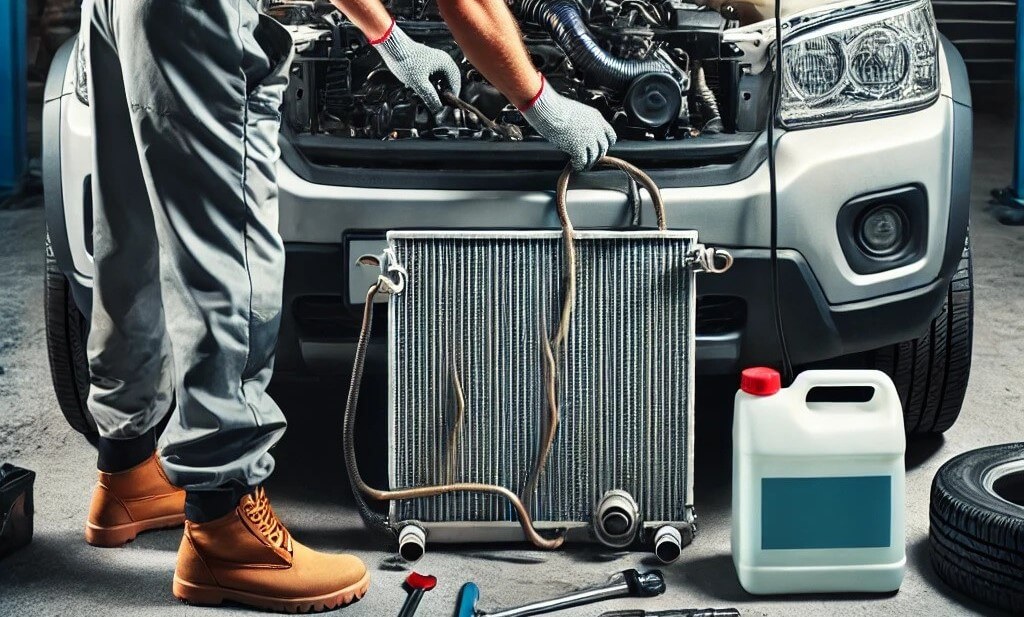
The radiator acts as a heat exchanger. Hot coolant flows through thin tubes inside it. Air passes over the tubes to cool the fluid down. It sits at the front of the car behind the grille.
- Common failure signs: You might see coolant leaks under the front of the car. The coolant might look rusty. The car may overheat at high speeds. Fins can get bent or clogged with bugs.
- Maintenance: Check it once a year. Flush the fluid regularly.
- Replacement cost: $300–$900 at a shop.
2. Water Pump
The water pump is the heart of the system. It forces coolant to move through the engine. It keeps the fluid flowing constantly. It is mounted on the front of the engine. A belt drives it to make it spin.
- Common failure signs: Look for coolant leaking from the pump. You might hear a grinding or whining noise. The engine will overheat if the pump stops.
- Maintenance: Replace it when you replace the timing belt.
- Replacement cost: $200–$700 at a shop.
3. Thermostat
The thermostat is a temperature-controlled valve. It stays closed when the engine is cold. This helps the engine warm up fast. It opens at about 195°F to let coolant flow. It sits where the hose meets the engine.
- Common failure signs: The engine overheats quickly if stuck closed. The engine stays too cold if stuck open. Your heater might not work well.
- Maintenance: It is cheap to replace. Change it when you flush the coolant.
- Replacement cost: $150–$300 at a shop.
4. Radiator Cap (Pressure Cap)
The radiator cap seals the system tight. It keeps pressure inside the radiator. High pressure raises the boiling point of the coolant. It also moves fluid to the overflow tank. It is located on top of the radiator.
- Common failure signs: Coolant might boil over. You might see steam from the hood. The coolant level drops with no visible leak.
- Maintenance: Test it when you flush the coolant. It is a cheap part.
- Replacement cost: $10–$30. You can do this yourself.
5. Coolant / Antifreeze
Coolant is the working fluid of the system. It absorbs heat from the metal engine. It carries heat to the radiator to be released. It also stops the engine from freezing in winter. You must use the correct type for your car.
- Common failure signs: A sweet smell means coolant is burning. Brown fluid means rust is inside. Oily fluid means a head gasket leak.
- Maintenance: Flush the system every 30,000–50,000 miles.
- Flush cost: $100–$200 at a shop.
6. Coolant Overflow Reservoir (Expansion Tank)
The overflow tank catches extra fluid. Coolant expands when it gets hot. The tank holds this extra fluid. When the engine cools, it pulls the fluid back in. It is a plastic tank near the radiator.
- Common failure signs: Look for cracks in the plastic. Coolant might leak around the tank. The level stays low even after you fill it.
- Maintenance: Check for cracks at every oil change.
- Replacement cost: $50–$150 at a shop.
7. Cooling Fan(s)
The cooling fan pulls air through the radiator. This is vital when the car is stopped. Without airflow, the radiator cannot cool down. Some fans run on a belt. Most newer cars use electric fans.
- Common failure signs: The car overheats at idle but is fine on the highway. The fan might not turn on. A mechanical fan might make a grinding noise.
- Maintenance: Check the fan blades when you service the car.
- Replacement cost: $200–$500 for an electric fan.
8. Upper and Lower Radiator Hoses
The radiator hoses are the main pipes. The upper hose takes hot fluid to the radiator. The lower hose brings cool fluid back to the engine. They are large rubber hoses.
- Common failure signs: Look for cracks in the rubber. A hose might feel soft or mushy. Coolant leaks at the connections. A hose can collapse from vacuum.
- Maintenance: Replace them every 4–5 years.
- Replacement cost: $75–$200 per hose at a shop.
9. Heater Core
The heater core is a small radiator. It sits inside your dashboard. Hot coolant flows through it. A fan blows air over it to heat your cabin. It uses the heat from the engine to warm you up.
- Common failure signs: You might smell sweet syrup inside the car. The windshield might get foggy. The passenger floor could be wet.
- Maintenance: Flush it when you flush the main system.
- Replacement cost: $500–$1,500 at a shop due to hard labor.
10. Heater Hoses
Heater hoses carry fluid to the heater core. They are smaller than radiator hoses. They run from the engine to the dashboard. They return cooled fluid to the engine.
- Common failure signs: Look for leaks near the firewall. The hoses can get soft or cracked. You might lose heat inside the car.
- Maintenance: Replace them every 4–5 years.
- Replacement cost: $80–$200 at a shop.
11. Freeze Plugs (Core Plugs)
Freeze plugs fill holes in the engine block. If the coolant freezes, it expands. The plugs pop out to save the block from cracking. They can also rust and leak over time.
- Common failure signs: Coolant drips from the side of the engine block. This is often hard to see. You usually find it during a service.
- Maintenance: Use the correct coolant mix to prevent freezing.
- Replacement cost: $100–$500+ depending on the location.
12. Coolant Temperature Sensor (CTS)
The sensor monitors the coolant temperature. It sends data to the car’s computer. The computer uses this to adjust fuel and fans. It also controls the temperature gauge on your dash. It screws into the engine block.
- Common failure signs: The gauge might read wrong. The fans might run constantly or not at all. You might use more gas than normal.
- Maintenance: Replace it if you see a check engine light.
- Replacement cost: $100–$250 at a shop.
Bonus Parts Worth Knowing
Bypass Hose
A small hose that lets coolant circulate when the thermostat is closed. This prevents hot spots. Replace it when you replace other hoses.
Head Gasket
The head gasket seals the engine block. It keeps coolant out of the oil chambers. A blown head gasket is a major problem. It causes white smoke and milky oil. It is very expensive to fix.
Serpentine Belt
This belt drives the water pump. If the belt breaks, the pump stops. The engine will overheat right away. It also runs the alternator and AC.
How the Cooling System Parts Work Together — The Flow
The parts work in a specific loop. Here is the path the coolant takes.
- Engine cold start: The thermostat is closed. Coolant stays in the engine to warm it up.
- Engine warms up: Once it hits ~195°F, the thermostat opens.
- Water pump pushes: The pump pushes hot coolant into the engine block. It absorbs heat.
- To the radiator: Hot fluid leaves through the upper hose. It enters the top of the radiator.
- Cooling down: Air flows through the radiator fins. The heat leaves the fluid. The fluid cools down.
- Back to engine: Cool fluid leaves through the lower hose. It goes back to the water pump.
- Cabin heat: Some hot fluid goes to the heater core. This warms the inside of your car.
- Pressure: The cap keeps pressure high. This stops the fluid from boiling too fast.
Cooling System Parts Replacement Cost Quick Reference
Here is a quick look at what repairs might cost.
| Part | Typical DIY Cost | Typical Shop Cost | Interval |
|---|---|---|---|
| Coolant flush | $15–$30 | $100–$200 | Every 2–5 years |
| Thermostat | $10–$30 part | $150–$300 shop | Every 60k–100k miles |
| Radiator hoses | $20–$50 each | $75–$200 each | Every 4–5 years |
| Water pump | $30–$80 part | $200–$700 shop | Every 60k–100k miles |
| Radiator cap | $10–$20 | $10–$30 | Every 5 years |
| Coolant sensor | $15–$40 part | $100–$250 shop | As needed |
| Freeze plugs | $5–$15 each | $100–$500+ shop | As needed |
| Radiator | $100–$400 part | $300–$900 shop | As needed |
| Heater core | $50–$150 part | $500–$1,500 shop | As needed |
Signs Your Cooling System Needs Attention
You should watch for these warning signs. They mean you need a mechanic soon.
- The temperature gauge moves toward the red zone.
- You smell a sweet syrup smell inside or outside the car.
- White smoke comes from the exhaust pipe.
- You see a green, orange, or pink puddle under the car.
- The heater blows cold air when it should be hot.
- The low coolant light turns on.
- The engine takes a long time to warm up in winter.
FAQs About Parts of a Cooling System
What are the 5 main parts of the cooling system?
The five main parts are the radiator, water pump, thermostat, cooling fan, and hoses. These parts move heat away from the engine.
What should you never remove while the engine is hot?
Never remove the radiator cap while the engine is hot. The pressure can cause hot coolant to spray out and burn you.
What is the most common cooling system problem?
Low coolant level is the most common problem. This is often caused by leaks or old coolant that evaporated.
Can a car drive without coolant?
No. A car cannot drive without coolant for long. It will overheat very quickly. This can cause severe engine damage in minutes.
What is the function of the thermostat in a cooling system?
The thermostat regulates the engine temperature. It opens and closes to control coolant flow. This helps the engine warm up fast and stay cool.
Bottom Line — Know Your Cooling System Parts Before They Fail
The cooling system needs regular care. It has 12 key parts that work together. If one part fails, the engine can overheat. Most failures are predictable if you check the system. Flush your coolant every few years. Replace old hoses before they break. Watch for leaks or sweet smells. Fix a small problem now to save money later. A simple thermostat fix is cheap. A blown head gasket is very expensive. Take care of your cooling system to keep your engine running.
Quick Summary
- The loop: Coolant moves heat from the engine to the radiator.
- The pump: The water pump keeps the fluid moving.
- The valve: The thermostat controls the flow and temperature.
- The seal: The radiator cap maintains pressure to prevent boiling.
- The airflow: The cooling fan helps cool the radiator at idle.
- The heater: The heater core uses engine heat to warm the cabin.
- Maintenance: Check fluids and hoses often to stop big repairs.