
This article was updated in May 12, 2026 with new products and information by Mark S. Taylor
One minute your radio is playing. The next, total silence. No warning light. No error message. Just… nothing.
That kind of sudden electrical failure is one of the most common car problems drivers face — and nine times out of ten, a blown fuse is the culprit. The good news? Fuses are cheap, easy to check, and usually replaceable in under ten minutes without any tools.
In this guide, you’ll learn the seven most common symptoms of a blown car fuse, how to tell a blown fuse apart from a dead battery or bad relay, and exactly what to do when you find one. Whether you’re a first-time car owner or just tired of guessing, this will help you figure it out fast.
Contents
- 1 What Does a Car Fuse Actually Do?
- 2 7 Common Symptoms of a Blown Car Fuse
- 2.1 1. One Electrical Component Suddenly Stops Working
- 2.2 2. Multiple Features in One Zone Go Dead at the Same Time
- 2.3 3. Interior Lights Stop Working
- 2.4 4. Radio, Infotainment System, or Touchscreen Goes Black
- 2.5 5. Power Windows or Locks Stop Responding
- 2.6 6. Windshield Wipers or Horn Stop Working
- 2.7 7. No Power to the Cigarette Lighter, USB Ports, or OBD2 Port
- 3 Blown Fuse vs. Dead Battery vs. Bad Relay — How to Tell
- 4 How to Check a Car Fuse (Step by Step)
- 5 Why Do Car Fuses Blow? (And What to Do When One Keeps Blowing)
- 6 Repair Cost and Urgency
- 7 FAQs About Symptoms of a Blown Car Fuse
- 8 The Bottom Line
What Does a Car Fuse Actually Do?
A car fuse is a small sacrificial component designed to protect your vehicle’s electrical circuits. Each fuse contains a thin wire rated for a specific amperage. When too much current flows through a circuit — due to a short, an overload, or a wiring fault — that wire melts and breaks the circuit before the wiring itself can burn.
Think of it like a controlled failure. The fuse takes the hit so your wiring (and your car) doesn’t.
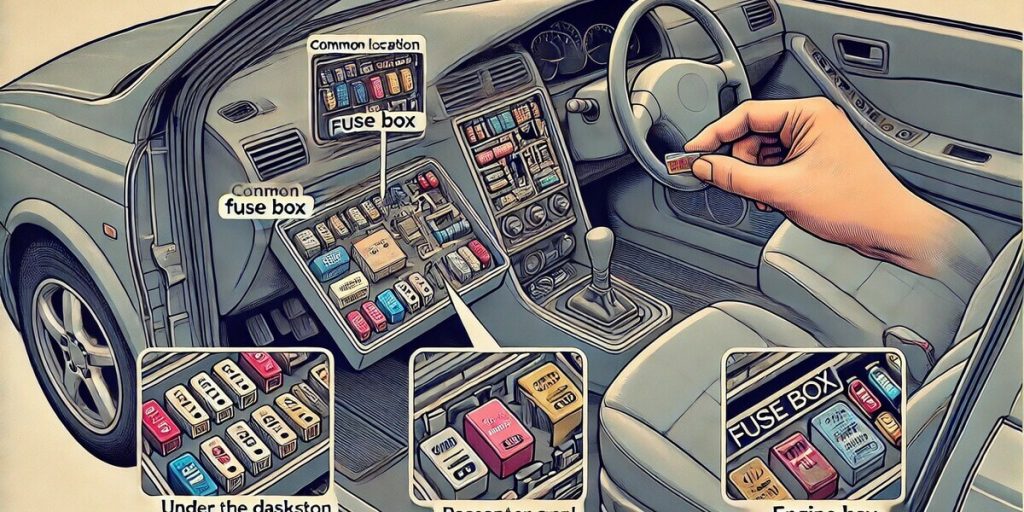
Modern vehicles use blade-style fuses in two or three sizes: mini, standard (ATC/ATO), and maxi. Each one is color-coded by amperage rating. Your car typically has two fuse boxes — one under the dashboard on the driver’s side, and a larger one under the hood near the battery.
7 Common Symptoms of a Blown Car Fuse
Here are the most common signs that a fuse has blown in your car:
- One electrical component suddenly stops working
- Multiple features in the same zone go dead at once
- Interior lights stop turning on
- Radio, infotainment system, or touchscreen goes black
- Power windows or door locks stop responding
- Windshield wipers or horn stop working
- No power to the cigarette lighter, USB ports, or OBD2 port
Let’s break each one down.
1. One Electrical Component Suddenly Stops Working
This is the most obvious sign. You go to use something — your heated seats, your rear defroster, your backup camera — and nothing happens. No flicker, no partial function. Just dead.
The key word here is suddenly. Components that fail gradually (like a bulb dimming before it burns out) usually point to a different cause. An instant, complete failure with no warning is classic blown-fuse behavior.
Mechanic insight: Before assuming the component itself is broken, always check the fuse first. A $0.50 fuse is a lot better than a $200 replacement part.
2. Multiple Features in One Zone Go Dead at the Same Time
This one surprises a lot of drivers. If your power windows, door locks, and interior mirror controls all stop working at the same time, that strongly suggests a single fuse handles all of them on a shared circuit.
Car manufacturers often group related features on one fuse. So when that fuse blows, an entire zone of your car goes dark at once. Common groupings include:
- All four power windows on one fuse
- All door locks on another
- Entire infotainment system (radio + screen + USB) on one circuit
If three things die at the exact same moment, start with the fuse box — not three separate repair jobs.
3. Interior Lights Stop Working
Dome lights, reading lights, map lights, trunk lights — these often share a fuse. When that fuse blows, opening the door produces darkness instead of the usual glow.
This one is easy to overlook because drivers assume the bulbs burned out. But multiple interior bulbs don’t all fail at the same second. If every interior light goes out at once, check the fuse before swapping bulbs.
4. Radio, Infotainment System, or Touchscreen Goes Black
Your head unit is one of the most fuse-dependent components in the car. Radio, navigation, Apple CarPlay, Android Auto, Bluetooth — these all run through the same circuit in most vehicles.
A blown fuse here kills everything at once. One minute you have navigation and music. The next, a blank screen and silence.
Some cars actually have two fuses for the head unit: one for memory (keeps your settings while the car is off) and one for operation. If the memory fuse blows, you might notice the radio resetting to factory defaults every time you start the car — even if the unit itself still works.
5. Power Windows or Locks Stop Responding
Power windows and door locks are two of the most common fuse-related failures mechanics see. Press the button and get nothing — no sound, no movement, no indicator light.
One important note: if only one window stops working while the others are fine, the problem is more likely the window motor or switch. But if multiple windows stop simultaneously, or none of them respond, a blown fuse is the likely cause.
Same logic applies to door locks. If the locks on your entire car stop responding to the button or key fob, check the fuse before anything else.
6. Windshield Wipers or Horn Stop Working
These might seem like unrelated systems, but both rely on fuses. A blown wiper fuse means no wipers at any speed — which becomes a safety issue the moment it starts raining.
Horn failures are often caused by a blown fuse too, though a bad horn relay is also common. If you press the horn and get no sound or a weak chirp, the fuse is the first place to look.
Safety note: Don’t ignore a dead wiper fuse. Driving with no wipers in wet weather is genuinely dangerous. This one warrants immediate attention.
7. No Power to the Cigarette Lighter, USB Ports, or OBD2 Port
The 12V power outlet (cigarette lighter socket) and USB ports almost always share a fuse. Plug in your phone charger and get nothing? That’s frequently a blown fuse.
This is also one of the most common reasons an OBD2 diagnostic scanner fails to connect. Mechanics and DIYers plug in their scanner and get no response — and often assume the scanner is broken. In many cases, the fuse for that circuit has simply blown.
Check this fuse before buying a new charger or scanner.
Blown Fuse vs. Dead Battery vs. Bad Relay — How to Tell
One of the biggest sources of confusion with car electrical problems is figuring out which component is at fault. Here’s a quick comparison:
| Symptom | Blown Fuse | Dead/Weak Battery | Bad Relay |
|---|---|---|---|
| Affects only one or a few components | ✓ | — | ✓ |
| Entire car won’t start or is sluggish | — | ✓ | — |
| Clicking sound when starting | — | ✓ | Sometimes |
| Dome lights still work | Usually ✓ | ✗ (dim or off) | Usually ✓ |
| Problem appears suddenly | ✓ | Gradual or sudden | ✓ |
| Multiple systems affected at once | Sometimes | ✓ (everything) | Usually one system |
Key distinction: A blown fuse kills one circuit. A dead battery affects the whole car. A bad relay usually affects just one system and sometimes produces a clicking or buzzing sound.
If you’re unsure, start by checking whether the affected component has its own dedicated fuse. If yes, check that fuse first. It takes two minutes and costs nothing.
How to Check a Car Fuse (Step by Step)
You don’t need a mechanic for this. Here’s how to do it yourself:
What you’ll need:
- Your car’s owner’s manual (or the fuse box diagram on the inside of the fuse box cover)
- A fuse puller (usually clipped inside the fuse box) or a pair of needle-nose pliers
- A flashlight
- Optionally: a test light or multimeter
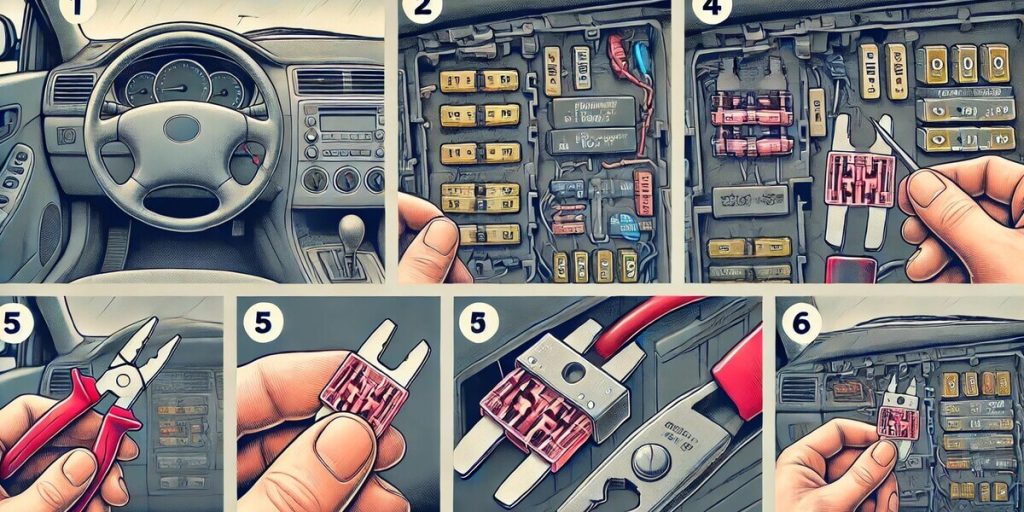
Step 1: Locate your fuse box. Most cars have a fuse panel under the dashboard on the driver’s side and another under the hood. Check your owner’s manual if you’re unsure.
Step 2: Find the fuse for the affected circuit. Open the fuse box cover. There’s usually a diagram on the inside listing which fuse controls which system. Match the dead component to its fuse number.
Step 3: Pull the fuse. Use the fuse puller or pliers to remove the fuse. Be gentle — they’re designed to pop out without force.
Step 4: Inspect the fuse visually. Hold the fuse up to light. A good fuse has an intact wire visible through the plastic window. A blown fuse will show a broken or melted wire, or the window may be cloudy or discolored.
Step 5: Confirm with a test light (optional but better). Clip the test light to a ground source, then touch the tip to each metal prong of the fuse with the ignition on. Both prongs should light up the tester. If only one side lights up, the fuse is blown — even if it looks intact visually.
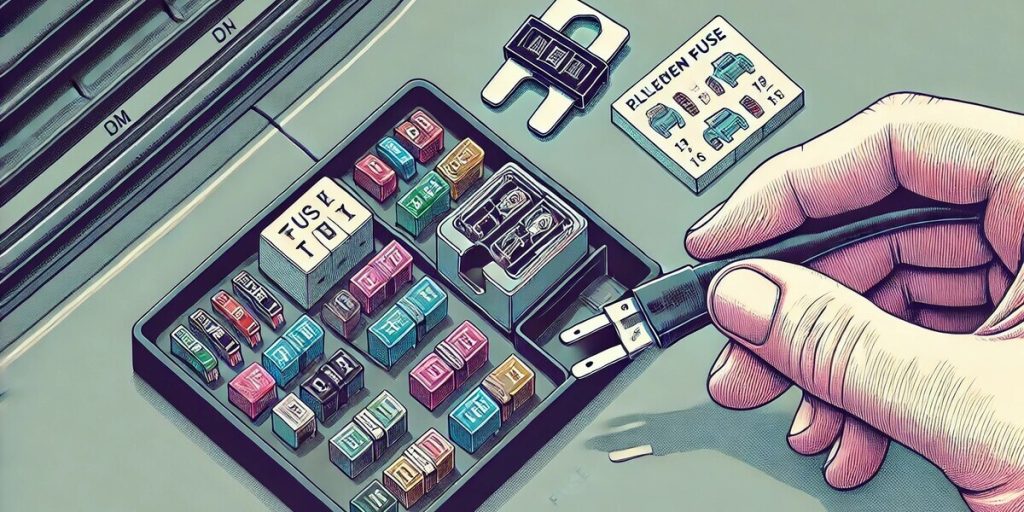
Step 6: Replace with the same amperage fuse. Match the amperage rating exactly (it’s printed on the fuse and color-coded). Using a higher-rated fuse doesn’t protect the circuit and can cause wiring damage or even a fire.
Why Do Car Fuses Blow? (And What to Do When One Keeps Blowing)
A single blown fuse is usually nothing to worry about. Electrical spikes happen, and a fuse doing its job is a sign the system is working as designed.
But if a fuse blows again shortly after you replace it, that’s a different story. Recurring fuse failures point to an underlying problem:
- Short circuit: A wire is contacting bare metal somewhere in the circuit, sending current directly to ground. This needs to be traced and repaired.
- Electrical overload: Too many devices drawing power through one circuit — common when people add aftermarket electronics like amplifiers, LED light bars, or dash cams without a dedicated circuit.
- Wrong replacement fuse: Someone previously installed a fuse with the wrong (usually too-low) amperage for that circuit.
- Failing component: The device the fuse protects is drawing more current than it should, often due to a failing motor or pump.
If you replace a fuse and it blows again within a day or two, don’t keep replacing it. That’s a sign to have a mechanic inspect the circuit. Repeatedly blowing fuses while ignoring the root cause can cause wiring damage — and in rare cases, a fire.
Repair Cost and Urgency
DIY cost: A pack of assorted blade fuses costs $5–$15 at any auto parts store. If you’re replacing a single standard fuse yourself, the cost is essentially zero if you have spares on hand.
Shop cost: If you bring it to a mechanic, expect to pay $20–$50 for diagnosis and the fuse replacement itself. Most shops can handle a simple fuse swap in under 30 minutes.
When to see a mechanic: Immediately, if:
- The fuse blows repeatedly after replacement
- You notice a burning smell from the fuse box
- Multiple fuses are blowing at the same time
- The affected system is safety-critical (wipers, headlights, ABS)
A blown fuse is a low-urgency repair if it affects convenience features like the radio or USB ports. It becomes a higher-urgency situation if it affects safety systems, or if it’s a symptom of something bigger happening in your wiring.
FAQs About Symptoms of a Blown Car Fuse
What are the most common symptoms of a blown car fuse?
The most common signs include one or more electrical components suddenly stopping — especially things like the radio, power windows, interior lights, USB ports, or windshield wipers. If multiple features in the same area of your car die at once, that usually means they share a fuse.
How do you check if a car fuse is blown?
Pull the fuse from the fuse box and hold it up to light. A blown fuse will have a broken or melted wire inside the plastic casing. For a more reliable check, use a test light with the ignition on — touch both metal prongs of the fuse socket. If only one side lights up, the fuse is gone.
Can a blown fuse cause a car not to start?
In most cases, no. Standard fuses protect individual circuits, not the entire starting system. However, some vehicles have a main fuse or fusible link that, if blown, can prevent the car from starting entirely. If your car is completely dead with no electrical response at all, check the main fuse and battery first.
How much does it cost to fix a blown car fuse?
A replacement fuse itself costs $0.50–$2. A pack of assorted fuses runs $5–$15. If a mechanic does the diagnosis and replacement, expect to pay $20–$50. The repair is expensive only when the blown fuse is caused by a deeper wiring or electrical fault that needs tracing.
Why does my car fuse keep blowing?
A fuse that blows repeatedly almost always means there’s an underlying problem — a short circuit, a failing component drawing too much current, or an overloaded circuit. Replace the fuse once and see if it blows again. If it does, have a mechanic inspect the wiring rather than continuing to replace the fuse.
The Bottom Line
A blown car fuse is one of the simplest and cheapest fixes in automotive repair — but it’s also one of the most commonly overlooked. Before you spend money on a new radio, window motor, or wiper system, spend two minutes checking the fuse first.
Quick Summary:
- Sudden, complete failure of one or more electrical components is the main symptom
- Multiple features dying at once usually means they share a blown fuse
- Safety-related components (wipers, horn) should be fixed right away
- Blown fuses are usually a quick DIY fix with a $5 fuse pack
- A fuse that keeps blowing points to a deeper wiring problem — don’t ignore it
- Use the fuse box diagram (on the lid or in your manual) to find the right fuse fast
- Never replace a fuse with a higher amperage rating than the original