
This article was updated in July 24, 2026 with new products and information by Mark S. Taylor
You feel a vibration or shudder every time you get on the gas, but you’ve already balanced the tires, maybe even replaced them — and the shake is still there. So every article telling you to “get your wheels balanced” is wasting your time. The good news: ruling out the tires is a huge clue, because it points the finger straight at the parts that only work hard when you accelerate.
When a vibration shows up under acceleration but it isn’t the tires, the cause is almost always in the drivetrain or engine — most often a worn inner CV joint, a cracked motor or transmission mount, a bad U-joint or driveshaft, or an engine misfire. These parts carry the engine’s power and load, so they only act up when that load is present. Tire and wheel problems, by contrast, shake at a given speed no matter what your foot is doing.
This guide skips the tire lecture and walks through the real drivetrain and engine causes, how to tell them apart, whether it’s safe to drive, and what each fix costs.
Contents
- 1 Why “Not the Tires” Points to the Drivetrain
- 2 6 Causes When It’s Not the Tires
- 3 How to Tell Which One It Is (Differential Diagnosis)
- 4 The Throttle-vs-Speed Test
- 5 CV Axle or Motor Mount? How to Tell
- 6 Is It Safe to Drive With This Vibration?
- 7 Repair Cost
- 8 DIY vs. Mechanic
- 9 How to Prevent It
- 10 FAQs About Vibration When Accelerating but Not the Tires
- 11 Bottom Line
Why “Not the Tires” Points to the Drivetrain
Here’s the logic that makes your diagnosis easier. A tire or wheel problem — imbalance, a bent rim, a bad wheel bearing — vibrates based on how fast the wheel is spinning. It shakes at, say, 60 mph whether you’re accelerating, coasting, or braking, because the wheel is turning the same speed either way.
An acceleration vibration is different. It appears or gets worse specifically when the engine is putting power through the drivetrain — pulling away from a stop, climbing a hill, or flooring it to merge. The moment you lift off the gas, the load disappears and so does the shake, even though your speed hasn’t changed. That behavior is the signature of a part that’s stressed by torque: a CV joint, a motor mount, a U-joint, or the engine itself.
So by ruling out the tires, you’ve already narrowed a big list down to the load-carrying parts. The rest of this guide works through them.
6 Causes When It’s Not the Tires
Here are the real culprits, roughly in the order they turn up when the tires are ruled out:
A worn inner CV joint (the #1 cause). The inner CV joint on your axle flexes as it sends power to the wheel. When it wears and develops play, the extra torque of acceleration makes it shudder — classically felt pulling away from a stop or climbing a hill. Mechanics see this more than any other acceleration-vibration cause, especially on front- and all-wheel-drive cars. A torn CV boot that let grease escape is a common lead-up.
A failing CV axle (outer joint / whole shaft). As the axle wears further, the vibration worsens and you may hear a rhythmic clicking when turning (a classic outer-CV-joint sign). Left alone, a CV axle can eventually fail completely and leave you stranded.
Cracked or collapsed motor (engine) mounts. Mounts hold the engine to the frame and soak up its movement. When one cracks or the rubber gives out, the engine rocks under acceleration and that shake transmits straight into the cabin. Tell-tale extras: a clunk when shifting into drive or reverse, more shaking at idle, and the engine visibly moving when you blip the throttle.
A worn transmission mount. The transmission has its own mount(s). When one fails, you get similar symptoms to a bad motor mount — vibration and clunking under load and when shifting — because the whole powertrain can shift more than it should.
A bad U-joint, driveshaft, or center support bearing (RWD/AWD). On rear- and all-wheel-drive vehicles, the driveshaft spins under load. A worn U-joint, a bent or unbalanced driveshaft, or a failing center support bearing produces a vibration that shows up under acceleration and often changes with load.
An engine misfire. If a cylinder isn’t firing cleanly — worn spark plugs, a failing ignition coil — the engine shudders and the car jerks as it tries to make power under throttle. A misfire often comes with a rough idle and sometimes a check-engine light.
Two of these — the inner CV joint and worn engine mounts — account for the majority of “it’s not the tires” acceleration vibrations.

How to Tell Which One It Is (Differential Diagnosis)
You can narrow this down a lot by paying attention to when and how the vibration shows up:
Worst pulling away from a stop or climbing a hill, smooths out once cruising: classic inner CV joint.
Vibration plus a rhythmic click or pop when turning (parking-lot speeds): the CV axle’s outer joint is worn.
Shaking that comes with a clunk shifting into gear, plus a shake at idle, and the engine visibly rocks: worn motor or transmission mounts.
On a RWD or AWD vehicle, vibration under load that changes with acceleration and may come with a howl underneath:U-joint or driveshaft.
Jerking or stumbling rather than a smooth buzz, maybe with a rough idle or check-engine light: an engine misfire.
A shudder that feels like driving over rumble strips during light acceleration (often an automatic/CVT): possible torque converter or CVT shudder — worth a transmission-specific look.
Match your symptoms to the closest description and you’ve usually narrowed it to one or two suspects. The next two sections give you hands-on tests to confirm.
The Throttle-vs-Speed Test
This is the single most useful test, and you can do it safely on any open road. The goal is to separate a drivetrain/engine problem from anything wheel-related.
Get the car up to the speed where you feel the vibration. Once you’re there, gently lift off the gas and let the car coast at the same speed. Pay attention to what the vibration does:
If it disappears (or drops way off) the instant you lift off the throttle, even though your speed hasn’t changed: it’s a drivetrain or engine issue — a CV joint, mount, driveshaft, or misfire. Load is the trigger, not speed.
If it stays exactly the same whether you’re on or off the gas at that speed: the cause tracks wheel speed, which points back toward tires, wheels, or a wheel bearing — but you’ve already ruled those out.
You can also try the reverse: at a steady cruise, ease back onto the throttle and see if the shake returns with the load. This on-throttle/off-throttle difference is exactly how a mechanic confirms the problem lives in the drivetrain before ever putting the car on a lift.
CV Axle or Motor Mount? How to Tell
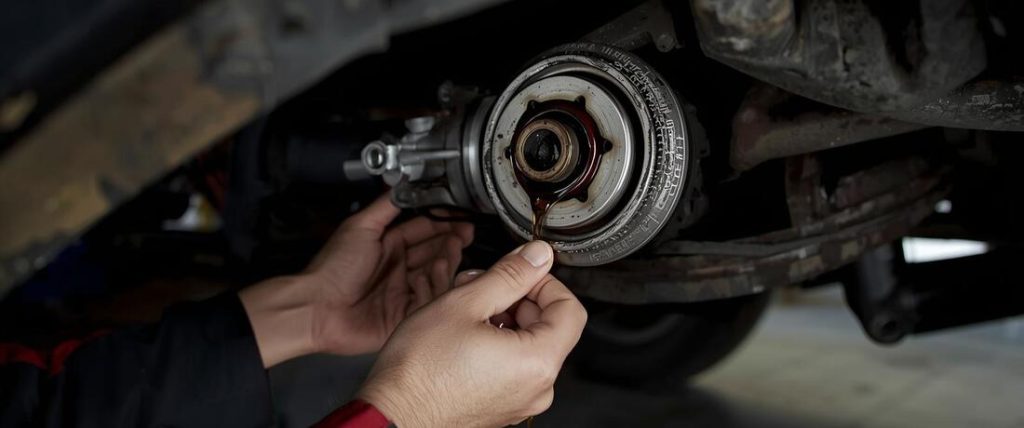
Once the throttle test confirms it’s the drivetrain, the two most common suspects are a CV axle and a worn engine mount — and people constantly replace one when it was actually the other. Here’s how to separate them.
Points to a CV axle:
A rhythmic clicking or popping when turning, loudest at low speed in a parking lot
Vibration that’s worst accelerating from a stop or up a hill, tied to road speed and load
A torn CV boot with grease flung around the inside of the wheel
The vibration is felt more in the floor/front end than tied to engine RPM
Points to a motor or transmission mount:
A distinct clunk or thud when shifting into drive or reverse
More shaking at idle, not just when moving
The engine visibly rocks or jumps when you blip the throttle with the hood open
Vibration that tracks engine RPM rather than road speed
A quick driveway check: pop the hood, put the car in park with the brake on, and have someone gently rev it while you watch the engine. A little movement is normal; a big rock or jump means a failed mount. For the axle, turn the wheels full lock in an empty lot and listen for that clicking. Between the two tests, you can usually tell which repair you actually need before you pay for parts.
Is It Safe to Drive With This Vibration?
Short answer: you can usually drive short-term, but don’t put off the fix — some of these failures end badly. The risk depends on the cause.
A worn CV axle: the most urgent. As the joint deteriorates, it can eventually separate, cutting power to that wheel and potentially whipping around and damaging other parts. If the vibration is getting worse or you hear loud clicking, get it in soon.
A bad U-joint or driveshaft (RWD/AWD): also serious. A failed U-joint can drop the driveshaft, which is dangerous at speed. Don’t ignore a worsening driveline vibration.
Worn mounts: less immediately dangerous, but a failing mount stresses axles, the exhaust, and wiring, and it gets worse over time.
A misfire: driving on a persistent misfire can damage the catalytic converter, turning a cheap fix into an expensive one.
The honest rule: an acceleration vibration that’s worsening, paired with clicking, clunking, or a warning light, deserves a prompt inspection. This isn’t a “wait and see for months” problem.
Repair Cost
Because the cause varies, so does the price. Here’s what the common fixes run:
| Repair | Typical Cost (parts + labor) |
|---|---|
| CV axle replacement (one side, installed) | $350–$950 per axle |
| Both front CV axles | $700–$1,700+ |
| Motor (engine) mount replacement | $250–$700 each |
| Transmission mount replacement | $200–$500 |
| U-joint replacement | $150–$400 each |
| Driveshaft / center support bearing | $300–$1,000+ |
| Spark plugs (misfire) | $100–$300 |
| Ignition coil (misfire) | $150–$450 |
For a CV axle, an aftermarket shaft runs around $150 versus roughly $600 for a dealer part, with about two hours of labor, so a typical single-axle job lands in the mid-hundreds. One word of caution from the trade: cheap aftermarket axles sometimes vibrate even when brand new, so if a fresh axle didn’t fix it, a low-quality part can be the reason. As always, get the cause pinned down before approving a big bill — the fixes here range from a $150 set of plugs to four figures for a driveshaft.
DIY vs. Mechanic
Some of these are weekend-driveway jobs; others need real tools or experience.
Reasonable to DIY (if you’re comfortable and have jack stands):
Replacing spark plugs or an ignition coil for a misfire
Replacing a CV axle on many front-wheel-drive cars (doable, if a bit involved)
Inspecting CV boots and watching the engine rock test
Leave it to a mechanic:
Engine and transmission mounts (the powertrain often has to be supported and lifted — awkward and easy to get wrong)
Driveshaft, U-joints, and center support bearings (balancing and press work)
Transmission/torque converter shudder (needs proper diagnosis, sometimes a fluid service or more)
Honest rule of thumb: plugs and a FWD axle are within reach of a confident DIYer, but mounts and driveline work reward the right equipment and experience. If a vibration involves the transmission or a driveshaft at speed, let a shop handle it.
How to Prevent It
You can head off most acceleration vibrations with a few habits:
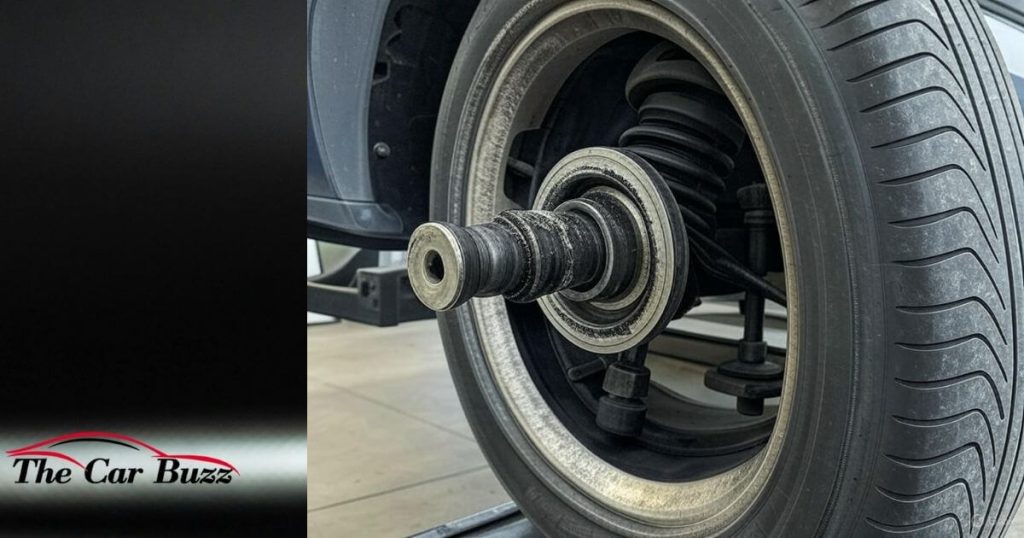
Check CV boots regularly. A torn boot slings out grease and lets dirt in, which kills the joint. Catching it early can mean a cheap boot instead of a whole axle.
Use quality parts. Cheap axles and mounts fail — or vibrate — sooner. Reputable brands are worth it here.
Keep up with tune-ups. Fresh spark plugs and healthy coils prevent misfire-related shudder and protect the catalytic converter.
Address small vibrations early. A minor shake under acceleration only gets worse; an early inspection is far cheaper than a failed axle or a ruined converter.
Replace mounts as a set when one goes. If one mount has aged out, the others usually aren’t far behind.
None of this is exotic, and it keeps the drivetrain smooth and reliable.
FAQs About Vibration When Accelerating but Not the Tires
Can a bad CV axle cause vibration only when accelerating?
Yes — it’s the most common cause. A worn inner CV joint develops play, and the extra torque of acceleration makes it shudder, especially pulling away from a stop or climbing a hill. It often eases off once you’re cruising and disappears when you lift off the gas. A clicking noise when turning points to the axle’s outer joint as well.
How do I tell a CV axle from a bad motor mount?
A CV axle usually clicks when turning at low speed and vibrates with road speed and load. A bad motor mount clunks when you shift into gear, shakes more at idle, and lets the engine visibly rock when you blip the throttle with the hood open. If the shake tracks engine RPM, suspect a mount; if it tracks road speed and load, suspect the axle.
Is it safe to drive with a vibration when accelerating?
Short-term, usually, but don’t delay the fix. A worn CV axle or U-joint can eventually fail and leave you stranded or cause a loss of control, and a persistent misfire can wreck the catalytic converter. If the vibration is worsening or comes with clicking, clunking, or a warning light, get it inspected promptly.
Why does the vibration go away when I let off the gas?
Because the problem is load-related. Parts like CV joints, mounts, and driveshafts are only stressed when the engine is sending power through them. Lift off the gas and that load disappears, so the vibration stops even though your speed hasn’t changed. That behavior confirms it’s the drivetrain or engine, not the tires.
I replaced the CV axle and it still vibrates — why?
Two common reasons. First, cheap aftermarket axles sometimes vibrate even when brand new, so a low-quality part may be the culprit — a better axle can fix it. Second, the original problem may have been a motor mount, transmission mount, or driveshaft, not the axle. Run the engine rock test and the throttle test to confirm what’s actually at fault.
Bottom Line
If your car vibrates under acceleration and you’ve ruled out the tires, you’ve already done the hardest part of the diagnosis — the cause is almost certainly in the drivetrain or engine. Start with the throttle-vs-speed test: if the shake vanishes the moment you lift off the gas, you’re looking at a CV joint, a mount, a driveshaft, or a misfire. Check the CV boots, do the engine rock test, and get it inspected before a worn axle or U-joint fails — a quick look now beats getting stranded later.