
This article was updated in August 30, 2026 with new products and information by Mark S. Taylor
A fuel pressure sensor helps the engine computer monitor fuel pressure so it can manage the fuel system correctly. When the sensor sends an inaccurate or unstable signal, the engine may develop hard starting, hesitation, poor acceleration, stalling, or reduced power.
But there’s an important catch:
The same symptoms can occur when fuel pressure itself is actually too low or too high.
A weak fuel pump, restricted fuel supply, faulty pressure regulator, wiring problem, or insufficient fuel can create symptoms that look like a bad sensor. That’s why replacing the sensor based only on symptoms or a diagnostic code can waste money.
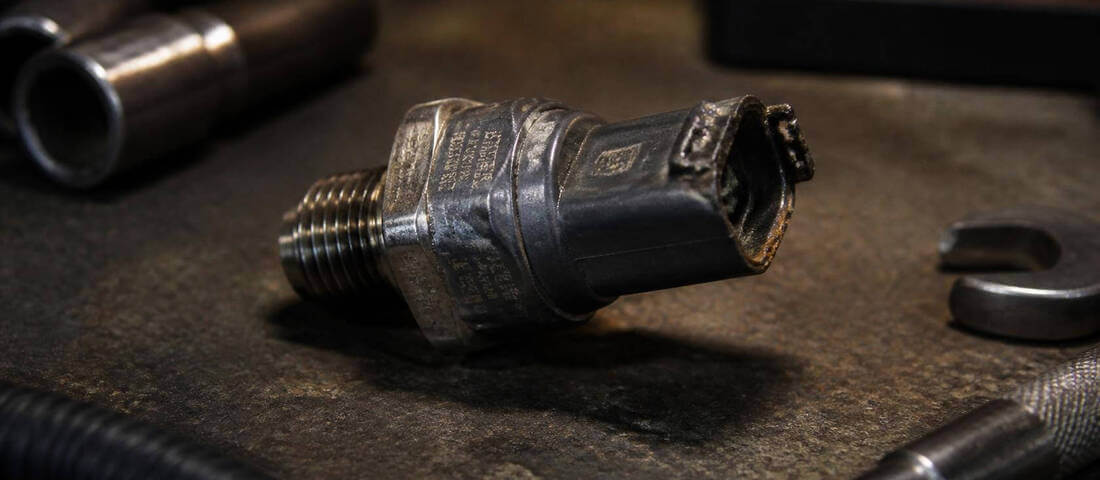
The most common bad fuel pressure sensor symptoms are:
- Check-engine light
- Hard starting or long cranking
- Engine stalling
- Poor acceleration
- Loss of power
- Hesitation or rough running
- Poor fuel economy
If you’re seeing these symptoms, don’t assume the sensor is defective. Compare the fuel-pressure value reported by the scan tool with actual fuel pressure using the appropriate test equipment and the manufacturer’s specifications.
Contents
- 1 What Is a Fuel Pressure Sensor?
- 2 7 Bad Fuel Pressure Sensor Symptoms
- 3 Bad Fuel Pressure Sensor vs Low Fuel Pressure
- 4 What Causes Fuel Pressure Sensor Problems?
- 5 Fuel Pressure Sensor Codes: P0190–P0194
- 6 How to Test a Fuel Pressure Sensor
- 7 ⚠️ Fuel Pressure Testing Safety
- 8 Can You Drive With a Bad Fuel Pressure Sensor?
- 9 Common Diagnostic Mistakes
- 10 FAQs About Bad Fuel Pressure Sensor Symptoms
- 10.1 What are the symptoms of a bad fuel pressure sensor?
- 10.2 Can a bad fuel pressure sensor cause a car not to start?
- 10.3 Does P0191 mean the fuel pressure sensor is bad?
- 10.4 How do you know if a fuel pressure sensor is bad?
- 10.5 Can a bad fuel pressure sensor cause poor acceleration?
- 10.6 What codes indicate a fuel pressure sensor problem?
What Is a Fuel Pressure Sensor?
A fuel pressure sensor monitors pressure in the fuel system and sends an electrical signal to the engine computer.
Depending on the vehicle, the sensor may be mounted on or near the fuel rail, or be part of another fuel-system assembly.
The computer uses the pressure information to determine whether the fuel system is operating as expected and, on systems with electronically controlled fuel pressure, to help control the system.
Some vehicles have a separate fuel pressure regulator, while others integrate pressure-control components with the sensor or fuel-system assembly.
Because fuel-system designs vary significantly, always use the service information for the exact vehicle.
7 Bad Fuel Pressure Sensor Symptoms
1. Check Engine Light
A check-engine light is one of the most common clues.
Possible fuel-pressure-sensor-related codes include:
- P0190 — Fuel Rail Pressure Sensor A Circuit
- P0191 — Fuel Rail Pressure Sensor A Circuit Range/Performance
- P0192 — Fuel Rail Pressure Sensor A Circuit Low Input
- P0193 — Fuel Rail Pressure Sensor A Circuit High Input
- P0194 — Fuel Rail Pressure Sensor A Circuit Intermittent
These codes provide diagnostic direction, but they don’t automatically mean the sensor itself has failed. P0190, for example, can involve the reference circuit or sensor, while P0191 can result from either an electrical or mechanical fuel-pressure problem.
2. Hard Starting or Long Cranking
A fuel-pressure problem can cause the engine to crank longer than normal before starting.
You may notice:
- Longer cranking after the vehicle sits
- Difficult cold starts
- Difficult hot starts
- Engine starts and immediately stalls
- Multiple attempts before the engine starts
But don’t automatically blame the pressure sensor.
A weak fuel pump, pressure loss, restricted filter, injector problem, or another fuel-system fault can produce similar symptoms.
A fuel-pressure sensor may be reporting the wrong pressure even though the mechanical pressure is normal.
3. Engine Stalling
A faulty fuel-pressure signal can interfere with fuel-system control and contribute to stalling.
You might notice:
- Stalling at idle
- Stalling after starting
- Stalling during acceleration
- Intermittent engine shutdown
P0191-related faults can include lack of power and crank-no-start conditions, while low-pressure sensor circuit faults can also produce longer crank times and no-start conditions.
Important
If your vehicle stalls repeatedly in traffic, treat the problem as a safety issue rather than continuing to drive it until the check-engine light gets worse.
4. Poor Acceleration
A fuel-pressure problem can become especially obvious when the engine needs more fuel.
You may notice:
- Sluggish acceleration
- Weak response when pressing the accelerator
- Difficulty climbing hills
- Poor passing performance
- Engine bogging under load
P0191-related symptoms can include lack of power, but actual low fuel pressure can also cause the same complaint.
This is why checking actual pressure matters.
5. Loss of Engine Power
If the fuel system can’t maintain the pressure required by the engine, power can drop.
But here’s where the diagnosis gets interesting.
Suppose:
Scan tool says: fuel pressure is normal.
Mechanical gauge says: fuel pressure is significantly lower.
That discrepancy makes the sensor or its signal circuit much more suspicious.
A diagnostic procedure for fuel-pressure sensor faults recommends comparing scan-tool pressure with actual pressure measured using a gauge; the readings should correspond within the vehicle’s specified tolerance.
6. Hesitation or Rough Running
A faulty fuel-pressure signal can contribute to:
- Hesitation
- Rough idle
- Sputtering
- Surging
- Misfires
- Poor throttle response
But these symptoms are extremely broad.
Possible causes include:
- Fuel pump
- Fuel filter
- Fuel injectors
- Fuel-pressure regulator
- MAF sensor
- MAP sensor
- Ignition problems
- Vacuum leaks
- Wiring problems
So don’t diagnose a fuel-pressure sensor from hesitation alone.
7. Poor Fuel Economy
An incorrect fuel-pressure signal can contribute to improper fuel-system operation and reduced fuel economy.
You might notice:
- More frequent fill-ups
- Fuel odor
- Rich-running symptoms
- Black smoke on some vehicles
- Poor mileage
A fuel-pressure regulator or control problem can also create rich-running symptoms and reduced fuel efficiency.
Again, the symptom isn’t proof that the sensor has failed.

Bad Fuel Pressure Sensor vs Low Fuel Pressure
This should be one of the most important sections on the page.
| Finding | Possible cause |
|---|---|
| Scan pressure abnormal + actual pressure abnormal | Real fuel-pressure problem |
| Scan pressure abnormal + actual pressure normal | Sensor/circuit problem |
| Both readings low | Pump, filter, regulator, supply problem |
| Signal stuck low/high | Sensor or wiring |
| Pressure changes but scan value doesn’t | Sensor/circuit issue |
| Intermittent scan pressure | Wiring, connector, sensor |
| Fuel-pressure code + pump code | Diagnose fuel system first |
The key principle:
The sensor reports pressure. It doesn’t necessarily create the pressure.
That one sentence is worth emphasizing.
What Causes Fuel Pressure Sensor Problems?
Failed sensor
The sensor’s internal electronics can fail.
Damaged wiring
Look for:
- Broken wires
- Chafing
- Short circuits
- Open circuits
- Heat damage
Corroded connector
Poor terminal contact can produce an intermittent signal.
Diagnostic procedures recommend inspecting the wiring and connector for chafing, corrosion, damaged terminals, and other visible problems.
Reference-voltage problem
Many pressure sensors use a reference circuit supplied by the PCM.
A problem with the reference circuit can make the sensor appear defective.
Ground problem
A poor sensor ground can distort the output signal.
Actual fuel-pressure problem
The sensor can correctly report a real problem caused by:
- Weak fuel pump
- Restricted fuel filter
- Low fuel supply
- Faulty regulator
- Fuel-system restriction

Fuel Pressure Sensor Codes: P0190–P0194
| Code | General meaning |
|---|---|
| P0190 | Fuel Rail Pressure Sensor A Circuit |
| P0191 | Fuel Rail Pressure Sensor A Circuit Range/Performance |
| P0192 | Fuel Rail Pressure Sensor A Circuit Low Input |
| P0193 | Fuel Rail Pressure Sensor A Circuit High Input |
| P0194 | Fuel Rail Pressure Sensor A Circuit Intermittent |
P0191 is particularly important because it doesn’t simply mean “bad sensor.” It indicates that the pressure-sensor signal is outside the expected range or doesn’t agree with expected system behavior.
P0192 indicates a low sensor signal, while P0193 indicates a high sensor signal. Both can involve the sensor or its circuit.
How to Test a Fuel Pressure Sensor
Step 1: Scan for codes
Record:
- Stored codes
- Pending codes
- Freeze-frame data
- Fuel-pressure PID
- Engine RPM
- Engine load
Don’t erase the codes before recording the data.
Step 2: Inspect the connector and wiring
Look for:
- Corrosion
- Loose terminals
- Broken wires
- Chafing
- Melted insulation
- Oil or fuel contamination
This simple inspection can prevent an unnecessary sensor replacement.
Step 3: Check sensor power/reference and ground
Use the vehicle-specific wiring diagram.
Don’t assume:
“Every fuel-pressure sensor has the same wiring.”
Many systems use a reference voltage, signal and ground, but exact configurations vary.
Step 4: Compare scan-tool pressure with actual pressure
This is the best diagnostic concept in the article.
Connect an appropriate mechanical fuel-pressure gauge according to the manufacturer’s procedure.
Then compare:
Actual pressure
vs.
Pressure reported by the scan tool
If the two readings don’t agree within the manufacturer’s specified tolerance, the sensor or its circuit becomes a strong suspect. One generic P0191 diagnostic procedure uses a comparison between the scan value and mechanical gauge as part of the diagnosis.

⚠️ Fuel Pressure Testing Safety
This section should be visually prominent.
Fuel systems can be under pressure.
And diesel common-rail systems can operate at extremely high pressures.
Bosch’s common-rail training material specifically treats high- and low-pressure measurements, scan-tool diagnostics, and oscilloscope testing as technician-level diagnostic procedures.
A generic diagnostic reference warns that diesel common-rail pressure can reach thousands of psi at idle and tens of thousands under load.
Therefore:
Do not loosen fuel-system components or install a mechanical gauge unless you know the correct procedure for the vehicle.
For high-pressure diesel common-rail systems, professional diagnosis is strongly recommended.
Can You Drive With a Bad Fuel Pressure Sensor?
It depends on the symptoms and the vehicle.
If you’re experiencing:
- Stalling
- Severe power loss
- Hard starting
- No-start condition
- Severe hesitation
- Fuel leaks
- Strong fuel odor
don’t continue normal driving.
A vehicle that loses power unexpectedly can create a serious safety hazard.
Common Diagnostic Mistakes
Mistake 1: Replacing the sensor because of P0191
P0191 doesn’t automatically mean the sensor is defective.
Mistake 2: Assuming low pressure means a bad sensor
The sensor may be accurately reporting low pressure.
Mistake 3: Ignoring the fuel pump
A weak pump can cause the same symptoms.
Mistake 4: Ignoring wiring
An electrical problem can mimic sensor failure.
Mistake 5: Using the wrong pressure gauge
The test equipment must be appropriate for the fuel system.
Mistake 6: Treating diesel common rail like gasoline fuel injection
Don’t.
The pressures and safety requirements are dramatically different.
FAQs About Bad Fuel Pressure Sensor Symptoms
What are the symptoms of a bad fuel pressure sensor?
Common symptoms include a check-engine light, hard starting, long cranking, stalling, poor acceleration, loss of power, hesitation, rough running, and poor fuel economy. However, these symptoms can also result from actual fuel-pressure problems.
Can a bad fuel pressure sensor cause a car not to start?
Yes. A faulty pressure signal can interfere with fuel-system control, and fuel-pressure sensor faults can be associated with crank-no-start conditions.
Does P0191 mean the fuel pressure sensor is bad?
No. P0191 indicates a fuel rail pressure sensor range/performance problem. The cause can be the sensor, wiring, excessive circuit resistance, high or low actual fuel pressure, or another fuel-system problem.
How do you know if a fuel pressure sensor is bad?
Compare the pressure reported by the scan tool with actual fuel pressure measured using the appropriate test equipment. If actual pressure is correct but the sensor reports an incorrect value, the sensor or its circuit becomes a strong suspect.
Can a bad fuel pressure sensor cause poor acceleration?
Yes. Fuel-pressure sensor faults can be associated with loss of power and poor engine performance, although actual low fuel pressure can cause the same symptoms.
What codes indicate a fuel pressure sensor problem?
Common codes include P0190, P0191, P0192, P0193 and P0194. The exact diagnostic procedure depends on the vehicle and fuel-system design.