
This article was updated in November 23, 2026 with new products and information by Mark S. Taylor
When a key fob will not unlock your car, the most common causes are a weak coin-cell battery, local radio-frequency interference, a discharged 12-volt car battery, or a faulty door-lock actuator. Test your spare fob and check whether one door or all doors fail before paying for reprogramming.

You press the unlock button on your remote, and nothing happens. Maybe the doors only respond when you stand right next to the window, or the lock button works while unlock stays dead.
Before you buy an expensive replacement fob or pay a shop to reprogram your keys, run a few fast isolation checks. Watching how the doors and your spare remote behave tells you whether the fault sits in your hand or inside the car.
Contents
- 1 Key Fob Pattern-to-Fault Diagnostic Triage Table
- 2 5 Common Reasons Your Key Fob Won’t Unlock the Car
- 3 How to Get Inside and Start Your Car Safely
- 4 When to Call a Technician or Automotive Locksmith
- 5 FAQs About Key Fob Won’t Unlock Car?
- 5.1 Can a dead key fob battery stop the car from unlocking?
- 5.2 Why does my key fob work only when I am close to the car?
- 5.3 Why does the key fob lock the car but not unlock it?
- 5.4 Can the vehicle battery cause the key fob not to unlock the doors?
- 5.5 Do all push-button-start vehicles have the same emergency fob location?
- 5.6 Do I need to reprogram my key fob after changing the battery?
Key Fob Pattern-to-Fault Diagnostic Triage Table
Use this quick table to match what your doors and remote are doing with the most likely fault and fastest test.
| What Happens When You Press Unlock | Most Likely Source | Fastest Safe Isolation Test |
| Primary fob fails, spare fob works normally | Weak fob battery, dirty internal button pad, or damaged primary fob | Replace coin-cell battery, check polarity, and avoid bitter-coated cells |
| Both fobs fail, and dome lights or dash are dim or dead | Discharged 12V vehicle battery or loose battery terminal | Check interior lights and horn; test 12V battery voltage before replacing fobs |
| Both fobs fail at one parking spot, but work elsewhere | Local radio-frequency (RF) interference (cell towers, aftermarket chargers, power lines) | Hold the fob directly against the driver’s door handle or move the car away from the source |
| Three doors unlock, one door stays locked (even from the interior switch) | Failed door-lock actuator, broken door-jamb wire, or jammed latch | Press the interior door-lock switch to confirm whether that single door responds |
| All doors work from the interior switch, neither fob works anywhere | Vehicle RF receiver, antenna, fuse, or lost key synchronization | Scan the Body Control Module (BCM) and test receiver power and ground |
5 Common Reasons Your Key Fob Won’t Unlock the Car
Start by testing your spare key fob if you have one at home. If the spare unlocks the doors cleanly from across the driveway, you immediately rule out the car battery, receiver, and door-lock actuators.
1. A Weak, Backwards, or Bitter-Coated Fob Battery
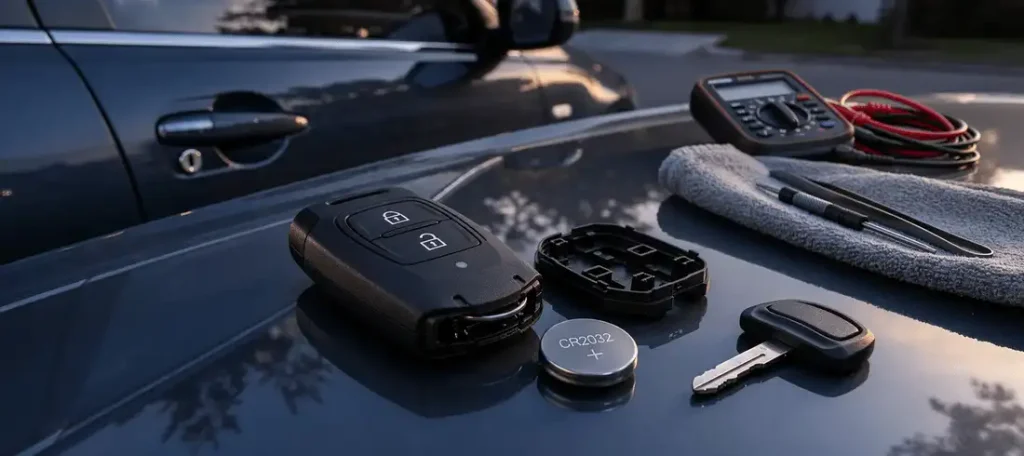
A dying coin-cell battery is the most common reason a remote loses range or takes several presses to work. Check your owner’s manual for the exact cell number (often a CR2032 or CR2025) and confirm the plus side faces the right way when you snap the case back together.
Watch out for child-safe coin batteries coated with a bitter deterrent layer. That invisible coating can prevent clean electrical contact inside certain key fob battery trays, leaving you thinking the fob is dead even with a brand-new cell installed. If a fresh battery does not restore normal range, check the battery contacts for bent tabs or try a standard uncoated cell.
2. Local Radio-Frequency (RF) Interference
Keyless entry relies on low-power radio signals. Strong nearby transmitters, cell towers, automatic gate openers, or noisy aftermarket electronics plugged into a 12-volt accessory socket can drown out that signal.
Automakers see this often enough to issue service guidance on it. For example, GM Preliminary Information PIC5650L (covering specified 2007–2025 GM vehicles) notes that aftermarket electronic devices can create radio-frequency interference that reduces keyless-access range. If your remote suddenly works fine once you drive a block away, local interference is a strong lead.
3. A Discharged 12-Volt Vehicle Battery
Your car’s keyless receiver and power door locks run off the main 12-volt battery. If that battery is heavily discharged, the receiver may stay asleep or lack enough voltage to throw the lock actuators.
Look through the window for dim dome lights, a dark dashboard, or a weak horn. If you notice signs of a weak or dying 12-volt car battery, have the battery and charging system tested before assuming the remote failed. If the vehicle battery repeatedly goes dead overnight alongside keyless-entry loss, check for parasitic battery drain killing your 12V battery overnight.
4. A Failed Door-Lock Actuator or Wiring Fault
If three doors unlock on the first click while one door stays locked, the key fob is doing its job. The fault is almost certainly isolated to that specific door’s electric lock actuator, latch mechanism, or the wiring harness flexing inside the door jamb.
Once you get inside the car, press the interior power-lock switch on the driver’s door panel. If the interior switch locks and unlocks all four doors normally while neither fob works, the actuators are healthy and the problem sits on the fob or RF receiver side.
5. A Vehicle Receiver, Antenna, or Synchronization Fault
Modern vehicles use a dedicated RF receiver, exterior handle antennas, and a Body Control Module (BCM) to verify your key signal. A blown fuse, corroded connector, water leak near a kick-panel module, or lost key synchronization can stop the car from recognizing a healthy fob.
Because these parts share circuits with other body electronics, a technician should scan the BCM for stored codes and check receiver power and ground before ordering a new remote or module.
How to Get Inside and Start Your Car Safely
When a fob battery dies in a parking lot, you do not need to force the handle or call a tow truck right away. Most vehicles have a built-in mechanical backup.
Using the Mechanical Key Inside Your Fob
Slide the small release latch on the side or back of your fob to pull out the hidden metal key blade. On many newer vehicles, the driver’s door lock cylinder sits hidden behind a small plastic cap on the rear end of the exterior handle.
Check your owner’s manual before prying off a handle cap so you do not snap the retention clip or scratch the paint. As noted in ALOA consumer automotive lock guidance, opening a locked car with the mechanical blade may trigger the factory security alarm until you switch the ignition on or follow your vehicle’s disarm step.
Starting a Push-Button Car With a Dead Fob
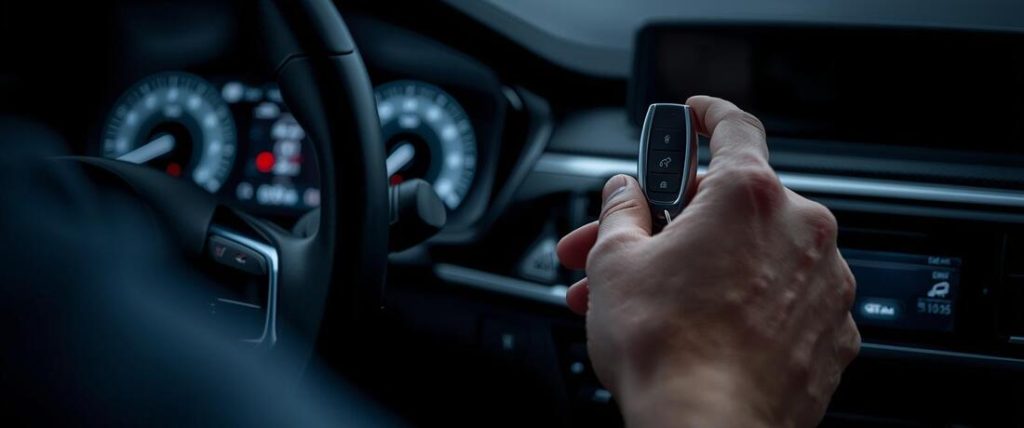
Push-button start vehicles use a short-range transponder chip inside the fob that does not require battery power to authorize a start. You simply have to place the dead fob in the vehicle’s designated backup recognition spot.
That location varies widely by make and model—it may be a molded pocket inside the center console, a cupholder slot, or directly against the start/stop button itself. For instance, Chevrolet’s Keyless Open and Start guide outlines model-specific transmitter pockets for equipped GM vehicles, while other automakers use different locations. Follow your exact owner’s manual, and if the engine still will not crank once the fob is recognized, move to troubleshooting a car that will not start.
When to Call a Technician or Automotive Locksmith
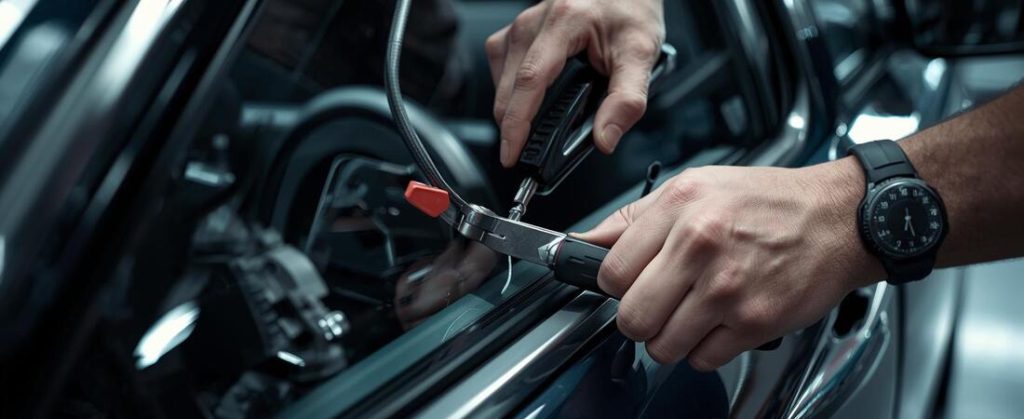
Schedule professional testing if a fresh, properly installed fob battery does not solve the issue or if both fobs stop working at the same time. A qualified shop or automotive locksmith can verify whether your fob is actually transmitting an RF signal using a frequency tester before quoting a replacement.
You should also check your VIN on the NHTSA VIN recall lookup to make sure no open safety recall covers your vehicle’s door latches, locks, or body control electronics. Never attempt to bypass an immobilizer or pry open door trim without the vehicle’s service procedure.
FAQs About Key Fob Won’t Unlock Car?
Can a dead key fob battery stop the car from unlocking?
Yes. A depleted coin-cell battery stops the remote from sending a radio signal to the car’s receiver. You can still unlock the driver’s door using the mechanical key blade hidden inside most fobs, following the access instructions in your owner’s manual.
Why does my key fob work only when I am close to the car?
Shortened range usually points to a weak fob battery or local radio-frequency interference from nearby electronics or transmitters. Replace the coin cell first and test the remote in a different parking area before suspecting a weak vehicle antenna or receiver.
Why does the key fob lock the car but not unlock it?
When one button works and another does not, the culprit is often a worn rubber contact pad or broken solder joint under that specific button inside the fob. Testing your spare fob quickly confirms whether the issue is inside the remote or on the vehicle side.
Can the vehicle battery cause the key fob not to unlock the doors?
Yes. If your car’s 12-volt battery is heavily discharged, the keyless-entry receiver and door-lock actuators may not have enough power to operate. Check whether interior dome lights and the horn work normally before blaming the key fob.
No. Backup transponder locations vary by make, model, and year—some use the start button itself, while others hide a dedicated slot inside the center console or glovebox. Always check your vehicle’s owner’s manual for the exact spot.
Do I need to reprogram my key fob after changing the battery?
Most modern vehicles retain key pairing during a simple battery swap, so reprogramming is rarely required. If the remote still fails after installing a fresh, uncoated battery in the right orientation, have a technician or locksmith test the fob’s signal before paying for programming.
Start with the fastest isolation steps: test your spare fob, swap in a fresh uncoated coin battery, and press the interior lock switch once you enter with the mechanical key. Narrowing down whether the fault lives in the remote, a single door, or the vehicle’s 12-volt power supply saves you from buying parts you do not need. For more circuit-testing walkthroughs, explore our automotive electrical troubleshooting guides.