
This article was updated in March 26, 2026 with new products and information by Mark S. Taylor
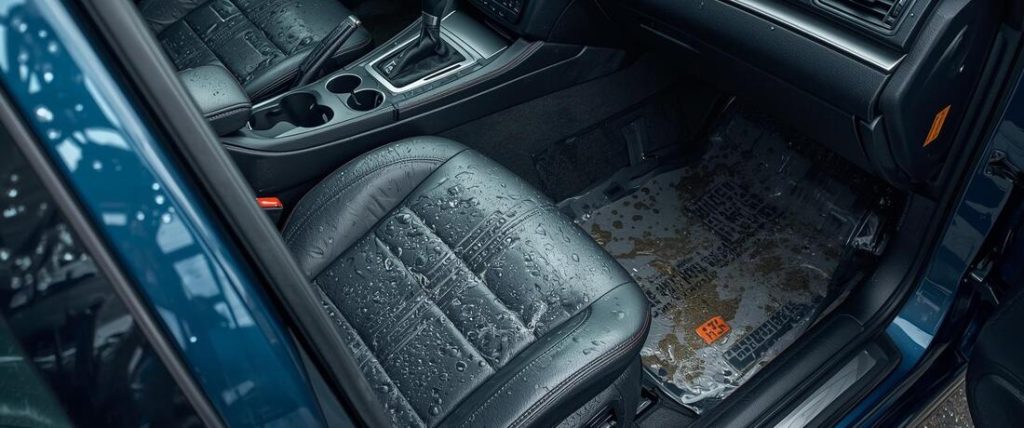
You get into your car after a heavy rainstorm. You step on the mat and feel a squish. Or you see a water spot on the headliner. You know you didn’t leave a window open. So where is the water coming from? Interior leaks have many causes. Some are obvious, but many are hidden. You must find the source fast. Left untreated, water inside a car leads to mold, rust, and expensive electrical damage. This guide covers the 10 causes of interior car leaks and what to do about each one.
Contents
- 1 Why Interior Car Leaks Are a Big Deal
- 2 How to Tell Where the Leak Is Coming From
- 3 The 10 Most Common Causes of Interior Car Leaks
- 3.1 1. Clogged Sunroof Drain Tubes
- 3.2 2. Worn or Damaged Door Seals (Weatherstripping)
- 3.3 3. Torn Door Membrane (Vapor Barrier)
- 3.4 4. Failed Windshield or Rear Window Seal
- 3.5 5. Clogged AC Condensation Drain
- 3.6 6. Leaking Heater Core
- 3.7 7. Clogged Cowl Drain
- 3.8 8. Cowl or Firewall Gasket Failure
- 3.9 9. Cracked or Rusted Cowl Panel
- 3.10 10. Soft-Top Convertible Seal Failure
- 4 Bonus Causes Worth Checking
- 5 What Happens If You Ignore an Interior Leak?
- 6 DIY vs. Professional Repair — Which Leaks Can You Fix Yourself?
- 7 How to Prevent Interior Car Leaks
- 8 FAQs About Causes of Interior Car Leaks
- 9 Bottom Line — Don’t Ignore a Wet Car Interior
Why Interior Car Leaks Are a Big Deal
Water inside your car creates a perfect environment for mold, rust, and electrical damage. It is not just a nuisance.
- Mold and mildew: These grow within 24–48 hours on wet carpet. The smell is hard to remove.
- Electrical shorts: Water near the ECU or fuse box causes shorts. This leads to weird electrical glitches.
- Rust: Metal floor pans rust silently under wet carpet. This weakens the car’s structure.
- Resale value: Water damage history drops your car’s value significantly.
Early detection means a cheap fix. Delayed action means expensive repairs. If you suspect suspension issues are making your ride rough, check our guide on signs of car suspension issues. But if the floor is wet, focus on the leak first.
How to Tell Where the Leak Is Coming From
The location of the water inside the cabin usually points directly to the source of the leak. You can often diagnose it just by looking at where the water pools.
| Location | Most Likely Cause | DIY or Pro? |
|---|---|---|
| Water near windshield | Failed windshield seal or clogged cowl drain | DIY or Pro |
| Passenger side floor | AC drain clog or heater core leak | DIY (AC) / Pro (Heater) |
| Dripping from headliner | Clogged sunroof drain tubes | DIY |
| Footwell near door | Torn door membrane or failed seal | DIY |
| Water in trunk | Failed trunk seal or tail light gasket | DIY |
| Sweet smell + warm liquid | Heater core leak (coolant) | Pro |
The 10 Most Common Causes of Interior Car Leaks
1. Clogged Sunroof Drain Tubes
Sunroof drains clog with debris and dump water into your headliner. This is a very common issue.
Sunroofs are designed to leak slightly. The water hits a tray and flows out drain tubes. Leaves and dirt block these tubes. The water overflows. It runs down the A-pillars and soaks the carpet.
- Fix: Use compressed air or a thin wire to clear the tubes.
- Cost: Free DIY or $75–$200 at a shop.
2. Worn or Damaged Door Seals (Weatherstripping)
Rubber door seals crack and shrink with age, letting water trickle inside. This often happens on older cars.
The rubber around the door frame keeps water out. In hot climates, the rubber dries out. It cracks or shrinks. Water runs down the window and seeps past the seal. It ends up on the floor.
- Fix: Clean the seals. Use a rubber conditioner. Replace if brittle.
- Cost: $50–$300 per door.
3. Torn Door Membrane (Vapor Barrier)
A torn plastic sheet inside the door lets water seep past the panel into the cabin. This happens often during stereo work.
Inside your door is a plastic sheet. It acts as a vapor barrier. Water gets inside the door shell. The membrane stops it from entering the cabin. If someone cut it to install a speaker, the water comes in.
- Fix: Use butyl tape to reseal the plastic.
- Cost: $10–$40 in materials (DIY).
4. Failed Windshield or Rear Window Seal
Windshield seals crack with age or poor installation, leaking water onto the dash. This can look like a mystery leak.
The black urethane sealant holding your windshield hardens over time. It cracks. Water seeps in along the edge. You might hear wind noise at highway speeds.
- Fix: Reseal the windshield with urethane.
- Cost: $100–$400 professionally.
5. Clogged AC Condensation Drain
A clogged AC drain tube backs up water onto the passenger floor. This is often mistaken for a rain leak.
Your AC removes humidity from the air. That water drips onto the ground via a tube. If the tube clogs, water backs up. It spills onto the passenger floor mat. It looks like water, but it is condensation.
- Fix: Locate the drain under the car. Clear it with a wire.
- Cost: Free DIY or $75–$150 at a shop.
6. Leaking Heater Core
A leaking heater core drips sweet-smelling coolant onto the passenger floor. This is a serious repair.
The heater core is a small radiator under the dash. It leaks hot coolant. This feels like water but is oily and smells sweet. A foggy windshield when the heat is on is another sign.
- Fix: Replace the heater core. This requires taking apart the dash.
- Cost: $500–$1,200+ (labor-intensive).
7. Clogged Cowl Drain
Leaves blocking the cowl drain force water into the ventilation system and cabin. The cowl is the vent area at the base of the windshield.
Leaves pile up at the base of the windshield. This is the cowl area. They block the drain holes. Water rises and seeps into the air intake. It pours onto the floor.
- Fix: Remove the cowl cover. Clear the leaves.
- Cost: Free DIY or $50–$150 at a shop.
8. Cowl or Firewall Gasket Failure
Dried-out gaskets on the firewall allow engine bay water to seep inside. These are hard to see.
The firewall separates the engine from the cabin. Rubber gaskets seal holes for wires. When they rot, water sprays through while driving in rain.
- Fix: Requires professional access.
- Cost: $150–$500+.
9. Cracked or Rusted Cowl Panel
Rust holes in the cowl panel create a direct path for water to enter the cabin. This happens on older cars.
If the cowl area stays wet for years, it rusts. Holes form. Water drops straight into the footwell.
- Fix: Weld in a new panel or patch the rust.
- Cost: $200–$800+.
10. Soft-Top Convertible Seal Failure
Convertible seals degrade and leak around the windows and roof frame. UV rays damage the rubber.
The rubber seals on a convertible top shrink and crack. Water leaks in where the roof meets the windshield frame. It can also leak around the side windows.
- Fix: Adjust the latch. Replace the seals.
- Cost: $50–$500+.
Bonus Causes Worth Checking
Sometimes the leak comes from a less obvious source like an antenna or trunk seal. Check these if the main causes check out.
- Cabin air filter housing: If the cover is loose, water enters the vent system.
- Antenna base: Old roof-mounted antennas leak at the base seal.
- Sunroof glass seal: The rubber around the glass itself might be torn.
- Trunk weatherstripping: This wets the spare tire well.
- Cracked window: A tiny crack can let in a surprising amount of water.
What Happens If You Ignore an Interior Leak?
Ignoring a leak leads to toxic mold, electrical failure, and structural rust. The damage gets expensive fast.
Mold grows in 24–48 hours. It smells bad and is bad for your lungs. Water ruins electronics. It can short out your ECU. This causes random faults. According to the CDC, mold can cause health issues. Rust eats the floor pans. This is dangerous in an accident. Insurance might deny a claim if they think you neglected the car. Water can also damage safety systems. If your stability control light is on, check our guide on symptoms of a bad electronic stability control module to see if water is the culprit.
DIY vs. Professional Repair — Which Leaks Can You Fix Yourself?
You can fix simple clogs and seals yourself, but major issues like heater cores need a pro. Here is a guide.
| Cause | DIY Difficulty | Avg. DIY Cost | Avg. Pro Cost | Recommended |
|---|---|---|---|---|
| Sunroof/Cowl/AC Drains | Easy | $0 – $10 | $75 – $200 | DIY |
| Door Membrane | Easy | $10 – $40 | $100 – $300 | DIY |
| Door Seals | Medium | $50 – $100 | $150 – $350 | DIY/Pro |
| Windshield Seal | Medium | $15 (sealant) | $100 – $400 | Pro |
| Heater Core | Hard | $100 – $300 | $500 – $1,200+ | Pro |
| Rusted Cowl | Hard | N/A | $200 – $800+ | Pro |
How to Prevent Interior Car Leaks
Regular cleaning of drains and inspecting seals stops most leaks before they start. A little maintenance goes a long way.
- Clean drains: Clear sunroof and cowl drains every spring and fall.
- Check seals: Inspect weatherstripping twice a year. Use silicone spray to keep them soft.
- Windshield check: After a windshield replacement, check for leaks within 48 hours.
- Avoid parking under trees: Leaves clog drains.
- Run AC in winter: Run the AC for 5 minutes once a month. This keeps the drain clear.
FAQs About Causes of Interior Car Leaks
How do I find where my car is leaking water?
Start by noting where the water collects. Passenger footwell usually means AC drain or heater core. Near the windshield means cowl or windshield seal. Headliner drips mean sunroof drain. Door footwell means door seal or membrane.
Can a water leak inside a car cause mold?
Yes. Mold and mildew can begin growing on wet carpet and upholstery within 24–48 hours. Prolonged leaks can also cause health issues — especially for children and allergy sufferers.
Is a car interior water leak covered by insurance?
It depends on the cause. Sudden damage from a storm may be covered under comprehensive insurance. Gradual leaks from neglected seals are typically considered wear and tear and not covered.
How much does it cost to fix a water leak inside a car?
Costs range widely. Simple fixes like clearing a drain tube cost nothing. Replacing weatherstripping runs $50–$300 per door. A heater core replacement can cost $500–$1,200 or more in labor alone.
Why does my car smell musty but I don’t see any water?
Hidden moisture in carpet padding or under seat foam is the usual cause. A previous or slow ongoing leak may not be visible but is still soaking the underlayers. Pull back carpet near the firewall and doors to check.
Bottom Line — Don’t Ignore a Wet Car Interior
The most common causes of interior car leaks are clogged sunroof drains, worn door seals, failed windshield seals, and AC drain clogs. Most can be found and fixed quickly.
You can often fix them for free or under $50 with basic tools. The real danger is waiting. Water inside a car moves fast. It ruins carpet, breeds mold, and destroys electronics. Find the source. Fix it fast. Dry out the interior completely. Your car — and your nose — will thank you.
Quick Summary:
- Water leaks lead to mold, rust, and electrical shorts.
- Check the sunroof drains if the headliner is wet.
- Check the AC drain if the passenger floor is wet.
- Check door seals and membranes if the footwell is wet.
- A sweet smell means a heater core leak, not water.
- DIY repairs are easy for clogs and seals.
- Fix leaks fast to avoid expensive damage.