
This article was updated in October 3, 2026 with new products and information by Mark S. Taylor
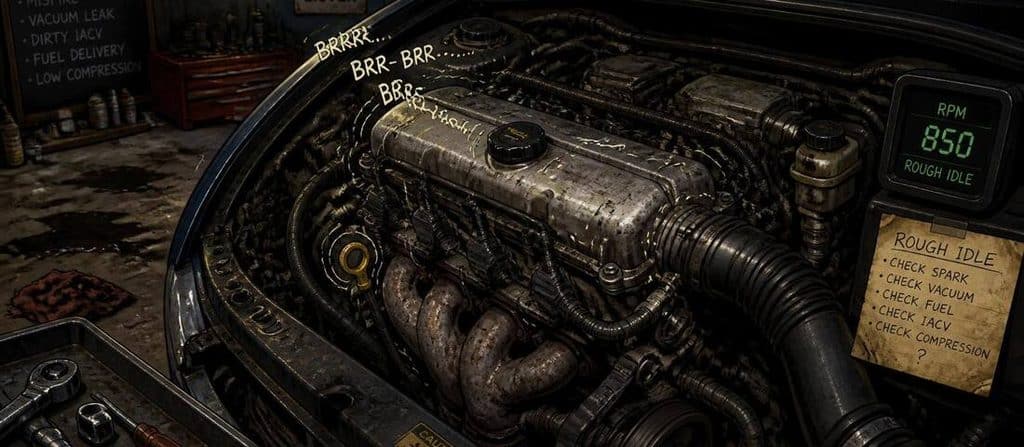
A rough idle can feel like the engine is shaking, stumbling, surging, or fighting to stay running. Sometimes the cause is minor. Sometimes it points to a misfire or another problem that should not be ignored.
The tricky part is that rough idle is a symptom, not a diagnosis.
A vacuum leak, ignition problem, fuel-delivery issue, mechanical problem, or even an engine mount can create a similar sensation. A vehicle-specific service bulletin can even identify valve deposits or sticking valves as a cause of rough idle and misfire on certain engines.
The important question isn’t simply, “What part is bad?”
It’s:
What is the engine doing, and what evidence separates one possible cause from another?
Contents
- 1 What Are the Symptoms of a Rough Idle?
- 2 The Engine Shakes at Idle
- 3 The RPM Goes Up and Down at Idle
- 4 The Engine Runs Rough Only When Cold
- 5 The Engine Idles Rough When Warm
- 6 Rough Idle With a Check Engine Light
- 7 Rough Idle With a Flashing Check Engine Light
- 8 Rough Idle With No Check Engine Light
- 9 Rough Idle vs. Engine Vibration
- 10 Common Causes of an Engine Rough Idle
- 11 How to Diagnose a Rough Idle
- 12 Can You Drive With a Rough Idle?
- 13 When Should You See a Mechanic?
- 14 Engine Rough Idle Symptoms: Quick Diagnostic Guide
- 15 Why Replacing Spark Plugs May Not Fix a Rough Idle
- 16 The Bottom Line
What Are the Symptoms of a Rough Idle?
Common engine rough idle symptoms include:
- Noticeable shaking or vibration while stopped
- RPM that rises and falls
- Engine stumbling or surging
- Uneven exhaust sound
- Feeling like the engine may stall
- A Check Engine Light
- Rough running that is worse when the engine is cold
- Roughness that changes when you shift into Drive or turn on accessories
- Poor acceleration along with the rough idle
- An occasional misfire or popping sound
Some vibration is normal. An engine is a machine with moving parts, after all. The concern is new, excessive, uneven, or worsening vibration, especially when other symptoms appear with it.
The Engine Shakes at Idle
A shaking engine is one of the most noticeable rough idle symptoms.
But don’t immediately blame the spark plugs.
A misfire can cause the engine to produce uneven power, which you may feel as a shake or stumble. A vacuum leak can also create a rough idle because unmetered air can upset the intended air-fuel mixture.
There’s another possibility that’s easy to overlook: engine mounts.
If the engine is running relatively normally but excessive vibration is being transferred into the cabin, a mount problem can make the vehicle feel like it has a rough idle. GM service information, for example, includes powertrain mount evaluation when certain rough-idle complaints aren’t explained by engine operation.
The useful question
Ask:
Is the engine actually running unevenly, or is the engine running normally but transmitting too much vibration?
That distinction can prevent an unnecessary parts swap.
The RPM Goes Up and Down at Idle
If the tachometer repeatedly rises and falls while you’re stopped, the engine isn’t maintaining a steady idle.
Possible causes include problems involving:
- Intake air
- Vacuum leaks
- Throttle control
- Fuel delivery
- Ignition
- Engine control systems
- Mechanical engine operation
A vacuum leak is one possibility because air entering the engine downstream of the normal intake measurement can upset the air-fuel mixture. It can contribute to rough idle, hesitation, misfire, and poor fuel economy.
But fluctuating RPM alone doesn’t tell you which component has failed.
That’s why replacing parts based only on this symptom is a gamble.
The Engine Runs Rough Only When Cold
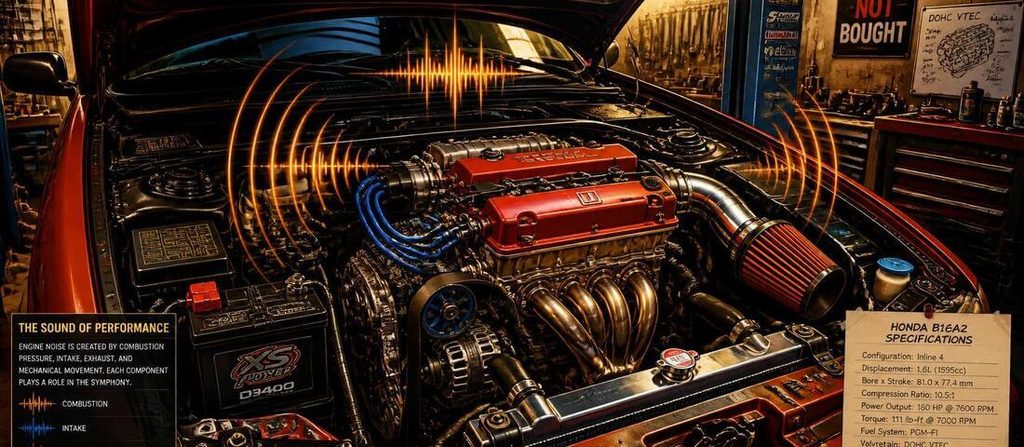
A rough idle that appears during a cold start but improves as the engine warms up is a different clue from an engine that runs poorly all the time.
Cold-start operation can involve different fueling and control strategies than a fully warmed engine. A vehicle-specific problem can therefore show up primarily during warm-up.
The key questions are:
- How long does the roughness last?
- Does it disappear completely when warm?
- Does the Check Engine Light come on?
- Is the RPM actually changing?
- Does the engine misfire?
- Does the problem happen every cold start?
Don’t assume that “only happens when cold” automatically means a bad sensor.
The pattern needs to be combined with the rest of the evidence.
The Engine Idles Rough When Warm
If the engine becomes rough after reaching operating temperature, that gives you another useful clue.
Depending on the vehicle, possible causes can include:
- Vacuum or intake leaks
- Ignition problems
- Fuel-delivery problems
- Injector problems
- Throttle or air-control issues
- Mechanical problems
- Engine mounts
The exact possibilities vary by engine.
That’s why the year, engine, and configuration matter before making a vehicle-specific diagnosis.
Rough Idle With a Check Engine Light
This combination deserves more attention.
A misfire can cause a rough idle or stumble during acceleration, often accompanied by a Check Engine Light.
Diagnostic trouble codes can provide useful direction.
For example, a cylinder-specific misfire code can tell you that the engine computer has detected a misfire associated with a particular cylinder.
But remember:
A misfire code does not automatically identify the failed part.
A misfire can have several causes.
The fault could involve ignition, fuel, air, compression, valve operation, or another engine-control issue.
So don’t translate:
P0301 → bad spark plug
without testing.
The code is a clue.
It isn’t the verdict.
Rough Idle With a Flashing Check Engine Light
A flashing Check Engine Light is more concerning than an ordinary steady warning light.
A significant misfire can allow unburned fuel to enter the exhaust. Continued misfire can damage the catalytic converter and may also affect drivability and acceleration.
If the engine is shaking badly and the Check Engine Light is flashing, don’t treat it like a minor annoyance.
Reduce driving and have the vehicle diagnosed promptly.
If the vehicle is losing substantial power, stalling, overheating, or behaving dangerously, stop driving and arrange appropriate assistance.
Rough Idle With No Check Engine Light
No warning light does not automatically mean everything is fine.
A driver can feel abnormal vibration without a stored engine fault code.
The cause might involve something other than a detectable combustion fault, or the fault may not have met the conditions needed to trigger a warning.
This is another reason to avoid the shortcut:
“No Check Engine Light = no engine problem.”
That’s too simple.
Rough Idle vs. Engine Vibration
This is one of the most useful distinctions to make.
Imagine sitting in a chair while someone shakes the floor.
You feel the movement, but that doesn’t tell you what caused it.
Your car can be similar.
If the engine itself is running unevenly
You may notice:
- RPM fluctuations
- Stumbling
- Uneven exhaust pulses
- Misfire symptoms
- Changes in acceleration
If the engine runs normally but vibration reaches the cabin
You may notice:
- Strong vibration while stopped
- Relatively stable RPM
- Little change in engine sound
- Vibration that changes when shifting between Park, Neutral, Drive, or Reverse
Engine mounts are one possible explanation for the second pattern. Manufacturer service information specifically shows that mount condition can be part of a rough-idle diagnosis.
This distinction matters because replacing ignition or fuel components won’t fix a vibration problem caused by a mount.
Common Causes of an Engine Rough Idle
Ignition problems
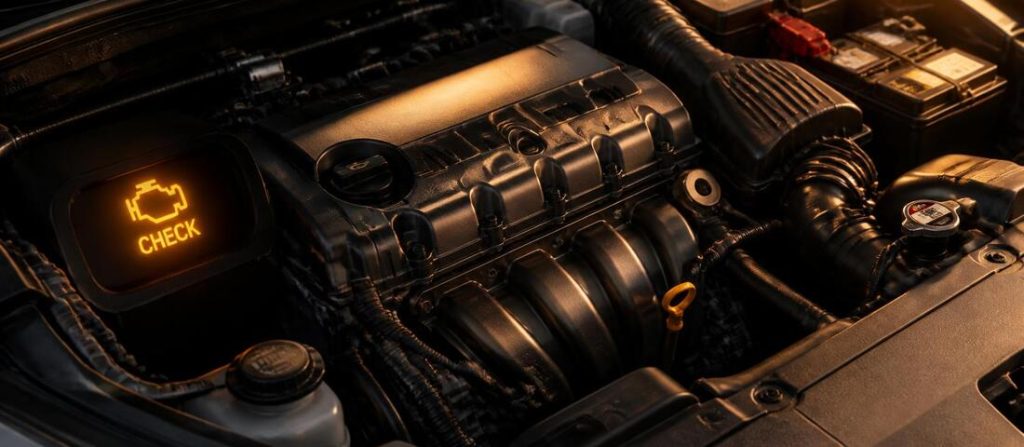
Problems with components such as spark plugs, ignition coils, or related ignition components can cause misfire and rough running.
But don’t assume the ignition system is automatically responsible.
Testing should point you there.
Vacuum or intake leaks
A leak can allow air into the engine that isn’t accounted for by the normal air-measurement strategy.
That can disturb the air-fuel mixture and contribute to rough idle, hesitation, or misfire.
Fuel-delivery problems
Problems involving fuel pressure, injectors, or fuel quality can affect combustion.
The symptoms can overlap with ignition and air-related problems, which is why testing matters.
Engine mounts
A worn or improperly functioning mount can allow more engine vibration to reach the vehicle.
The engine may not actually be misfiring.
Mechanical engine problems
Compression problems, valve issues, or other mechanical faults can cause rough running.
These are particularly important when basic ignition, air, and fuel checks don’t explain the symptom.
Carbon buildup or sticking valves
This is a good example of why generic diagnosis can fail.
A 2024 GM service bulletin covering certain gasoline-powered Buick, Cadillac, Chevrolet, and GMC vehicles describes rough idle and misfire associated with excessive carbon buildup on valves or sticking valves.
That does not mean carbon buildup is the cause of every rough idle.
It means vehicle-specific information can materially change the diagnosis.
How to Diagnose a Rough Idle
The goal is not to guess the bad part.
Use this sequence:
Symptom → evidence → test → interpretation → next action
Step 1: Notice the pattern
Determine:
- Cold or warm?
- Constant or intermittent?
- Park/Neutral or also in Drive?
- RPM stable or fluctuating?
- Worse with accessories?
- Worse under acceleration?
- Any unusual noise?
- Any warning lights?
These details narrow the possibilities.
Step 2: Check for warning lights
If the Check Engine Light is on, retrieve the diagnostic trouble codes.
Don’t stop there.
A code is evidence about what the vehicle detected. It isn’t necessarily proof of component failure.
Step 3: Look for additional symptoms
A rough idle combined with:
- Poor acceleration
- Hard starting
- Fuel odor
- Stalling
- Abnormal exhaust
- Overheating
- Unusual mechanical noise
tells you much more than rough idle by itself.
Step 4: Separate engine roughness from vibration
If RPM and engine operation appear normal but the cabin shakes, don’t automatically diagnose a combustion problem.
Consider whether the vibration is being transmitted through the powertrain mounts.
Step 5: Test before replacing parts
This is where many DIY diagnoses go sideways.
Don’t replace six components because six components can cause rough idle.
Find evidence that points toward one system or another.

Can You Drive With a Rough Idle?
Sometimes, but the symptoms determine the risk.
A mild vibration with no warning lights and no loss of power is different from a severe misfire with a flashing Check Engine Light.
Avoid treating all rough idle complaints the same.
Stop or minimize driving when you have:
- A flashing Check Engine Light
- Severe engine shaking
- Major loss of power
- Repeated stalling
- Overheating
- Strong fuel odor
- Loud or unusual mechanical noise
- Other signs of a serious engine fault
A flashing warning light combined with a misfire deserves particular attention because continued misfire can damage the catalytic converter.
When Should You See a Mechanic?
Get professional diagnosis when:
- The rough idle is getting worse.
- The vehicle repeatedly stalls.
- The Check Engine Light is flashing.
- You have significant power loss.
- You can’t determine whether the problem is mechanical, ignition, fuel, or air-related.
- Basic checks don’t explain the problem.
- The vehicle has a known model-specific issue that requires manufacturer procedures.
For modern engines, guessing can get expensive quickly.
A proper diagnosis may cost less than replacing several parts that weren’t actually bad.
Engine Rough Idle Symptoms: Quick Diagnostic Guide
| What you notice | Possible direction | What to investigate |
|---|---|---|
| Shaking + fluctuating RPM | Engine running unevenly | Misfire, air/fuel, control issue |
| Shaking + stable RPM | Vibration issue possible | Engine mounts and powertrain |
| Rough only when cold | Cold-start-related issue | Warm-up pattern, codes, vehicle-specific information |
| Rough all the time | Broader fault possible | Ignition, air, fuel, mechanical |
| Rough idle + flashing CEL | Active misfire possible | Diagnose promptly |
| Rough idle + poor acceleration | Combustion or mechanical problem possible | Codes and further testing |
| Rough idle + no CEL | Fault still possible | Separate engine operation from vibration |
| Rough idle + fuel smell | Fuel/combustion issue possible | Avoid guessing; diagnose promptly |
| Rough idle + overheating | Potentially serious | Stop driving and address overheating |
This table is a starting point, not a diagnostic decision by itself.

Why Replacing Spark Plugs May Not Fix a Rough Idle
Spark plugs are an easy suspect.
They’re also an easy way to waste money if they’re blamed without evidence.
A vacuum leak can cause rough idle and misfire-like symptoms. Mechanical problems can do the same. Engine mounts can create a vibration that feels like rough running even when the engine itself isn’t misfiring.
So the better question isn’t:
“What part should I replace?”
It’s:
“What test would make one cause more likely than the others?”
That’s the mindset that turns parts swapping into diagnosis.
The Bottom Line
Engine rough idle symptoms can include shaking, fluctuating RPM, stumbling, misfire, unusual exhaust sounds, and possible Check Engine Light activity.
But rough idle is a symptom, not a diagnosis.
The cause can range from an ignition or air/fuel problem to a mechanical fault or engine-mount issue. Vehicle-specific service information can also reveal less obvious causes.
If the Check Engine Light is flashing, the engine is shaking badly, power is dropping, or the vehicle is overheating, don’t keep driving and hope it sorts itself out.
Use the symptoms to narrow the problem, then test before replacing parts.