
This article was updated in March 27, 2026 with new products and information by Mark S. Taylor
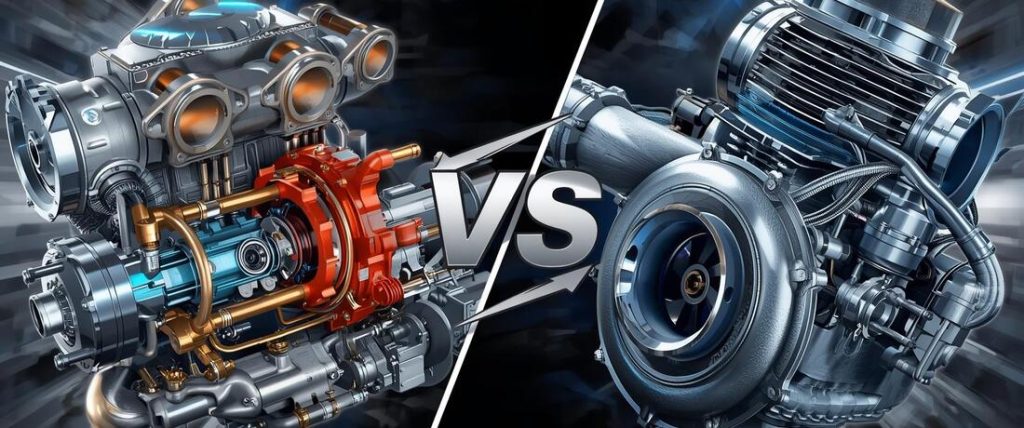
You have heard the terms a hundred times — turbo and supercharger — but what actually separates them? Both force more air into your engine to make more power. But how they do it, how they feel, and what they cost are very different. Whether you are buying a new car, upgrading a project build, or just curious what that hood scoop actually does, this guide breaks it all down in plain English. We will settle the supercharger vs turbocharger debate with a clear verdict at the end.
Contents
- 1 What Is Forced Induction? (The Shared Foundation)
- 2 How a Turbocharger Works
- 3 How a Supercharger Works
- 4 Supercharger vs Turbocharger — Side-by-Side Comparison
- 5 Turbo Lag — What It Is and Does It Still Matter?
- 6 Fuel Economy — Turbo or Supercharger?
- 7 Reliability and Maintenance
- 8 Cost Comparison — Turbocharger vs Supercharger
- 9 What Is a Twincharger? (Best of Both Worlds)
- 10 Real-World Vehicle Examples
- 11 Which Is Better for Your Driving Style?
- 12 FAQs About Supercharger vs Turbocharger
- 13 Bottom Line — Turbocharger or Supercharger?
Both systems compress air and push it into the engine to create more power. This is the shared goal of turbos and superchargers.
Normal engines use natural air pressure to breathe. This is called naturally aspirated. Forced induction is different. It acts like a powerful fan. It shoves more air into the engine. More air means more oxygen. More oxygen means you can burn more fuel. Burning more fuel creates bigger explosions. This turns the crankshaft with more force.
A typical system adds 6 to 8 pounds of boost. This usually gives a 30% to 40% jump in power. The engine does not have to be larger. It just works harder and more efficiently.
How a Turbocharger Works
The Basic Mechanism
A turbocharger uses exhaust gas that would otherwise be wasted to spin a turbine. It is a clever way to recycle energy.
Exhaust gas leaves the engine. It hits a turbine wheel. This wheel spins very fast. A shaft connects this wheel to another wheel on the intake side. This second wheel is the compressor. It pulls in fresh air and shoves it into the engine. This creates boost. Turbos work best when the engine is spinning fast, usually at medium to high RPM.
Key Turbocharger Components
Turbos have a few key parts that manage pressure and heat. Understanding these helps you see why they are complex.
- Turbine and Compressor: The two fans connected by a shaft.
- Wastegate: A valve that opens to let exhaust bypass the turbine. This controls boost pressure so the engine does not blow up.
- Blow-off Valve: When you let off the gas, this valve releases pressure. It makes that sharp “pshhh” sound.
- Intercooler: Compressing air makes it hot. Hot air is bad for power. The intercooler cools the air before it enters the engine.
Types of Turbocharger Setups
Engineers use different turbo setups to fix lag or add massive power. The layout changes how the car feels.
- Single Turbo: The most common type. Simple and reliable.
- Twin-Turbo: Two turbos work together. Often used on V6 or V8 engines. One turbo for each bank of cylinders.
- Sequential Turbo: A small turbo works at low speeds. A big turbo kicks in at high speeds. This gives power everywhere.
- Variable Geometry (VGT): Fins inside the turbo move to adjust airflow. This helps the turbo spool up faster.
How a Supercharger Works
The Basic Mechanism
A supercharger is bolted to the engine and spins with a belt. It gives power instantly because it is connected to the engine.
The engine crankshaft spins a belt. The belt spins the supercharger. The supercharger sucks in air and pushes it into the engine. Since it runs off the engine, it creates boost right away. There is no waiting. However, it takes power to make power. The engine works harder to turn the supercharger. This is called parasitic loss.
Types of Superchargers
There are three main types of superchargers, and they work very differently. The type affects how the car drives.
Roots Supercharger
This is the classic “blower.” It sits on top of the engine. You have seen this on muscle cars with the scoop poking out of the hood. It pushes air into the engine in big gulps. It makes huge torque at low RPM. It looks cool and sounds mean.
Twin-Screw Supercharger
This looks like the Roots type but works better. It uses two screws that mesh together. It compresses the air inside the case. This makes the air cooler and denser. It is more efficient but costs more money. You find these on high-end performance cars.
Centrifugal Supercharger
This looks like a turbo. It spins very fast. It builds boost as the engine RPM rises. It is small and light. It fits easily in tight engine bays. It feels like a big turbo rather than a Roots blower.
Supercharger vs Turbocharger — Side-by-Side Comparison
Here is a quick look at how these two systems stack up against each other. This table covers the main differences.
| Feature | Turbocharger | Supercharger |
|---|---|---|
| Power Source | Exhaust gas | Engine belt |
| Response | Delayed (Lag) | Instant |
| Fuel Economy | Better when not in boost | Lower (parasitic loss) |
| Complexity | High (oil lines, intercooler) | Medium (belt drive) |
| Reliability | Good, but heat sensitive | Very robust |
| Sound | Spool/whistle + blow-off valve | Whine from the gears |
| Best For | Daily driving, fuel economy | Drag racing, instant power |
Turbo Lag — What It Is and Does It Still Matter?
Turbo lag is the delay between stepping on the gas and feeling the power kick in. It used to be a big problem.
In older cars, you would step on the gas and wait. One second. Two seconds. Then the turbo would wake up. It felt like a delay. This happened because the exhaust took time to spin the heavy turbine.
Today, things are different. Modern turbos are lighter. They use variable geometry. They use twin-scroll designs. Lag is almost gone in new cars. You might feel a tiny hesitation. But for most drivers, it is not an issue anymore. If your car hesitates badly, there might be other issues. You can check our guide on why your car jumps when accelerating to see if it is a turbo issue or something else.
Fuel Economy — Turbo or Supercharger?
Turbochargers are better for fuel economy because they use waste energy. Superchargers take power from the engine.
A turbo runs on exhaust gas. The engine creates this gas anyway. The turbo does not put a load on the engine until it makes boost. A supercharger runs off a belt. It drags on the engine all the time. This hurts your gas mileage.
Look at the Ford F-150. The 3.5L EcoBoost V6 makes 400 horsepower. It gets better gas mileage than the 5.0L V8. The V6 turbo acts like a small engine when cruising. It acts like a big engine when you floor it. Superchargers are for pure performance. They do not care about MPG.
Reliability and Maintenance
Turbocharger Reliability
Turbos run very hot and spin very fast, which creates wear. They need clean oil to survive.
Heat is the enemy. The turbo glows red hot after a hard drive. If you shut the engine off right away, the oil bakes inside the turbo. This ruins the bearings. You should let the car idle for a minute after hard driving. This lets the turbo cool down. If a turbo fails, it is expensive to fix.
Supercharger Reliability
Superchargers are simpler and generally last longer. They run cooler than turbos.
Since they run off a belt, they are easy to see and check. The main issue is belt wear. You might need a new belt or tensioner pulley. The oil inside the supercharger needs changing sometimes. But they rarely suffer catastrophic failure like a turbo can.
Cost Comparison — Turbocharger vs Supercharger
Turbos are usually cheaper to buy, but harder to install. Superchargers are easier to install but cost more for parts.
| Cost Factor | Turbocharger | Supercharger |
|---|---|---|
| Aftermarket Kit | $1,500 – $5,000 | $2,500 – $8,000 |
| Installation Labor | $500 – $2,000 | $500 – $1,500 |
| Repair (Part) | $1,000 – $3,500 | $800 – $3,000 |
| DIY Difficulty | Hard | Medium |
Factory cars with turbos are very common. They are cheap to buy. Adding one later is complex. You need to weld pipes and run oil lines. Superchargers often come as a kit. You bolt it on and go. It takes less time to install.
What Is a Twincharger? (Best of Both Worlds)
A twincharger uses both a supercharger and a turbo on one engine. This gives you the best of both worlds.
The supercharger gives you power at low RPM. It fills the gap while the turbo wakes up. Then the turbo takes over at high RPM. It is very complex. Volkswagen used this on the 1.4L TSI engine. It is rare because it is expensive to build and fix.

Real-World Vehicle Examples
Best Turbocharged Cars and Trucks
- Ford F-150 3.5L EcoBoost: A twin-turbo V6 that tows like a diesel.
- Porsche 911 Turbo S: A benchmark for speed and technology.
- Honda Civic Type R: A 4-cylinder that feels like a race car.
- BMW M3/M4: Twin-turbo inline-6 power.
Best Supercharged Cars
- Dodge Hellcat: 6.2L V8 with 717 HP. Pure American muscle.
- Ford Mustang Shelby GT500: 760 HP. The most powerful Mustang ever.
- Cadillac CT5-V Blackwing: Luxury and massive power.
Which Is Better for Your Driving Style?
Your choice depends on where and how you drive your car. Use this guide to decide.
- Daily Driver: Pick a Turbo. It saves gas and has enough power.
- Drag Racer: Pick a Supercharger. You need that instant launch.
- Towing: Pick a Turbo. The torque curve is perfect for heavy loads.
- Muscle Car Fan: Pick a Supercharger. You want the look and the whine.
- Track Day: Pick a Twin-Turbo. You need high-RPM power for corners.
If your car feels unstable or bouncy at high speeds, it might not be the engine. Check our article on signs of car suspension issues to rule out other problems.
FAQs About Supercharger vs Turbocharger
Is a supercharger faster than a turbocharger?
A supercharger feels faster at low speeds because there is no lag. A turbo usually makes more peak power at high speeds. For a drag race, a supercharger gets the jump. For a highway roll race, the turbo often wins.
Do superchargers use more fuel than turbos?
Yes. Superchargers create drag on the engine all the time. This burns more gas. Turbos only use extra fuel when you are in boost.
Can you put both a turbocharger and supercharger on the same engine?
Yes. This is called a twincharger. It is complex and rare. It uses the supercharger for low RPM and the turbo for high RPM.
Which is more reliable — a turbocharger or a supercharger?
Superchargers are often more reliable. They run cooler and have fewer parts. Turbos run very hot and need perfect oil supply.
How much horsepower does a turbo or supercharger add?
Most kits add 30% to 40% more power. A 200 HP engine becomes a 280 HP engine. Larger kits can double the power.
Bottom Line — Turbocharger or Supercharger?
For most drivers, the turbocharger is the smarter choice today. It is efficient and powerful.
Modern turbos have fixed the lag problem. They work well on trucks and sedans. They let small engines act like big ones. But if you want the classic muscle car feel, get a supercharger. The instant torque and the whine are addictive. Neither is “better” in every way. They are tools for different jobs. Pick the one that fits your life.
Quick Summary:
- Turbos use exhaust gas; superchargers use engine belts.
- Turbos are efficient; superchargers have instant power.
- Turbo lag is mostly gone in new cars.
- Superchargers are easier to install but use more gas.
- Turbos need cool-down time; superchargers are robust.
- Choose a turbo for daily driving or towing.
- Choose a supercharger for racing or muscle cars.