
This article was updated in June 29, 2026 with new products and information by Mark S. Taylor
Most drivers hear “ABS hydraulic unit” for the first time when a mechanic hands them an estimate with a four-digit number on it. By that point, the question isn’t academic — it’s financial. You’re trying to figure out what this thing is, whether it’s actually broken, and whether the number on that estimate is real.
Contents
- 1 What Is the ABS Hydraulic Unit?
- 2 Where Is It Located and What Does It Look Like?
- 3 How the ABS Hydraulic Unit Works — The Valve Architecture Nobody Explains
- 4 What Happens at the Wheel During an ABS Event — Step by Step
- 5 What Goes Wrong Inside the ABS Hydraulic Unit
- 6 ABS Warning Light On — What the Codes Actually Mean
- 7 How a Shop Diagnoses ABS Hydraulic Unit Failure — The Right Way
- 7.1 Step 1 — Pull and Document All DTCs (15 minutes)
- 7.2 Step 2 — Wheel Speed Sensor Live Data Comparison (10–15 minutes)
- 7.3 Step 3 — Motor Relay Test (5 minutes)
- 7.4 Step 4 — Pump Motor Current Draw Test (10 minutes)
- 7.5 Step 5 — Bi-Directional Solenoid Valve Actuation Test (10–15 minutes)
- 7.6 Step 6 — Harness Back-Probe and Ground Verification (10 minutes)
- 8 ABS Hydraulic Unit Replacement Cost — What the Bill Should Actually Look Like
- 9 Scenario 1 — Relay or Sensor Was the Actual Problem (Not the HCU)
- 10 Scenario 2 — HCU Replacement with Remanufactured Unit
- 11 Scenario 3 — HCU Replacement with OEM Unit
- 12 Scenario 4 — EBCM Replacement Only (Separate Module, Non-Integrated Systems)
- 13 OEM vs. Remanufactured ABS Hydraulic Unit — Which One to Buy
- 14 How To Prevent ABS Hydraulic Unit Failure
- 15 FAQs — What Is an ABS Hydraulic Unit
- 16 The Expert Verdict
What Is the ABS Hydraulic Unit?
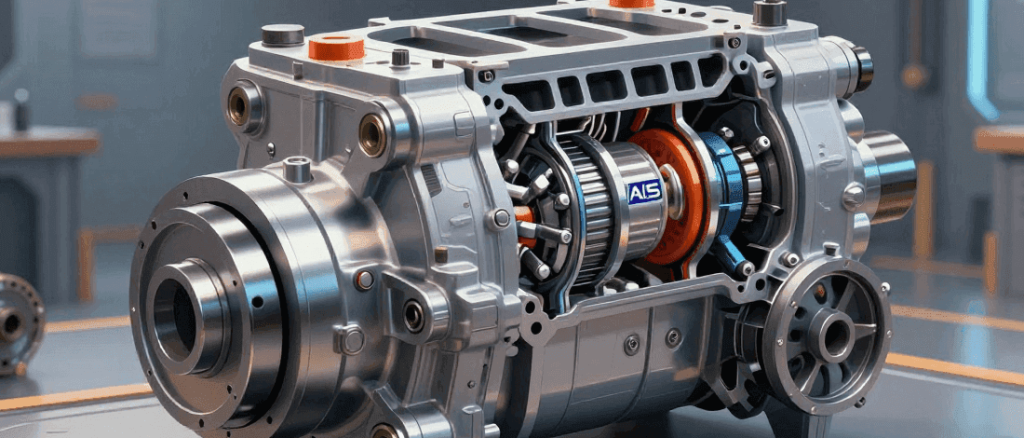
The ABS hydraulic unit — also called the HCU (hydraulic control unit), ABS modulator, or on systems with an integrated controller, the HECU (hydraulic and electronic control unit) — is the electro-hydraulic valve body that sits between your master cylinder and your four wheel brakes. Every drop of brake fluid in your system passes through it on the way from your foot to your rotors.
Its job is precise. During a normal stop, it does nothing — brake fluid flows through it freely, the master cylinder applies pressure, and the calipers clamp. The moment a wheel starts to lock up during a hard stop, the HCU takes over. It modulates brake pressure at each individual wheel — releasing, holding, and reapplying pressure in a rapid cycle — faster than any human foot could manage — to keep the tire rotating at the edge of grip rather than skidding across the pavement.
Under FMVSS No. 135, ABS is a required safety system on all new passenger vehicles sold in the US since 2013. The hydraulic unit is the hardware that makes that mandate physically possible.
Where Is It Located and What Does It Look Like?
The HCU mounts in the engine bay, typically on a bracket near the firewall or inner fender, within 12 to 18 inches of the master cylinder. It looks like a dense aluminum block — roughly the size of a large hardback book — with a cluster of steel brake lines threading into the top and sides. A wiring harness connector plugs into one end, feeding the solenoid coils and motor.
On integrated HECU units — which include the electronic control module bolted directly to the hydraulic block — there’s a second, larger connector carrying the communication lines to the vehicle’s main CAN bus and the wheel speed sensor inputs. That integrated design means the module and the valve body fail together and get replaced together, which is part of why the repair cost is what it is.
The lines going into the top or rear port face are the master cylinder inlets. The lines threading out to the corners are the four wheel circuits. Every brake line in the vehicle passes through this block. That physical position — in series with the entire hydraulic system — is why HCU failure affects braking at all four corners simultaneously rather than pulling to one side the way a single failed caliper would.
How the ABS Hydraulic Unit Works — The Valve Architecture Nobody Explains
This is the part most articles skip. Understanding what’s actually inside the HCU explains every failure mode, every diagnostic code, and every line item on a repair estimate.
Inside the block, for each of the four wheel circuits, there are two solenoid valves:
The inlet solenoid valve is normally open. In its resting state, with no electrical signal applied, it allows brake fluid to flow from the master cylinder to the wheel caliper. During an ABS event, the EBCM energizes this valve — it closes, sealing the caliper off from the master cylinder and holding the current pressure at that wheel.
The outlet solenoid valve is normally closed. At rest, it blocks flow out of the wheel circuit. During an ABS pressure-release phase, the EBCM energizes this valve — it opens, dumping pressure from the caliper into a low-pressure accumulator chamber inside the HCU block.
That combination — close the inlet, open the outlet — drops brake pressure at one wheel in milliseconds. The tire regains rotation. Then the EBCM closes the outlet solenoid and opens the inlet solenoid, reapplying pressure. The cycle runs 8 to 15 times per second per wheel, independently at each corner, according to SAE J2538 performance specifications.
The accumulator is a small chamber with a rubber diaphragm and a nitrogen pre-charge behind it. It’s the temporary pressure dump — the place released fluid goes when the outlet solenoid opens. Without it, the released fluid would back-pressure the master cylinder and push your pedal upward during an ABS event.
The return pump is a small electric motor inside the HCU block driving a piston pump. Its job is to pull fluid out of the accumulator and push it back into the brake lines between ABS cycles — restoring pressure so the system can reapply braking force. When you feel that characteristic rapid pulsing in the brake pedal during an ABS stop, that’s the pump running and the solenoid valves cycling.
What Happens at the Wheel During an ABS Event — Step by Step
When a truck rolls into my bay with a complaint that the ABS activates on dry pavement at 15 mph, the first thing I do is pull live wheel speed data on all four channels simultaneously. Nine times out of ten, one channel drops to zero or erratically flatlines during normal driving. That’s not a hydraulic problem. That’s a wheel speed sensor telling the EBCM that a wheel has locked, and the EBCM believing it.
Here’s the sequence that executes inside the HCU during an ABS event — real or phantom:
Step 1 — Wheel Speed Dropout Detected:
The EBCM monitors all four wheel speed sensors continuously. When one wheel decelerates faster than the others by more than a calibrated threshold — typically a 20% velocity differential — the EBCM interprets it as impending lockup and issues a modulation command to that wheel’s valve pair within 10–15 milliseconds.
Step 2 — Pressure Hold:
The inlet solenoid for that wheel closes. Brake pressure at the caliper is isolated and held at its current level. The master cylinder continues generating pressure, but it can’t push more fluid into that circuit.
Step 3 — Pressure Release:
The outlet solenoid opens. Fluid from the caliper dumps into the accumulator, dropping caliper clamping force. The wheel accelerates — traction is recovering.
Step 4 — Pressure Reapply:
The EBCM closes the outlet solenoid and opens the inlet solenoid. Master cylinder pressure floods back in, increasing caliper force. If the wheel begins decelerating too fast again, the cycle immediately repeats.
Step 5 — Return Pump Activation:
While the solenoid valve cycle is running, the EBCM commands the pump motor relay on. The pump draws fluid from the accumulator and re-pressurizes the supply circuit, ensuring the inlet solenoid always has adequate pressure available for the next reapply phase. The pump running is what you feel as pedal pulsation.
A faulty wheel speed sensor sends a false dropout signal at Step 1. The entire sequence executes correctly — valves work, pump runs, pedal pulses — on a wheel that was never actually locking. The HCU isn’t broken. Replacing it fixes nothing. A $65 wheel speed sensor fixes everything. This is the most expensive misdiagnosis in the ABS system.
What Goes Wrong Inside the ABS Hydraulic Unit
Four distinct failure modes. Each produces different symptoms and requires different repairs.
Failure Mode 1 — Pump Motor Bearing Seizure or Brush Wear
The return pump motor runs every time ABS activates. On high-mileage vehicles, the motor brushes wear or the armature bearings corrode. The motor either stalls under load or draws excessive current and trips the pump relay. During a real emergency stop, the outlet solenoids release pressure into the accumulator correctly — but the pump can’t push it back into the lines. Pedal pressure collapses mid-stop. The driver feels the pedal drop toward the floor exactly when maximum braking force is needed.
Pump motor current draw at activation should fall between 20 and 40 amps. A reading above 50 amps indicates the motor is straining against seized bearings or a stuck pump piston. Code C0110 fires. Test the relay first — 5 minutes, $20 part. If the relay tests good and the motor still stalls under load, the HCU comes out.
Failure Mode 2 — Solenoid Valve Spool Sticking
The inlet and outlet solenoid valves inside the HCU have precision-machined spools that travel less than 0.060 inches between open and closed positions. Corrosion from moisture-saturated brake fluid, rubber debris from contaminated fluid, or varnish deposits from fluid that hasn’t been changed in years can cause the spool to hang in the open or closed position.
A stuck-open outlet solenoid dumps brake pressure at that wheel even during normal stops — the driver feels the wheel pulling or dragging, sometimes with an unexpected ABS activation at low speed. A stuck-closed outlet solenoid prevents pressure release during an ABS event — the wheel locks fully instead of modulating. Code C0121 (inlet) or related outlet performance codes flag. The bi-directional solenoid actuation test via scan tool confirms which valve is mechanically stuck.
Failure Mode 3 — Accumulator Diaphragm Collapse
The nitrogen pre-charge behind the accumulator diaphragm typically holds 90 to 130 PSI. When the diaphragm rubber fatigues or the nitrogen charge bleeds down over years of service, the accumulator loses its buffering capacity. During an ABS event, released fluid has nowhere to go except back against the master cylinder piston — which the driver feels as a violent, lurching pedal pulse rather than the smooth, controlled ABS pulsation of a healthy system.
No specific DTC fires for this failure. The ABS system functions but delivers a harsh, uncontrolled pedal feel during emergency stops. Most drivers — and some technicians — mistake this for a brake booster problem. Accumulator failure is confirmed by pressure-testing the HCU accumulator port with a gauge after isolating the master cylinder circuit.
Failure Mode 4 — EBCM Circuit Board Failure (Integrated HECU Units)
On vehicles where the electronic control module is bolted directly to the hydraulic block as a combined HECU, circuit board failures inside the module disable the entire system. Causes include voltage spikes from jump-starting, moisture ingress through a degraded connector seal, and capacitor failure on high-mileage units. The ABS warning light illuminates and stores no active codes — because the module that would store the codes is the component that failed. Communication DTCs like U0121 (lost communication with ABS module) appear in other modules on the network. The HECU must be replaced as an assembly.
ABS Warning Light On — What the Codes Actually Mean
| DTC | Description | Most Likely Cause | Replace HCU? |
|---|---|---|---|
| C0035–C0050 | Wheel speed sensor circuit fault (by corner) | Wheel speed sensor or ring gear | No — test sensor first |
| C0110 | ABS pump motor circuit malfunction | Pump motor relay or motor | Test relay first ($20 fix possible) |
| C0121 | Inlet solenoid valve performance | Stuck solenoid spool or wiring fault | Confirm with bi-directional test |
| C0161 | Brake switch circuit | Brake light switch | No — $15–$35 switch |
| C0265 | EBCM motor relay circuit | Motor relay in fuse box | Test relay first — $15–$25 part |
| C0269 | HCU pressure/flow performance | Solenoid fault or internal leak | Bi-directional test required |
| U0121 | Lost communication with ABS module | HECU internal circuit board failure | Yes — module is dead |
C0265 is the code that costs people the most money unnecessarily. It points to the EBCM motor relay circuit — which includes both the relay in the fuse box and the motor feed circuit inside the HCU. The relay fails far more often than the motor. Pull the relay, bench-test it with a 12V source, and swap it if it doesn’t click. That’s a $15 to $25 part and a 5-minute job. Any shop that sees C0265 and immediately quotes an HCU without testing the relay is skipping a diagnostic step that protects your wallet.
How a Shop Diagnoses ABS Hydraulic Unit Failure — The Right Way
When a vehicle comes in with an ABS light and a C0265 or C0269 stored, here’s the diagnostic sequence a competent technician runs before anyone touches the HCU:
Step 1 — Pull and Document All DTCs (15 minutes)
Every module on the network gets scanned — not just the ABS module. Body control module, instrument cluster, and powertrain control module all receive ABS system data via the CAN bus. A U0121 in a secondary module with no codes in the ABS module itself points to a dead EBCM, not a solenoid or pump problem.
Step 2 — Wheel Speed Sensor Live Data Comparison (10–15 minutes)
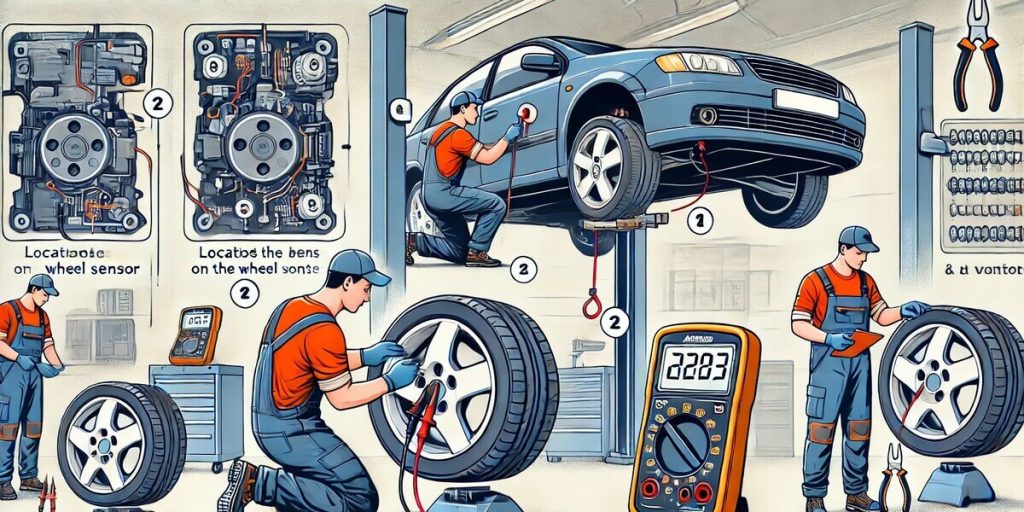
Road test the vehicle with a scan tool running all four wheel speed PIDs simultaneously. All four channels must track within 2–3 MPH of each other at all speeds. Any channel that reads zero, drops erratically, or lags the others by more than 5 MPH during steady driving is a faulty sensor, not a bad HCU. Replacing the sensor resolves the phantom ABS activation without touching the modulator.
Step 3 — Motor Relay Test (5 minutes)
Pull the ABS pump motor relay from the underhood fuse box. Bench-test it with a 12V source and a test light. The relay should click and pass current. A relay that doesn’t click or passes no current is the cheapest ABS fix on the board. Replace it. Clear the codes. Road test. If C0265 returns with a confirmed-good relay, now the motor circuit inside the HCU is suspect.
Step 4 — Pump Motor Current Draw Test (10 minutes)
Connect an amp clamp around the motor feed wire at the HCU connector. Command the pump motor on via bi-directional control on the scan tool. Normal draw: 20 to 40 amps. A reading above 50 amps with the motor struggling to spin indicates a seized pump. Zero amps with a confirmed-good relay and an intact harness means an open motor winding — the motor is dead.
Step 5 — Bi-Directional Solenoid Valve Actuation Test (10–15 minutes)
With the scan tool in bi-directional mode, command each inlet and outlet solenoid individually. A technician placing their hand on the HCU block should feel a distinct mechanical click from each solenoid as it activates. No click means an open solenoid coil or a stuck spool. A click with no corresponding hydraulic response — confirmed by watching brake pressure on a gauge attached to that wheel’s circuit — means a mechanically failed valve.
Step 6 — Harness Back-Probe and Ground Verification (10 minutes)
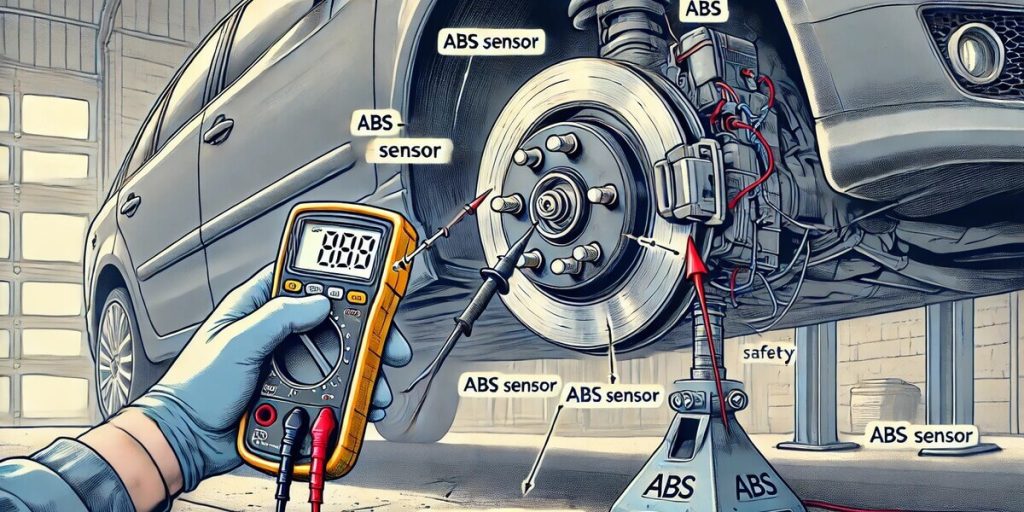
Before condemning the HCU, back-probe the harness connector at the HCU with a digital multimeter. Reference voltage on the solenoid coil feeds should read 12.5 to 14.2V with the key on. Ground circuit voltage drop between the HCU ground terminal and battery negative should read less than 0.1V. A dirty ground connection — common on high-mileage vehicles where the ground strap corrodes at the chassis attachment point — can cause multiple solenoid codes and phantom ABS activation without any internal HCU failure whatsoever.
Only after all six steps come back pointing at the HCU itself does the modulator get condemned. That process takes 60 to 90 minutes of diagnostic time. A shop that quotes HCU replacement after a 10-minute code pull skipped steps 2 through 6.

ABS Hydraulic Unit Replacement Cost — What the Bill Should Actually Look Like
Labor rates used: $120 to $210 per hour at a US independent shop. Dealership rates run $160 to $280 per hour and push total costs 30 to 50 percent higher.
Scenario 1 — Relay or Sensor Was the Actual Problem (Not the HCU)
| Component | Parts Cost | Labor Hours | Labor Cost | Total Estimate |
|---|---|---|---|---|
| ABS pump motor relay | $15–$25 | 0.3 hrs | $36–$63 | $51–$88 |
| Wheel speed sensor (one corner) | $35–$95 | 0.5–1.0 hrs | $60–$210 | $95–$305 |
| Brake light switch | $15–$35 | 0.3–0.5 hrs | $36–$105 | $51–$140 |
This is where the diagnostic process pays for itself. A $150 diagnostic fee that catches a $25 relay saves the reader $600 to $1,800 in unnecessary HCU replacement.
Scenario 2 — HCU Replacement with Remanufactured Unit
| Component | Parts Cost | Labor Hours | Labor Cost | Total Estimate |
|---|---|---|---|---|
| HCU — remanufactured (quality tier) | $480–$900 | 1.5–2.5 hrs | $180–$525 | $660–$1,425 |
| Brake fluid (full system refill) | $20–$35 | Included in HCU labor | — | Included |
| Bi-directional ABS bleed cycle | $0 (included) | Included | — | Included |
| Scenario 2 Total | $660–$1,425 |
Scenario 3 — HCU Replacement with OEM Unit
| Component | Parts Cost | Labor Hours | Labor Cost | Total Estimate |
|---|---|---|---|---|
| HCU — OEM (Bosch, Continental, Delphi) | $900–$1,400 | 1.5–2.5 hrs | $180–$525 | $1,080–$1,925 |
| Brake fluid | $20–$35 | Included | — | Included |
| Scenario 3 Total | $1,080–$1,925 |
Scenario 4 — EBCM Replacement Only (Separate Module, Non-Integrated Systems)
| Component | Parts Cost | Labor Hours | Labor Cost | Total Estimate |
|---|---|---|---|---|
| EBCM (standalone module) | $180–$420 | 0.5–1.0 hrs | $60–$210 | $240–$630 |
| Module programming (if required) | $75–$150 | 0.5 hrs | Included in programming fee | $75–$150 |
| Scenario 4 Total | $315–$780 |
Note: Some EBCM replacements require VIN-specific programming at a dealer or with a professional-grade scan tool. Confirm before purchasing a module — an unprogrammed module will store U0121 and leave the ABS system non-functional.
OEM vs. Remanufactured ABS Hydraulic Unit — Which One to Buy
The price difference between a quality remanufactured HCU and an OEM unit runs $300 to $600 on most applications. That’s a real number, and the choice matters more than it does on most other brake components.
What a quality remanufacturer actually does:
A legitimate reman house — Cardone Gold series, ATE, Motorcraft Remanufactured — disassembles the HCU to the bare valve body. Every solenoid O-ring gets replaced. The pump motor is tested for current draw and brush wear. The accumulator diaphragm is replaced or pressure-tested. Each hydraulic channel is pressure-tested individually to confirm no cross-channel leakage. The unit ships bench-bled. Warranty: 1 to 3 years parts and labor coverage.
What an offshore no-name unit typically delivers:
External cleaning. Electrical testing at the connector pins. Solenoid resistance check. No internal disassembly. No O-ring replacement. No pressure test. Shipped dry (not bench-bled). Warranty: 90 days, “parts only” — meaning you’re paying labor twice if it fails. Documented field failure rates on offshore ABS HCU units run above 20% within 12 months of installation.
On a repair that’s already costing $660 to $1,425, the $80 difference between a quality reman and an offshore unit is not where to cut corners. The labor to pull and reinstall a failed unit is the same number the second time as the first.
When to choose OEM:
Performance vehicles, late-model trucks with integrated trailer brake control and electronic stability systems, and any application where the remanufactured market supply is thin or quality-tier options aren’t available. On a 2022 F-150 with Pro Trailer Backup Assist tied into the ABS system, an offshore HCU introduces calibration variables that an OEM unit doesn’t. Pay the premium.
How To Prevent ABS Hydraulic Unit Failure
The HCU doesn’t wear out the way brake pads do. It fails for two primary reasons: contaminated fluid and neglected maintenance.
Change the brake fluid every 2 years or 30,000 miles.
Glycol-based brake fluid is hygroscopic. It absorbs moisture through the reservoir vent over time. Water content above 3 percent drops the fluid’s wet boiling point below the threshold where hard braking can cause local fluid vaporization inside the HCU valve body — steam bubbles in a precision-machined solenoid bore accelerate internal corrosion faster than any other single factor. A $10 to $20 refractometer test at any well-equipped shop measures water content directly.
Never add petroleum-based fluid to the brake reservoir.
One ounce of power steering fluid introduces enough hydrocarbon content to begin attacking the solenoid O-rings inside the HCU within 24 to 48 hours. The O-rings sit in the valve body bore at tolerances under 0.005 inches. Swollen O-rings restrict solenoid spool travel. The HCU starts throwing C0121 and C0269 codes within weeks, and the repair bill starts at the HCU replacement cost — not a fluid flush.
Address ABS warning lights within 48 hours.
An ABS system with a stored fault code continues delivering normal brake performance in non-ABS stops. It delivers zero ABS performance in a real emergency. Driving with the ABS light on isn’t a “fix it when convenient” situation — it’s driving without the system that keeps you from spinning into oncoming traffic on a wet road. The diagnostic fee is $60 to $210. The deductible on a collision claim is probably higher.
FAQs — What Is an ABS Hydraulic Unit
What does an ABS hydraulic unit do?
It controls brake pressure at each individual wheel during an emergency stop. When a wheel starts to lock, the HCU releases pressure at that wheel, lets the tire regain rotation, then reapplies pressure — cycling 8 to 15 times per second — to deliver maximum stopping force without wheel lockup or loss of steering control.
Can you drive with a bad ABS hydraulic unit?
You can drive with a failed HCU as long as the base brake hydraulic circuit isn’t compromised. Normal braking — foot on pedal, car slows down — still works. ABS modulation during a panic stop or slippery-surface stop does not. On dry pavement at low speed, you probably won’t notice. On a wet highway at 60 mph with full emergency braking, you will.
How long does an ABS hydraulic unit last?
Most OEM HCU units are engineered for the service life of the vehicle — 150,000 to 200,000 miles under normal conditions with clean brake fluid. Contaminated fluid, moisture-saturated glycol, or petroleum contamination cuts that lifespan dramatically. Vehicles in Rust Belt states where road salt accelerates brake line and fitting corrosion tend to see HCU failures earlier — commonly in the 80,000 to 120,000 mile range.
Is the ABS modulator the same as the ABS hydraulic unit?
Yes. ABS modulator, ABS hydraulic unit, HCU, and ABS valve body all refer to the same component. On systems with an integrated electronic module, the combined assembly is called an HECU. The terminology varies by manufacturer, service manual, and parts counter — but they’re describing the same aluminum block in the engine bay with the brake lines threaded into it.
Can I replace the ABS hydraulic unit myself?
The mechanical removal and installation — disconnecting brake lines, unbolting the mounting bracket, swapping the unit — is within reach of an experienced DIY mechanic. The part that isn’t is the post-installation bleed procedure. Fully purging the new HCU requires a scan tool with bi-directional control to cycle the internal solenoid valves open during bleeding. Without that step, air remains trapped inside the valve body and the pedal stays spongy. Budget for a shop to perform the bi-directional bleed even if you handle the R&R yourself.
The Expert Verdict
The ABS hydraulic unit is one of those components that sounds expensive before you understand it and still costs real money once you do. The valve architecture inside it — eight solenoids, an accumulator, and a return pump all working together at 15 cycles per second — is genuinely complex hardware. But the diagnostic process that confirms it’s actually failed is equally specific, and a shop that skips it is billing you for the most expensive possible answer when the real problem might be a $25 relay or a $65 sensor.
Know what the part does. Know what the diagnostic process looks like. Walk into that service counter with the right questions, and you’ll either confirm the HCU needs replacement — or find out it didn’t.