
This article was updated in July 24, 2026 with new products and information by Mark S. Taylor
You hear a high-pitched squeal every time you hit the brakes, but you’ve already checked — the pads have plenty of life, or maybe they’re brand new. So every article telling you “your pads are worn, that squeal is the wear indicator” is missing the point. Here’s the reassuring part: when the pads are fine, the squeal is almost never about worn-out parts, and the fix is usually cheap.
When brakes squeal but the pads are fine, the noise is a high-frequency vibration coming from something other than pad wear — most often glazed pads or rotors, a lack of lubrication on the brake hardware, missing or worn anti-rattle shims, surface rust, or a sticking caliper. Squeal is a vibration problem, not a “you’re out of brakes” problem, which is exactly why brake grease and hardware so often silence it.
This guide skips the worn-pad lecture, explains why brakes squeal in the first place, walks through the real non-pad causes, shows you how to tell them apart, and points out the one version that’s actually urgent.
Contents
- 1 What a Squeal Actually Is (Quick Primer)
- 2 6 Causes When the Pads Are Fine
- 3 How to Tell Which One It Is (Differential Diagnosis)
- 4 The Sticking Caliper Red Flag
- 5 Is It Just Surface Rust or New Brakes? (Often Harmless)
- 6 Is It Safe to Drive With Squealing Brakes?
- 7 Repair Cost
- 8 DIY vs. Mechanic
- 9 How to Prevent It
- 10 FAQs About Squealing Noise When Braking but Not the Brake Pads
- 11 Bottom Line
What a Squeal Actually Is (Quick Primer)
Understanding the sound makes the fix obvious. A brake squeal is a high-frequency vibration — the pad, rotor, and caliper are essentially resonating against each other thousands of times a second, like a finger squeaking on glass. That vibration turns into the shrill noise you hear.
This matters because it reframes the whole problem. If squeal were purely about worn pads, the only fix would be new pads. But because it’s a vibration, anything that lets the parts buzz against each other can cause it: dried-out grease on the caliper slide pins, a missing shim behind the pad, a hardened or glazed friction surface, or corrosion. And anything that damps that vibration — brake grease at the contact points, anti-rattle shims and clips, a properly bedded pad surface — makes it stop.
So when your pads are fine and the brakes still squeal, you’re not looking for a worn-out part. You’re hunting for whatever is letting the brake vibrate, and most of the time that’s a cheap, fixable thing.
6 Causes When the Pads Are Fine
Here are the real culprits, roughly in the order they turn up when the pads check out:
Missing or dried-out lubrication on the brake hardware. The caliper slide pins, the pad’s contact points where it sits in the bracket, and the back of the pad all need high-temperature brake grease to stay quiet. When that grease dries out or was never applied (common after a rushed brake job), the pad is free to vibrate and squeal. This is one of the most common non-pad causes — and one of the cheapest to fix.
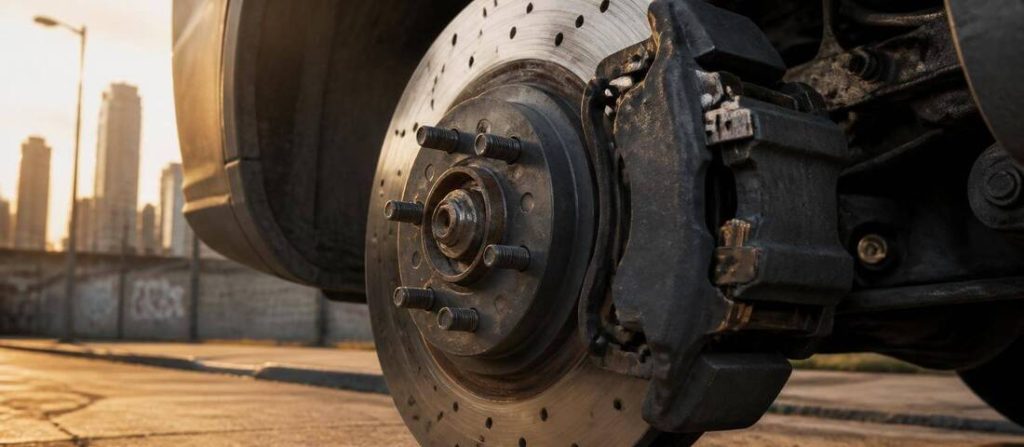
Glazed pads or rotors. Hard or repeated braking overheats the friction surfaces until they turn hard, smooth, and glassy — “glazed.” A glazed surface can’t grip properly, so it squeals and often reduces braking. Look for a shiny, mirror-like finish on the pad or rotor, sometimes with a burnt smell.
Missing, worn, or misinstalled shims and hardware. Anti-rattle shims, clips, and springs exist purely to dampen vibration. If they’re missing, corroded, or installed wrong (again, often after a brake job), the pad rattles and squeals even though it’s in perfect shape.
Surface rust on the rotors. Rotors are bare metal and rust overnight in damp weather or after the car sits. The pads scrape that thin rust off for the first few stops, squealing as they go, then it clears. This one is usually harmless.
A sticking or seized caliper (or seized slide pins). When a caliper or its pins seize from corrosion, the pad stays pressed against the rotor and drags, producing a constant squeal — often from just one wheel — plus heat and reduced braking. This is the one cause that’s genuinely urgent (more below).
Trapped debris or the wrong pad material. A small stone or gravel-road dust can wedge in and squeal until it clears. And some hard or cheap metallic pads simply squeal by nature, especially cold — so even a fine set of the wrong pads can be noisy, and freshly installed pads may squeal until they’re bedded in.
Two of these — missing lubrication/hardware and glazing — account for the majority of squeals when the pads are genuinely fine.
How to Tell Which One It Is (Differential Diagnosis)
You can narrow this down a lot by paying attention to when and how the squeal shows up:
Squeals for the first few stops in the morning, then goes quiet: almost certainly surface rust, especially after a damp night or the car sitting. Harmless.
Started right after a brake job and is fairly constant: points to missing lubrication or hardware, improper installation, or new pads that need bedding in.
Constant squeal from one wheel, maybe with the car pulling, extra heat, or a burnt smell: suspect a sticking caliper — the urgent one.
Squeal with noticeably weaker braking, pedal pulsation, or a glossy mirror-like surface on the discs: likely glazed pads or rotors.
Started suddenly after driving on gravel or through debris: probably a trapped stone or dust, which may clear on its own or after backing up.
Squeals cold or lightly, quiets when warm, on otherwise fine brakes: often just hard or cheap pad material.
Match your squeal to the closest description and you’ve usually narrowed it to one or two suspects. The next section covers the one you don’t want to ignore.
The Sticking Caliper Red Flag
Most brake squeal is an annoyance. A sticking caliper is the exception — it’s the one cause on this list that can leave you stranded or unsafe, so it’s worth ruling out first.
When a caliper or its slide pins seize up from rust or dried grease, the caliper can’t release fully, so the pad stays clamped against the rotor even when you’re off the brake. That constant contact makes a persistent squeal, usually from a single corner, and it comes with tell-tale extras:
The squeal is nearly constant, not just when you press the pedal
The car pulls to one side under braking
One wheel gets noticeably hotter than the others after a drive
A burnt or chemical smell, sometimes with reduced braking
Left alone, a dragging caliper overheats the brake, can glaze the pad and rotor (causing more squeal), wears that corner out fast, and hurts fuel economy. If your symptoms match this pattern, don’t file it under “annoying noise” — get it inspected soon. A caliper service or slide-pin cleaning often solves it before it turns into a bigger repair.
Is It Just Surface Rust or New Brakes? (Often Harmless)
Before you worry about a repair, rule out the two most innocent causes — because a lot of squeals fall here.
Morning surface rust. Brake rotors are exposed bare metal, so a thin film of rust forms overnight in damp weather or after the car sits. The pads scrape it off during your first few stops, squealing as they do, then go quiet. If your squeal shows up cold in the morning and clears within the first mile of normal braking, that’s textbook surface rust and it’s nothing to fix.
New brakes bedding in. Fresh pads and rotors need a break-in period called bedding, where a thin, even layer of pad material transfers onto the rotor. Until that happens, new brakes can squeal. Many manufacturers suggest a gentle bedding routine — a series of moderate slow-downs from about 50 to 20 mph with cool-down time between them, and no hard panic stops early on. If your brakes are freshly installed, give them a few hundred miles and a proper bedding before assuming something’s wrong.
The line to watch: harmless squeal clears up on its own — either after the morning stops or within the first few hundred miles of new brakes. A squeal that persists, worsens, or comes with weaker braking deserves a closer look.
Is It Safe to Drive With Squealing Brakes?
Short answer: most squeal is an annoyance rather than a danger, but a few versions need prompt attention. Use this as your guide:
Clears after the first few morning stops, braking feels normal: harmless surface rust — fine to drive.
Started after new brakes and is fading over a few hundred miles: normal bedding-in — fine, just finish the break-in.
Persistent squeal but braking feels strong: usually a vibration issue (lube, hardware, or pad material). Not dangerous, but worth fixing so you don’t mask a real problem developing later.
Constant squeal from one wheel, pulling, heat, or a burnt smell: possible sticking caliper — get it inspected soon.
Squeal plus noticeably weaker braking, a glazed shiny surface, or pedal pulsation: have it checked promptly, since glazing and overheating reduce stopping power.
Brakes are the one system where it’s worth erring on the side of caution. If braking performance has changed at all, don’t wait.
Repair Cost
Here’s the good news the other articles bury: when the pads are fine, the fix is often cheap. Costs run roughly:
| Fix | Typical Cost (parts + labor) |
|---|---|
| Brake inspection | $120–$180 (often waived with a repair) |
| Clean & lubricate hardware / slide pins | $0–$150 (DIY grease is a few dollars) |
| Add or replace shims & anti-rattle hardware | $50–$200 |
| Remove trapped debris | $0–$80 (often quick) |
| Resurface rotors (de-glaze) | $50–$150 per rotor |
| Replace glazed pads with quieter (ceramic) pads | $150–$350 per axle |
| Service or replace a sticking caliper | $300–$900 per wheel |
Notice the spread. A squeal from dried-out grease or a missing shim might cost you nothing but a tube of brake grease and an hour in the driveway. Glazing sometimes clears with a rotor resurface or a re-bed. The only big-ticket item is a seized caliper. So before you let a shop sell you a full pad-and-rotor job for a noise, ask them to check lubrication, hardware, and the caliper first — it’s frequently the whole answer.
DIY vs. Mechanic
A lot of squeal fixes are genuinely DIY-friendly, which is unusual for brakes.
Reasonable to DIY (if you’re comfortable pulling a wheel):
Cleaning and re-greasing the caliper slide pins and pad contact points with high-temp brake grease
Applying disc-brake-quiet compound to the backs of the pads (never the friction face)
Adding or reseating anti-rattle shims and hardware
Clearing a trapped stone
Bedding in new pads with a proper slow-down routine
Leave it to a mechanic:
A seized or sticking caliper (it involves the hydraulic system and bleeding)
Resurfacing rotors (needs a lathe)
Diagnosing reduced braking or pedal pulsation
Anything where you’re unsure whether the pads/rotors are truly fine
Honest rule of thumb: cleaning, lubricating, and hardware are fair game for a confident DIYer, and they solve most squeals. Anything touching the caliper’s hydraulics or your actual stopping power belongs in a shop.
How to Prevent It
You can head off most squeal with a few habits:
Insist on proper lube and new hardware at every brake job. Grease on the pins and contact points, plus fresh shims and clips, prevents the vibration that causes squeal.
Bed in new brakes correctly. Follow the break-in routine instead of jumping straight into hard stops.
Choose quality, quieter pads. Ceramic pads are generally quieter and cleaner than cheap metallic ones.
Avoid riding the brakes and hard repeated stops. Excess heat glazes pads and rotors.
Drive the car regularly and rinse off road salt. That keeps surface rust from building up.
None of this is expensive, and it keeps the whole braking system quiet and dependable.
FAQs About Squealing Noise When Braking but Not the Brake Pads
Why do my brakes squeal if the pads are good?
Because squeal is a vibration, not just a wear sign. With good pads, the usual causes are dried-out or missing lubrication on the caliper hardware, missing or worn anti-rattle shims, glazed (shiny, overheated) pads or rotors, surface rust, or a sticking caliper. Most of these are cheap to fix — often just cleaning and greasing the hardware.
Can glazed rotors or pads cause squealing?
Yes. Hard or repeated braking overheats the friction surfaces until they turn hard, smooth, and glassy. A glazed surface can’t grip well, so it squeals and often reduces braking. You’ll usually see a shiny, mirror-like finish and sometimes smell a burnt odor. De-glazing the rotors or fitting fresh, quieter pads and re-bedding them typically solves it.
My brakes squeal after new pads and rotors — is that normal?
Often, yes. New brakes need to bed in, and they can squeal until a thin, even layer of pad material transfers to the rotor over a few hundred miles. Squeal right after a job can also mean the hardware wasn’t lubricated or shims were left off. If it doesn’t fade after proper bedding, have the installation checked.
How do I know if it’s a sticking caliper?
A sticking caliper usually squeals constantly from one wheel, not just when you brake. Look for the car pulling to one side, one wheel running much hotter than the others, a burnt smell, or reduced braking. That combination needs a prompt inspection, since a dragging caliper overheats and wears that corner quickly.
Is it safe to drive with squealing brakes?
Usually, if braking still feels strong and the squeal clears after the first few stops or fades on new brakes. But a constant one-wheel squeal, weaker braking, pedal pulsation, or a burnt smell all point to a sticking caliper or glazing and deserve prompt attention. If stopping power has changed at all, don’t wait.
Bottom Line
If your brakes squeal but the pads are fine, don’t panic and don’t let anyone talk you into new pads for a noise. Squeal is a vibration, so start by noticing when it happens: if it clears after the first few morning stops or fades on new brakes, it’s harmless. If it’s constant from one wheel with heat or pulling, rule out a sticking caliper first — that’s the one that matters. For everything in between, a cleanup, fresh brake grease, and proper hardware usually silence it for a few dollars. Fix the vibration, not parts you don’t need.