
This article was updated in August 2, 2026 with new products and information by Mark S. Taylor
You’re rolling down the highway, and suddenly—thump-thump-thump—a flat. You pull over safely, wrestle with the floor jack, and eventually bolt on that skinnier, temporary spare tire. Relief, right? Well, sort of.
That spare tire is an emergency safety measure, not a permanent driving solution, and it carries strict mechanical limitations. As an ASE-Certified Master Technician who has seen countless blown spare tires and shredded AWD transfer cases from drivers pushing their luck, let me be clear: you need to understand exactly how long can you drive on a spare tire before a minor flat turns into a multi-thousand-dollar drivetrain repair bill.

Contents
- 1 Not All Spares Are Created Equal: Know Your Type
- 2 The Donut Dilemma: Compact Temporary Spare Limitations
- 3 The Full-Size “Spare”: Not Necessarily a Free Pass
- 4 Mechanic’s Urgent Checklist: What to Do Immediately After a Flat
- 5 Getting Your Car Back on All Four Good Tires: Repair or Replace?
- 6 The Impact on Modern Vehicle Systems (TPMS, ABS, Traction Control)
- 7 FAQs About How Long Can You Drive on a Spare Tire
- 7.1 Q1: How long can a full-size spare tire be stored before it’s unsafe to use?
- 7.2 Q2: What if my car didn’t come with a spare tire?
- 7.3 Q3: Can I drive cross-country on a full-size spare if it matches?
- 7.4 Q4: My tire shop wants to replace all four tires because of one flat. Why?
- 7.5 Q5: Will driving on a spare tire affect my car’s alignment?
- 8 The Bottom Line
Not All Spares Are Created Equal: Know Your Type
Before we talk limits, you need to know what kind of spare tire you’re actually dealing with. Not every car comes with the same spare, and each type has its own set of rules.
- Compact Temporary Spares (The “Donut”): This is what most modern cars carry. It’s noticeably smaller and thinner than your regular tires, often with a yellow sticker plastered on it. Its sole purpose is to get you from the side of the road to the nearest tire shop.
- Why it’s different: It’s built with minimal tread, lighter construction, and a shallow tread depth. It’s designed for short-term, low-stress use.
- Full-Size Matching Spares: Some trucks, SUVs, and older vehicles might have these. It’s a regular tire and wheel assembly, identical (or very similar) to the ones on your car.
- Why it’s better: It can handle normal driving conditions because it’s a regular tire. However, if it’s been stored for years, the rubber can degrade, making it less safe than your other tires. Also, if it’s not rotated with the other four, its tread depth will be different, which can still cause issues, especially on AWD/4WD vehicles.
- Full-Size Non-Matching Spares: Similar to the above, but the wheel design might be different, or it might not be the exact tire brand/model. It’s still a full-size tire, but there might be slight differences in diameter or tread pattern.
- Run-Flat Tires: These aren’t spares at all, but they’re worth mentioning. If your car has run-flats, you probably don’t have a spare. These tires are designed with reinforced sidewalls to allow you to drive for about 50 miles at up to 50 MPH after a puncture, letting you get to a service center without needing to change a tire on the spot.
The Donut Dilemma: Compact Temporary Spare Limitations
If you’ve got a compact spare – that skinny “donut” – listen up. This is not a regular tire. It’s an emergency device.
- Distance Limit: 50 Miles: Most manufacturers specify a maximum distance of 50 miles. This isn’t an arbitrary number; it’s a safety buffer. These tires are not built for endurance. Pushing beyond 50 miles significantly increases the risk of tire failure, which could be catastrophic.
- Speed Limit: 50 MPH: Never exceed 50 miles per hour on a compact spare. The smaller size, shallower tread, and less robust construction mean it offers dramatically reduced traction, stability, and handling compared to your regular tires. Driving faster can lead to:
- Overheating: The donut’s construction isn’t designed to dissipate heat like a full-size tire. Higher speeds generate more friction and heat, leading to rapid degradation and potential blowout.
- Poor Handling: The smaller contact patch and different sidewall stiffness will make your car handle strangely. Steering response will be sluggish, and emergency maneuvers will be dangerous.
- Increased Braking Distance: With less traction, your braking distance will increase significantly.
- Reduced Load Capacity: Donut spares have a lower load rating. Carrying heavy loads in the trunk or backseat will put undue stress on the tire.
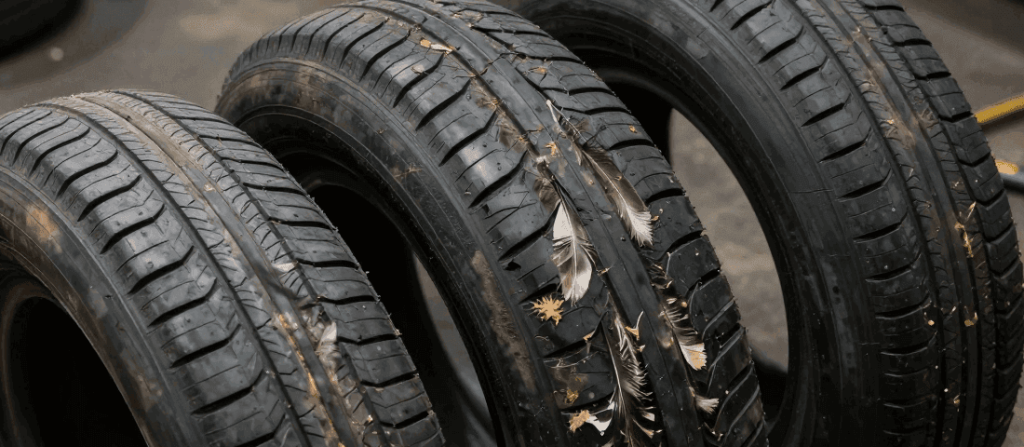
The smaller size, shallower tread, and less robust construction mean it offers dramatically reduced traction, stability, and handling compared to your regular tires.
The Full-Size “Spare”: Not Necessarily a Free Pass
Having a full-size spare might seem like you’ve dodged a bullet, but there are still things to consider.
- Age and Degradation: Even an unused spare can degrade over time. Rubber compounds break down due to age and temperature fluctuations, especially if stored in extreme heat or cold. Check the manufacture date stamped on the sidewall – if it’s over 6-8 years old, it’s risky, regardless of tread.
- Tread Depth Differences: If your full-size spare has never been rotated into service with your other tires, its tread will be significantly deeper. This difference in tire circumference can cause issues, particularly for:
- All-Wheel Drive (AWD) and 4-Wheel Drive (4WD) Vehicles: Driving with tires of different diameters on these vehicles can cause severe stress and damage to the differentials, transfer case, and transmission. These drivetrain components are designed to have all four wheels spinning at the same rate. A mismatched tire forces the system to constantly compensate, leading to premature wear and expensive repairs that can run into thousands of dollars. If you have an AWD/4WD, it’s critical to place the spare on a non-drive axle (usually the rear), or better yet, have it towed or flat-bedded to the shop.
- Tire Pressure: Just because it’s full-size doesn’t mean it’s properly inflated. Spares are often neglected. Check its PSI (pounds per square inch) before relying on it; the correct pressure is usually listed on a sticker inside your driver’s side door jamb or in the owner’s manual.
Mechanic’s Urgent Checklist: What to Do Immediately After a Flat
You’ve got the spare on. Now what? Your priority should be getting to a shop. Here’s my checklist:
- Check Spare Tire Pressure: Before you drive even a mile, ensure the spare is inflated to the correct PSI. Donut spares often require a much higher pressure (60 PSI) than your regular tires. Don’t assume it’s good to go; it could have slowly leaked pressure over the years.
- Positioning for Safety (Especially for Donut Spares):
- If your flat is on a drive wheel (front for FWD, rear for RWD), and you have a donut, it’s safer to move a good full-size tire from a non-drive axle to the drive axle, then put the donut on the non-drive axle. This helps maintain better traction and handling on the wheels primarily responsible for propulsion.
- For AWD/4WD: Avoid driving on a donut spare as much as possible. If you must, place the donut on the rear axle to minimize strain on the front differential and transfer case. Drive directly to the nearest tire shop.
- Drive Cautiously: Maintain a consistent speed below the spare’s limit (never over 50 MPH for a donut). Avoid sudden acceleration, hard braking, or sharp turns.
- Find a Shop NOW: Your spare is not for commuting to work for a week. Head directly to a reputable tire shop. Don’t put it off.
- Assess the Flat:
- Puncture in the Tread: If it’s a simple nail or screw in the main tread area (not near the sidewall), it’s likely repairable with a patch and plug from the inside, typically costing $25-$40.
- Sidewall Damage or Large Puncture: Any damage to the sidewall, a large gash, or a puncture close to the shoulder usually means the tire is not safely repairable and needs to be replaced.
- Run-Flat Damage: Run-flat tires are often not repairable, especially if driven for any significant distance while flat.
Your spare is not for commuting to work for a week. Head directly to a reputable tire shop. Don’t put it off.

Getting Your Car Back on All Four Good Tires: Repair or Replace?
Once you’re at the tire shop, a qualified technician will inspect your damaged tire.
- Tire Repair: If the damage is a simple puncture (less than a quarter-inch in diameter) in the tread area, a professional patch and plug from the inside out is usually a safe and effective repair. This typically costs $25 to $40.
- Tire Replacement: You’ll need a new tire if:
- The puncture is on the sidewall or shoulder.
- The damage is too large or irregular.
- The tire has been driven on while severely underinflated (destroying the internal structure).
- The tread depth is too low (less than 2/32nds of an inch).
- If you have an AWD or 4WD vehicle and only one tire needs replacing, and the remaining tires have significant wear, you might need to replace all four tires to maintain equal tread depth and prevent drivetrain damage. This is a crucial, often expensive, consideration that many drivers overlook.
A single new tire can cost anywhere from $100 to $350 or more, depending on your vehicle and tire type. If you have an AWD or 4WD vehicle and only one tire needs replacing, and the remaining tires have significant wear, you might need to replace all four tires to maintain equal tread depth and prevent drivetrain damage.
The Impact on Modern Vehicle Systems (TPMS, ABS, Traction Control)
Driving on a temporary spare can throw off more than just your speed.
- TPMS (Tire Pressure Monitoring System): Most spare tires don’t have a TPMS sensor. This means your TPMS warning light will likely stay on while the spare is installed. Don’t ignore it; it’s a reminder that a sensor is missing or your other tires might be low.
- ABS (Anti-lock Braking System) and Traction Control: The smaller diameter of a donut spare means it’s spinning faster than your regular tires at the same road speed. This can confuse your car’s ABS and traction control systems, potentially causing them to engage erratically or not at all, especially during emergency braking or in slippery conditions. Your vehicle’s computers are programmed for specific tire sizes, and a donut deviates significantly from that.
- Vehicle Stability Systems: Modern cars have stability control systems that rely on consistent wheel speed and traction. A mismatched spare can disrupt these systems, potentially reducing your car’s ability to maintain control.
FAQs About How Long Can You Drive on a Spare Tire
Q1: How long can a full-size spare tire be stored before it’s unsafe to use?
A: Even if a full-size spare has never touched the road, its rubber compounds degrade over time. Generally, a tire (including a spare) should be replaced after 6 years, regardless of how much tread it has. After 10 years, it should be replaced as a safety precaution, even if it looks fine. The age is stamped on the sidewall (DOT code).
Q2: What if my car didn’t come with a spare tire?
A: Many newer vehicles, especially hybrids and EVs, omit a spare to save weight and space. Instead, they often come with a tire repair kit (sealant and compressor) or rely on run-flat tires. Understand how to use your kit or the limitations of your run-flats, and always have a roadside assistance plan.
Q3: Can I drive cross-country on a full-size spare if it matches?
A: If it’s a truly matching full-size spare (same size, type, and ideally similar tread depth), and it’s properly inflated and in good condition, it’s generally safe to drive on it as you would a regular tire. However, it’s still best to get your original tire fixed or replaced as soon as possible and rotate the spare into the rotation if it matches. For AWD/4WD, if the tread depth is significantly different, you still run the risk of drivetrain damage, so proceed with caution or consult a professional.
Q4: My tire shop wants to replace all four tires because of one flat. Why?
A: This usually happens with AWD/4WD vehicles when one tire is irreparable and the remaining three tires have significant wear. To prevent damage to the drivetrain (differentials, transfer case) from mismatched tire diameters, it’s often recommended to replace all four so they wear evenly together. This is a costly but sometimes necessary measure to protect more expensive components.
Q5: Will driving on a spare tire affect my car’s alignment?
A: Directly, no. Driving on a spare won’t cause an alignment issue. However, the temporary spare’s smaller size and different handling characteristics might make any existing slight alignment issues feel more pronounced. Once your proper wheel and tire are back on, your alignment should be fine unless the incident that caused the flat also damaged suspension components.
The Bottom Line
That temporary spare tire in your trunk is a short-term lifeline, not a permission slip for weekly commuting. Respect the 50-mph speed ceiling and 50-mile distance limit on donuts, protect your AWD transfer case by keeping wheel diameters balanced, and head directly to a certified tire shop to patch or replace your primary tire immediately.
Safety & Sensor Diagnostics: If driving on a temporary spare has triggered persistent dashboard warnings across your braking or traction systems, check our workshop guide on How to Read Check Engine Light Codes Without a Scannerto clear historical ABS and stability codes. For tracking unexpected tire pressure warning dropouts or winter air loss, read our in-depth diagnostic analysis on Tires Losing Pressure in Cold Weather.