
This article was updated in August 10, 2026 with new products and information by Mark S. Taylor
It is 6:00 AM, the temperature is hovering near single digits, and you are already running late. You slide into the driver’s seat, turn the key, and instead of the engine firing to life, you hear it: a rapid, heavy click-click-click, or a slow, agonizing groan from the starter before everything goes dark.
Your car battery is dead.
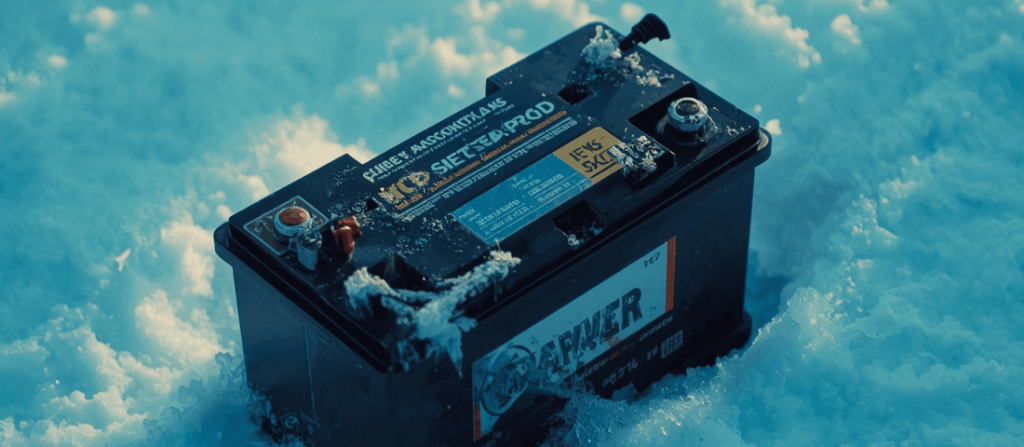
If this has happened to you, your first thought is probably that the freezing temperatures “drained” the electricity out of your battery overnight. But as a mechanic, I can tell you that isn’t exactly what happened. The cold didn’t steal your power; it just trapped it, right at the exact moment your engine became incredibly difficult to turn over.
Let’s look at what is actually happening under your hood on a freezing morning, how to get your car started safely, and what you need to do today so you aren’t stranded again tomorrow.
Contents
- 1 The Winter Death Squeeze: Why Cold is Brutal on Batteries
- 2 The Secret Killer: Summer Murder, Winter Autopsy
- 3 Warning: Do Not Jump a Frozen Battery
- 4 How to Get Moving Again (Safe Jump Starting)
- 5 Prevention: How to Stop Your Battery from Dying Tomorrow
- 6 Repair Cost Breakdown
- 7 FAQs About Car Battery Dead in Cold Weather?
- 8 The Verdict
The Winter Death Squeeze: Why Cold is Brutal on Batteries
Your car’s lead-acid battery doesn’t store electricity like a bucket holds water. It creates electricity through a chemical reaction between lead plates and an electrolyte solution (acid and water).
When the temperature drops, you get hit with what we call the “Winter Death Squeeze.” It is a brutal combination of two factors:
- The battery loses its punch: Cold temperatures drastically slow down the chemical reaction inside the battery. At 32°F, your battery loses about 35% of its starting power. If the temperature drops to 0°F, your battery only has roughly 50% of its normal power available.
- The engine demands more effort: While your battery is getting weaker, your engine is getting harder to start. Engine oil thickens in freezing weather, turning from a smooth liquid into something resembling cold syrup. Your starter motor has to work much harder to push those pistons through the thick oil, requiring up to twice as much electrical amperage as it does on a warm summer day.
Half the power available, twice the power required. That is why a battery that started perfectly fine at 60°F will leave you stranded at 10°F.
The Secret Killer: Summer Murder, Winter Autopsy
Customers frequently ask me, “My battery is only three years old, why did the cold kill it?”
The truth is, the cold weather didn’t kill your battery. The extreme heat of the previous summer killed it. The cold weather just performed the autopsy.
When you drive in 95-degree heat, the temperature under your hood can easily exceed 200 degrees. That intense heat slowly evaporates the water out of the battery’s electrolyte solution and accelerates internal corrosion on the lead plates. The battery becomes permanently weakened, but because hot engines are very easy to start, you never notice the missing power.
It isn’t until the first freeze hits and demands maximum output that the summer heat damage is finally exposed.
Warning: Do Not Jump a Frozen Battery
If you are currently stranded, your first instinct is to grab a set of jumper cables. Stop and look at your battery first.
When a battery is fully charged, the electrolyte solution is mostly sulfuric acid, which has a very low freezing point. But when a battery is deeply discharged or dead, that solution turns into mostly water. If the temperature is below 32°F, the water inside the battery can actually freeze solid.
Never attempt to jump-start a frozen battery.
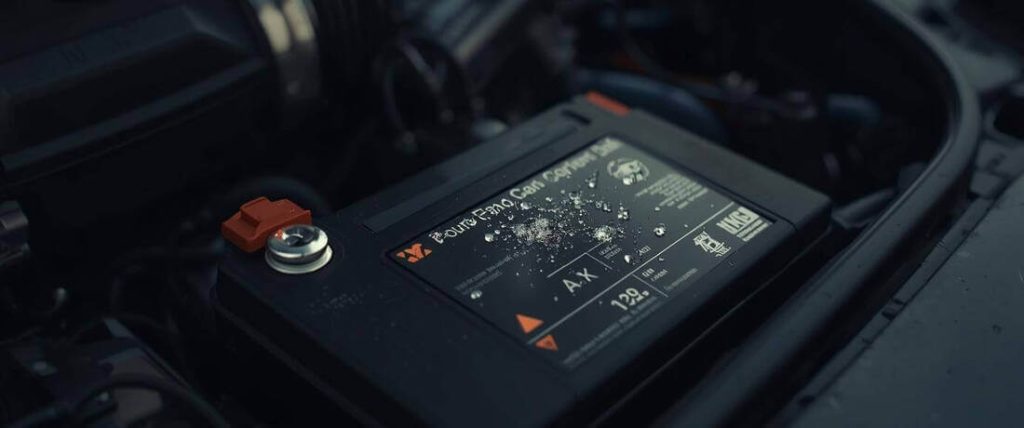
Open your hood and look at the plastic battery casing. If the sides are bulging outward, or if you see visible cracks in the plastic, the battery is frozen. If you force hundreds of amps from a jump-start into a frozen battery, the sudden buildup of hydrogen gas can cause the casing to explode, spraying battery acid everywhere.
If the battery case is bulging, you cannot drive the vehicle. You must remove the battery, let it thaw in a warm room, and have it tested (though a frozen battery is almost always permanently ruined and needs replacing).
How to Get Moving Again (Safe Jump Starting)
If the battery casing is perfectly flat and undamaged, it is safe to jump-start the vehicle. You can use traditional jumper cables connected to a running vehicle, or a modern portable lithium-ion jump pack.
The Charging Myth: Here is where most people make their second mistake. After getting a jump-start, they drive to work for 15 minutes and assume the alternator has fully recharged the battery. It hasn’t.
A freezing cold battery has very high internal resistance. It physically resists accepting a charge from the alternator until the battery itself warms up. A short winter commute will not replace the massive amount of energy it took to start the car. If you just drive 15 minutes and park it, it will likely be dead again when you leave work.
To properly recharge a depleted battery in freezing weather, you need to drive at highway speeds for at least 45 minutes to an hour, or better yet, put it on a plug-in charger overnight.
Prevention: How to Stop Your Battery from Dying Tomorrow
Once you get your car running, you need to take steps to ensure you aren’t doing this all over again tomorrow morning. If you have to park outside in freezing temperatures, here is how you protect your battery.
- Buy a Smart Trickle Charger: This is the single best investment you can make. A “smart” battery maintainer or trickle charger (which costs about $30 to $50) plugs into a standard wall outlet and connects to your battery overnight. It sends a very low-amperage charge that not only keeps the battery at 100% capacity but also generates a tiny amount of internal heat, keeping the battery warm enough to perform perfectly in the morning.
- Clean the Terminals: Cold weather already reduces the electrical flow. Don’t make it worse by forcing that electricity to fight through a layer of crusty, white battery acid buildup. Disconnect the terminals and clean them with a wire brush and a mixture of baking soda and water.
- Turn Off Parasitic Draws: Modern cars are never truly “off.” The computer, keyless entry receiver, and security system are constantly pulling a tiny amount of power (a parasitic draw). If you add an aftermarket remote starter or leave a dashcam plugged in, you are increasing that draw. Unplug all unnecessary accessories overnight.
- Minimize Short Trips: As mentioned earlier, short trips in the cold don’t allow the alternator enough time to recharge the battery. Try to combine your errands into one longer trip rather than several five-minute drives.
Repair Cost Breakdown
If you jump-start your car, drive it for an hour, and it still won’t start the next morning, the battery has likely reached the end of its life.
It is important to know what kind of battery your car requires before you go shopping. If your vehicle was built in the last 10 years and has a “Start-Stop” feature (where the engine shuts off at red lights), you almost certainly require an AGM battery, which is significantly more expensive than a standard battery.
| Battery Type | Expected Cost Range | Why You Need It |
|---|---|---|
| Standard Flooded Battery | $120 – $180 | Older vehicles without heavy electrical demands or start-stop technology. |
| AGM (Absorbent Glass Mat) | $200 – $350 | Required for modern cars with start-stop tech, advanced electronics, or heavy winter use. |
| Professional Installation | $0 – $50 | Most auto parts stores will install it for free, but some European cars require shop labor to “register” the new battery to the computer. |
| Smart Battery Maintainer | $30 – $60 | Preventative tool to keep parked cars fully charged overnight. |
Note: Never replace an AGM battery with a cheaper standard flooded battery. The car’s charging system will destroy the standard battery in a matter of months.
FAQs About Car Battery Dead in Cold Weather?
At what temperature do car batteries start failing?
You will usually start noticing a slower engine crank when temperatures drop below 32°F (0°C). By the time it hits 0°F (-18°C), a battery has lost about half its starting power. If a battery is old or already weak, it will usually fail in the 10°F to 20°F range.
Does a car battery lose charge sitting in the cold?
The cold doesn’t necessarily drain the charge out of the battery; it slows down the chemical reaction, making the stored energy unavailable. However, the car’s computer systems constantly pull a tiny amount of power. In extreme cold, this parasitic draw combined with the slowed chemical reaction will result in a dead battery overnight.
Should I buy a battery with higher Cold Cranking Amps (CCA)?
Yes, if you live in a cold climate, replacing your battery with one that has a higher CCA rating is a smart move. CCA measures how many amps a battery can deliver at 0°F for 30 seconds. A higher number means more starting power on freezing mornings. Just make sure the physical size (Group Size) fits your car.
Can a frozen car battery be saved?
Usually, no. If the water inside the battery freezes and expands, it bends and cracks the internal lead plates, shorting them out. Even if the plastic casing hasn’t split, a battery that has frozen solid will almost never hold a reliable charge again.
Will idling my car in the driveway recharge the battery?
Not very well. Alternators produce their maximum output when the engine is running at higher RPMs (like highway driving). Idling a freezing car in the driveway for 15 minutes provides very little charge to a cold, resistant battery.
The Verdict
A car battery dead in cold weather is usually the result of a weakened battery being pushed past its limits by thick engine oil and slowed chemical reactions. Don’t guess whether it was just a cold night or if the battery is permanently ruined. Once you safely jump-start the vehicle, drive directly to an auto parts store or a trusted mechanic and ask for a “load test.” It takes two minutes, it is usually free, and it will tell you definitively if you need to buy a new battery or just invest in a trickle charger.