
This article was updated in May 24, 2026 with new products and information by Mark S. Taylor
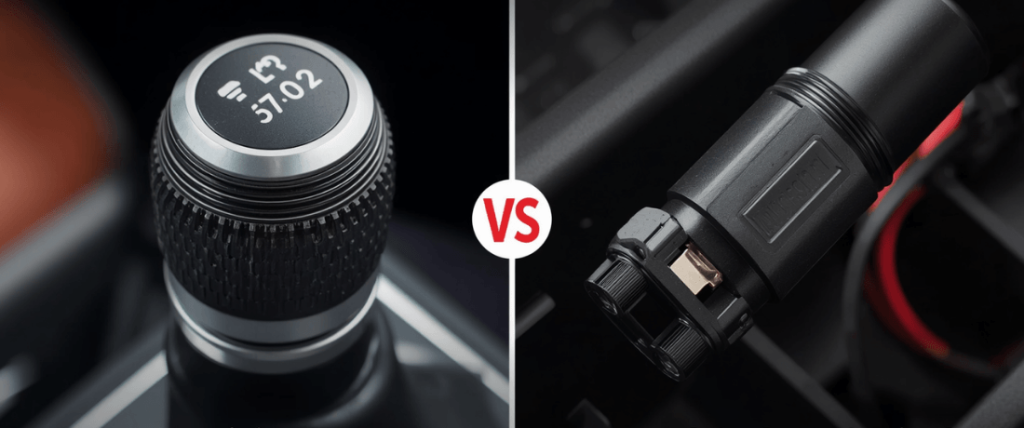
Your car won’t start, or it’s shifting erratically, or the dashboard gear display is showing the wrong position — and someone has mentioned either the gear position sensor, the neutral safety switch, or both. Before you approve any repair, you need to understand what each component does, how to tell which one is failing, and — critically — whether they’re actually the same part on your specific vehicle.
That last point is where most guides fail you. Here’s the full picture in gear position sensor vs neutral safety switch.
Contents
- 1 What Each Component Does (And Why They’re Often the Same Part)
- 2 Key Differences Table
- 3 Pros & Cons
- 4 Performance Differences — How Each Failure Affects Driving
- 5 Reliability — Which Fails More Often and Why
- 6 Maintenance & Cost
- 7 Fuel Economy
- 8 Best for Daily Driving — Which Failure Is More Manageable
- 9 Best for High-Mileage and Performance Vehicles
- 10 Which Lasts Longer?
- 11 FAQs About Gear Position Sensor vs Neutral Safety Switch
- 11.1 Are the gear position sensor and neutral safety switch the same part?
- 11.2 Can I bypass the neutral safety switch to start my car?
- 11.3 What OBD2 codes point to a gear position sensor or neutral safety switch failure?
- 11.4 How do I test a neutral safety switch at home?
- 11.5 Can a bad gear position sensor cause transmission damage?
- 11.6 Verdict
Quick Winner
Car won’t start in Park or Neutral — cranks fine in Drive or Reverse: Neutral safety switch failure. The switch that prevents starting in gear is either stuck open or has lost its connection to the starting circuit.
Car won’t start in any gear position — no crank at all: Could be either component, or the unified TRS (transmission range sensor). Start with an OBD2 scan before replacing anything.
Dashboard gear indicator showing wrong position, or showing no position: Gear position sensor failure — or the TRS if your vehicle uses a unified unit.
Harsh, erratic shifting, wrong gear engagement, or transmission in limp mode: Gear position sensor providing bad data to the TCM. This is a transmission symptom, not a starting symptom — and it’s the most commonly misdiagnosed scenario on this list.
Reverse lights not working with no other symptoms: Neutral safety switch or TRS — the reverse light circuit runs through the same component on most vehicles.
Check engine light with P0705, P0706, P0707, or P0708 codes: Transmission range sensor circuit fault — covers both functions on modern vehicles.

What Each Component Does (And Why They’re Often the Same Part)
Gear Position Sensor
The gear position sensor tells the Transmission Control Module (TCM) and Engine Control Module (ECM) what gear the driver has selected. Every time the transmission shifts — Park, Reverse, Neutral, Drive, or a numbered range — the sensor reads the selector position and sends that data to the control modules. The TCM uses this input to manage shift timing, shift solenoid activation, and torque converter lockup. The ECM uses it to adjust fuel delivery and ignition timing for each gear range.
When the gear position sensor fails, the control modules receive wrong or missing position data. The result is incorrect shift behavior — harsh shifts, wrong gear engagement, limp mode, or an inaccurate dashboard gear display.
Neutral Safety Switch
The neutral safety switch is a safety interlock. Its single job is to prevent the engine from starting unless the transmission is in Park or Neutral — positions where the drivetrain is disconnected and the car won’t move when the engine fires. It sits in the starting circuit between the ignition switch and the starter motor. When the transmission is in Park or Neutral, the switch is closed — current flows to the starter. In any other gear, the switch is open — the starter circuit is broken and the engine cannot crank.
A failed neutral safety switch causes either a complete no-start in all positions (switch stuck open) or — more dangerously — allows the engine to start in Drive or Reverse (switch stuck closed).
The Modern Reality: The Transmission Range Sensor (TRS)
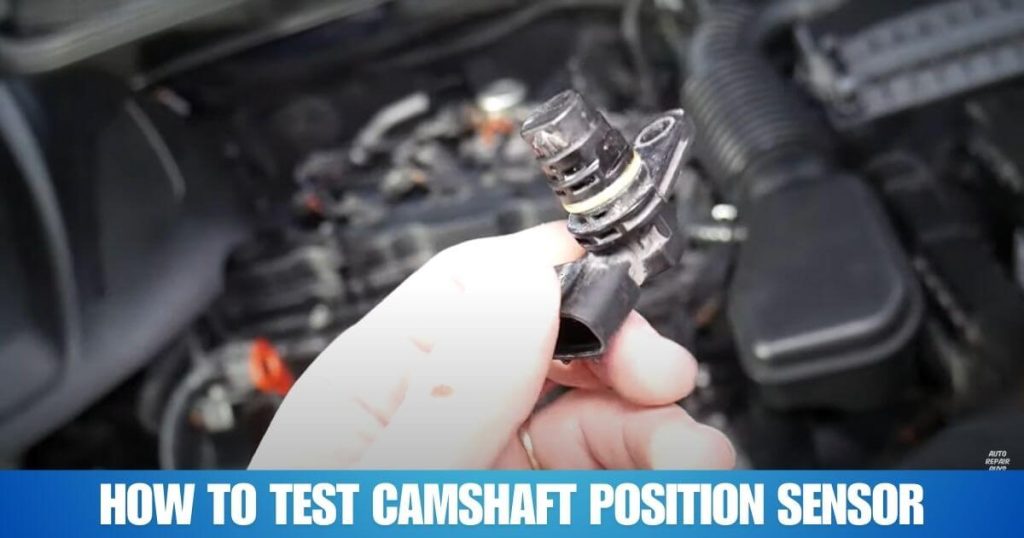
Here’s what most guides don’t tell you: on the majority of vehicles built since the mid-1990s, the gear position sensor and neutral safety switch are not separate components. They are two functions performed by one part — the Transmission Range Sensor (TRS), also called the Inhibitor Switch, the Park/Neutral Position Switch (PNP switch), or the Transmission Position Sensor depending on the manufacturer.
The TRS mounts on the transmission case or valve body, reads the selector drum or shift shaft position mechanically or electronically, and simultaneously sends gear position data to the TCM/ECM and controls the starting circuit interlock. One part. Two jobs. One replacement when it fails.
Older vehicles — roughly pre-1990s — and some budget economy cars do use separate components. But if you drive a modern automatic-transmission vehicle, you almost certainly have a unified TRS performing both functions.
Key Differences Table
| Feature | Gear Position Sensor (GPS) | Neutral Safety Switch (NSS) | Modern TRS (Unified) |
|---|---|---|---|
| Primary function | Reports gear selection to TCM/ECM | Prevents starting outside P/N | Performs both GPS and NSS functions |
| Vehicles | Older/separate-component systems | Older/separate-component systems | Most modern automatics (mid-1990s+) |
| Location | Transmission case / shift linkage | Shift linkage / transmission case | Transmission case or valve body |
| Failure symptom | Wrong gear display, harsh shifts, limp mode | No-start or starts in gear | Any combination of both |
| Starting affected | Indirectly (TCM interaction) | Directly (starting circuit) | Yes — both directly and indirectly |
| OBD2 codes | P0705–P0708, P0706 | No specific code (starting circuit) | P0705–P0708 range |
| Reverse lights | Not typically | Yes — circuit runs through NSS | Yes |
| Replacement cost (parts) | $80–$200 | $40–$150 | $120–$400 |
| Labor cost | $80–$200 | $60–$180 | $100–$250 |
| DIY feasibility | Moderate | Moderate | Moderate — varies by vehicle |
Pros & Cons
Gear Position Sensor Failure — Implications
What it means when it fails:
- The TCM is flying blind — making shift decisions without accurate position data
- Symptoms appear as transmission problems, not electrical problems — leading many drivers to chase expensive transmission repairs
- The car may still start normally while shifting incorrectly — creating a false sense that the starting system is fine
- Limp mode activation (transmission locks into a single safe gear) protects the transmission from damage but makes the vehicle difficult to drive
Repair implications:
- OBD2 codes typically present — P0705, P0706, P0707, P0708 point directly to the TRS/GPS circuit
- Connector inspection and cleaning should always precede part replacement — resolves a significant percentage of cases for $0
- On some vehicles, TCM recalibration is required after sensor replacement — a step many DIY guides omit
Neutral Safety Switch Failure — Implications
What it means when it fails:
- A switch stuck open = complete no-crank condition in all gear positions — frustrating but safe
- A switch stuck closed = engine can start in any gear = genuine safety hazard — the car can lurch forward or backward the moment the engine fires
- No OBD2 code typically generated — the starting circuit failure doesn’t register as a powertrain fault
- Reverse lights may stop working simultaneously
Repair implications:
- The stuck-closed failure is an immediate stop-driving scenario — do not operate the vehicle until repaired
- Diagnosis requires a multimeter to test switch continuity across gear positions — an OBD2 scanner alone won’t catch a pure starting circuit failure
- Adjustment of the switch position (on vehicles with adjustable NSS) sometimes resolves the fault without replacement
Performance Differences — How Each Failure Affects Driving
Understanding what each failure actually feels like in the driver’s seat is where most diagnostic guides fall short.
Gear Position Sensor Failure: The Transmission Problem
The first thing I tell a customer who comes in with harsh shifting, random downshifts, or a transmission that seems confused about what gear it’s in — before I touch the transmission itself — is to pull the GPS/TRS codes. Three times out of ten, it’s not a transmission problem at all. It’s a $150 sensor feeding the TCM garbage data.
When the gear position sensor fails or drifts, the TCM receives incorrect or missing position signals. The consequences cascade:
Harsh or erratic shifting: The TCM commands shifts based on position data that doesn’t match actual gear selection. The result is shifts that happen at wrong times, with wrong timing, or not at all.
Limp mode activation: When the TCM detects conflicting or absent position signals, it activates limp mode — locking the transmission in a single gear (usually 2nd or 3rd) to protect it from damage caused by incorrect shift commands. The car drives but feels severely restricted, especially at highway speeds.
Wrong gear display: The dashboard PRNDL indicator shows the wrong position — or flickers between positions — because the sensor data driving it is incorrect.
Incorrect gear engagement: In some failure modes, the transmission attempts to engage the wrong gear for the selected position, causing surging, clunking, or unexpected deceleration.
Neutral Safety Switch Failure: The Starting Problem
Neutral safety switch failure is more immediately obvious — and more immediately dangerous in one of its two failure modes.
No-crank in all positions: The switch has lost continuity. Turn the key or press the start button — nothing happens. Not even a click from the starter solenoid. The starting circuit is broken regardless of gear position. Frustrating, but safe.
Starting in gear (stuck closed): The switch has lost its ability to open in Drive or Reverse. The car starts normally — but it starts with the drivetrain engaged. On a car pointing toward a garage wall, a person, or another vehicle, the lurch when the engine fires can cause a serious accident. This failure mode requires immediate attention. Do not operate the vehicle.
Reverse lights failure: The reverse light circuit passes through the NSS or TRS on most vehicles. A failed switch in the wrong position cuts the reverse light circuit — the lights don’t illuminate when backing up.
Reliability — Which Fails More Often and Why
Both components — whether separate or unified in a TRS — are generally reliable to 100,000–150,000 miles under normal conditions. Premature failure almost always traces to one of three causes:
Connector corrosion: The most common failure mode. The multi-pin connector at the TRS or NSS sits in the transmission area — exposed to oil spray, heat cycling, moisture intrusion, and road salt in northern climates. Over time, the pins corrode, resistance increases, and signal quality degrades. The sensor reads as failed when the actual sensor is fine. Always inspect and clean the connector before replacing the sensor. This resolves approximately 30–40% of apparent sensor failures with no parts cost.
Wiring harness damage: The wiring between the sensor and the TCM/ECM runs through the engine bay and under the vehicle — subject to heat, abrasion, and rodent damage. A single broken wire produces the same fault code as a failed sensor. A visual harness inspection is step two after connector cleaning.
Mechanical wear at the shift linkage: On vehicles where the sensor position is adjusted by the shift linkage, wear in the linkage bushings allows the sensor to drift out of its calibrated range over time — producing intermittent faults that worsen gradually. Linkage adjustment or bushing replacement may resolve the fault before sensor replacement is needed.
The sensor itself: Actual internal sensor failure — the electronic component itself dying — is the least common cause of these faults, though it does occur, typically from sustained heat exposure near the transmission.
Maintenance & Cost
Diagnostic Cost — Start Here Before Buying Parts
| Diagnostic Step | Cost | Resolves What % of Cases |
|---|---|---|
| OBD2 scan (DIY scanner) | $0–$25 (if you own a scanner) | Identifies TRS/GPS codes — ~70% of cases |
| OBD2 scan (auto parts store — free) | $0 | Same as above |
| Connector inspection and cleaning | $0 | Resolves ~30–40% of apparent failures |
| Multimeter continuity test (NSS) | $0 (if you own one) | Confirms NSS open/closed state |
| Shop diagnostic fee | $80–$150 | Comprehensive — recommended if DIY steps unclear |
Repair Cost Comparison
| Repair | DIY Parts Cost | Shop Total (Parts + Labor) |
|---|---|---|
| Connector cleaning (no parts) | $0 | $0 (DIY) / $80–$120 (shop diagnostic) |
| Neutral safety switch replacement | $40–$150 | $120–$330 |
| Gear position sensor replacement | $80–$200 | $180–$400 |
| Transmission range sensor (unified TRS) | $120–$400 | $230–$650 |
| Shift linkage bushing replacement | $20–$60 | $80–$200 |
| TCM recalibration (if required) | N/A (dealer/specialist) | $80–$200 |
The most expensive mistake: Replacing the TRS or GPS without first cleaning the connector and checking the wiring harness. A corroded connector is a $0 fix. A new TRS on a corroded connector will throw the same code within weeks.
Fuel Economy
A failed gear position sensor has a direct and measurable fuel economy impact — one of the few sensor failures that does.
Incorrect gear engagement: When the TCM receives wrong position data, it may command incorrect gear ratios for the driving conditions. An engine lugging in too high a gear, or revving unnecessarily high in too low a gear, both waste fuel directly.
Limp mode: Transmission limp mode — the TCM’s safe-mode response to sensor failure — locks the transmission in a middle gear (typically 2nd or 3rd) regardless of speed. At highway speeds, this means the engine is spinning far higher than needed — a severe fuel economy penalty. Limp mode at 65 mph in 3rd gear on a 6-speed transmission can reduce fuel economy by 25–40% compared to normal top gear operation.
Neutral safety switch: A failed NSS has no direct fuel economy impact — it either prevents starting or it doesn’t. There is no in-motion fueling effect from NSS failure alone.
Best for Daily Driving — Which Failure Is More Manageable
Gear position sensor failure — can be driven carefully short-term: If the car starts normally but is shifting harshly or showing the wrong gear position, you can typically drive it carefully for a short period while arranging repair. Avoid aggressive acceleration and be aware the transmission may behave unpredictably. If limp mode activates, the car is driveable at low speeds but highway driving becomes impractical. Get it diagnosed promptly — operating the transmission on bad sensor data risks damage to shift solenoids and valve body components over time.
Neutral safety switch failure — depends entirely on the failure mode:
Stuck open (won’t start): The car is immobile but safe. You’re not driving it anywhere until it’s fixed — it simply won’t start. Call for assistance or diagnose and repair before attempting to start.
Stuck closed (starts in gear): Do not drive the vehicle. A switch that allows starting in Drive or Reverse is a safety hazard that requires immediate repair. No short-term operation. No exceptions.

Best for High-Mileage and Performance Vehicles
High-mileage daily drivers: At 100,000+ miles, both connector corrosion and wiring harness fatigue accumulate. Before replacing any sensor, invest 30 minutes in a thorough connector inspection — remove the connector, inspect for green or white corrosion on the pins, clean with electrical contact cleaner, apply dielectric grease, and reinstall. This step resolves a disproportionate number of high-mileage sensor “failures” for zero parts cost.
Performance vehicles with aftermarket transmission tuning: If your vehicle has aftermarket TCM tuning (custom shift maps, performance transmission controllers), a TRS replacement may require recalibration of the TCM to recognize the new sensor’s output range. Installing an OEM-specification TRS on a tuned vehicle and expecting it to work without recalibration is a common error that produces persistent fault codes even after correct part installation. Consult the tuner or the transmission specialist who performed the original tune before ordering parts.
Vehicles with known TSBs: Several manufacturers — notably certain GM, Ford, and Chrysler platforms — have Technical Service Bulletins covering TRS connector failures, wiring harness routing issues, or sensor calibration problems. Before paying for a replacement sensor, search the NHTSA TSB database for your specific year, make, and model. A known TSB may indicate a covered repair procedure or a specific failure pattern that changes the diagnostic approach.
Which Lasts Longer?
Both components — gear position sensor and neutral safety switch, or the unified TRS — typically last 100,000–150,000+ miles when the connector and wiring harness are maintained.
The sensor itself rarely fails from internal degradation before 150,000 miles under normal conditions. The connector and wiring are the weak points, and they degrade on a timeline driven by environment (road salt, heat, moisture) rather than mileage.
Factors that shorten service life:
- Northern climate road salt exposure — accelerates connector pin corrosion dramatically
- Transmission fluid leaks near the sensor — degrades connector seals and wiring insulation
- Rodent damage to wiring harness — unpredictable but increasingly common
- Repeated heat cycling from performance driving or towing — accelerates connector pin oxidation
- Failure to address minor symptoms early — intermittent faults that become permanent failures
Factors that extend service life:
- Annual connector inspection and dielectric grease application (free, 10 minutes)
- Addressing transmission fluid leaks promptly before they reach sensor wiring
- Replacing wiring harness clips and retainers when they break — prevents abrasion damage
A sensor that’s inspected and maintained at major service intervals routinely lasts the life of the vehicle. One that’s ignored until it fails typically does so between 80,000 and 120,000 miles.
FAQs About Gear Position Sensor vs Neutral Safety Switch
Are the gear position sensor and neutral safety switch the same part?
On most vehicles built since the mid-1990s, yes — they are two functions performed by one component called the Transmission Range Sensor (TRS), also known as the inhibitor switch or park/neutral position switch depending on the manufacturer. Older vehicles and some budget economy cars use separate components. Check your vehicle’s service documentation or ask a parts store to look up the specific components for your year, make, and model before ordering parts.
Can I bypass the neutral safety switch to start my car?
You can — connecting the starter circuit directly bypasses the NSS interlock and allows the engine to start regardless of gear position. But this should only be done as a temporary diagnostic test to confirm the switch is the fault, never as a permanent fix. A permanently bypassed NSS means the car can start in Drive or Reverse — a serious safety hazard. If you bypass it to confirm diagnosis, repair or replace the switch before operating the vehicle normally.
What OBD2 codes point to a gear position sensor or neutral safety switch failure?
The primary codes are P0705 (Transmission Range Sensor Circuit Malfunction), P0706 (Transmission Range Sensor Circuit Range/Performance), P0707 (Transmission Range Sensor Circuit Low Input), and P0708 (Transmission Range Sensor Circuit High Input). These cover TRS/GPS circuit faults. A pure neutral safety switch failure in the starting circuit typically does not generate an OBD2 fault code — it simply prevents starting, requiring multimeter testing rather than scanner diagnosis.
How do I test a neutral safety switch at home?
With the ignition off and the connector unplugged from the NSS or TRS, use a multimeter set to continuity or resistance mode. Probe the switch terminals that correspond to the starter circuit (consult your vehicle’s wiring diagram for pin identification). In Park and Neutral, the switch should show continuity (closed circuit). In Drive, Reverse, and other gear positions, it should show no continuity (open circuit). A switch that shows continuity in Drive or Reverse has failed in the dangerous stuck-closed mode.
Can a bad gear position sensor cause transmission damage?
Indirectly, yes — over time. When the TCM receives incorrect gear position data, it commands shift solenoids to activate at wrong times and in wrong sequences. Repeated incorrect shift commands stress the valve body, clutch packs, and solenoids. Limp mode is the TCM’s attempt to prevent this damage — it locks the transmission in a safe gear to stop the incorrect shift commands. If limp mode activates, address the sensor fault promptly. Operating in limp mode for extended periods is manageable short-term but adds wear over time.
Verdict
Car won’t start — no crank in any position: Scan for OBD2 codes first. If P0705–P0708 codes are present, the TRS is the suspect. If no codes, test the NSS with a multimeter for continuity across gear positions. Clean the connector before ordering any part.
Car starts in Drive or Reverse: Neutral safety switch or TRS stuck in the closed position. Stop driving the vehicle immediately. This is a safety repair, not a monitor-and-wait situation.
Harsh shifting, limp mode, wrong gear display: Gear position sensor / TRS failure. Pull OBD2 codes to confirm. Clean the connector. If codes persist after connector service, replace the TRS (or standalone GPS if your vehicle uses separate components).
Reverse lights stopped working with no other symptoms: NSS or TRS — test the reverse light circuit through the switch. Often resolved by connector cleaning or switch adjustment before replacement.
The honest diagnostic sequence for any of the above:
- OBD2 scan — identify codes
- Visual harness inspection — check for damage
- Connector cleaning — resolve 30–40% of cases for free
- Multimeter test — confirm sensor output vs. specification
- Replace the sensor only after steps 1–4 are complete
Skipping to step 5 without the others wastes money on parts that won’t fix a wiring problem.