
This article was updated in August 4, 2026 with new products and information by Mark S. Taylor
There’s a special kind of dread that sets in when your car makes an unexpected noise. If that noise only happens when you’re braking at low speeds – maybe a squeal as you roll up to a stop sign, or a grind just before you come to a full stop – it can be both annoying and alarming. You wonder if your brakes are about to fail, or if you’re just driving a symphony of mechanical protests. As a mechanic with twenty years under the hood, I can tell you that this specific symptom is a common one, and while it’s almost always a sign that something needs attention, it’s not always an emergency. We’re going to cut through the noise, figure out exactly what your car is trying to tell you, and whether you need to get it to a shop yesterday or if you have a little breathing room.

Contents
- 1 The Low-Speed Brake Mystery: Why Only Then?
- 2 Decoding the Sound: What Kind of Noise Are You Hearing?
- 3 Common Culprits: What’s Making Your Brakes Talk?
- 4 Diagnosing Low-Speed Brake Noise: A Mechanic’s Approach
- 5 Can You Drive With It? Safety & Urgency of Brake Noise
- 6 Repair Cost Breakdown: Fixing Those Noisy Brakes
- 7 DIY vs Mechanic: Who Should Tackle Noisy Brakes?
- 8 Prevention Tips: Silence Your Slow Stops
- 9 FAQs About Car Noise When Braking at Low Speed?
- 9.1 Q: My car just got new brake pads and now it squeals at low speeds. Is this normal?
- 9.2 Q: I only hear the grinding noise when I first drive in the morning, but it goes away after a few stops. What is it?
- 9.3 Q: My brakes groan loudly when I’m almost at a stop, but they don’t squeal or grind. What could that be?
- 9.4 Q: Can a loose wheel cause a clunking noise when braking at low speed?
- 9.5 Q: Should I use “anti-squeal” spray on my brake pads if they’re making noise?
- 10 Verdict: The Bottom Line
The Low-Speed Brake Mystery: Why Only Then?
It’s a fair question: if your brakes are making noise, why only when you’re almost stopped? It seems counter-intuitive, doesn’t it? After all, shouldn’t worn brakes protest loudly at high speeds too? The answer lies in the physics of braking and the behavior of materials at different speeds and pressures.
- Resonance and Vibration: At higher speeds, the brake pads are pressed firmly against the rotors, often damping out minor vibrations. As you slow down and apply lighter pressure, the pads can start to vibrate against the rotors at their resonant frequency, creating that high-pitched squeal. Think of it like drawing a bow across a violin string – the right pressure and speed create the sound.
- Light Pedal Pressure: Often, low-speed braking involves lighter pedal application. This doesn’t apply enough force to fully seat the pads against the rotor, allowing them to chatter or vibrate.
- Surface Imperfections: Rust is a big one. After sitting overnight, a thin layer of surface rust can form on your brake rotors. At high speeds, a few hard stops will scrub this off. But at low speeds, with light pressure, it can cause a temporary grinding or scraping sound until it’s worn away, often only noticeable on your first few stops of the day.
- Brake Dust Buildup: Fine metallic brake dust can accumulate between the pad and rotor, acting as an abrasive at low speeds, contributing to chirps or squeals.
- Component Slack: As brake components (calipers, pads, hardware) wear, they can develop a small amount of play. This slack is often taken up and held firmly at higher speeds, but at low speeds, or with intermittent light braking, these loose components can clunk or click as forces shift.
So, it’s not that your brakes are only bad at low speeds; it’s that the unique conditions of low-speed braking (light pressure, more prevalent resonance, less heat to burn off imperfections) are perfect for revealing existing issues.
Decoding the Sound: What Kind of Noise Are You Hearing?
When you tell a mechanic your brakes are “making a noise,” it’s not much to go on. But if you can describe the type of noise, its location, and the exact conditions, you’ve handed us a powerful diagnostic tool.
- Squealing (High-Pitched Whine/Chirp):
- Common: Often a high-pitched metallic squeal.
- Conditions: Can happen with light pedal pressure, usually just before coming to a complete stop. Often happens more when brakes are cold.
- Likely Causes: Brake pad wear indicators (if metallic), glazed brake pads or rotors, brake dust buildup, vibration of brake pads within the caliper, lack of anti-squeal shims or proper lubrication on pad backing plates. New pads can also squeal briefly during break-in.
- Grinding (Deep, Metallic Rubbing):
- Common: A rough, metallic, abrasive sound.
- Conditions: Can happen at very low speeds, often with harder pedal pressure. You might feel it through the pedal or steering wheel.
- Likely Causes: Severely worn brake pads (metal-on-metal), hard spots on rotors, foreign objects (rocks, debris) lodged in the caliper, or heavy surface rust on the rotors (especially after sitting for a while). This is a more serious sound.
- Clunking or Thumping:
- Common: A dull, heavy, single or repetitive impact sound.
- Conditions: Often heard at the very beginning or end of a low-speed stop, sometimes associated with a change in direction (like stopping then reversing).
- Likely Causes: Loose brake caliper bolts, worn caliper guide pins, excessive play in a wheel bearing, loose suspension components (ball joints, control arm bushings) that are put under stress during braking, or loose lug nuts.
- Groaning or Moaning:
- Common: A low-pitched, sometimes resonant sound.
- Conditions: Often when applying light pressure just before stopping, or on first few stops.
- Likely Causes: Brake pad material vibrating against the rotor, sometimes a sign of glazed pads, or surface rust that hasn’t fully worn off yet. Can also be a characteristic of certain brake pad compounds (e.g., performance pads).
- Clicking:
- Common: A light, repetitive sound.
- Conditions: Can occur with very light pedal pressure or just as the wheel rotates when stopping.
- Likely Causes: Loose brake pads shifting slightly within the caliper, a small stone or debris stuck between the rotor and splash shield, or an ABS sensor ring issue (rarely specific to low-speed braking unless also combined with other issues).
The more accurately you can describe the sound and the conditions under which it occurs, the faster and more precise the diagnosis will be.
Common Culprits: What’s Making Your Brakes Talk?
Most noise when braking at low speed points to one of these usual suspects in your brake system or nearby components:
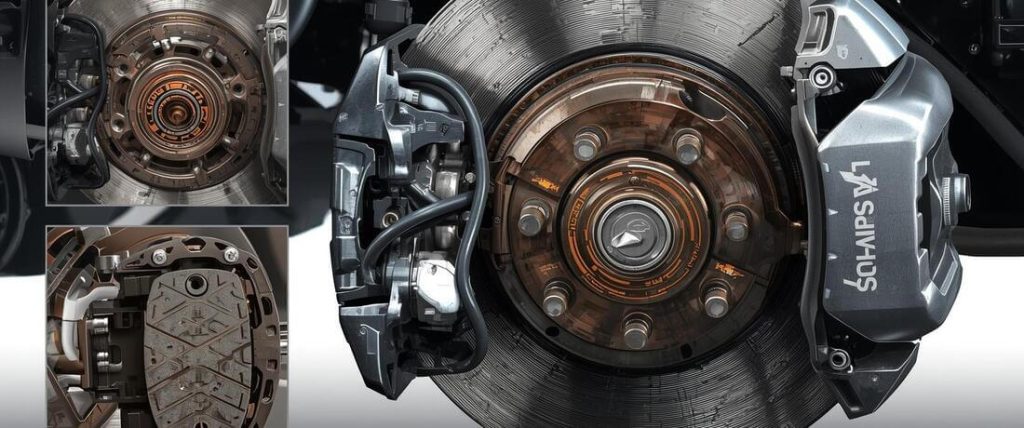
- Worn Brake Pads: This is the most frequent cause of both squealing and grinding. Pads are designed with wear indicators – small metal tabs that scrape against the rotor when the friction material gets too thin, creating a high-pitched squeal. If you ignore that squeal, the friction material can wear completely away, leading to a dangerous, metallic grinding sound as the pad’s steel backing plate rubs directly on the rotor.
- Surface Rust on Rotors: After your car sits, especially overnight or in damp weather, a thin layer of rust can form on the cast-iron rotors. This rust is typically scraped off during your first few stops, causing a temporary scraping or grinding sound, particularly noticeable at low speeds. It’s usually harmless, but if it’s excessive or persistent, it can point to a larger issue or poor quality rotors.
- Brake Dust & Glazed Pads/Rotors: Over time, fine metallic dust from pad wear can build up. This dust, along with pads or rotors that have become “glazed” (hardened and shiny due to heat), can cause squealing or groaning at low speeds due to altered friction characteristics.
- Loose Brake Hardware: The brake caliper is designed to float on guide pins and uses clips and springs to hold the pads firmly in place. If these parts are worn, seized (from lack of lubrication), or improperly installed, the pads can vibrate or shift within the caliper, leading to squeals, clunks, or rattles, especially at low speeds where forces are less intense.
- Caliper Issues: A caliper that’s not sliding freely on its guide pins, or a piston that’s slightly sticking, can cause uneven pad wear and noise. This can manifest as a persistent squeal or grinding from one side as the pad doesn’t release properly.
- Foreign Objects: Sometimes, a small stone, piece of gravel, or other road debris can get lodged between the brake rotor and the caliper or splash shield, creating a distinct scraping or clicking noise that’s often more noticeable at low speeds.
- Wheel Bearings & Suspension Components: While not directly part of the brake system, excessive play in a wheel bearing or worn suspension components (like ball joints or tie rod ends) can allow the wheel to move slightly under braking forces, leading to clunking or thumping sounds that might mimic a brake issue.
Diagnosing Low-Speed Brake Noise: A Mechanic’s Approach
Pinpointing the exact cause of a low-speed brake noise requires a systematic approach. You can help by noting your observations, but a professional diagnosis is crucial for safety.
- Listen, Observe, and Document: Before you even bring it to the shop, make mental notes: What exact sound? Is it a squeal, grind, clunk? When does it happen? Light pedal pressure, hard pedal, just before stopping, only when cold? Which wheel area? Does it change when turning? These details are invaluable for me.
- Visual Inspection (Safe & Simple): Park on level ground. You can often see the outer brake pad through the wheel spokes. Is it very thin? Can you see deep grooves or score marks on the rotor? Is there excessive rust? Never stick your hand into the wheel area unless the car is off and secured.
- Basic Checks: If you’re comfortable, you can gently push down on each corner of the car to check for excessive suspension play. Check lug nuts for tightness. A truly loose lug nut can cause a clunking noise under braking.
When your car comes to my shop, here’s how a good mechanic will approach it:
- Confirm the Complaint: The first step is always a test drive, replicating the exact conditions you described. I need to hear and feel the noise myself to pinpoint its source and character. Driving at low speeds, varying pedal pressure, and making turns are all part of this.
- Lift and Inspect: On the lift, I’ll remove the wheels and perform a thorough visual inspection:
- Pads: Check pad thickness. Is one pad significantly thinner than the other on the same wheel? Is the wear even? Are wear indicators exposed?
- Rotors: Look for deep grooves, score marks, cracks, excessive rust, or signs of glazing. I’ll check for runout (wobble) with a dial indicator.
- Calipers: Check for free movement of the caliper and its guide pins. Is the piston seized? Are there any leaks?
- Hardware: Inspect anti-rattle clips, shims, and caliper bolts for damage, corrosion, or improper installation.
- Surrounding Components: I’ll also check wheel bearings for play, and look at steering and suspension components for any looseness that could contribute to noise under braking.
- Clean and Lubricate: Often, simply disassembling the brakes, cleaning away accumulated dust, lubricating caliper slide pins, and applying anti-squeal compound to pad backing plates can eliminate many low-speed squeals. The first thing I often do for a customer complaining of low-speed squeal, assuming pads aren’t worn out, is a thorough brake cleaning and lubrication service – it’s amazing how many noises that solves.

Can You Drive With It? Safety & Urgency of Brake Noise
This is the big question, and the answer depends entirely on the type of noise you’re hearing. Your brakes are your primary safety system; don’t guess when it comes to their health.
- Immediate Danger (Stop Driving!): If you hear a loud, metallic grinding sound, especially if it’s accompanied by a spongy pedal, a pulling sensation, or a significant increase in stopping distance, do not drive the car. A grinding noise almost always means metal-on-metal contact, which means your pads are completely worn out, or something else catastrophic is happening. This is an immediate safety hazard and could lead to total brake failure or severe damage to your rotors, turning a simple pad job into a much costlier full brake job.
- Urgent Attention (Drive with Caution): A consistent, sharp squealing, a recurring clunking, or a new, persistent groaning noise needs to be inspected as soon as possible. While you might be able to drive it to the shop, avoid heavy braking or long trips. These sounds often indicate worn pads approaching their limit, seized caliper components, or loose hardware that could degrade further and compromise your stopping power.
- Monitor (But Get It Checked Soon): A very light, intermittent squeal (especially on the first few stops of the day, or after new pads have just been installed) or a temporary scraping sound from rust might not be an immediate emergency. However, it’s still a signal that something needs attention. Get it inspected at your earliest convenience to rule out anything serious. Don’t ever assume a brake noise is harmless without a professional looking at it. Your life, and the lives of others on the road, depend on those brakes.
Repair Cost Breakdown: Fixing Those Noisy Brakes
When those brakes start talking to you at low speeds, the cost to quiet them down can swing wildly depending on what’s actually making the racket. Ignoring a minor noise can quickly turn into a major expense if it leads to further damage. Here’s a realistic look at what you can expect:
| Component Causing Noise | Parts Cost (Estimated) | Labor Cost (Estimated) | Total Cost Range (Typical) | Key Factor Affecting Price |
|---|---|---|---|---|
| Brake Pads (one axle) | $30 – $120 | $80 – $180 | $110 – $300 | Pad material (ceramic vs. semi-metallic), vehicle type |
| Rotors (one axle) | $60 – $200 | Included in pad labor | $180 – $450 | Rotor type (standard vs. drilled/slotted), machining vs. replacement |
| Full Brake Job (Pads & Rotors, one axle) | $90 – $320 | $80 – $180 | $170 – $500 | Quality of components, condition of caliper/hardware |
| Brake Caliper (one) | $60 – $200 | $100 – $250 | $160 – $450 | Remanufactured vs. new, ease of access |
| Brake Hardware Kit (one axle) | $10 – $30 | Included in pad labor | $10 – $30 (add-on) | Often replaced with pads; price is marginal |
| Brake Fluid Flush | $40 – $80 | $80 – $150 | $120 – $230 | Fluid type, method of bleeding |
| Wheel Bearing (one) | $100 – $400 | $200 – $450 | $300 – $850 | Press-in vs. hub assembly, vehicle type |
These figures are general estimates for a typical passenger vehicle in the USA and can fluctuate based on your location, vehicle make/model, and the specific parts chosen.
Always get a detailed, written estimate that clearly separates parts, labor, and any additional services like brake fluid flushing. If a shop quotes you over $350 total for just pads and rotors on a standard four-cylinder car, get a second opinion. Good brake service isn’t about the lowest price, it’s about the right parts, properly installed, for safe stopping.
DIY vs Mechanic: Who Should Tackle Noisy Brakes?
Working on brakes is not like changing your oil. This is a safety-critical system, and errors can have severe consequences.
- DIY Feasible (with caution and knowledge):
- Visual inspection of pad thickness and rotor condition.
- Cleaning accumulated brake dust (with appropriate safety gear).
- Checking lug nut tightness.
- Why: These tasks are observational or require minimal tools and pose low risk if done correctly.
- Mechanic Recommended (or required):
- Replacing brake pads and rotors.
- Servicing or replacing calipers.
- Bleeding the brake system or flushing fluid.
- Diagnosing and replacing wheel bearings or suspension components.
- Any diagnosis beyond basic visual checks, especially if there’s grinding or clunking.
- Why: These jobs require proper torque specifications, specialty tools (like caliper compressors, torque wrenches, brake bleeders), a safe way to lift the vehicle, and an understanding of hydraulic systems. Your brakes are too important to mess up. If you don’t have the right tools, knowledge, and confidence, a professional mechanic is the only answer. Don’t compromise your safety or others’ to save a few bucks.
Prevention Tips: Silence Your Slow Stops
While some noises (like surface rust) are almost unavoidable, diligent maintenance and good habits can significantly reduce the likelihood of persistent low-speed brake noises:
- Regular Brake Inspections: Have your brakes checked at least once a year, or every 10,000-12,000 miles. Don’t just wait for them to make noise.
- Keep Them Clean: If you notice a lot of brake dust, a quick spray with brake cleaner (when the brakes are cool) can help prevent buildup that leads to squealing.
- Proper Installation: When replacing pads, ensure all brake hardware (clips, shims, guide pins) is cleaned, lubricated with high-temperature brake grease, and installed correctly.
- Choose Quality Pads: Different pad compounds (ceramic, semi-metallic, organic) have different noise characteristics. Ceramic pads are generally quieter but can sometimes create a light, low-speed squeal when cold. Your mechanic can advise on the best type for your vehicle and driving style.
- Smooth Braking Habits: Avoid sudden, harsh stops unless necessary. Gradual, controlled braking reduces wear and heat buildup, helping prevent glazing and prolonging component life.
- Address Rust Early: If your car sits for long periods, those first few noisy stops are inevitable. But persistent heavy rust can damage rotors. Consider driving it regularly to keep the rotors clean.
FAQs About Car Noise When Braking at Low Speed?
Q: My car just got new brake pads and now it squeals at low speeds. Is this normal?
A: A slight, intermittent squeal from new brake pads during the first few hundred miles is often normal. Pads need to “bed in” to the rotors, and some materials are just naturally a bit noisy. If it’s persistent, very loud, or accompanied by other issues, have the installer recheck their work.
Q: I only hear the grinding noise when I first drive in the morning, but it goes away after a few stops. What is it?
A: That’s almost certainly surface rust on your rotors, especially if you live in a humid area or it rained overnight. A thin layer of rust forms on the exposed iron rotors. Your first few brake applications grind it away, and the noise stops. It’s usually harmless, but keep an eye on pad thickness.
Q: My brakes groan loudly when I’m almost at a stop, but they don’t squeal or grind. What could that be?
A: A groaning noise at very low speeds can be a characteristic of certain brake pad compounds or glazed pads/rotors. It’s often due to low-frequency vibration. While usually not immediately dangerous, it indicates altered friction characteristics and warrants inspection to ensure there isn’t uneven wear or a stuck caliper.
Q: Can a loose wheel cause a clunking noise when braking at low speed?
A: Yes. If your lug nuts are loose, the wheel can shift slightly on the studs when braking, causing a clunking sound. This is extremely dangerous. If you suspect this, pull over safely and check all lug nuts immediately. It could also be excessive play in a wheel bearing.
Q: Should I use “anti-squeal” spray on my brake pads if they’re making noise?
A: Anti-squeal products are typically applied to the back of the brake pads during installation to dampen vibrations. Spraying it onto an assembled brake system or directly onto the pad’s friction material is ineffective and potentially harmful. A noise means a deeper look is needed, not just a spray-on fix.
Verdict: The Bottom Line
A noise when braking at low speed is your car’s primary safety system telling you something’s amiss. While a light squeal might just be a minor annoyance or temporary rust, a metallic grinding or a clunking sound signals something far more serious. Your brakes are not a component to ignore or delay service on. Get any new or changing brake noise professionally inspected by a qualified mechanic. Early diagnosis and repair protect your safety, prevent escalating damage to other brake components, and ultimately save you money and headaches down the road.