
This article was updated in September 25, 2026 with new products and information by Mark S. Taylor
If your car vibrates when braking, the problem may be in the brake system, wheel and tire assembly, steering, or suspension. Common causes include brake rotor thickness variation or runout, uneven brake-pad deposits, a sticking caliper, worn suspension parts, and wheel or tire problems.
The important point is that you should not automatically blame “warped rotors.” Brake vibration is a symptom, not a diagnosis.
Where you feel the vibration, when it happens, and whether the car pulls or vibrates while cruising can help narrow down the cause.

Contents
- 1 Why Does My Car Vibrate When Braking?
- 2 Where Do You Feel the Vibration?
- 3 8 Causes of a Car Vibrating When Braking
- 3.1 1. Brake Rotor Thickness Variation or Runout
- 3.2 Important diagnostic point
- 3.3 2. Uneven Brake-Pad Material Deposits
- 3.4 3. Sticking or Seized Brake Caliper
- 3.5 A useful clue
- 3.6 4. Worn, Damaged, or Unevenly Worn Brake Pads
- 3.7 5. Worn Steering or Suspension Components
- 3.8 Diagnostic clue
- 3.9 6. Wheel or Tire Problems
- 3.10 The key question
- 3.11 7. Wheel Hub or Wheel Bearing Problems
- 3.12 8. Dirty or Corroded Hub-to-Rotor Mating Surfaces
- 4 Why Does My Car Vibrate When Braking at High Speed?
- 5 Why Does the Steering Wheel Shake When Braking?
- 6 Why Does the Brake Pedal Pulse When Braking?
- 7 How to Diagnose a Car That Vibrates When Braking
- 8 Is It Safe to Drive if Your Car Vibrates When Braking?
- 9 How Do You Fix Brake Vibration?
- 10 How Much Does It Cost to Fix a Car That Vibrates When Braking?
- 11 How to Prevent Brake Vibration
- 12 FAQs About Car Vibrates When Braking
- 13 The Bottom Line
Why Does My Car Vibrate When Braking?
Your car should slow down smoothly when you apply the brakes.
If the vehicle shakes, shudders, or pulses, something may be causing the braking force to vary as the wheels rotate.
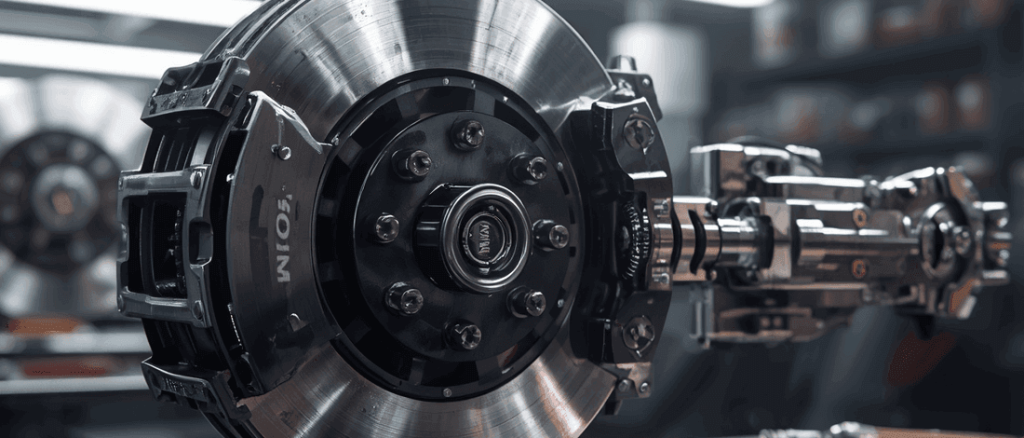
One common cause is rotor thickness variation or lateral runout. As an uneven rotor rotates between the brake pads, the pads move in and out slightly. That movement can be transmitted through the hydraulic system and felt as brake-pedal pulsation or vibration through the steering wheel or vehicle body.
But the brakes are not the only possible source.
A worn suspension component, damaged wheel, tire problem, wheel bearing, or sticking caliper can create a similar complaint.
Where Do You Feel the Vibration?
This is one of the most useful clues.
| Where you feel it | What it may point toward |
|---|---|
| Steering wheel | Front brake, wheel, tire, steering, or suspension problem |
| Brake pedal | Rotor thickness variation, rotor runout, or ABS operation |
| Seat/floor | Rear brake, wheel/tire, or suspension problem |
| Entire vehicle | Brake, wheel/tire, hub, or suspension issue |
These are diagnostic clues, not guarantees. Several components can produce overlapping symptoms.
For example, technical diagnostic information shows that brake vibration can be transmitted through the brake pedal, steering wheel, floor, or vehicle body.
8 Causes of a Car Vibrating When Braking
1. Brake Rotor Thickness Variation or Runout
This is one of the first things to investigate when a vehicle vibrates during braking.
People commonly call this a “warped rotor.”
However, that phrase can be misleading.
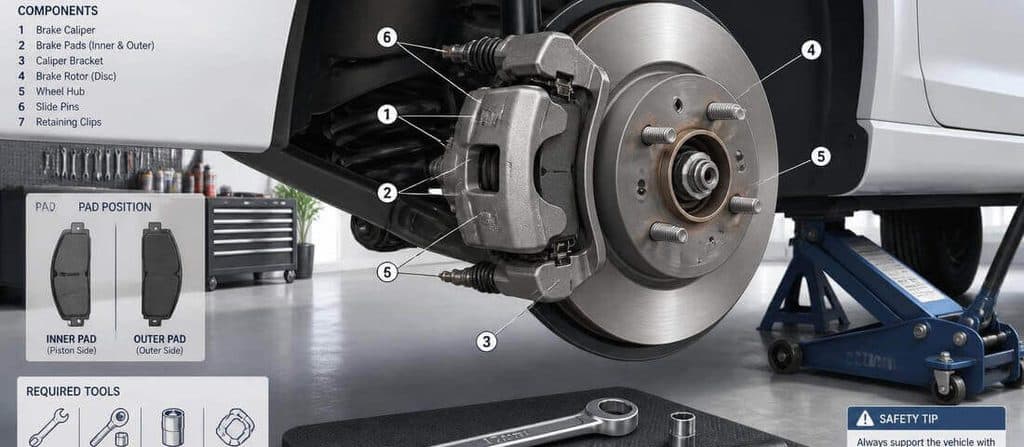
Brake service information describes brake judder as being associated with rotor thickness variation and/or rotor runout. When the rotor is not uniformly flat or does not rotate true relative to the hub, the brake pads can move as the rotor turns.
You may notice:
- Steering-wheel shake
- Brake-pedal pulsation
- Vehicle vibration
- Stronger vibration from higher speeds
- A rhythmic vibration during braking
Mazda’s service bulletin notes that brake judder can become more noticeable when slowing from higher speeds.
Important diagnostic point
Don’t replace the rotor based only on the feeling.
The rotor should be inspected and measured against the vehicle manufacturer’s specifications.
2. Uneven Brake-Pad Material Deposits
A rotor does not always have to be physically “warped” to create a vibration.
Uneven friction material deposited on the rotor can change how the brake pad contacts the rotor.
This can create a sensation similar to rotor thickness variation.
Hard braking, repeated high-temperature braking, and brake-system problems can contribute to uneven friction behavior.
If the vibration appeared after heavy braking or repeated high-temperature use, the brake surfaces deserve close inspection.
3. Sticking or Seized Brake Caliper
A brake caliper should apply and release the brake pads correctly.
If the piston or slide mechanism sticks, the pad may remain partially engaged with the rotor.
That can create:
- Excessive heat
- Uneven pad wear
- Rotor damage
- Vehicle pulling
- Burning smell
- Brake vibration
A sticking brake can also create rotor problems that return after a new rotor is installed.
That is why replacing the rotor without finding the reason for the original damage can lead to repeat problems.
Manufacturer diagnostic material specifically identifies brake-pad dragging as a contributor to excessive heat and brake judder.
A useful clue
If the vibration is accompanied by pulling to one side or an unusually hot wheel, the caliper deserves attention.
Do not touch a brake rotor immediately after driving. It can become extremely hot.
4. Worn, Damaged, or Unevenly Worn Brake Pads
Brake pads that are worn unevenly or damaged can create inconsistent contact with the rotor.
Look for:
- Uneven pad thickness
- Cracks
- Glazing
- Contamination
- Abnormal wear between inner and outer pads
However, don’t assume that replacing the pads alone will solve the vibration.
If the rotor has already developed excessive variation or heat damage, the rotor may also require service.
5. Worn Steering or Suspension Components
Not every braking vibration comes from the brakes.
When you brake, weight transfers toward the front of the vehicle.
That increased load can expose play in components such as:
- Ball joints
- Tie rod ends
- Control-arm bushings
- Wheel bearings
- Other steering or suspension components
A worn component may feel acceptable while cruising but allow unwanted wheel movement during braking.
This can create a shake or instability that feels like a brake problem.
Diagnostic clue
If the vibration is accompanied by:
- Clunking
- Loose steering
- Wandering
- Uneven tire wear
- Steering-wheel movement over bumps
inspect the steering and suspension rather than assuming the rotors are responsible.
6. Wheel or Tire Problems
A tire or wheel problem can also become more noticeable when braking.
Possible causes include:
- Tire imbalance
- Bent wheel
- Damaged tire
- Tire belt problem
- Incorrect tire pressure
- Wheel installation problems
NHTSA notes that tire balance and wheel alignment are important to prevent wheel-related shaking or vibration.
The key question
Does the car vibrate when you are not braking?
If it also shakes while cruising at highway speed, don’t limit the diagnosis to the brake system.
That makes a wheel, tire, suspension, or other rotating-component problem more important to investigate.
7. Wheel Hub or Wheel Bearing Problems
A damaged hub or wheel bearing can sometimes create vibration that becomes more noticeable under braking.
A worn bearing may also produce:
- Humming
- Growling
- Roaring
- Wheel play
- Abnormal tire wear
The exact symptoms vary by vehicle and failure mode.
Because the brake rotor mounts to the hub, problems with the hub-to-rotor interface can also contribute to rotor runout.
This is why a proper brake diagnosis should include inspection of the mounting surfaces.
8. Dirty or Corroded Hub-to-Rotor Mating Surfaces
This is an easy problem to overlook.
If corrosion, rust, dirt, or other contamination prevents the rotor from sitting correctly against the hub, the rotor may not run true.
Mazda’s brake-judder service information specifically warns that foreign material between the hub and rotor can prevent the rotor from fitting flush and contribute to repeat brake judder.
This creates an important lesson:
A new rotor does not automatically fix a brake-vibration problem if the underlying mounting problem remains.
Why Does My Car Vibrate When Braking at High Speed?
Brake vibration may become more noticeable as vehicle speed increases.
The rotating brake components are moving faster, and the braking system is handling greater kinetic energy.
Rotor thickness variation or runout is one possible cause.
But don’t use speed alone to diagnose the problem.
A vehicle that vibrates while cruising and becomes worse when braking could have a wheel, tire, hub, or suspension issue rather than a brake-only problem.
Technical diagnostic procedures recommend road testing the vehicle and determining whether vibration exists without braking or is primarily amplified when braking.
Why Does the Steering Wheel Shake When Braking?
A steering-wheel shake usually tells you that vibration is reaching the front steering system.
Possible causes include:
- Front rotor variation
- Front rotor runout
- Front caliper problems
- Wheel or tire problems
- Wheel-bearing problems
- Worn steering components
- Worn suspension components
It does not automatically mean the front brake rotors are bad.
Use the symptom as a clue, then confirm the cause with inspection and measurement.
Why Does the Brake Pedal Pulse When Braking?
A pulsing brake pedal can occur when the brake pads encounter changing rotor geometry as the rotor rotates.
Rotor thickness variation and runout are important causes.
However, ABS activation can also create a pedal pulsation during braking.
That distinction matters.
Normal ABS pulsation
If ABS activates during a hard stop or on a low-traction surface, you may feel rapid pedal pulsation.
Abnormal brake pulsation
If the pedal pulses during normal braking on dry pavement without ABS activation, the brake system should be inspected.
How to Diagnose a Car That Vibrates When Braking
Don’t start by ordering new rotors.
Use this diagnostic sequence.
Step 1: Determine When the Vibration Happens
Ask:
- Only during braking?
- During light braking?
- During hard braking?
- Mainly at highway speeds?
- When the brakes are hot?
- Even when cruising?
This immediately narrows the possibilities.
Step 2: Identify Where You Feel It
Determine whether the vibration is mainly in:
- Steering wheel
- Brake pedal
- Seat
- Floor
- Entire vehicle
Record the pattern.
Step 3: Check for Pulling
Does the car pull left or right during braking?
If yes, inspect for:
- Caliper problems
- Uneven pad wear
- Tire problems
- Suspension problems
- Alignment issues
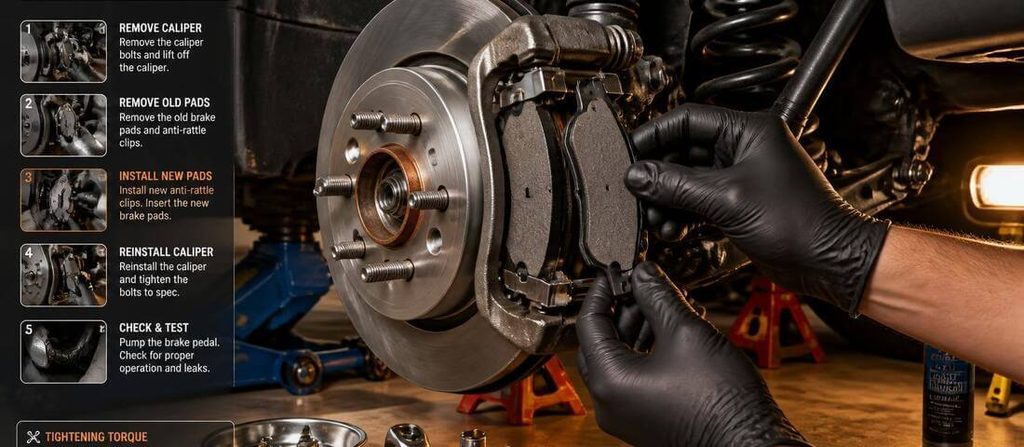
Step 4: Inspect the Brake Pads and Rotors
Look for:
- Uneven pad wear
- Rotor scoring
- Heat damage
- Cracks
- Corrosion
- Abnormal deposits
- Blue or discolored areas
Mazda’s service procedure specifically identifies corrosion, heat damage, and pad condition as part of brake-judder diagnosis.
Step 5: Measure the Rotor
Don’t rely solely on appearance.
Measure rotor thickness and runout according to the vehicle manufacturer’s specifications.
There is no universal measurement that applies to every vehicle.
Step 6: Inspect the Hub
Check the rotor-to-hub mating surfaces for:
- Rust
- Dirt
- Corrosion
- Foreign material
- Damage
Step 7: Inspect Steering and Suspension
If the brake system checks out, inspect the components that can move under braking load.
Is It Safe to Drive if Your Car Vibrates When Braking?
It depends on the cause and severity.
A mild vibration still deserves inspection because the braking system is safety-critical.
Stop driving and seek immediate professional inspection if you experience:
- Severe shaking
- Significant pulling
- Grinding
- A soft or sinking brake pedal
- Loss of braking power
- Smoke from a wheel
- Strong burning smell
- A brake or ABS warning light combined with abnormal braking
- A wheel that appears loose
- Sudden major changes in braking behavior
Don’t try to diagnose a serious brake problem by repeatedly testing it at high speed.
How Do You Fix Brake Vibration?
The correct repair depends on the cause.
| Cause | Possible repair |
|---|---|
| Excessive rotor variation/runout | Resurface or replace rotor according to specification |
| Damaged rotor | Replace rotor |
| Uneven brake pads | Replace pads and address underlying cause |
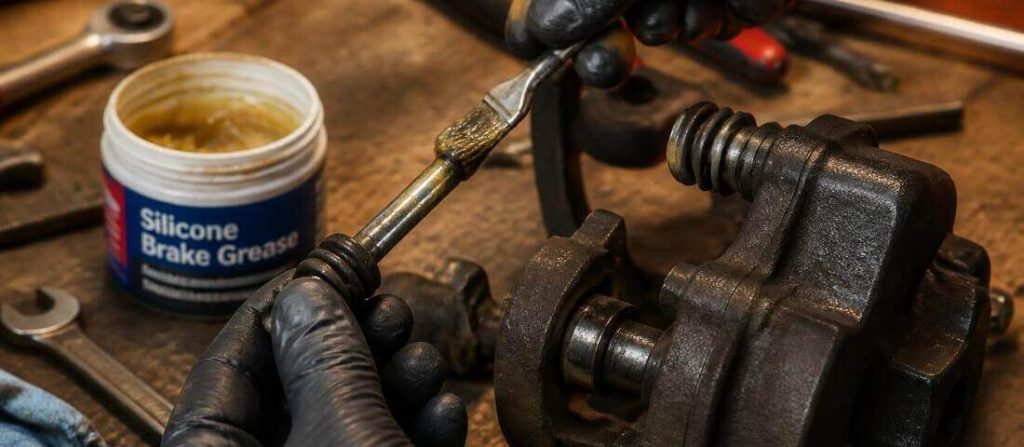
| Sticking caliper | Repair or replace caliper/hardware |
| Hub contamination | Clean mating surfaces correctly |
| Wheel/tire problem | Repair, balance, or replace as appropriate |
| Worn suspension | Replace failed component and align vehicle if required |
| Wheel bearing problem | Replace bearing/hub assembly as applicable |
Do not automatically replace every brake component.
The goal is to identify why the vibration exists, not simply replace the most commonly blamed part.
How Much Does It Cost to Fix a Car That Vibrates When Braking?
There is no reliable single price without knowing the vehicle and failed component.
The repair could involve:
- Brake inspection
- Pads
- Rotors
- Caliper service
- Wheel/tire service
- Wheel bearing
- Suspension components
- Alignment
For The Car Buzz, I would not publish a universal “$150–$800” figure without vehicle-specific research. Current search results contain broad estimates, but labor rates, vehicle configuration, parts quality, and repair scope can change the total substantially.
A better article strategy is to give cost ranges by repair category after researching current U.S. pricing.
How to Prevent Brake Vibration
You can reduce the risk by:
- Following the manufacturer’s brake-service intervals.
- Inspecting brakes when pads are serviced.
- Using the correct brake parts for the vehicle.
- Installing rotors correctly.
- Cleaning the hub-to-rotor mating surface when required.
- Correctly torquing wheel fasteners.
- Addressing sticking calipers promptly.
- Avoiding unnecessary repeated hard braking.
- Checking tires and wheel balance when vibration occurs.
Proper installation matters.
A service bulletin notes that contamination between the hub and rotor can contribute to repeat brake judder.
FAQs About Car Vibrates When Braking
Why does my car vibrate only when I brake?
Brake-related vibration commonly comes from rotor thickness variation or runout, but sticking calipers, brake-pad problems, wheel/tire issues, and worn suspension components can produce similar symptoms.
Why does my steering wheel shake when I brake?
A steering-wheel shake can be caused by front brake rotor variation, but wheel, tire, hub, steering, and suspension problems can also transmit vibration into the steering wheel.
Why does my brake pedal pulse?
Rotor thickness variation or runout can cause the brake pads to move as the rotor rotates, creating pedal pulsation. ABS activation can also cause normal rapid pedal pulsation during hard braking.
Can bad brake pads cause vibration?
Yes. Damaged, unevenly worn, contaminated, or overheated brake pads can contribute to vibration. However, the rotor and caliper should also be checked.
Can a bad caliper cause the car to vibrate when braking?
Yes. A sticking caliper can keep a pad in contact with the rotor, generating excessive heat and potentially contributing to brake judder.
Can bad suspension cause vibration when braking?
Yes. Worn steering or suspension components can allow unwanted wheel movement when braking loads shift through the vehicle.
The Bottom Line
If your car vibrates when braking, don’t automatically assume you need new brake rotors.
The most common diagnostic possibilities include:
- Rotor thickness variation or runout
- Uneven brake-pad deposits or wear
- Sticking brake caliper
- Damaged or worn brake pads
- Worn steering or suspension components
- Wheel or tire problems
- Hub or wheel-bearing problems
- Contamination between the rotor and hub
The most useful clues are where you feel the vibration, when it happens, whether it changes with speed, and whether the car pulls to one side.
Most importantly, diagnose the cause before replacing parts.
A rotor can be damaged because of another problem, such as brake-pad dragging or a poor hub-to-rotor interface. Fixing only the rotor can allow the vibration to return.