
This article was updated in November 13, 2026 with new products and information by Mark S. Taylor
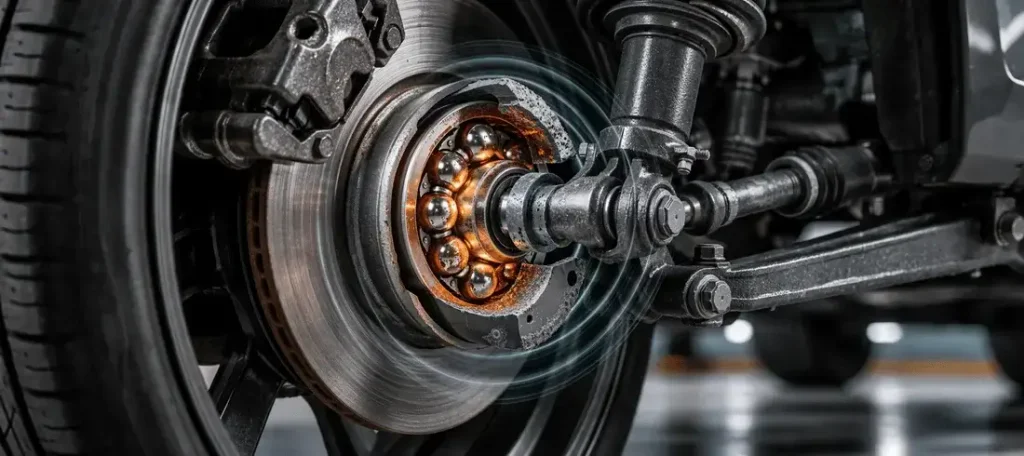
A wheel bearing can make a humming, rumbling, growling, or grinding noise that changes with vehicle speed or during turns. Cornering changes the load on the wheel ends, which can make a worn bearing more noticeable. However, tires, brakes, CV joints, and driveline parts can create similar sounds, so inspection is needed before replacing a hub.
Contents
- 1 What Does Wheel Bearing Noise Sound Like?
- 2 7 Signs That May Point to a Bad Wheel Bearing
- 2.1 1. A Hum or Growl That Increases With Road Speed
- 2.2 2. The Noise Changes During a Turn
- 2.3 3. A Rumble That Continues When You Are Not Braking
- 2.4 4. Vibration That Changes With Vehicle Speed
- 2.5 5. Clicking or Popping During a Tight Turn
- 2.6 6. Wheel Looseness or Play
- 2.7 7. An ABS Warning After Wheel or Hub Work
- 3 Wheel Bearing vs. Tire Noise vs. CV Joint vs. Brake Noise
- 4 Why the Noisy Side Can Be Difficult to Identify
- 5 How a Technician Confirms a Bad Wheel Bearing
- 6 Is It Safe to Drive With a Noisy Wheel Bearing?
- 7 What Should You Tell the Repair Shop?
- 8 FAQs About Wheel Bearing Noise When Turning
- 9 The Bottom Line
- 10 Technical References
What Does Wheel Bearing Noise Sound Like?
A worn wheel bearing often makes a low humming, rumbling, or growling sound while the vehicle is moving. The noise may start quietly and become more noticeable as road speed increases.
Some drivers describe it as a steady roar coming from one side of the vehicle. Others hear a rough grinding sound that changes during a turn.
The exact noise depends on the bearing design, the type of damage, and how far the wear has progressed.
Common sounds include:
- Humming: A steady noise that may become louder as road speed increases.
- Rumbling: A deeper sound that can resemble rough tire noise.
- Growling: A rough mechanical sound that may change during cornering.
- Grinding: A harsher noise that can indicate serious mechanical damage.
- Clicking or popping: A sound that may involve the wheel bearing, CV joint, or another wheel-end component.
A sound that changes with road speed deserves attention. However, it does not automatically mean the wheel bearing has failed.
7 Signs That May Point to a Bad Wheel Bearing
A wheel bearing can show several warning signs before it develops severe looseness or noise. Look at the full symptom pattern rather than relying on one sound.
1. A Hum or Growl That Increases With Road Speed
A bearing-related noise often changes as the wheels rotate faster. You may hear a low hum at neighborhood speeds that becomes a louder growl on the highway.
Pay attention to whether the sound follows vehicle speed rather than engine RPM.
For example, if the noise continues while the vehicle coasts and the engine speed changes, the source may be connected to the wheels or driveline. This observation helps narrow the diagnosis, but it does not identify a specific component.
2. The Noise Changes During a Turn
Cornering shifts vehicle load across the wheels. A worn bearing may become louder or change tone when its load changes.
This is one reason drivers often notice wheel-bearing noise while turning left or right.
However, the common shortcut that a left turn always identifies the right bearing is unreliable. Noise can travel through the suspension, subframe, and body, making the apparent location misleading.
Do not make sharp or repeated steering movements to test a suspected bearing. Record what you notice during normal, safe driving and let a technician reproduce the complaint.
3. A Rumble That Continues When You Are Not Braking
A bearing-related noise may continue while the vehicle moves without the driver pressing the brake pedal.
This can help distinguish it from some brake problems. A worn pad, dragging caliper, or dust shield touching the rotor may create a scraping sound that changes when the brakes are applied.
The distinction is not absolute. A technician should inspect the brake assembly and wheel end before deciding which component is responsible.
4. Vibration That Changes With Vehicle Speed
A damaged wheel bearing can contribute to vibration, but several other parts can create the same symptom.
Possible causes include:
- An unbalanced wheel
- A damaged or unevenly worn tire
- A bent wheel
- Worn suspension components
- A damaged wheel bearing or hub assembly
A vibration that appears at one speed range is not enough to condemn a bearing. The tire, wheel, suspension, and wheel end need to be checked.
5. Clicking or Popping During a Tight Turn
Repeated clicking during a tight, low-speed turn often points toward an outer CV joint.
The noise may become more noticeable as the steering angle increases. A torn CV boot can also allow grease to escape and dirt to enter the joint.
A bearing or another wheel-end problem can sometimes produce clicking or popping too. The technician should inspect the CV joints and bearing assembly together rather than replacing a part based on sound alone.
6. Wheel Looseness or Play
Excessive movement at the wheel or hub can indicate a bearing or another wheel-end problem.
The amount of acceptable movement depends on the vehicle and bearing design. Some sealed hub assemblies have different inspection requirements from older serviceable bearings.
A technician should follow the vehicle manufacturer’s procedure and use the specified measurement limits. Do not assume every vehicle should have the same allowable play.
7. An ABS Warning After Wheel or Hub Work
Some wheel-end assemblies incorporate wheel-speed sensing components or magnetic encoder features.
Damage to an encoder, incorrect installation, sensor wiring problems, or a connector fault can trigger an ABS warning.
An ABS light alone does not prove the wheel bearing is bad. The diagnostic trouble codes, sensor data, wiring, and hub design must all be considered.
Wheel Bearing vs. Tire Noise vs. CV Joint vs. Brake Noise
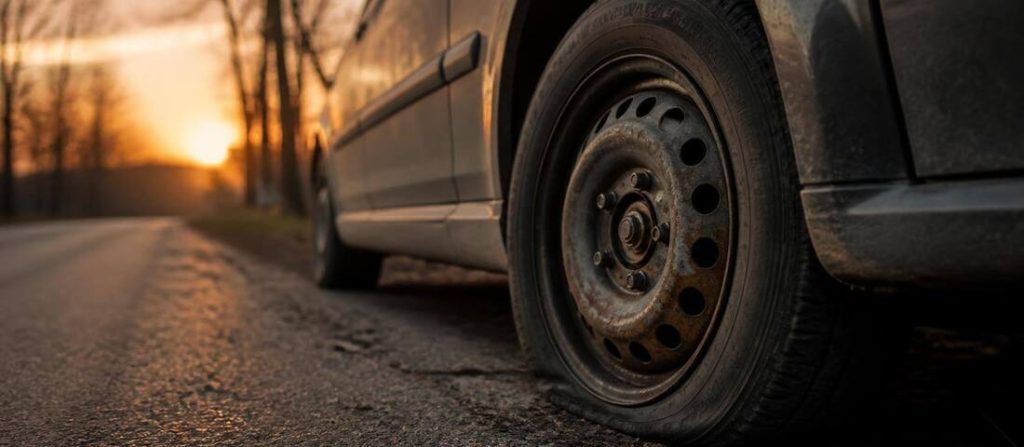
Several wheel-end and driveline problems can sound alike. This comparison helps you describe the symptoms and understand what a technician may inspect.
| What you notice | Possible source | Useful distinction |
|---|---|---|
| Hum, rumble, or growl that rises with road speed | Wheel bearing or tire | Inspect tread wear, wheel condition, and hub operation |
| Noise changes with road surface | Tire | Uneven or irregular tread may create a steady road-speed hum |
| Clicking during tight turns | Outer CV joint | Inspect the joint and its protective boot |
| Scraping that changes when braking | Brake pad, rotor, caliper, or dust shield | Inspect brake hardware and possible rotor contact |
| Vibration at a particular speed | Tire, wheel balance, suspension, or hub | Check tire condition, wheel balance, and wheel-end play |
| Clunk during acceleration or deceleration | CV joint, driveline, or differential | Check joints and driveline components rather than assuming a bearing fault |
Can Uneven Tire Wear Sound Like a Bad Wheel Bearing?
Yes. Uneven tread wear can create a humming or roaring noise that resembles a worn bearing.
Cupping, feathering, irregular tread blocks, and tire damage can all affect the sound a tire makes against the road. Some tires also produce more road noise because of their tread design.
The noise may change when the vehicle travels over a different road surface.
A technician can inspect the tread pattern, check for tire damage, and evaluate wheel balance. If the tires show irregular wear, the cause of that wear may also need attention.
For more background, see our guide to tire maintenance tips.
Can a CV Joint Make Noise Like a Wheel Bearing?
Yes, but the sound pattern may be different.
An outer CV joint often makes repeated clicking or popping during a tight turn. The noise may become more noticeable as the steering angle increases.
A wheel bearing more commonly produces a hum, rumble, or growl that changes with road speed or cornering load.
These are useful clues, not guaranteed rules. A technician should inspect the CV joint, boot, hub, and related components before deciding which part has failed.
Can Brake Problems Cause a Wheel Noise?
Yes. Brake components can create a scraping, rubbing, squealing, or grinding sound that changes with wheel speed.
Possible causes include:
- A brake pad contacting the rotor incorrectly
- A sticking brake caliper
- Loose or damaged brake hardware
- A bent dust shield touching the rotor
- Rotor damage or uneven wear
If the noise changes when you apply the brake pedal, the brake system deserves close attention.
Do not ignore a grinding brake noise. A brake problem can affect stopping performance and should be inspected promptly.

Why the Noisy Side Can Be Difficult to Identify
Drivers often try to identify a bad wheel bearing by listening during a left or right turn. This can help describe the symptom, but it is not a reliable parts-selection method.
When a vehicle turns, its weight shifts across the suspension. The sound can also travel through the body, frame, and suspension mounting points.
As a result, the noise may seem to come from a different corner than the component actually making it.
Timken’s technical guidance describes humming, rumbling, and growling that may intensify during a slight steering change. It also explains that tire, electrical, drivetrain, CV-joint, and brake components can create similar symptoms.
A technician should compare both sides and use inspection results rather than a turn-direction shortcut.
How a Technician Confirms a Bad Wheel Bearing
A proper diagnosis begins by verifying the driver’s complaint and checking other possible sources.
The technician should not replace a hub simply because the noise sounds like a wheel bearing.
1. Reproduce the Noise
The technician records when the sound occurs and what conditions affect it.
Useful details include:
- Vehicle speed when the noise starts
- Whether the sound occurs on straight roads or during turns
- Whether the noise changes on different road surfaces
- Whether braking changes the sound
- Whether vibration accompanies the noise
- Whether the vehicle has recently had tire, brake, or suspension work
A controlled road test may help reproduce the complaint if the vehicle is safe to operate.
2. Inspect the Tires and Wheels
The technician checks for uneven tread wear, cupping, tire damage, wheel imbalance, and signs of a shifted or damaged tire belt.
A tire can make a steady road-speed noise that is easily mistaken for a bearing problem.
The technician may also compare the tread patterns across all four tires and check for abnormal wheel or tire runout.
3. Inspect the Brakes and Suspension
Brake pads, rotors, calipers, dust shields, steering parts, and suspension components can create or transmit noise.
The technician checks these components before condemning the hub assembly.
A damaged steering knuckle or related suspension component may also affect wheel alignment and handling. Our guide to bad steering knuckle symptoms explains some of the warning signs.
4. Check Wheel and Hub Movement
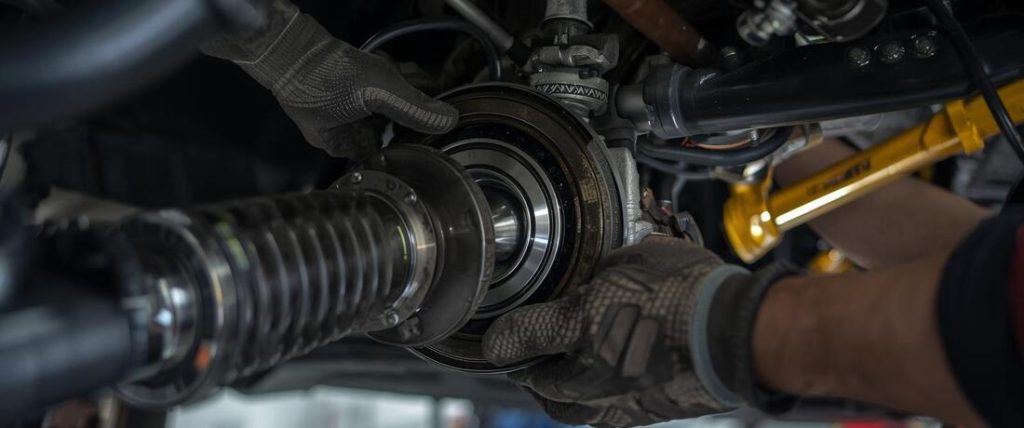
Depending on the vehicle, the technician may check for looseness, roughness, noise, or measured bearing endplay.
Timken’s workshop guidance describes checking wheel movement and rotating the hub assembly by hand as part of a wheel-bearing inspection.
A dial indicator may be used when the vehicle’s service procedure calls for a measurement. The specified limit depends on the application.
The technician should use the correct service information rather than applying one universal measurement to every vehicle.
5. Check Wheel-Speed Sensor and ABS Data When Needed
If an ABS warning is present, the technician should read the relevant diagnostic trouble codes and inspect the sensor, wiring, connector, and encoder arrangement.
A fault in the wheel-speed sensor circuit can exist without mechanical bearing damage.
Likewise, a worn bearing does not automatically mean the ABS sensor has failed. The mechanical and electrical systems need to be evaluated separately.
Is It Safe to Drive With a Noisy Wheel Bearing?
A faint new hum does not reveal how much service life remains. Noise alone cannot establish whether a bearing is safe for another day, week, or month.
Arrange an inspection promptly, even if the vehicle still feels normal.
Stop driving and arrange a tow if you notice:
- Severe grinding or loud mechanical noise
- Significant wheel looseness
- Strong vibration or shaking
- A wheel that appears to wobble
- Unstable handling or unusual steering behavior
- A sudden change in braking or vehicle control
These symptoms may indicate a serious wheel-end, tire, brake, or suspension problem. Continuing to drive could increase the risk of losing control or causing further damage.
Do not crawl under a vehicle supported only by a jack. Wheel lifting, brake removal, hub measurement, and road testing should be performed by a qualified technician using the correct equipment and vehicle-specific service procedure.
What Should You Tell the Repair Shop?
A clear description can help the technician reproduce the problem and avoid unnecessary parts replacement.
Before your appointment, note:
- The speed at which the noise begins.
- Whether it becomes louder as the vehicle accelerates.
- Whether it changes during normal left or right turns.
- Whether it changes when you apply the brakes.
- Whether the sound changes on different road surfaces.
- Whether you feel vibration through the steering wheel, seat, or floor.
- Whether any ABS or traction-control warning lights are on.
- Whether the tires, brakes, or suspension were recently serviced.
Avoid telling the shop that a particular wheel bearing is definitely bad unless it has been confirmed. Describe what you hear and feel, then let the inspection establish the cause.
FAQs About Wheel Bearing Noise When Turning
Does wheel-bearing noise get louder when turning?
It can. Cornering changes the load on the wheel ends, which may change the sound from a worn bearing. However, a noise that changes during a turn does not prove which bearing has failed or rule out tire, brake, and driveline problems.
Does a bad wheel bearing make a humming noise?
Yes. A worn bearing may produce a hum, rumble, growl, or grinding noise that changes with road speed. Tires and driveline parts can create similar sounds, so a physical inspection is needed before replacing the hub.
Can tire noise sound like a bad wheel bearing?
Yes. Uneven tread wear, cupping, feathering, and certain tire designs can create a hum or roar. The sound may change with road surface. A technician should inspect the tires and wheels before recommending a wheel-bearing replacement.
Is clicking when turning a sign of a bad wheel bearing?
Not necessarily. Repeated clicking during a tight turn often points toward an outer CV joint. However, bearing and other wheel-end problems can also make clicking or popping noises. The full assembly needs inspection before choosing a replacement part.
Can a bad wheel bearing cause an ABS light?
It can, depending on the hub design and whether the wheel-speed sensor or magnetic encoder is integrated into the assembly. Wiring, connector, and sensor faults can also trigger an ABS warning, so diagnostic codes and circuit checks are important.
The Bottom Line
A wheel bearing can make a hum, rumble, growl, or grinding noise that changes with road speed or during turns. But tires, brakes, CV joints, and other rotating parts can produce similar symptoms.
Pay attention to when the noise occurs, whether it changes with speed, and whether braking or road surface affects it. Then have the wheel end inspected before buying a replacement hub assembly.
The right diagnosis comes from comparing the driver’s observations with physical evidence, not guessing from the sound alone.
Technical References
- Timken: Symptoms of a Worn Wheel Hub Bearing (Light Vehicle TechTips LV5)
- Timken: Checking a Hub Bearing Assembly (Light Vehicle TechTips LV3)
- BCA Bearings: What’s Causing That Noise? Isolating Wheel Bearing Noise from Tires, Brakes and Other Components
- MOOG: Diagnosis of Worn Wheel End Bearings (Technical Bulletin TB-003)